




Genentech Announces Workforce Reduction Plan, Over 400 Employees Affected
In a recent development, Genentech, a subsidiary of Roche, has announced its decision to implement a workforce reduction plan, impacting over 400 employees. The company, renowned for its groundbreaking biotechnology innovations, aims to maintain operational efficiency while continuing to deliver innovative drugs and meet the needs of patients. This move comes as part of Genentech's ongoing efforts to optimize its operations and adapt to the evolving demands of the pharmaceutical industry.
Genentech, a pioneer in the biotech industry and a leading producer of monoclonal antibodies, has been a key subsidiary of Roche since the latter acquired the remaining 40% of its shares in 2009 for a staggering $46.8 billion. The company utilizes genetically modified cells to produce monoclonal antibodies, which are used in the production of next-generation drugs. With its state-of-the-art manufacturing facility in Vacaville, California, boasting a total bioreactor capacity of approximately 330,000 liters, Genentech has been a vital engine for Roche's continued growth and success.
However, as Roche's product portfolio has diversified to include not only monoclonal antibodies but also bispecific antibodies, cell therapies, and personalized cancer vaccines, the need for more flexible production capacity has arisen. To meet this demand and ensure its future competitiveness, Roche made the strategic decision to divest the Vacaville facility operated by Genentech. This move aims to align the company's production capabilities with the requirements of small-scale, personalized vaccine manufacturing. It is worth noting that if a buyer is not found, the Vacaville facility may be closed by 2029.
To further streamline its operations, Genentech recently initiated a reduction in its workforce. The company plans to lay off approximately 3% of its employees, affecting more than 400 individuals. This decision follows a previous workforce reduction in March 2023, when Genentech announced the layoff of 265 employees and the closure of a facility in South San Francisco. Genentech emphasized that these actions were unrelated to the current economic environment. Rather, they were part of a long-term strategic plan to gradually reduce production operations at the South San Francisco facility and transition some employees to a new clinical supply center in the same location.
The recent workforce reduction at Genentech coincides with a management transition within the company. Alexander Hardy stepped down as CEO on November 1, 2023, after serving in the position for 20 years. Ashley Magargee, a seasoned employee with two decades of experience at Genentech, assumed the role of CEO in January 2024. These leadership changes, coupled with the workforce reduction, signify Genentech's commitment to adapt to changing market dynamics and maintain its position as a leader in biotechnology innovation.
Genentech has assured its employees that those affected by the layoffs will receive severance packages, financial benefits, extended healthcare coverage, and job placement assistance. The company has been transparent about its long-term strategy, and employees have been aware of the gradual reduction in production operations at the South San Francisco facility for several years.
Genentech's decision to implement a workforce reduction plan reflects its ongoing efforts to optimize operations and adapt to the evolving pharmaceutical landscape. With over 400 employees affected, the company aims to maintain its commitment to delivering innovative drugs while meeting the needs of patients. As Genentech undergoes this transition, it remains a key subsidiary of Roche, continuing to contribute to the advancement of biotechnology and the development of life-saving therapies.

You May Interested In


High Quality β-Nicotinamide adenine dinucleotide CAS 53-84-9 NADwith ready stock and best price
$3E+1/UNIT FOB


2026-10-23
Trade Alert
Delivering the latest product trends and industry news straight to your inbox.
(We'll never share your email address with a third-party.)

Related News
-
South Korea Approves Yeosu Restructuring Plan, Permanently Retiring 1.39 Million Tons of Ethylene Capacity
-
Sika in China Under Pressure: The Structural Alarm Behind the 1,500-Job Cut
-
Blue from the Rainforest: EFSA Greenlights Natural “Jagua Blue” as Safe Food Colorant
-
From Eggshell to Elixir: EFSA Declares Egg Membrane Collagen Peptides Safe for Adult Supplements
-
Probiotic Promise, Safety Snag: EFSA Gives Mixed Verdict on Multi-Strain Dog Feed Additive
-
From Ancient Volcanoes to Modern Feed Mills: EFSA Validates Volcanic Zeolite as Safe and Effective Feed Additive
-
Spice Up the Coop: EFSA Reaffirms Safety of Botanical Blend for Broiler Feed—With a Warning for Handlers
-
New Ocean Freight GRI Takes Effect on Asia, Middle East and Africa Routes to U.S. and Canada
-
Sun-Kissed Insect Oil? EFSA Approves UV-Treated Mealworm Fat as Safe—and Vitamin D-Rich—Novel Food
-
From Fungus to Food: EFSA Greenlights Rhizomucor pusillus Biomass as Safe Novel Ingredient
Recommend Reading
-
![Antidumping Pressure Hits the Chemical Chain as Chinese Exports Face Higher Barriers in Europe]()
Antidumping Pressure Hits the Chemical Chain as Chinese Exports Face Higher Barriers in Europe
-
![Huide Technology Partners with U.S. Firm to Open the Door to Mass Production of Circular TPU]()
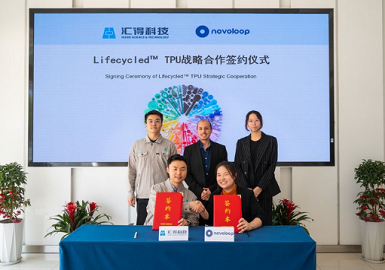
Huide Technology Partners with U.S. Firm to Open the Door to Mass Production of Circular TPU
-
![European Gas Breaks €80 Intraday, Putting Chemical and Fertilizer Output Back Under Pressure]()
European Gas Breaks €80 Intraday, Putting Chemical and Fertilizer Output Back Under Pressure
-
![Lotte Chemical Jumps Nearly 13% as Korean Petrochemical Stocks Rally on Supply-Tightening Bets]()
Lotte Chemical Jumps Nearly 13% as Korean Petrochemical Stocks Rally on Supply-Tightening Bets
-
![Snack Tests Put Red 40, Titanium Dioxide and BHT Back Under Pressure]()
Snack Tests Put Red 40, Titanium Dioxide and BHT Back Under Pressure
-
![Off-season Supply Increases, Polyethylene Continues Downward Trend in China]()
Off-season Supply Increases, Polyethylene Continues Downward Trend in China
-
![Business Society’s BDO Trend Analysis on September 16, 2026: High-Range Fluctuations]()
Business Society’s BDO Trend Analysis on September 16, 2026: High-Range Fluctuations
-
![Chinese Ammonium Sulfate Market Stops Rising and Falls (5.14-5.21)]()
Chinese Ammonium Sulfate Market Stops Rising and Falls (5.14-5.21)
-
![Business Society September 30, 2026 PP (Fiber) Trend Analysis: Volatility]()
Business Society September 30, 2026 PP (Fiber) Trend Analysis: Volatility
-
![This week, the market price of pure benzene in China has fallen (6.15-6.18)]()
This week, the market price of pure benzene in China has fallen (6.15-6.18)








- Hot Searches
- 2cb for sale
- retatrutide wholesale
- ethyleneamines market
- sr 17018 buy online usa
- aeo 7 surfactant
- disodium octaborate tetrahydrate distributor
- bioglutide for sale
- acrylonitrile butadiene styrene price
- where to buy anhydrous ammonia
- methanol price per gallon
- retatrutide for sale
- where to get reta peptide