




EU Extends Authorization Period for Lactobacillus NCIMB 10415 as an Additive in Animal Feed
In a recent development, the European Union (EU) has announced the extension of the authorization period for Lactobacillus NCIMB 10415 as an additive in certain animal feeds. This decision, outlined in Regulation (EU) 2024/1161, emphasizes the authorization for the use of Lactobacillus NCIMB 10415 in feed for fattening and laying chickens, as well as small poultry breeds. Let's delve into the details of this significant update.
Key Points:
1. Authorization Extension:
The EU Commission, through Regulation (EU) 2024/1161, has extended the authorization period for Lactobacillus NCIMB 10415 as a feed additive for fattening and laying chickens, as well as small poultry breeds used for egg production.
2. Categorized as a "Technological Additive":
Lactobacillus NCIMB 10415 falls under the category of "technological additives" as specified in the attached conditions. It is classified as a "gut flora stabilizer," which supports the stability of the intestinal microbiota in animals.
3. Validity Period:
The extended authorization for Lactobacillus NCIMB 10415 as a feed additive is effective until May 13, 2034. This regulation will come into effect twenty days after its publication date.
4. Additional Approvals:
Furthermore, the use of Lactobacillus NCIMB 10415 as a feed additive has been approved for feeding and fattening calves, feeding and fattening young goats, sows, suckling piglets, weaned piglets, and fattening pigs.
The European Union's extension of the authorization period for Lactobacillus NCIMB 10415 as an additive in animal feed marks an important development in the field of animal nutrition. This decision reflects the commitment to ensure the welfare and health of animals by supporting the stability of gut flora. With the extended validity period, the industry can continue to utilize Lactobacillus NCIMB 10415 in feed formulations for the specified animal categories. It is essential for stakeholders to stay updated on such regulatory changes to comply with the EU's guidelines and contribute to the overall safety and quality of animal feed production.

You May Interested In


β-Nicotinamide Adenine Dinucleotide High Quality NAD+ CAS 53-84-9 Exclusive Production Factory CAS NO.53-84-9
$75/UNIT FOB


2026-08-10
Trade Alert
Delivering the latest product trends and industry news straight to your inbox.
(We'll never share your email address with a third-party.)

Related News
-
From Painting Walls to Total Collapse: The RMB 152 Million Debt That Tore Off the Last Veil of Asia Chuangneng’s Paint Empire
-
“Amputation or Strategic Retreat?”: Shell’s Six-Year Chemical Losses and the Quiet Unwinding of an Empire
-
Wegovy Slips on Price While Mounjaro Defends Its Weight-Loss Crown
-
A New Obesity Pill Enters the Arena With Double-Digit Weight Loss
-
Lilly’s Mounjaro Enters China’s State Insurance System
-
Vertex Pushes Gene Therapy Into Younger Children With Blood Disorders
-
Selling the Family Silver for a New Suit? Why Bohai Chemical’s Transformation Drama Got Canceled After Just Two Acts
-
Smog Becomes a Sales Catalyst as Respiratory Drugs Surge in November
-
Arkema and ENNEX Forge Global Alliance to Power the Next Generation of Safer, Smarter Battery Separators
-
Sherwin-Williams Opens High-Performance Industrial Coatings Facility in Saskatchewan
Recommend Reading
-

The Great Hydrogen Reality Check: Global Clean Hydrogen Projects Face Mass Cancellations
-

LG Chem and GS Caltex in Talks to Merge Yeosu Cracker Assets as Korea Pushes Industry Restructuring
-

Europe’s Chemicals Industry Stalls Again as Cefic Cuts 2025 Outlook
-

ConocoPhillips to Cut Up to 25% of Workforce as Oil Price Slump Bites
-

Europe’s Recycling Industry in Crisis: Cheap Imports and Red Tape Push Plastic Recyclers to the Brink
-

Global Butadiene Market Faces Heavy Headwinds as Supply Surge Outpaces Demand
-

Crude oil prices fall, retail prices of refined oil products in China continue to decrease
-
MTBE Market Prices Continue to Decline
-
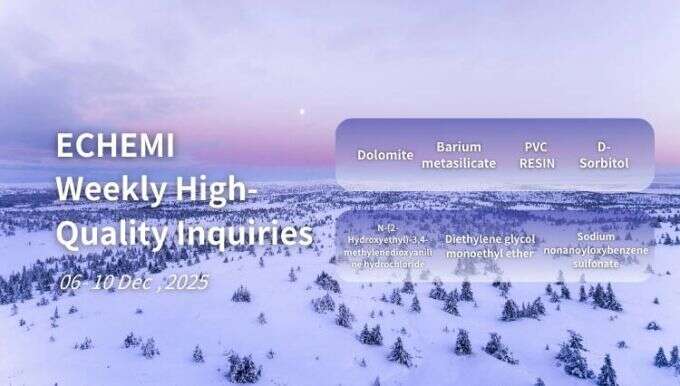
Premium Global Chemical Sourcing Requests (6-10 Dec 2025)
-

Chemical Properties and Applications of Cyclopropen
- Hot Searches
- food grade defoamers
- hypochlorite bleaches market
- best place to get retatrutide
- amoxycillin and potassium clavulanate tablets
- sodium hydroxide price
- epoxy resin chemical formula
- dayquil ingredients vs nyquil
- flour treatment agent
- where to buy ss 31 peptide
- glycol price per gallon
- where to get reta peptide
- tungsten trioxide powder