




South Korea partners with Lush to boost consumption by using beans in cosmetics
Lush Korea has signed an agreement with the Ministry of Agriculture, Food and Rural Affairs to expand the use of locally sourced pulses in its cosmetics.
The two parties signed a memorandum of understanding aimed at diversifying domestic consumption of pulses. The Korean arm of the British cosmetics maker already uses local ingredients in about 80 of its products, but the exact proportion across its entire catalog has not been disclosed. Under the agreement, Lush Korea will further integrate local pulses into a wider range of products.
The Ministry of Agriculture of South Korea will ensure that Lush Korea has a stable supply, which is crucial given that its products often have a short shelf life. The ministry will also provide important information on domestic pulse varieties, production locations and production levels.
In addition to meeting consumer demand, the partnership aims to reshape South Korea's perception of domestic pulses and highlight their little-known value as a cosmetic ingredient.
"This partnership marks mutual cooperation between multinational companies and Korean agriculture," said Ministry of Agriculture of South Korea Song Mi-ryung. "Create new demand for domestically produced beans and diversify consumption, making domestic high-quality pulses and beans products more accessible."
The head of Lush Korea said: "I believe our agreement with the Ministry of Agriculture provides customers with the opportunity to provide local, high-quality produce directly to customers, which will be well received at our UK headquarters. It would be ideal if domestically produced soybeans could be supplied to Lush in Southeast Asia."
Looking for chemical products? Let suppliers reach out to you!
You May Interested In


β-Nicotinamide Adenine Dinucleotide High Quality NAD+ CAS 53-84-9 Exclusive Production Factory CAS NO.53-84-9
$75/UNIT FOB

2026-07-24
Trade Alert
Delivering the latest product trends and industry news straight to your inbox.
(We'll never share your email address with a third-party.)

Related News
-
Kumho Mitsui Chemicals to Further Expand MDI Production, Annual Capacity to Reach 710,000 Tons
-
Iran Closes Strait of Hormuz to All Vessels: Global Chemical Trade Gets Choked
-
Fertilizer Shock Reshapes Rice Export Decisions
-
The Chemical Market Is No Longer Just Raising Prices — It Has Started Stopping Quotations
-
China Moves Lycopene Toward Filing-Based Health Food Management
-
Brazil Rewrites the Supplement Rulebook
-
March Brought a Faster Global Food Rule Cycle
-
Middle East Conflict Pushes Up Oil Prices as More Than 100 Chemical Raw Materials Rise in Concentration
-
Japan Tightens Additive Use Standards
-
Arkema Triples Transparent Polyamide Capacity in Singapore: a Bet on Virtual Reality Growth or a Move to Strengthen Supply Resilience?
Recommend Reading
-

India’s Tariff Cuts Could Lower Agrochemical Costs
-

Redwall Raises Prices by as Much as 80%, Songwon Launches Global Increases, and Chemical Companies Are Collectively Passing On Costs
-

Alipay, Baidu, and iFlytek Win Big—As the Government Spends $1.1 Billion on AI Healthcare, Is This a Lifeline or a Feeding Frenzy for Tech Giants?
-

$530 Million Lawsuit Unheard, $76 Million Counterclaim Filed: Is Qicai Chemical’s ‘Reputation Defense’ a Desperate Last Stand or a Calculated PR Gambit?
-

U.S. Issues Final Anti-Dumping Ruling on Chinese MDI: Dumping Margins Reduced from Over 500% to 85%+
-

Sodium Hydroxide Reactions: With Aluminum, Acids, and Metals
-

Cost Pressure Rises, Anhydrous Hydrogen Fluoride Prices Increase in China
-

On February 26, the Chinese pure benzene market operated with weak stability
-
Lithium Carbonate Trending Upward, with a Bumpy Process
-
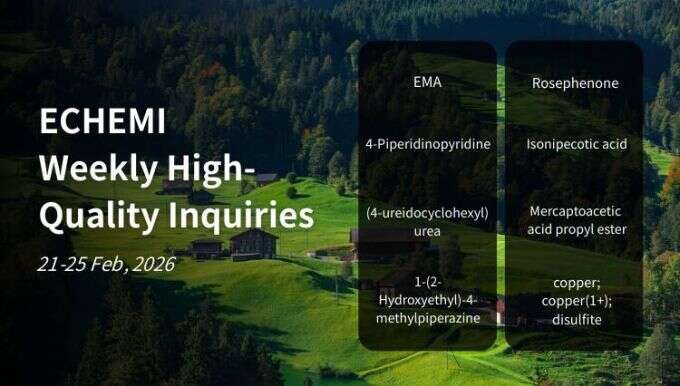
Premium Global Chemical Sourcing Requests (21 - 25 Feb, 2026)