Chinachem and NAMI Collaborate on Strippable Nano Window Protective Coating
Chinachem Group and Nano and Advanced Materials Institute (NAMI) have jointly developed an innovative strippable nano protective coating. This is a nano coating that enhances the protection of the interior and exterior surfaces of windows during building construction. This advanced patented technology can improve cost and environmental efficiency. NAMI is a local research and development center.
Chinachem Group is committed to promoting the advancement of green building technology. "We are committed to working with scientific research institutions to promote the advancement of green real estate technology," said Cai Hongxing, Executive Director and Chief Executive Officer of Chinachem Group.
"We have successfully applied "Modular Integrated Construction" (MiC) to private residential projects and are now working with NAMI to develop this peelable nano-protective coating technology. This innovation is in line with green building principles and aims to reduce material waste, improve construction quality and increase satisfaction among apartment buyers, in line with our "triple bottom line" approach of prioritizing People, Prosperity and Planet (3P). We plan to adopt this patented coating in our upcoming developments in Tai Po Kau and Tung Chung. This groundbreaking move will set a new standard for developers and bring significant benefits to the sustainable development of Hong Kong's construction industry."
NAMI is a company with extensive experience in the research and development of architectural coatings, and this jointly developed innovative technology has been patented. One of its main advantages is the ability to adjust the degree of protection to the needs of various building conditions.
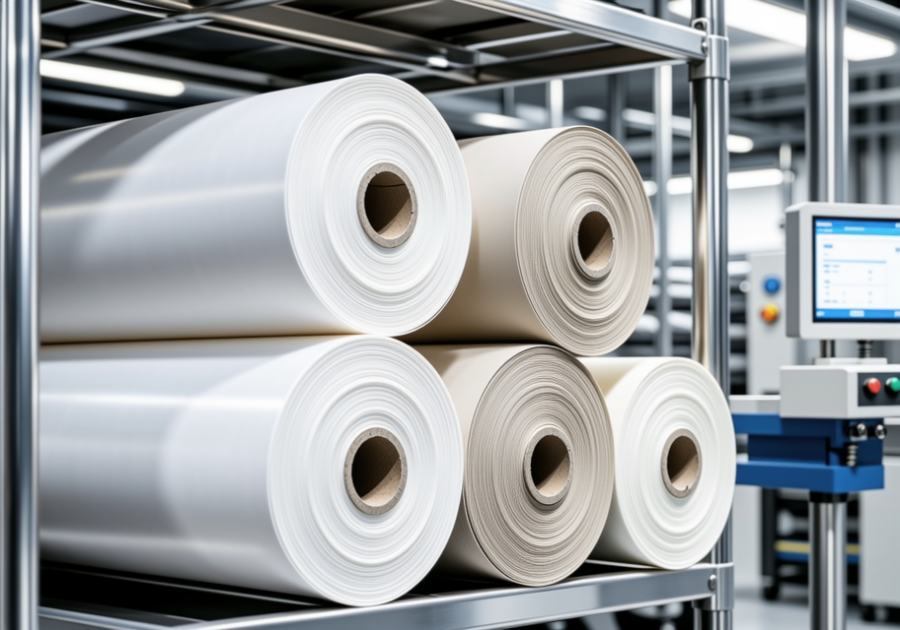
The coating thickness is more than three times that of traditional protective materials. This provides excellent protection and reduces the occurrence of glass window breakage or damage during property handover and inspection. Therefore, it minimizes the need to replace glass.
In addition, the nano coating is UV-resistant and waterproof. This ensures that even after long-term exposure to sunlight or rain, no residue will form on the glass surface or the coating will fall off prematurely. Therefore, it simplifies the cleaning process and saves time.
Nano coating not only improves cost-effectiveness, but also prioritizes environmental efficiency by reducing construction waste. Its single-layer thickness provides sufficient protection strength without the need for additional foam board wrapping. In addition, the coating is easy to remove and reuse, minimizing construction waste. The environmentally friendly formula does not contain solvents. It prevents the release of harmful substances such as volatile organic compounds (VOCs).
The coating also helps save energy because it allows natural light to pass through the glass. Therefore, it eliminates the need for artificial lighting during indoor construction. It also solves the problem of shading caused by excessive use of protective coating materials. In addition, nano coatings can be applied to a variety of building materials in addition to glass windows. It includes metal surfaces and treated wooden furniture.
Glass is easily damaged, with a loss rate of up to 30%. Contractors sometimes resort to additional wrapping with foam boards with low light transmittance. This requires additional indoor lighting during the construction phase. In addition, traditional sticky protective coatings may adhere firmly to glass, requiring extensive cleaning work. The development of nano coatings can solve this problem in the industry.
"This peelable nano protective coating can improve the protection of building materials and help reduce construction waste and carbon emissions," explained Dr. Ivan Sham, Chief Commercial Officer of NAMI. "This innovative technology demonstrates a successful collaboration between research institutions and industry to provide new and cost-effective solutions for the construction industry while promoting sustainable development in Hong Kong. "

You May Interested In


Glow70/KLOW80 99% China Peptides Warehouse Direct Delivery Lyophilized Powder in Stock
$169/UNIT FOB


2026-10-16
Trade Alert
Delivering the latest product trends and industry news straight to your inbox.
(We'll never share your email address with a third-party.)

Related News
-
Application Trend and Development of Nano Coatings
-
$25 Billion Paint Giant Born: AkzoNobel and Axalta Shareholders Approve Merger by Landslide
-
ContextLogic Acquires gChem for $850 Million in Major Specialty Chemicals Deal
-
Houthis Claim Strikes on Two Saudi Aramco Facilities as Missile and Drone Attacks Hit Saudi Airports
-
LB Group Takes Over UK Titanium Dioxide Plant, Restarts 150,000-tonne Capacity
-
Three-Phase Plan for 120,000 Tons! “TPU King” Zhuhai Makes Its Move—Covestro’s New Plant Signals Not Just Capacity Expansion but a Full-Scale Upgrade in the Asia-Pacific Market Battle
-
Mitsubishi Gas Chemical Halts MXDA Plant Construction in the Netherlands Amid Rising Costs and Market Pressures
-
Univar Solutions Expands EMEA Portfolio Through Exclusive Distribution Agreement with CABB Group
-
Indonesia Forges a Green Future for Its Highly Dynamic Packaging & Automotive Industries
-
Record Net Profit, Yet “Joining Forces” with a Rival? Axalta Drops a Final Trump Card Before the Merger
Recommend Reading
-
![Lotte Chemical Plans Sale of Selected Operations in Malaysia, Indonesia, and the United States]()
Lotte Chemical Plans Sale of Selected Operations in Malaysia, Indonesia, and the United States
-
![Dongyue Silicon Materials' Net Profit Expected to Increase More Than 190-Fold]()
Dongyue Silicon Materials' Net Profit Expected to Increase More Than 190-Fold
-
![Xinxiang Chemical Fiber Suspends 31,200 t/y Production Line, Expects RMB 40 Million Profit Reduction]()
Xinxiang Chemical Fiber Suspends 31,200 t/y Production Line, Expects RMB 40 Million Profit Reduction
-
![Wanhua Chemical Announces 2026 Investment Plan: RMB 27.3 Billion for Projects Plus RMB 2.22 Billion for Equity Investments]()
Wanhua Chemical Announces 2026 Investment Plan: RMB 27.3 Billion for Projects Plus RMB 2.22 Billion for Equity Investments
-
![BASF Raises API and Excipient Prices]()
BASF Raises API and Excipient Prices
-
![Business Society’s MTBE Market Outlook on September 8, 2026: Volatile Consolidation]()
Business Society’s MTBE Market Outlook on September 8, 2026: Volatile Consolidation
-
![Premium Global Chemical Sourcing Requests (19 - 23 Jan, 2026)]()
Premium Global Chemical Sourcing Requests (19 - 23 Jan, 2026)
-
![Business Society’s Market Outlook for Epichlorohydrin on September 2, 2026: Price Trend Is Expected to Be Volatile]()
Business Society’s Market Outlook for Epichlorohydrin on September 2, 2026: Price Trend Is Expected to Be Volatile
-
![Business Society’s Market Outlook for Polyester Staple Fiber on August 19, 2026: Clearly Upward]()
Business Society’s Market Outlook for Polyester Staple Fiber on August 19, 2026: Clearly Upward
-
![Business Society’s Market Outlook for Isooctanol on September 3, 2026: Strong Rebound with a Bullish Bias]()
Business Society’s Market Outlook for Isooctanol on September 3, 2026: Strong Rebound with a Bullish Bias