Potassium Hydroxide in Water | Detailed Explanation
Potassium hydroxide mostly exists as a solid and has no color. There will be a huge heat release when putting potassium hydroxide in water. Because of its corrosiveness and reactivity with acids, it has many commercial and industrial uses. You can find it to be used as an acidity adjuster in the lab, a main ingredient in the hair removal cream, and in the cleaning agents.
Features of potassium hydroxide
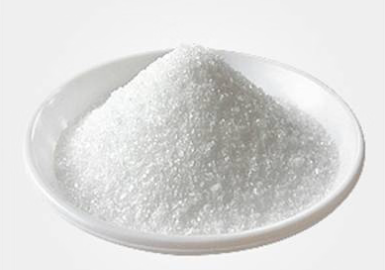
Potassium hydroxide is usually in a semi-transparent granular form on the market. Because of its hygroscopicity, it will become very sticky in the air. Therefore, it usually contains different amounts of water. It is not easily dehydrated until reaches 380℃.
It shows high thermal stability. In a gaseous state, it is a dimer. Because it is very stable and its low melting point, it is usually melted and cast into small balls or rods. Then how does the strong heat release from potassium hydroxide in water?
The principle of heat release from potassium hydroxide in water is due to the exothermic process in which microscopic particles detach from the crystal and form hydrated particles during the dissolution process. In these two processes of microscopic particles detaching from the crystal and forming hydrated particles, the exothermic process dominates.
Applications of potassium hydroxide
It exists in many daily necessities we use, such as shampoo, face cream, etc. It also has many other applications as below.
1.Making soft soap
The secret ingredient for soft soap is potassium hydroxide saponified fats. It can make the soap softer than the common ones. Because of the softness and high solubility of potassium soaps, they require less water for liquefaction and have more cleaning agents.
2.Processing fur
As a corrosive alkali that damages the epidermis of hair, it is used to remove hair from animal skins. Put potassium hydroxide in water and soak the leather in the solution for 5~6 hours, the depilation process will be much smoother. The same principle is also used to produce shaving cream. It can open the hair stratum corneum and attract and force water into the scaly epidermis. Hair is more likely to be cut off by the razor blade in this weakened state.
3.Identify fungal species
Apply 3-5% potassium hydroxide in water, and put the solution onto the flesh of the mushrooms. Pay attention to whether the color of the flesh will change. Certain types of mushrooms, porous bacteria, and lichens can be identified based on this color change reaction.
4.As electrolyte
Potassium hydroxide in water is used as an electrolyte in alkaline batteries, nickel-cadmium batteries, and manganese zinc dioxide batteries. Compared with sodium hydroxide solution, potassium hydroxide solution has better conductivity as an electrolyte for fuel cells.
5.Catalyst
Adding it to cosmetics such as shampoo can serve as a catalyst in the emulsification process. Moderate dosage can react with the acidic components in the base oil to generate surface active substances such as hydrogen and water. Therefore, the basic emulsification can be formed into oil in water lotion to improve the effect and quality of cosmetics. It can make the skin delicate after use and not easily spoil cosmetics.
Effects on the human body
-It can absorb oxygen from the air, avoiding situations where the oxygen content is too low. It can also prevent the body from absorbing too much carbon dioxide.
-If there are too many acidic substances in the body, acidosis may occur. It can be eaten appropriately to maintain the acid-base balance in the body.
-It can keep the excitability of the neuromuscular junction within a normal range, avoid excessive excitability of the neuromuscular junction, and also provide sufficient rest for the muscles.
-It can maintain the normal function of the heart, avoid arrhythmias, increase the contractility of the myocardium, and prevent the occurrence of heart failure.
-It can keep the cell membrane stable, avoid cell damage, and also maintain the normal physiological function of the cell.
Storage conditions of potassium hydroxide in water
Potassium hydroxide in water should be stored at room temperature, preferably between 20-25℃. Excessive temperature may cause the decomposition of potassium hydroxide to produce oxygen and high-temperature reactions, and increase the pressure and danger of the solution.
Choose containers with strong corrosion resistance and good sealing to store potassium hydroxide solution. Common container materials include glass bottles, polyolefin plastic bottles, etc. Metal containers should not be used because they can react with metals to produce combustible hydrogen gas.
It is a highly hygroscopic substance that easily absorbs moisture from the air to form a potassium hydroxide solution. Therefore, when storing its solution, a well-sealed container should be used and placed in a dry place to avoid contact with moisture in the air.
Conclusion
This article mainly talks about several applications of potassium hydroxide based on its special features. We can find its existence in the soaps, shaving creams, batteries, and chemical reagents. Besides, you must have learned the conditions to store potassium hydroxide in water.
Looking for chemical products? Let suppliers reach out to you!
You May Interested In


Glow70/KLOW80 99% China Peptides Warehouse Direct Delivery Lyophilized Powder in Stock
$169/UNIT FOB

SS-31 Cosmetic peptides, discounted price improving cognitive impairment factory supply
$78/UNIT FOB


2026-10-23
Trade Alert
Delivering the latest product trends and industry news straight to your inbox.
(We'll never share your email address with a third-party.)

Related News
-
Key Properties and Applications of Para-Nitrophenol
-
Understanding Reactions Between Silver and Chloride
-
Ammonia Chemical Formula: NH3 Structure & Properties
-
Benzyl Alcohol: Uses in Cosmetics, Preservative Efficacy, and Safety
-
Sodium Chloride (NaCl): Food Grade vs Industrial Grade Uses & Safety Data
-
Chemical Raw Materials: How to Source Quality Suppliers & Understand Grades
-
Uses and Properties of Copper Acetate
-
Vanillin: Properties, Uses, and Safety
-
What is a Surfactant? (Definition, Types, and How They Work)
-
Oxalic Acid: Acidity (pKa), Sources, and Kidney Stone Risk
Recommend Reading
-
![What is Amylum Starch? (Old Terminology & Modern Equivalent)]()
What is Amylum Starch? (Old Terminology & Modern Equivalent)
-
![Chemical Properties and Uses of Caesium Fluoride]()
Chemical Properties and Uses of Caesium Fluoride
-
![What is Element Stibium? (Antimony Facts & Uses)]()
What is Element Stibium? (Antimony Facts & Uses)
-
![Uses and Properties of Chromium Oxide]()
Uses and Properties of Chromium Oxide
-
![Isoascorbic Acid: Uses and Safety]()
Isoascorbic Acid: Uses and Safety
-
![Business Society September 22, 2026 Melamine Trend Analysis: Tending to Fluctuate]()
Business Society September 22, 2026 Melamine Trend Analysis: Tending to Fluctuate
-
![Business Society September 21, 2026 Ethylene Glycol Trend Analysis: Volatile with a Bearish Bias]()
Business Society September 21, 2026 Ethylene Glycol Trend Analysis: Volatile with a Bearish Bias
-
![Premium Global Chemical Sourcing Requests (12-14Oct.,2026)]()
Premium Global Chemical Sourcing Requests (12-14Oct.,2026)
-
![Business Society September 21, 2026 BDO Trend Analysis: Volatile Consolidation]()
Business Society September 21, 2026 BDO Trend Analysis: Volatile Consolidation
-
![Business Society September 22, 2026 Acrylic Acid Trend Analysis: Consolidation with a Bias to the Upside]()
Business Society September 22, 2026 Acrylic Acid Trend Analysis: Consolidation with a Bias to the Upside