




Honeywell Divests Additive Manufacturing Business; Market Expected to Shrink to $3.6 Billion in 5 Years
On October 8, 2024, Honeywell International Inc. (NASDAQ: HON, $222.35, Market cap of $144.4 billion) officially unveiled A plan to spin off its Advanced Materials division (SpinCo) into a separate U.S.-listed company. The plan is to divest shareholders in a tax-free manner by the end of 2025 or early 2026.
Following the divestiture, SpinCo will focus on sustainable specialty chemicals and materials, including fluorine products, electronic materials, industrial-grade fibers, and healthcare packaging solutions. Its portfolio of brands will include Solstice, Spectra, Hydranal and Aclar, among others. The standalone business is estimated to be valued at approximately $10 billion and is expected to generate approximately $3.8 billion in revenue in fiscal 2024 with an EBITDA margin of more than 25.0%.
At the same time, Honeywell (RemainCo) plans to realign its business around three key trends: automation, aviation and energy transition. Specifically, the company will be organized into four main business units: Aerospace Technology, which is dedicated to providing advanced solutions for the aerospace industry and industrial automation; Automation technology department, focusing on automation technology in various industries; Building Automation, which provides smart building solutions to improve efficiency and sustainability; And the Energy & Sustainability Solutions segment, which focuses on the development of energy saving and sustainable technologies.
The spin-off transaction is expected to close in late 2025 or early 2026, subject to certain customary conditions, including the filing of relevant documents with the SEC (including a Form 10 registration statement) and confirmation of its validity, ensuring that the business spin-off is tax free to Honeywell shareholders, obtaining approval from relevant regulatory authorities, and final approval by Honeywell's Board of Directors.
As the transaction moves forward, Honeywell plans to provide additional details about the future management team and board of directors of the independent Advanced Materials company. Goldman Sachs & Co. LLC acted as financial adviser on the transaction, while Skadden, Arps, Slate, Meagher & Flom LLP provided outside legal advisory services.
Honeywell announced plans to spin off its Advanced Materials (AM) division, which was formerly part of its Energy & Sustainability Solutions (ESS) division. With industry-leading technology, processing and licensing capabilities, ESS is committed to driving the global energy transition.
The additive Manufacturing business focuses on specialty chemicals and materials, serving a variety of industries including electronics, healthcare and industrial manufacturing. While the division contributes to sustainability through products such as low global warming potential refrigerants, its broad portfolio does not directly support the energy transition initiatives at the heart of the ESS division. Management said the AM business spin-off is the latest move to optimize Honeywell's portfolio to enhance the overall competitiveness of its portfolio through strategic acquisitions and divestments of non-core business lines.
As the demand for highly customized solutions in healthcare applications continues to grow, management believes that a well-funded and independent Additive Manufacturing (AM) division would benefit from greater financial flexibility to advance its strategic agenda and related investment choices.
The global specialty chemicals market is forecast to expand at a compound annual growth rate (CAGR) of 5.2% from 2024 to 2030, and its market size is expected to reach approximately $866.9 billion by 2030. Given the continued demand in the market, management believes that now is the right time to move the business forward on its own to take full advantage of its advanced technology and deep customer relationships. By spinning off the additive manufacturing business, Honeywell will have a smaller, leaner manufacturing system that will allow it to focus its supply chain operations on discrete and batch manufacturing. This streamlining is designed to enhance Honeywell's ability to leverage synergies across its businesses, enhance organic growth potential, mitigate cyclical volatility, and ultimately improve its free cash flow profile.
The Aerospace Technology (AT) segment is a key player in the aerospace industry, providing a wide range of products and services for commercial, defense and space applications. This segment covers the development and manufacture of aircraft engines, avionics and auxiliary power units (APUs), which are critical to the efficiency of aircraft operations.
The Industrial Automation (IA) segment focuses on improving the efficiency, safety, and productivity of industrial operations with advanced technologies and solutions, including process management, iot, advanced sensors, and material handling automation. With expertise in control systems, cybersecurity and energy management, Honeywell helps industries optimize operations, reduce emissions and improve overall performance. The division also addresses workers' productivity and safety needs through innovative mobile computing and personal protective equipment, ensuring full industrial automation.
Building Automation (BA) transforms buildings into intelligent, integrated environments to improve operational efficiency, safety and sustainability. This segment offers a comprehensive suite of hardware, software, sensors and analytical tools designed to optimize building performance. Honeywell's solutions help manage energy consumption, reduce carbon footprint, and improve occupant comfort and safety. By applying advanced technologies such as the Internet of Things (IoT) and artificial intelligence (AI), Honeywell is able to achieve better control of facilities, streamline operations and respond quickly to emergencies.
The Energy and Sustainability Solutions (ESS) division focuses on driving the energy transition and enhancing sustainability across industries. ESS provides innovative technologies and solutions to reduce emissions, improve energy efficiency and support the circular economy, covering areas such as advanced materials, energy storage systems and sustainable fuel technologies.
In 2023, the AT segment accounted for 40.6% of total revenue, followed by IA (26.2%), BA (16.4%) and ESS (16.8%). Total revenue increased 4.7% year-over-year to $9.6 billion (+ 1.7% on estimate), driven primarily by strong demand in the AT and BA segments, which offset lower revenue in the IA segment. Aerospace revenue increased 16.5% year-over-year to $3.9 billion, of which Defense and Space (D&S) revenue increased 18.7% year-over-year to $1.4 billion, and commercial aviation aftermarket (CAA) revenue increased 17.3% year-over-year to $1.8 billion. Commercial aviation original Equipment (CAOE) revenue increased 10.0% year-over-year to $668 million.
IA segment revenue decreased 8.1% year-over-year to $2.5 billion as warehouse and Workflow Solutions (W&WS) revenue decreased 41.5% year-over-year to $233 million and Sensing and Security Technologies (S&ST) revenue decreased 10.0% year-over-year to $466 million. Productivity Solutions and Services (PS&S) revenue declined 9.4% year-over-year to $298 million, offsetting a 1.8% year-over-year increase in process Solutions (PS) revenue to $1.5 billion.
BA segment revenue increased 0.5 percent to $6 billion, with Building Technology (BT) revenue up 3.60 percent to $2.4 billion, offsetting a 1.5 percent decline in Building Performance (BP) revenue to $3.6 billion. Process Technology and Materials (PM&T) revenue increased 7.3% year-over-year to $11.5 billion, with Performance Materials and Solutions (PS) revenue up 11.3% year-over-year to $5.2 billion, General Oil and Gas (UOP) revenue up 7.6% year-over-year to $2.6 billion, and Additive Manufacturing (AM) revenue up 1.7% year-over-year to $3.6 billion. Standard & Poor's Services (SPS) revenue declined 20.5% year-over-year to $5.5 billion due to a 37.5% year-over-year decline in W&WS revenue to $1.4 billion, a 24.5% year-over-year decline in PS&S revenue to $1.3 billion, and a 4.4% year-over-year decline in SPS revenue to $2.7 billion. Operating revenue increased 10.2% year-over-year to $7.1 billion, and the corresponding margin improved approximately 120 basis points to 19.3%, driven by strong revenue performance in all segments except SPS. Higher prices and higher productivity have contributed to the expansion of profit margins. Net income increased 13.9% year-over-year to $5.6 billion (7.5% lower than expected), with a corresponding margin improvement of 143 basis points to 15.4%. Adjusted diluted earnings per share were $9.16 (FY22: $8.76), in line with expectations.
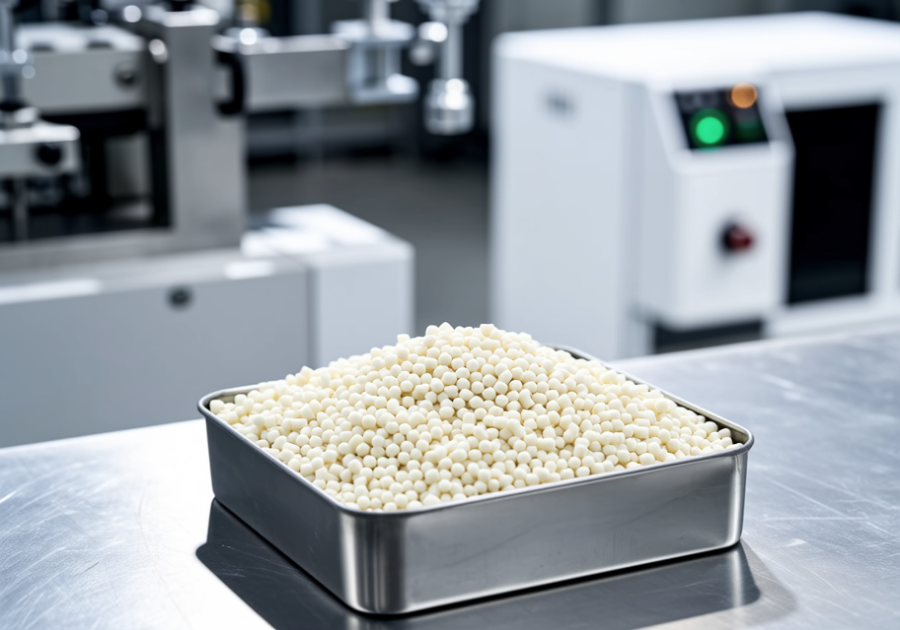
The additive Manufacturing business focuses on specialty chemicals and materials for industries such as aerospace, automotive and electronics.

You May Interested In


High Quality β-Nicotinamide adenine dinucleotide CAS 53-84-9 NADwith ready stock and best price
$3/UNIT FOB


2026-10-18
Trade Alert
Delivering the latest product trends and industry news straight to your inbox.
(We'll never share your email address with a third-party.)

Related News
-
Trump Tariff "Boomerang": $2.5 Billion Polysilicon Factory Faces Shutdown Crisis
-
China’s Chemical Time Bomb Just Got a Legal Fuse: The New Law That Could Save Thousands of Lives
-
U.S. Strikes Three Iranian Tankers as “Tanker-for-Tanker” Escalation Raises Chemical Shipping Risk
-
Panama Canal Delays Deeper Draft Cut, but Transit Capacity Is Still Tightening
-
Hormuz Closes, Paint Feels It First: How a Barrel of Oil Rewrites the Cost of Every Barrel of Coatings
-
Saudi Energy Facilities Hit as Middle East Feedstock Risk Spreads Toward the Red Sea
-
China Methanol Futures Hit Limit-Up as More Than 60% of Middle East Capacity Remains Offline
-
“Fake Fame” in a Forgotten Dock: Chinese Authorities Bust $100,000 Counterfeit Building Materials Ring
-
Asian Paints Dives Deeper into the Desert: Unveils Second UAE Plant to Dominate GCC Coatings Market
-
From Rust to Recharge: Novonix Ignites America’s Graphite Independence with Twin Mega-Plants in Chattanooga
Recommend Reading
-
![Corn’s Surprise Surge: Export Fireworks Ignite Bullish Sentiment]()
Corn’s Surprise Surge: Export Fireworks Ignite Bullish Sentiment
-
![Brazil Redefines “Milk”: New Rules Force Honesty on Dairy Labels]()
Brazil Redefines “Milk”: New Rules Force Honesty on Dairy Labels
-
![Canada’s Infant Formula Gets a Risk-Based Makeover]()
Canada’s Infant Formula Gets a Risk-Based Makeover
-
![Wheat Drowns in a Sea of Plenty: Global Glut Crushes Price Hopes]()
Wheat Drowns in a Sea of Plenty: Global Glut Crushes Price Hopes
-
![EFSA Eyes Higher Dodine Limits in Grapes—Safety Assured, Critics Wary]()
EFSA Eyes Higher Dodine Limits in Grapes—Safety Assured, Critics Wary
-
![Business Society’s DOP Market Outlook on August 13, 2026: Clearly Upward]()
Business Society’s DOP Market Outlook on August 13, 2026: Clearly Upward
-
![Remote Costs Rise, ABS Prices Increase in Early September in China]()
Remote Costs Rise, ABS Prices Increase in Early September in China
-
![FDA Slams Door on Chinese Food Exports: Inspection Refusals Trigger Automatic Detentions]()
FDA Slams Door on Chinese Food Exports: Inspection Refusals Trigger Automatic Detentions
-
![Business Society Toluene Daily Review: Short-Term Upward Trend on August 12, 2026]()
Business Society Toluene Daily Review: Short-Term Upward Trend on August 12, 2026
-
![This week's ethyl acetate market in China has slightly decreased]()
This week's ethyl acetate market in China has slightly decreased









- Hot Searches
- best place to buy retatrutide peptides
- 4-o-acetyldehydrozingerone sds
- sds titanium dioxide
- hong kong chemical reagent suppliers
- proplyne glycol
- dienoget
- buy adrenochrome
- retatrutide peptide research buy
- hydroquinone powder
- buy potassium cyanide
- saudi chevron phillips s chem
- propene price