Major Changes in the Global Automotive Market: Chinese New Energy Vehicles Challenge Dominance of Europe and America
In recent years, the global automotive market has faced growth bottlenecks, becoming a highly competitive "red ocean" market. In this context, the rise of new energy and intelligent technologies is leading industry transformation. Notably, manufacturers from China (like BYD and Geely) and the U.S. (such as Tesla) are rapidly emerging, posing significant challenges to traditional fuel vehicle companies, especially German, Japanese, and Korean brands.
German luxury brands like Mercedes-Benz, BMW, and Audi have reported significant declines in both revenue and profit in their latest financial statements. Meanwhile, Chinese automotive brands have made remarkable progress in international markets, garnering widespread attention.
Europe, the birthplace of the automotive industry, has also begun to take action. The European Union announced anti-subsidy taxes on Chinese electric vehicles, affecting brands such as SAIC, BYD, Geely, and Tesla, with rates as high as 45.3%. This move is seen as a response to similar U.S. policies, reflecting a united stance on dealing with the expansion of the Chinese EV market.
According to the Financial Times, the EU plans to take further measures to compel Chinese companies to transfer battery technology to Europe. This strategy has been humorously dubbed "piracy," indicating that the EU is not only focused on economic competition but also aims to enhance its industrial competitiveness through technology transfer.
Negotiations between China and the EU seem to be making positive progress. According to Reuters, Bernd Lange, chairman of the European Parliament's International Trade Committee, announced that the EU is about to reach an agreement to eliminate tariffs on electric vehicles imported from China. This move stands in stark contrast to the U.S. policy of maintaining high tariffs.
The U.S. imposes tariffs of up to 100% on Chinese electric vehicles, and the EU subsequently proposed an anti-subsidy tax plan, potentially imposing tariffs of up to 35% on Chinese companies. However, the situation dramatically shifted, prompting the EU to reconsider its approach and explore collaboration with China.
Internal attitudes towards China within the EU have long been contentious. Previously, the EU's increased tariffs on China led to counter investigations on dairy and brandy exports, sparking protests from European businesses and citizens. There are also divisions within the automotive industry, but collaboration between the EU and China to develop local automotive manufacturing has become the best option.
EU electric vehicle manufacturers have long depended on China for raw materials and key components. While Europe attempted to pursue a self-sufficient route, the bankruptcy of a Swedish battery giant highlighted the challenges of this strategy. In contrast, countries like Hungary and Spain have opted to collaborate with China to establish factories, indicating that Europe is not entirely united.
Bilateral trade data between China and the EU shows fluctuations in trade volume in recent years. It reached a historical peak in 2021, continued to grow in 2022, but saw declines in 2023 and from January to October 2024. Popular imports include wireless mobile phones, data processors, rechargeable batteries, and solar panels.
Chinese exporting companies should adopt diversification strategies, focusing not only on the U.S. and EU markets but also on emerging markets. In business warfare, interests are eternal, while friendships are temporary. While the EU and China discuss eliminating tariffs, they also set conditions for China to sell electric vehicles in the EU at a promised minimum price. The top five destinations for Chinese new energy vehicle exports include Belgium, the UK, Spain, Australia, and Thailand, demonstrating the popularity of these vehicles in high-end markets.

You May Interested In


High Purity Retatrutide 10mg Lyophilized Peptide Vial Cosmetic Lab Sample With Complete HPLC Analysis COA
$79/BOU FOB

2026-08-31
Trade Alert
Delivering the latest product trends and industry news straight to your inbox.
(We'll never share your email address with a third-party.)

Related News
-
Alipay, Baidu, and iFlytek Win Big—As the Government Spends $1.1 Billion on AI Healthcare, Is This a Lifeline or a Feeding Frenzy for Tech Giants?
-
$530 Million Lawsuit Unheard, $76 Million Counterclaim Filed: Is Qicai Chemical’s ‘Reputation Defense’ a Desperate Last Stand or a Calculated PR Gambit?
-
BASF Raises European NPG and HDO Prices by Up to €300/Tonne as Costs Climb
-
Rising Naphtha Prices in Japan Drive Up Costs for Diapers, Sanitary Products, and Cosmetics
-
Global Chemical Inventories Hit Critical Lows as Over 200 Chinese Companies Suspend Quotations
-
Strait of Hormuz Reopens, Oil Prices Plunge: Is the Chemical Price Rally Over?
-
U.S. Chemical Companies Are Benefiting from This Feedstock Shock
-
Chemicals Are Going Wild: Sulfur Surges 512%, Titanium Dioxide, Polyols and Sulfuric Acid Lose Control
-
Arkema Triples Transparent Polyamide Capacity in Singapore: a Bet on Virtual Reality Growth or a Move to Strengthen Supply Resilience?
-
Hengli Sanctions Spill Over: One Barrel of Iranian Crude Pulls an Aromatics Chain Into Risk
Recommend Reading
-
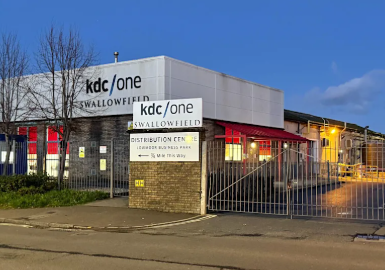
![End of an Era: KDC/One to Close 150-Year-Old Somerset Cosmetics Factory as Production Shifts to Scotland]()
End of an Era: KDC/One to Close 150-Year-Old Somerset Cosmetics Factory as Production Shifts to Scotland
-
![Sekisui Specialty Chemicals Has Announced a Global Price Increase]()
Sekisui Specialty Chemicals Has Announced a Global Price Increase
-
![The “Counter-Wind Ledger” of CHF 11.2 Billion: Sika Barely Grew in 2025—Yet Kept Taking Market Share]()
The “Counter-Wind Ledger” of CHF 11.2 Billion: Sika Barely Grew in 2025—Yet Kept Taking Market Share
-
![Chemours Sells Its Former Titanium Dioxide Site in Taiwan: Turning a “White Powder” Factory into “Wind Power Real Estate” for $360 Million—Buying Not Cash, But Breathing Room]()
Chemours Sells Its Former Titanium Dioxide Site in Taiwan: Turning a “White Powder” Factory into “Wind Power Real Estate” for $360 Million—Buying Not Cash, But Breathing Room
-
![Middle East Conflict Pushes Up Oil Prices as More Than 100 Chemical Raw Materials Rise in Concentration]()
Middle East Conflict Pushes Up Oil Prices as More Than 100 Chemical Raw Materials Rise in Concentration
-
![Melamine Prices Surge Over 10% as Upstream and Downstream Competition Intensifies in China]()
Melamine Prices Surge Over 10% as Upstream and Downstream Competition Intensifies in China
-
![Premium Global Chemical Sourcing Requests (3-7 Nov 2025)]()
Premium Global Chemical Sourcing Requests (3-7 Nov 2025)
-
![Change Rate Remains Positive, This Round of Refined Oil Retail Prices in China Is About to Increase]()
Change Rate Remains Positive, This Round of Refined Oil Retail Prices in China Is About to Increase
-
![Vendor Shipment Surge Halts Mid-October PC Price Increase]()
Vendor Shipment Surge Halts Mid-October PC Price Increase
-
![Premium Global Chemical Sourcing Requests (12 - 16 Jan, 2026)]()
Premium Global Chemical Sourcing Requests (12 - 16 Jan, 2026)