UBE Reform: 35 Billion Loss for New Beginnings
UBE Corporation has recently announced its detailed plans for structural reforms aimed at driving growth in its specialty chemicals business while addressing global environmental challenges. The company is expanding its specialty chemicals segment through investment while downsizing and restructuring its core business to adapt to the current market landscape.
To achieve sustainable growth, UBE Corporation is steadily implementing its specialty chemicals expansion strategy. This includes investments in production facilities for polyimides, separation membranes, ceramics (silicon nitride), and C1 chemicals. Recently, the company has also agreed to acquire the polyurethane systems business from Germany's Lanxess.
However, the challenges are significant. Due to oversupply from Chinese companies, especially in the Asian market, the current business environment is proving to be more difficult than expected. Consequently, UBE Corporation has decided to accelerate structural reforms, including downsizing through facility closures to ensure the company’s long-term health.
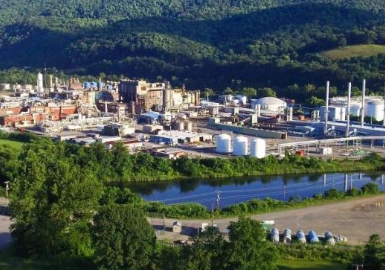
At the Ube Chemical Plant in Japan, production of ammonia and related products will cease by the end of FY2027, more than two years ahead of the original plan. Additionally, the production of caprolactam will be halted by the end of FY2026, further reducing capacity. Following these changes, the Ube Chemical Plant will become a hub for the production of specialty chemicals such as polyimides.
In Thailand, UBE Corporation will stop producing cyclohexanone, caprolactam, and ammonium sulfate by the end of FY2026, and will close one of its nylon polymer production lines. Nevertheless, its operations in Thailand will continue to produce composite materials and high-performance coatings.
In Spain, UBE Europe will continue to produce caprolactam and nylon polymers while planning to expand its production of eco-friendly products. The company holds a significant position in the nylon polymer market and is expected to cease the production of certain products promptly through agreements with clients.
With the reduction of production capacities for products like ammonia, caprolactam, and nylon polymers, UBE Corporation aims to mitigate the impact of market fluctuations on its performance. The company anticipates that by March 2025, impairment losses and related expenses will reach approximately 35 billion yen, with about 10 billion yen attributed to the Ube plant and 25 billion yen to the Thai production base.
By accelerating the closure of facilities with high greenhouse gas emissions, UBE Corporation expects to achieve its greenhouse gas reduction targets ahead of 2030, further promoting the company's sustainable development. Overall, this series of reforms offers hope for financial stability and profit improvement for UBE Corporation.

You May Interested In


High Quality β-Nicotinamide adenine dinucleotide CAS 53-84-9 NADwith ready stock and best price
$3E+1/UNIT FOB


2026-10-24
Trade Alert
Delivering the latest product trends and industry news straight to your inbox.
(We'll never share your email address with a third-party.)

Related News
-
India Launches Concentrated Anti-Dumping Actions Against Eight Categories of Chinese Chemicals, Covering APIs/Intermediates, Polyurethanes, and Refrigerants
-
Shandong’s Export Growth Is 2.8%; This Category Is 19%: Shandong Has a Chokehold on the Upstream of Global Manufacturing
-
Middle East Crude Exports Rebound Sharply in September as Saudi Arabia Returns to Market at 5.4 Million bpd
-
Saudi Aramco Weighs Discounts of Up to $9/Barrel on Oman STS Crude as Freight Costs Surge
-
Iran Closes Strait of Hormuz to All Vessels: Global Chemical Trade Gets Choked
-
Solvay's "Slimming Action": Soda Ash Production Capacity in Spain Slashed by 180,000 Tons, 77 Jobs to Go
-
U.S. Fighter Jet Strikes Commercial Cargo Ship in Gulf of Oman, Disabling Propulsion
-
Phillips 66 Locks Out 385 Workers at 275,000-bpd Bayway Refinery
-
Behind Japan's Tungsten Hexafluoride Crisis: Can China's Electronic Specialty Gases Seize a New Opportunity?
-
TSMC, Samsung, and SK Hynix Scramble for Electronic-Grade Hydrofluoric Acid as High-End Supply Tightens; Some Suppliers Raise Prices by 30% This Year
Recommend Reading
-
![Behind Arkema’s ¥430 Million Claim: A Patent War Over Acrylic Acid Is Tearing Off the “Technical Fig Leaf” of China’s Chemical Giants]()
Behind Arkema’s ¥430 Million Claim: A Patent War Over Acrylic Acid Is Tearing Off the “Technical Fig Leaf” of China’s Chemical Giants
-
![“Oil Sheikhs” Buy Germany’s Chemical Crown: A €14.7 Billion Green Gamble or a Power Play in the Age of Carbon Neutrality?]()
“Oil Sheikhs” Buy Germany’s Chemical Crown: A €14.7 Billion Green Gamble or a Power Play in the Age of Carbon Neutrality?
-
![From “10,000-Ton Bet” to “5,000-Ton Test”: Acore’s Polyetheramine Dilemma—Is This a Symptom of Industry Winter or the Prelude to Strategic Retreat?]()
From “10,000-Ton Bet” to “5,000-Ton Test”: Acore’s Polyetheramine Dilemma—Is This a Symptom of Industry Winter or the Prelude to Strategic Retreat?
-
![Celanese to Close Acetate Tow Plant in Lanaken, Belgium by 2026]()
Celanese to Close Acetate Tow Plant in Lanaken, Belgium by 2026
-
![Lianolong Bets Big on Electronic Adhesives with $50M Strategic Stake in Sidofu]()
Lianolong Bets Big on Electronic Adhesives with $50M Strategic Stake in Sidofu
-
![Production and Sales Pressure Eases; PC Prices Rise from Low Levels in Mid-January]()
Production and Sales Pressure Eases; PC Prices Rise from Low Levels in Mid-January
-
![This Week's Styrene Market First Declined Then Rose (11.10-11.14)]()
This Week's Styrene Market First Declined Then Rose (11.10-11.14)
-
![This week, the market price of pure benzene in China has fallen (6.15-6.18)]()
This week, the market price of pure benzene in China has fallen (6.15-6.18)
-
![Cost-side positives slow down; PP fluctuates within a range in mid-January]()
Cost-side positives slow down; PP fluctuates within a range in mid-January
-
![Caustic Soda Prices Weakly Trending This Week (Nov. 10–14)]()
Caustic Soda Prices Weakly Trending This Week (Nov. 10–14)