New Regulations for Interior Wall Paints Set to Enhance Safety by 2025
In response to the growing need for consumer safety and product quality, the State Administration for Market Regulation issued Announcement No. 9 last year regarding the mandatory certification management of commercial gas burners and other products. A significant addition to this announcement is the mandatory product certification (CCC) for water-based interior wall paints. This measure marks the beginning of a more stringent era of quality regulation in the paint industry, particularly in the vital area of water-based paints that affect residents' health.
Starting July 1, 2025, all water-based interior wall paints listed in the CCC certification directory must undergo stringent certification processes and display the CCC mark before they can be manufactured, sold, imported, or used in any business activities. This requirement not only imposes strict standards on paint manufacturers but also provides robust protection for consumers' health rights.
CCC certification, or China Compulsory Certification, is a system implemented by the government to safeguard consumer safety and enhance product quality management. The introduction of CCC certification for water-based interior wall paints is expected to significantly improve their quality and safety.
Which water-based interior wall paints will be affected? According to the market regulator's definition, the certification scope mainly includes paints made from synthetic resins and natural resin emulsions, mixed with additives and water, intended for application on cement-based and other non-metallic substrates (excluding wooden materials). This clear definition encompasses mainstream water-based interior wall paint products while excluding external wall paints, putties, decorative board coatings, and inorganic building powder paints, reflecting the precision and targeting of the policy.
For paint manufacturers, this regulation presents several challenges. Companies will need to invest more resources in product certification to meet CCC standards and enhance internal management to improve quality control in response to stricter market oversight. However, in the long run, the introduction of CCC certification is expected to bolster the competitiveness and sustainability of the entire paint industry, guiding it towards a more standardized and healthier future.
For consumers, the implementation of CCC certification will lead to safer and more reliable water-based interior wall paint products. Consumers should look for the CCC mark when selecting paint products, using it as a key indicator of quality and safety. Additionally, understanding the CCC standards will enhance consumer awareness and rights protection.
In summary, the enforcement of mandatory product certification for water-based interior wall paints by the State Administration for Market Regulation is a significant initiative with profound implications. It will enhance product quality and safety while promoting the paint industry towards a more regulated, healthy, and sustainable direction. Looking ahead, we anticipate the arrival of more high-quality, safe water-based interior wall paints in homes, bringing color and warmth to people's lives.

You May Interested In


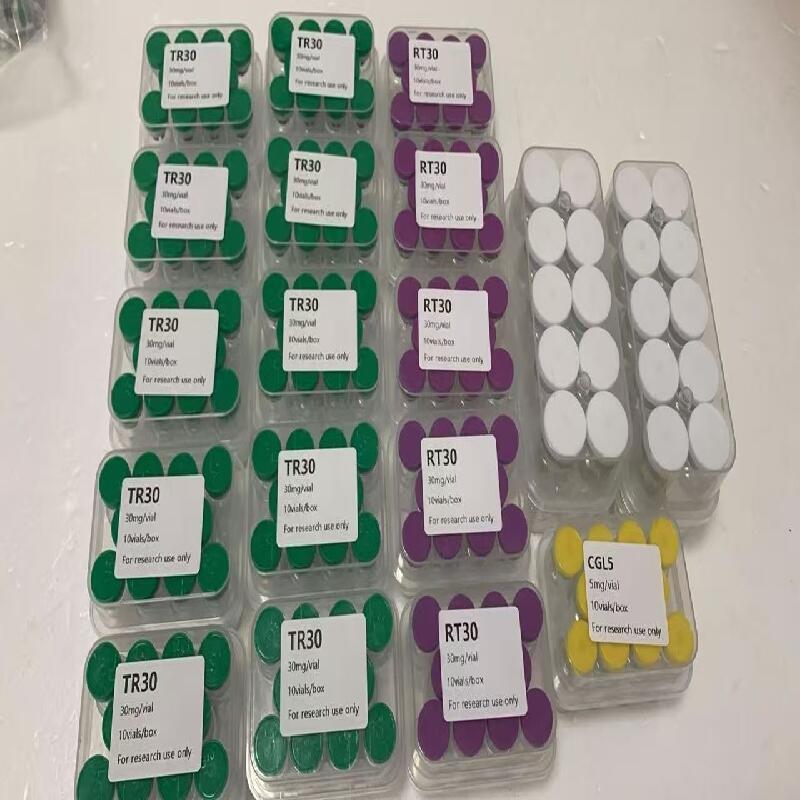
Glow70/KLOW80 99% China Peptides Warehouse Direct Delivery Lyophilized Powder in Stock
$1.8E+2/UNIT FOB


2026-09-05
Trade Alert
Delivering the latest product trends and industry news straight to your inbox.
(We'll never share your email address with a third-party.)

Related News
-
2026 Q1 Chemical Giant Earnings: Supply Contraction, Flat Demand, Full-Scale "Defense Priority"
-
South Korea and Japan Launch Energy Supply Chain Cooperation as Hormuz Risks Grow
-
Pakistan Launches Successive Anti-dumping Investigations against Chinese Products, Involving Soda Ash, Ibuprofen and Other Raw Materials
-
FDA Color Policy Uncertainty Opens a New Chapter for Food Ingredient Reform
-
FDA’s Warning to Compounders Raises the Stakes for API and Excipient Suppliers
-
FDA Lifts Administrative Stay, Restoring Red No. 3 Ban Timeline for Food and Ingested Drugs
-
Brazil Expands Chemical Tax Breaks as India’s Crop Protection Industry Warns of a 25% Cost Increase
-
After Semaglutide Patent Expiry in India, the Price System Has Been Restructured as More Than 40 Drugmakers Enter the Competition
-
South Korea’s Largest Petrochemical Hub Moves to Cut Cracker Capacity by 40%
-
China’s Hybio Takes Generic Tirzepatide to FDA: Lilly’s GLP-1 Fortress Gets a Warning Shot
Recommend Reading
-
![Medicare’s $50 GLP-1 Door Opens: Weight-Loss Drug Demand Just Got Bigger]()
Medicare’s $50 GLP-1 Door Opens: Weight-Loss Drug Demand Just Got Bigger
-
![Pesticide Market in Limbo: Prices Plunge Amid Weak Demand and Overcapacity—Only a Few Hold Firm]()
Pesticide Market in Limbo: Prices Plunge Amid Weak Demand and Overcapacity—Only a Few Hold Firm
-
![Refrigerant Prices Peak! Domestic Quotas Tighten, U.S. and U.K. Policies Add Fuel to the Fire]()
Refrigerant Prices Peak! Domestic Quotas Tighten, U.S. and U.K. Policies Add Fuel to the Fire
-
![WACKER’s 2025 Loss Reaches €805 Million as the PACE Cost-Cutting Plan Becomes the Key Variable for 2026]()
WACKER’s 2025 Loss Reaches €805 Million as the PACE Cost-Cutting Plan Becomes the Key Variable for 2026
-
![关于将4-amino-1-boc-piperidine、tert-buty 4-aminopiperidine-1-carboxylate产品列入《ECHEMI平台禁限售商品目录》的公告 Announcement on Including 4-amino-1-boc-piperidine and tert-buty 4-aminopiperidine-1-carboxylate in the Announcement on the List of Prohibited Sales of Prohibited and Controlled Items on ECHEMI]()
关于将4-amino-1-boc-piperidine、tert-buty 4-aminopiperidine-1-carboxylate产品列入《ECHEMI平台禁限售商品目录》的公告 Announcement on Including 4-amino-1-boc-piperidine and tert-buty 4-aminopiperidine-1-carboxylate in the Announcement on the List of Prohibited Sales of Prohibited and Controlled Items on ECHEMI
-
![This Week Sodium Metabisulfite Prices Stabilize in China (10.20-10.24)]()
This Week Sodium Metabisulfite Prices Stabilize in China (10.20-10.24)
-
![BDO market in China operates steadily]()
BDO market in China operates steadily
-
![This Week's Activated Carbon Prices Remain Stable (10.20-10.24)]()
This Week's Activated Carbon Prices Remain Stable (10.20-10.24)
-
![This week, isopropanol market prices slightly decreased (10.20-10.24) in China]()
This week, isopropanol market prices slightly decreased (10.20-10.24) in China
-
![China's urea market shows a strong upward trend (10.20-10.24)]()
China's urea market shows a strong upward trend (10.20-10.24)