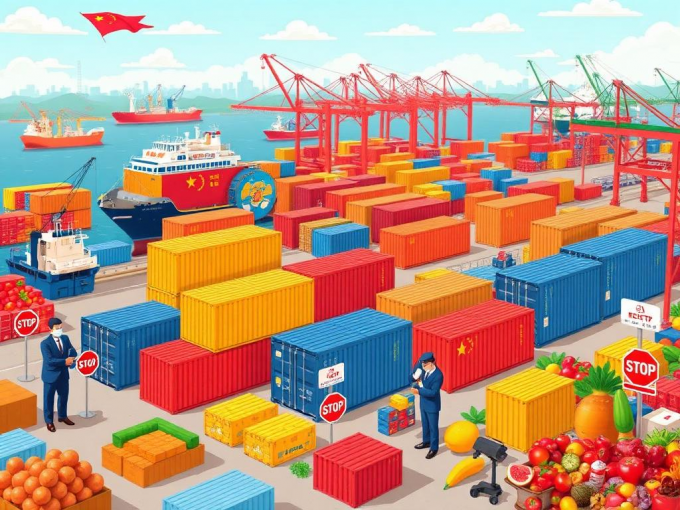
On September 2, 2026, South Korea and Japan held their first formal meeting in Tokyo to implement a bilateral supply-chain partnership, agreeing to deepen cooperation on emergency supplies of LNG, crude oil and petroleum products as renewed instability around the Strait of Hormuz puts Asian energy security back under pressure.
The timing is difficult to ignore.
Only a day earlier, two VLCCs carrying Saudi crude were attacked while exiting Hormuz. Shipping traffic through the strait remains sharply reduced, while renewed U.S.-Iran fighting has pushed oil prices higher.
For Japan and South Korea, disruptions in Middle Eastern energy flows are particularly important.
Both countries operate large refining, petrochemical and manufacturing industries but rely heavily on imported energy.
That makes emergency access to LNG, crude and petroleum products more than an energy-policy issue. It also affects refineries, crackers and downstream manufacturers.
According to South Korea's Industry Ministry, the two countries agreed to deepen cooperation on the stable emergency supply of LNG, crude oil and petroleum products.
The meeting also went beyond immediate energy security.
Seoul and Tokyo exchanged views on coordinating their responses to carbon emissions rules, supply-chain due diligence requirements and the European Union's carbon tariff policies.
That combination is significant.
Asian chemical and industrial companies are increasingly dealing with two supply-chain challenges at the same time.
The first is physical: Can raw materials and energy reach plants reliably?
The second is regulatory: Can those same supply chains satisfy tightening carbon, traceability and due-diligence requirements in export markets?
The current Hormuz crisis makes the first problem particularly visible.
Qatari and UAE LNG cargoes have already resorted to unusual ship-to-ship transfers outside the strait before continuing to buyers in India and Japan. Asian spot LNG prices have climbed to $23.20/mmBtu, more than twice their pre-conflict level.
Japan and South Korea therefore have an obvious incentive to cooperate.
Closer coordination could help both countries respond more effectively during shortages, while potentially improving communication between governments, importers, refiners and energy companies when shipping routes are disrupted.
The September 2 meeting does not amount to a new joint strategic petroleum reserve or an automatic energy-sharing mechanism.
It is the first meeting to implement their supply-chain partnership, and many operational details remain to be developed.
But the direction is notable.
For decades, Japan and South Korea have competed for many of the same imported energy resources and export markets. Increasing geopolitical and regulatory pressure is now creating more reasons for the two industrial economies to coordinate.
For chemical producers in Northeast Asia, that cooperation is worth watching.
A prolonged disruption to Middle Eastern crude or LNG would not stop at the refinery gate. It would eventually affect feedstock costs, utility prices, cracker economics and downstream chemical competitiveness.
The new Japan-Korea dialogue is therefore as much about industrial supply-chain resilience as it is about energy.