Chemical raw materials fell collectively! The secret of this round of price increases...
Yesterday (19th), Wanhua Chemical’s quotation of n-butanol was 15,300 CNY/ton in North China, 15,600 CNY/ton in East China, and 15,800 CNY/ton in South China, both lower than the previous week’s quotation by 1,000 CNY/ton. The domestic market price of n-butanol is 15091.67 CNY/ton, down by 1,275 CNY/ton from the previous week.
Since the beginning of the year, commodities have continued to rise, and the chemical industry has continued the rise since the second half of last year, but this situation has quietly changed recently. After the Ching Ming Festival, the National Development and Reform Commission took the lead, saying that the recent increase in international commodity prices was mainly due to short-term changes in supply and demand and did not have the basis for long-term increases. Subsequently, the Ministry of Industry and Information Technology, the State-owned Assets Supervision and Administration Commission of the State Council, and the Bureau of Statistics successively stated that the price of bulk commodities did not have the basis for long-term increase. Then the market of some products in the chemical industry took a sharp turn, and chemical raw materials such as epoxy resin, Acetone and butylene glycol fell by nearly 5000 CNY/ton.
On the 19th, acetone was quoted at RMB 6,925/ton, down RMB 1,325/ton from the beginning of the month, or 16.06%.
On the 19th, butanediol was quoted at RMB 23,900/ton, down RMB 3,625/ton from the beginning of the month, a decrease of 13.17%.
On the 19th, the quotation of epoxy resin was RMB 32,433.33/ton, a decrease of RMB 4,116.67/ton from the beginning of the month, a decrease of 12.93%.
On the 19th, TDI quoted 14166.67 CNY/ton, down 1500 CNY/ton from the beginning of the month, a decrease of 9.57%.
On the 19th, the quotation of epichlorohydrin was 13,833.33 CNY/ton, a decrease of 1,300 CNY/ton from the beginning of the month, a decrease of 8.59%.
On the 19th, the price of isopropanol was 8533.33 CNY/ton, a decrease of 733.34 CNY/ton from the beginning of the month, a decrease of 7.91%.
On the 19th, the price of polymeric MDI was 17,550 CNY/ton, a decrease of 1,325 CNY/ton from the beginning of the month, a decrease of 7.02%.
On the 19th, the price of n-propanol was 8833.33 CNY/ton, down 500 CNY/ton from the beginning of the month, a decrease of 5.36%.
On the 19th, acetic anhydride was quoted at RMB 11,700/ton, down RMB 633.33/ton from the beginning of the month, a decrease of 5.14%.
On the 19th, Adipic Acid was quoted at RMB 10,400/ton, down RMB 540/ton from the beginning of the month, or 4.94%.
On the 19th, bisphenol A was quoted at RMB 26,700/ton, a decrease of RMB 1,080/ton from the beginning of the month, a decrease of 3.89%.
On the 19th, propylene oxide was quoted at RMB 18,266.67/ton, a decrease of RMB 633.33/ton from the beginning of the month, a decrease of 3.35%.
On the 19th, organic silicon was quoted at RMB 26,800/ton, a decrease of RMB 800/ton from the beginning of the month, or 2.90%.
The chemical industry market is magical, new highs continue
Many people wonder if the market in the chemical industry is really so magical. The National Development and Reform Commission, the Ministry of Industry and Information Technology and other national ministries and commissions urgently stepped on the "brake" on domestic commodity prices. After that, we saw the prices of some raw materials decline to varying degrees. This can be said to be a little comfort for downstream users.
However, looking at the entire chemical industry, although the prices of some products have declined, they are still operating at a high level compared to previous years. Especially for industries with high production capacity such as titanium dioxide, it has been rising for 11 consecutive months. Haifengxin and China Nuclear Power Titanium dioxide, Jiangsu Zhentai, Ananda, Ningbo Xinfu, Huiyun Titanium and other titanium dioxide companies have started the fifth round of price increases during the year. At present, some companies are quoting 23,000 CNY/ton, a record high; epoxy resin Hit historical highs; solid resin quotations hit a 15-year high; liquid resin quotations hit a 10-year high; styrene hits a new high since September 2018...
Regarding the recent decline in bulk raw materials, many people in the industry believe that it is due to the continued weakness of downstream demand and the frequent voices of major ministries and commissions. However, in the eyes of Coatings Purchasing Network, this is only part of the factor. The main reason for this has a lot to do with the current structure of my country's chemical industry chain. Increasing prices and falling prices are not simple market behaviors, and there are huge risks hidden in them.
Secrets of price hikes in the chemical industry
Since the second half of 2020, the prices of various domestic chemical products have risen one after another. After nearly a year of rising, we found that this round of increase in raw material prices can basically be divided into three parts. The first : High-end raw material enterprises with technical barriers, mainly foreign-funded enterprises. Second: Oligopoly companies with "monopoly" advantages, such as Wanhua, Lomon Baili, etc. Third: Small and medium-sized enterprises that follow the trend and increase prices are mainly concentrated in small and medium-sized enterprises in the industry, and follow large companies to increase prices.
1. High-end raw material companies represented by a large number of global chemical giants such as DuPont, BASF, Eastman, and WACKER have carried out rounds of price increases, involving high-end imported titanium dioxide and p-xylene (PX) Industrial chain, methanol, ethylene glycol, organic pigments, acrylic, styrene, etc. Because of the many technical barriers, the performance of domestic raw material products is completely inferior to the effect of imported products, and it is difficult to find substitutes in the domestic market. Therefore, many companies have no choice but to accept the price increase of foreign-funded enterprises.
According to incomplete statistics from the Paint Purchasing Network, my country’s chemical industry has import requirements for more than 40 kinds of raw materials, of which some of the chemical raw materials upstream of the petroleum industry chain such as propylene, pure benzene, ethylene, styrene, phenol, etc. are in the forefront. 10,000 tons/year. According to data from the Ministry of Industry and Information Technology, among the key basic chemical materials, 32% of the varieties in my country are still blank, and 52% are still dependent on imports. Such as high-end electronic chemicals, high-end functional materials, high-end polyolefins, etc., are difficult to meet economic and people's livelihood needs.
2. In addition, there are domestic "special" products, highly "monopolistic" products, such as MDI, TDI, adipic acid, etc., these products are mostly oligopoly structure, the top few leading companies in the industry control The resources of the entire industry also occupy a large market share and can intervene in market conditions and prices. The price increase of this type of product is no longer determined by changes in market demand, but by major companies.
Titanium dioxide: my country's titanium dioxide production capacity reaches 4.17 million tons. In terms of production capacity, the market share of my country's titanium dioxide industry is the largest by Lomonbali. In recent years, with Lomonbali’s acquisitions of small and medium-sized titanium dioxide companies, it will already occupy the market in 2020. Domestic market share of 24.22%. China Nuclear Titanium Dioxide ranks second with a total production capacity of 340,000 tons, accounting for 8.39% of the domestic market share.
MDI: my country's MDI production capacity is 342 tons, of which Wanhua Chemical has the highest proportion, accounting for 52.63% of the national MDI market share; Shanghai Lianheng accounts for 17.25%.
TDI: my country's TDI production capacity is 1.34 million tons, of which Wanhua Chemical has the highest proportion, accounting for 22% of the national TDI market share; Cangzhou Dahua accounts for about 12% of the domestic production capacity.
PTA: Domestic production capacity is 50.62 million tons/year, Hengli Petrochemical is 11.6 million tons/year, Rongsheng Petrochemical is 7.04 million tons/year, Hengyi Petrochemical is 8.83 million tons/year, Fu Chemical Trade is 4.5 million tons/year, Xinfengming 4.4 million tons/year, the top five in the industry accounted for 71.85%.
Adipic acid: my country’s top five adipic acid industry accounts for 77.6% of production capacity. Chongqing Huafeng (23.5%), Shenma Group (28.9%), Jiangsu Haili (11%), Shandong Haili ( 8.3%), Hualu Hengsheng (5.9%) and other large enterprises as the representative of a multi-strong oligopoly pattern.
3. Except for technical barrier products and "monopolistic" fields, the rapid increase in the prices of most of the remaining raw materials is completely a state of following the trend, and most of these products are low-end products, no matter in In the domestic market or the international market, there is almost no competitiveness. When the market pulls back, this type of enterprise is the first to be affected and the easiest to be replaced.
This round of chemical industry market prices have risen so sharply, mainly due to continued currency loosening and the impact of foreign epidemics. Many foreign production companies have been forced to suspend production and production is obviously insufficient, and they have to import domestic products. The "water release" cannot last forever, and the epidemic will come to an end. When that day arrives, the market will eventually return to rationality, and the demand in foreign markets will slow down. What will we do at that time? If our chemical industry still does not have "fist" products, we can only rely on "high imitation" to develop. Under this "deformed" model, the chemical industry will enter the abyss.

You May Interested In


High Quality β-Nicotinamide adenine dinucleotide CAS 53-84-9 NADwith ready stock and best price
$3/UNIT FOB


2026-10-10
Trade Alert
Delivering the latest product trends and industry news straight to your inbox.
(We'll never share your email address with a third-party.)

Related News
-
Global Trade Data for Epoxy Resin in 2025 Released: Asia Accounted for $640 Million in Imports, Vietnam Emerges as Top Buyer
-
ECHEMI High Quality Inquiries (10-14 Aug)
-
Syensqo expands its bio-based product portfolio with new MTM epoxy resin
-
Performance Overview of Epoxy Resin Manufacturers in China
-
Review of Last Week's Epoxy Resin Market Trends (August 21-25)
-
Environmental Impact Assessment Public Notice for a 60,000-ton Per Year Polyurethane and Epoxy Resin Materials Project
-
Total investment: 1.55 billion! Projects with an annual output of 200,000 tons of epoxy resin will be put into trial production at the end of June
-
200000 tons/year electronic grade epoxy resin project publicity!
-
Over capacity, Olin shut down the epoxy resin plant!
-
Epoxy Resin Coatings Market Size in 2023-2029: Competitive landscape and Leading Country
Recommend Reading
-
![India Swings the Tariff Axe at Made-in-China: Epoxy Resins Are Just the Beginning—The Road for Chinese Chemicals Abroad Is No Longer Smooth]()
India Swings the Tariff Axe at Made-in-China: Epoxy Resins Are Just the Beginning—The Road for Chinese Chemicals Abroad Is No Longer Smooth
-
![Japan Begins Construction of the World’s Largest Commercial Liquid Hydrogen Receiving Terminal]()
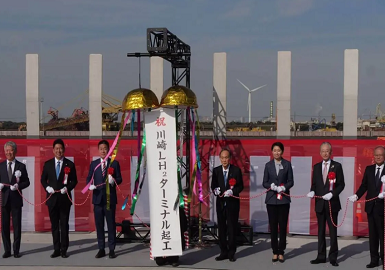
Japan Begins Construction of the World’s Largest Commercial Liquid Hydrogen Receiving Terminal
-
Japanese Plastics Market Accelerates its Shifts to Recycled Materials and Bioplastics
-
![Chemicals Take the Hit as China's Markets Thin Out — Wanhua, Juhua Chemical Slide Over 2%]()
Chemicals Take the Hit as China's Markets Thin Out — Wanhua, Juhua Chemical Slide Over 2%
-
![Australia Approves Lab-Grown “Milk Sugar” for Babies—A Breakthrough in Infant Nutrition]()
Australia Approves Lab-Grown “Milk Sugar” for Babies—A Breakthrough in Infant Nutrition
-
![Lithium carbonate enters a tight balance phase, with prices steadily rising]()
Lithium carbonate enters a tight balance phase, with prices steadily rising
-
![Supply and Demand Improve; Early Month Sees Rising Prices for n-Butanol Market]()
Supply and Demand Improve; Early Month Sees Rising Prices for n-Butanol Market
-
![Supply and Demand Stable, Formic Acid Prices Running Steadily]()
Supply and Demand Stable, Formic Acid Prices Running Steadily
-
![On January 30, the price of pure benzene in China increased]()
On January 30, the price of pure benzene in China increased
-
![Polyester Bottle Flakes in January Show Initial Weakness, Then Strengthen, Climbing to a Peak at Month’s End Before Reversing]()
Polyester Bottle Flakes in January Show Initial Weakness, Then Strengthen, Climbing to a Peak at Month’s End Before Reversing