Calcium Sulfate: Properties, Construction Applications & Safety Tips
Calcium sulfate has become a building material that engineers and contractors rely on daily. Its chemistry makes it predictable and easy to work with, while its adaptability allows it to appear in products ranging from drywall panels to self-leveling flooring. Understanding the calcium sulfate properties and construction applications is useful for project planning, but it is just as important to follow good safety practices when handling the substance in powder or board form.
Chemical Profile and Key Properties
Calcium sulfate (CaSO₄) is widely recognized in two natural forms: gypsum, which contains water molecules in its structure, and anhydrite, which does not. This small chemical difference influences how each form behaves when exposed to moisture and heat. Gypsum, for example, sets quickly when mixed with water, while anhydrite requires more controlled conditions.
Below is a concise overview of its main characteristics:
| Characteristic | Details |
|---|---|
| Chemical Symbol | CaSO₄ |
| Forms Found | Gypsum (CaSO₄·2H₂O) and Anhydrite (CaSO₄) |
| Water Solubility | Low, but sufficient for industrial use |
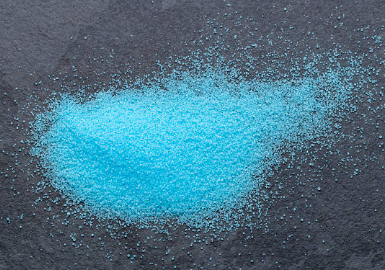
| Appearance | White to off-white crystalline solid |
| Heat Behavior | Stable at normal temperatures, loses water when heated strongly |
Because of these stable properties, calcium sulfate has been favored in construction for centuries, and it remains a mainstay in both traditional and modern building methods.
Construction Applications
One reason calcium sulfate remains so important is its ability to adapt to different roles in construction. From speeding up plasterwork to regulating cement setting times, it ensures projects can be completed efficiently and safely. Common calcium sulfate properties and construction applications include:
- Plaster Finishes: Gypsum plaster sets quickly and delivers smooth interior walls.
- Drywall Boards: Lightweight panels that combine strength with fire resistance.
- Cement Additive: Added to Portland cement to prevent flash setting and improve workability.
- Floor Screeds: Self-leveling calcium sulfate screeds provide a flat, durable base for floor coverings.
- Acoustic and Thermal Control: Gypsum-based products help improve sound insulation and energy efficiency indoors.
Another advantage is sustainability. Many gypsum boards can be recycled, and the production process has a comparatively lower environmental footprint than some alternative materials.
Safe Handling and Precautions
Although calcium sulfate is not classified as hazardous, it does present certain occupational risks if mishandled. Dust particles can irritate eyes, skin, and respiratory systems, especially in poorly ventilated environments. For this reason, workplace safety standards encourage consistent protective measures:
- Protective Gear: Use safety goggles, gloves, and masks to reduce exposure to dust.
- Ventilation: Work areas should have adequate air circulation or dust extraction systems.
- Hygiene: Wash hands and skin after direct contact to avoid dryness or irritation.
- Storage: Keep the material dry, since moisture causes clumping and premature setting.
- First Aid: If dust gets into eyes, rinse thoroughly with water; seek medical advice if irritation continues.
Guidance from organizations such as OSHA and NIOSH supports these practices, emphasizing prevention as the best safeguard against workplace health issues.
Final Thoughts
Calcium sulfate is not just another mineral—it is a foundation of modern construction. Its stable chemistry, adaptable applications, and reliable performance make it indispensable. Yet, for all its benefits, professionals should not overlook safety. By combining technical knowledge of calcium sulfate properties and construction applications with careful handling, the industry can continue to build structures that are both durable and safe for the people who create them.
Looking for chemical products? Let suppliers reach out to you!
You May Interested In


Glow70/KLOW80 99% China Peptides Warehouse Direct Delivery Lyophilized Powder in Stock
$169/UNIT FOB


2026-10-23
Trade Alert
Delivering the latest product trends and industry news straight to your inbox.
(We'll never share your email address with a third-party.)

Related News
-
Calcium Sulfate: Properties, Uses, and Applications
-
What is a Surfactant? (Definition, Types, and How They Work)
-
Oxalic Acid: Acidity (pKa), Sources, and Kidney Stone Risk
-
What is the Formula for Ammonia? (NH3 Structure & Properties)
-
What are Acetoglycerides? (Definition & Food Industry Uses)
-
What is Aconitic Acid? (Chemistry & Occurrence)
-
Key Properties and Applications of Para-Nitrophenol
-
Understanding Reactions Between Silver and Chloride
-
Acetophenone: Properties, Uses, and Applications
-
Acetonitrile: Properties, Uses, and Safety
Recommend Reading
-
![Hydrogen Peroxide Formula: H2O2 Concentration & Safety]()
Hydrogen Peroxide Formula: H2O2 Concentration & Safety
-
![Imidazole: Heterocyclic Chemistry, Antifungal Drugs, and Buffer Systems]()
Imidazole: Heterocyclic Chemistry, Antifungal Drugs, and Buffer Systems
-
![Uses and Properties of Copper Acetate]()
Uses and Properties of Copper Acetate
-
![Sodium Pentothal: Medical Applications and Safety]()
Sodium Pentothal: Medical Applications and Safety
-
![Sodium Benzoate (E211): Safety, Benzene Risk, and Preservative Uses]()
Sodium Benzoate (E211): Safety, Benzene Risk, and Preservative Uses
-
![November Cost and Demand Game, Polyester Bottle Chip Prices Fluctuate]()
November Cost and Demand Game, Polyester Bottle Chip Prices Fluctuate
-
![On March 18, the Chinese epichlorohydrin market continued to decline]()
On March 18, the Chinese epichlorohydrin market continued to decline
-
![November hydrogen peroxide market shows weak downward trend in China]()
November hydrogen peroxide market shows weak downward trend in China
-
![This Week PVC Market Stabilized (11.24-28)]()
This Week PVC Market Stabilized (11.24-28)
-
![Shipping Pressure Continues, ABS Market Prices Still Decline]()
Shipping Pressure Continues, ABS Market Prices Still Decline