Application and Advantages of Sunflower Lecithin as an Emulsifier
Sunflower lecithin as an emulsifier is great. Emulsifiers are a crucial functional additive in food, pharmaceuticals, cosmetics, and industrial production. Their main function is to stabilize the oil-water system. They allow the two phases to mix uniformly, and they can prevent stratification and precipitation, helping substances with different properties to coexist stably. Among many emulsifiers, phospholipids have received widespread attention due to their natural sources and excellent emulsifying properties. Among them, sunflower lecithin is a high-quality plant-based emulsifier. It is gradually replacing soy lecithin, and more than that, it is favored by the food and health industries. This article will discuss "Sunflower Lecithin as an Emulsifier".
The Source And Composition Of Sunflower Lecithin
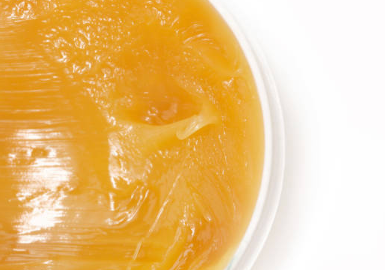
Sunflower lecithin is a natural phospholipid extracted from sunflower seeds. The main components are phosphatidylcholine (PC), phosphatidylethanolamine (PE), and phosphatidylinositol (PI).
Compared with soybean lecithin, the process of extracting it is usually with cold pressing or physical extraction methods instead of chemical solvents to ensure higher purity.
In addition, it does not contain genetically modified ingredients and does not cause soy-related allergic reactions. It has a high content of phosphatidylcholine and good solubility. The above factors combined make it an ideal and safe natural emulsifier choice.
Emulsification Mechanism
The emulsifying ability of sunflower lecithin mainly comes from its parental molecular structure. It has both hydrophilic and hydrophobic parts, which can form a stable layer at the oil-water interface and reduce interfacial tension. It can evenly mix incompatible liquids and maintain stability, which can prevent emulsion delamination as well.
The hydrophilic end (phosphate group) can bind with water, while the hydrophobic end (fatty acid chain) can bind with oil. In addition, phospholipids can also work synergistically with proteins or other surfactants to improve emulsion stability. Sunflower lecithin can maintain a good emulsification effect under different pH and temperature conditions. That property makes it widely used in industries such as food, medicine, and cosmetics.
Main Application Areas
Sunflower lecithin is widely used in the food industry. It has good characteristics such as emulsification, solubilization, and anti-caking. In baked goods, it can improve the dough’s extensibility, enhance bubble stability, and make cakes and bread softer.
In terms of chocolate and candy, it can reduce viscosity, improve fluidity, and reduce cocoa butter crystallization. It can improve the product’s uniformity and smoothness. It enhances emulsion stability and prevents oil-water separation in dairy products and plant-based beverages. In terms of instant powdered food, it can improve the powder’s dispersibility and solubility and then make it more soluble in water.
In the field of medicine, sunflower lecithin is used in liposome formulations. It is used as a drug carrier to enhance the drug’s solubility and bioavailability. It can also enhance fat-soluble drugs in soft capsules and improve absorption efficiency. In terms of injectable emulsifiers, they play an emulsifying role in intravenous formulations. It increases drug distribution uniformity and improves drug efficacy.
Sunflower lecithin is an ideal ingredient in the cosmetics industry. It can be used in skin care products (face cream, essence) to promote the mixing of water and oil and then improve the absorption effect on the skin. It enhances moisturizing performance in shampoo and conditioner, making hair smoother. In cosmetics products (lipstick, foundation make-up), it improves the product texture, so that it is made easier to apply and longer lasting.
In industry, it is used in coatings and inks to improve dispersibility, prevent pigment aggregation, and enhance pigment uniformity. It can also be used as a feed additive, which can improve fats and nutrients’ digestion and absorption and enhance the efficiency of animal nutrient absorption.
The Advantages Of Sunflower Lecithin
One of the biggest advantages of sunflower lecithin compared to soybean lecithin is that it is natural and non-GMO, which makes it suitable for consumers with organic food and special dietary needs.
Soy lecithin may cause allergic reactions in some populations, while sunflower lecithin does not contain soy protein, which makes it a safer alternative.
The phosphatidylcholine (PC) content in sunflower lecithin is usually higher than that in soybean lecithin. That has better nutritional value in promoting brain health, improving memory, and protecting the liver.
Sunflower lecithin has a mild odor and strong palatability. It is suitable for use in food and health products without affecting the flavor of the final product.
Sunflower cultivation has a relatively small impact on the environment, and its extraction process does not involve solvent residues. These properties are more in line with environmental protection and sustainable development requirements.
Future Development Trends
With the increasing demand for healthy food and attention to genetically modified foods among consumers, the market demand for sunflower lecithin is expected to continue to grow.
Future research may focus on improving extraction techniques to enhance phospholipid purity and functionality. Develop composite emulsion systems to enhance synergistic effects with other emulsifiers. Expand application areas, such as wider applications in biomedical and functional foods.
Conclusion
Sunflower lecithin as an emulsifier is a meaningful topic. Sunflower lecithin is a natural, safe, and efficient emulsifier that has shown great potential in multiple fields, such as food, pharmaceuticals, and cosmetics. Its advantages of non-GMO, low allergenicity, and high nutritional value make it a high-quality alternative to traditional soy lecithin. In the future, with the advancement of extraction technology and the expansion of application scenarios, the influence of sunflower lecithin in the global market will be further enhanced.
Looking for chemical products? Let suppliers reach out to you!
You May Interested In


Glow70/KLOW80 99% China Peptides Warehouse Direct Delivery Lyophilized Powder in Stock
$169/UNIT FOB


2026-10-23
Trade Alert
Delivering the latest product trends and industry news straight to your inbox.
(We'll never share your email address with a third-party.)

Related News
-
India Unleashes a Triple-Action Defender: Parijat Introduces NILANIX SC into the Rice Battlefront
-
France’s Vineyards Find a New Shield: Eden’s Mevalone Enters the Frontline of a Changing Fungicide Era
-
Sulfuric Acid Reactions: With Sugar (Dehydration), Water, and Metals
-
What is Serine? (Amino Acid Function & Sources)
-
Hydrogen Peroxide Formula: H2O2 Concentration & Safety
-
Imidazole: Heterocyclic Chemistry, Antifungal Drugs, and Buffer Systems
-
ADAMA Targets Sucking Pests with Ateka
-
EFSA Reviews Clodinafop Risk
-
Methylamine: Chemical Properties, Synthesis, and Industrial Applications
-
Melamine: Toxicity, Industrial Resin Uses, and Food Safety Scandals
Recommend Reading
-
![Paraffin Wax vs. Beeswax: Candles, Cosmetics, and Industrial Applications]()
Paraffin Wax vs. Beeswax: Candles, Cosmetics, and Industrial Applications
-
![Lanolin: Benefits for Skin, Cosmetic Uses, and Allergy Risks]()
Lanolin: Benefits for Skin, Cosmetic Uses, and Allergy Risks
-
![Sodium Hydroxide (Caustic Soda): Soap Making, Cleaning, and pH Control Guide]()
Sodium Hydroxide (Caustic Soda): Soap Making, Cleaning, and pH Control Guide
-
![Applications and Safety of Sodium Dichromate]()
Applications and Safety of Sodium Dichromate
-
![Uses and Benefits of Sodium Selenite]()
Uses and Benefits of Sodium Selenite
-
![In the first half of January, the Chinese propylene oxide market showed an upward trend]()
In the first half of January, the Chinese propylene oxide market showed an upward trend
-
![Premium Global Chemical Sourcing Requests (10-14 Jan, 2026)]()
Premium Global Chemical Sourcing Requests (10-14 Jan, 2026)
-
![Early January Cyclohexanone Market in Shandong Fluctuates]()
Early January Cyclohexanone Market in Shandong Fluctuates
-
![2025 Review and 2026 Outlook of the Methanol Market in China]()
2025 Review and 2026 Outlook of the Methanol Market in China
-
![Geopolitical Premium Fades and Inventory Pressures Weigh on Oil Prices, Ending Five-Day Rally]()
Geopolitical Premium Fades and Inventory Pressures Weigh on Oil Prices, Ending Five-Day Rally