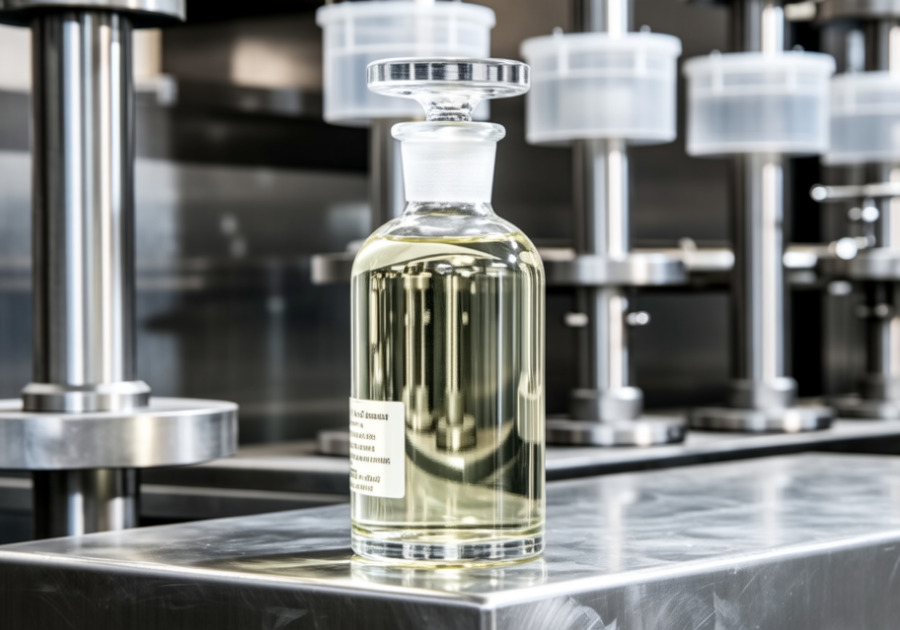
Coragen eVo Insecticide Approved in California and Arizona Enhances Pest Control for Specialty Crops
FMC Corporation has announced that its Coragen eVo insecticide has been registered for use in California and Arizona, targeting key specialty crops such as tomatoes, leafy greens, cabbage, and fruit vegetables. Powered by a high-concentration formulation of chlorantraniliprole, Coragen eVo provides fast and long-lasting control of lepidopteran pests.
The active ingredient concentration in Coragen eVo is three times higher than that of the original Coragen insecticide, while requiring lower application rates. With a standard dosage of 1.7 ounces per acre, users only need 1 quart for 20 acres, significantly improving convenience and efficiency. Additionally, the product can be easily mixed with crop protection products, nutrients, and adjuvants, making it a highly flexible solution for Integrated Pest Management (IPM) programs.
According to FMC’s U.S. Regional Technical Sales Manager, Coragen eVo offers growers a proven tool for effective pest control, ensuring long-term stability in managing harmful insects. Its enhanced formulation reduces operational costs, minimizes application rates, and maintains robust, residual efficacy.
When used as directed, Coragen eVo delivers rapid knockdown of target pests and provides extended residual control. The product is environmentally friendly, having minimal impact on beneficial insects, making it an ideal candidate for IPM strategies. Furthermore, Coragen eVo is fully compatible with other FMC products, such as Avaunt eVo, Exirel, and Verimark insecticides, allowing growers to create a comprehensive pest management strategy.

You May Interested In


High Quality β-Nicotinamide adenine dinucleotide CAS 53-84-9 NADwith ready stock and best price
$3/UNIT FOB


2026-10-16
Trade Alert
Delivering the latest product trends and industry news straight to your inbox.
(We'll never share your email address with a third-party.)

Related News
-
EU Low-Value Parcel Rules Could Disrupt Chemical Sample Flows
-
EU May Build Industry-Level Trade Barriers Against Chinese Chemicals
-
What Can $3.4 Billion Buy? Shin-Etsu Chemical’s Answer: Upstream Control of PVC
-
EU Greenlights Four GM Crops—But Only at the Border
-
The $6 Billion Gold Rush: Generic Semaglutide Set to Reshape Global Pharma After Patent Cliff
-
Domo Chemicals’ German Subsidiary Insolvencies: Energy Costs, Weak Demand and Chinese Nylon Competition
-
Carbon Fiber’s Price Surge Signals a New Era of Strategic Value—and Supply Tension
-
Sherwin-Williams Surpasses $100 Billion in Market Cap: Is This the ‘Apple Moment’ for Paint, or America’s Industrial ‘One Hundred Years of Solitude’?
-
The Carbon Tollbooth Is Open: EU’s CBAM Ushers in a New Era of Climate-Linked Trade
-
“Anti-Overcapacity” Backfires: China’s Chemical Industry Trapped in a Hell of Its Own Making—and Global Pushback
Recommend Reading
-
![South Korea Retires 1.39 Million Tonnes of Ethylene Capacity as Northeast Asia’s Petrochemical Reset Turns Real]()
South Korea Retires 1.39 Million Tonnes of Ethylene Capacity as Northeast Asia’s Petrochemical Reset Turns Real
-
![US-Iran Conflict Escalates Again as Oil Tops $90 and Petrochemical Feedstock Risks Return]()
US-Iran Conflict Escalates Again as Oil Tops $90 and Petrochemical Feedstock Risks Return
-
![India Launches Concentrated Anti-Dumping Actions Against Eight Categories of Chinese Chemicals, Covering APIs/Intermediates, Polyurethanes, and Refrigerants]()
India Launches Concentrated Anti-Dumping Actions Against Eight Categories of Chinese Chemicals, Covering APIs/Intermediates, Polyurethanes, and Refrigerants
-
![Arkema Triples Transparent Polyamide Capacity in Singapore: a Bet on Virtual Reality Growth or a Move to Strengthen Supply Resilience?]()
Arkema Triples Transparent Polyamide Capacity in Singapore: a Bet on Virtual Reality Growth or a Move to Strengthen Supply Resilience?
-
![DIC Raises Epoxy Resin and Curing Agent Prices by Up to 280 Yen/kg]()
DIC Raises Epoxy Resin and Curing Agent Prices by Up to 280 Yen/kg
-
![Ammonium Sulfate Market Prices at the Caprolactam Grade Show a Strong Increase (Sep 7–Sep 11)]()
Ammonium Sulfate Market Prices at the Caprolactam Grade Show a Strong Increase (Sep 7–Sep 11)
-
![Business Society September 29, 2026 Styrene Trend Analysis: Volatile with a Slight Upward Bias]()
Business Society September 29, 2026 Styrene Trend Analysis: Volatile with a Slight Upward Bias
-
![Business Society’s Market Outlook for MIBK on August 13, 2026: Volatile and Tending to Weaken]()
Business Society’s Market Outlook for MIBK on August 13, 2026: Volatile and Tending to Weaken
-
![Business Society September 11, 2026 Ethyl Acetate Trend Analysis: Clearly Upward]()
Business Society September 11, 2026 Ethyl Acetate Trend Analysis: Clearly Upward
-
![Business Society September 28, 2026 Maleic Anhydride Trend Analysis: Volatility]()
Business Society September 28, 2026 Maleic Anhydride Trend Analysis: Volatility