High Supply Remains Firm, Weakness in ABS Market Persists at End of October in China
October 27th, news
At the end of October, the Chinese ABS market continued to show a weak trend, with spot prices for most grades being reduced. According to the commodity price analysis system, as of October 27, the average price of ABS sample products was 9,287.50 CNY/ton, a change rate of -5.71% compared to early October.
Fundamental Analysis
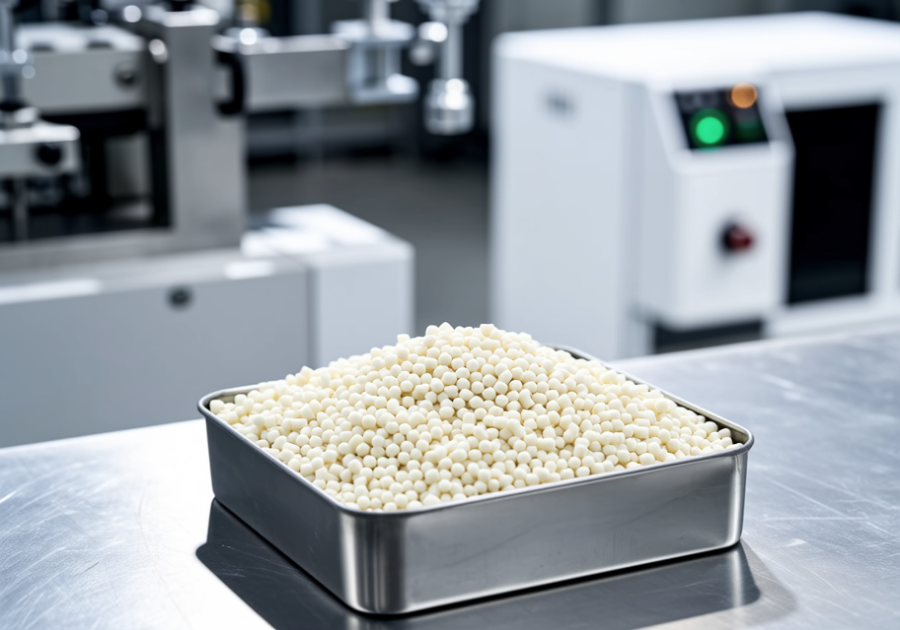
Supply Level: Since October, the overall operating rate of China's ABS industry has been relatively stable with minor fluctuations. Recently, except for Shandong Haijiang reducing its load to 60%, no other polymer plants have announced maintenance schedules. In the future, Zhejiang Petrochemical plans to increase production, and Huajin Chemical plans to restart one line. The industry's operating rate has slightly decreased by 0.2% to around 72.8%. Weekly average production remains above 140,000 tons, and the inventory of polymer enterprises is holding firm at a high level of about 260,000 tons, maintaining ample supply in the market. Overall, the long-term loose supply situation in the ABS market remains unchanged, and the support from the supply side for the ABS spot price continues to be weak.
Cost Factors: At the end of October, upstream prices for ABS's three key raw materials remained generally weak, showing no improvement in terms of cost support. Among them, acrylonitrile fundamentals saw limited changes—overall supply remains ample, with no immediate expectations of production cuts—but demand has stayed steady, driven primarily by buyers making purchases based on their specific needs. Meanwhile, acrylonitrile producers continue to lower prices. Additionally, recent weakening in cost-side support suggests the market may continue its downward trajectory.
Recently, the Chinese butadiene market has been fluctuating downward. The downstream synthetic rubber market shows low enthusiasm for entering the market, with a weak intention to purchase raw material butadiene. Actual market transactions have been poor, lacking demand support. Additionally, with some plants in China resuming operations, the overall supply is relatively loose. The market lacks positive factors to boost it, and it is recommended to closely monitor the procurement demand from downstream.
Styrene prices bottomed out and slightly rebounded at the end of October. The main port in East China for raw material benzene continued to reduce inventory, but market sentiment was weak, leading to a sustained decline. Although the port inventory of styrene has slightly decreased recently, the falling crude oil prices have created significant resistance to price increases. The consumption by major downstream users is expected to remain stable with a slight increase, but there are no signs of large-scale demand growth. It is anticipated that the styrene market in China will likely operate weakly in the short term.
Demand Side: For a long time, downstream ABS factories have maintained modest operating rates. In October, polymer plants experienced increased inventory buildup following the two major holidays, putting greater pressure on shipments. Meanwhile, end-user companies, affected by the broader macroeconomic environment, are seeing weaker sales and profitability. The key downstream sector—electrical appliance casing manufacturers—continues to face sluggish consumption, with no signs of increased production schedules. Meanwhile, cautious sentiment persists in external markets, further dampening industry export performance. Overall, the prevailing inventory management strategy remains focused on meeting immediate demand through restocking and fulfilling urgent orders, though product turnover remains slow. As a result, both manufacturers and traders are offering discounts to facilitate sales amid mounting pressure to clear high inventory levels. Taken together, there’s little improvement yet in terms of demand supporting ABS market conditions.
Future Market Forecast
At the end of October, China's ABS market trend continued to decline. The overall performance of the upstream three materials was weak, and the production load of ABS polymer plants remained largely stable with minor adjustments, while consumer demand did not show any significant increase. Analysts believe that ABS has been dragged down by a long-term supply-demand contradiction, making it difficult for the spot price to gain momentum. With no fundamental positive factors on the horizon, the "Golden September, Silver October" phenomenon for ABS in this year has been disproven, leading to a generally pessimistic outlook among industry players. It is expected that the downward pressure on ABS will continue in the short term.

You May Interested In


2026-10-04
Trade Alert
Delivering the latest product trends and industry news straight to your inbox.
(We'll never share your email address with a third-party.)

Related News
-
Business Society’s Market Outlook for Epichlorohydrin on September 9, 2026: The Trend Is Volatile
-
October Sodium Metabisulfite Prices Decline
-
Business Society’s Market Outlook for Propylene Oxide on September 9, 2026: Volatile
-
Business Society’s Market Outlook for Acrylic Acid on September 10, 2026: Fluctuating Trend
-
Business Society’s Market Outlook for Isooctanol on September 10, 2026: Stagnation and Price Increase Alert
-
Supply at Low Levels & High Costs, PC Strengthens in Early September in China
-
Cost-Driven Acrylonitrile Market Bottoming Out and Consolidating
-
Business Society’s PVC Market Outlook on September 10, 2026: Upside Limited
-
Bulls and Bears Intertwined: Palm Oil Prices Weaken in February
-
Business Society’s Market Outlook for Caustic Soda on September 10, 2026: Downside Limited
Recommend Reading
-
![Remote Costs Rise, ABS Prices Increase in Early September in China]()
Remote Costs Rise, ABS Prices Increase in Early September in China
-
![Business Society’s Market Outlook for Lithium Carbonate on September 10, 2026: Decline]()
Business Society’s Market Outlook for Lithium Carbonate on September 10, 2026: Decline
-
![MTBE Market Trend Shows Strong Fluctuations in China]()
MTBE Market Trend Shows Strong Fluctuations in China
-
![Business Society’s Market Outlook for Lithium Carbonate on September 9, 2026: Volatile]()
Business Society’s Market Outlook for Lithium Carbonate on September 9, 2026: Volatile
-
![October Isopropyl Alcohol Market Price Rises First, Then Falls]()
October Isopropyl Alcohol Market Price Rises First, Then Falls
-
![PEG (Polyethylene Glycol): Uses in Pharma, Cosmetics, and PEGylation]()
PEG (Polyethylene Glycol): Uses in Pharma, Cosmetics, and PEGylation
-
![What is HCO3? (Bicarbonate Ion Function & Normal Levels)]()
What is HCO3? (Bicarbonate Ion Function & Normal Levels)
-
![Applications of Diphenyl Cyanide]()
Applications of Diphenyl Cyanide
-
![Gellan Gum (E418): Vegan Thickener vs. Xanthan Gum in Food]()
Gellan Gum (E418): Vegan Thickener vs. Xanthan Gum in Food
-
![Chemical Properties of Dibenzylideneacetone]()
Chemical Properties of Dibenzylideneacetone