Why does fertilizer go crazy
The summer harvest of the Central Plains has come to an end. After the summer harvest, the summer sowing is replaced by the summer sowing. There is another work that affects the harvest at the same time as the summer sowing, that is, fertilizing.
However, when many farmers go to the agricultural material shop in the village, they will find that the price of fertilizer is ridiculously higher than in previous years. They even say that the price asked every two days is different. Can't help but doubt that the price of fertilizer is so expensive now? Today, Brother Chao will tell you why the price of fertilizer will be so expensive this year.
First of all, the price of raw materials has been high
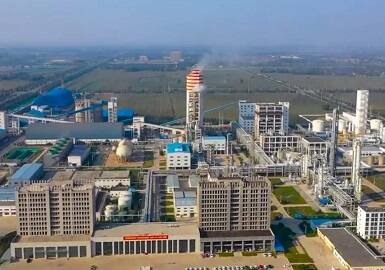
The raw material for fertilizer is coal. This year, the price of coal has been rising, resulting in the price of urea. The price per ton of urea has risen by 600-800 yuan, and now it has risen to a record high of nearly 3,000 CNY/ton. The price of wheat is on the high side, but the increase in chemical fertilizers is even more outrageous, which also leads to a shortage of income. The high price of chemical fertilizers will also cause a group of farmers not to use fertilizers on the land this year. Crops are food for people, and fertilizers are food for crops, which may also lead to a decline in the output of corn harvested in autumn, thereby affecting market prices.
The second is a large number of foreign trade orders
Affected by the global new crown epidemic, factories in the United States, India and other countries have stopped working, and companies have stopped production, which has led to an increase in the amount of fertilizer imported from my country. A large number of foreign trade orders was originally a good thing for Chinese companies, but it was also affected by inflation that led to higher export prices, and also caused domestic prices to rise. However, when the demand for fertilizers was high, some companies stopped production and equipment maintenance, or even worked overtime. Increased production of foreign trade orders has led to insufficient supply in most areas of the country, and production cannot meet demand, which is also one of the reasons for price increases.
Another factor is environmental protection
Because the country's call for environmental protection is getting higher and higher, the government has higher and higher thresholds and requirements for fertilizer manufacturers. The original source of production has decreased, and the increase in fertilizer has also become an inevitable trend.
The rise in urea and chemical fertilizers has a great impact on farmers’ confidence in farming. This is related to the peasants’ real income. Many people ridicule that a piece of wheat was more than a catty ten years ago, and a piece of wheat will still be more than a pound ten years later. A catty, nowadays the cost of farming for farmers has increased, and the corresponding income has also decreased. To increase farmers’ production and income, the price of chemical fertilizers must be effectively controlled and kept at a reasonable level. Only when farmers’ income is truly increased can their enthusiasm for farming be improved, land can be fully utilized, and farmers can be truly wealthy.

An omega-3 that's poison for tumors
You May Interested In


High Quality β-Nicotinamide adenine dinucleotide CAS 53-84-9 NADwith ready stock and best price
$3/UNIT FOB


2026-10-14
Trade Alert
Delivering the latest product trends and industry news straight to your inbox.
(We'll never share your email address with a third-party.)

Related News
-
Fertilizer Costs Rise as Middle East Tensions Pressure Global Food Production
-
Fertilizer Costs Rise as Middle East Tensions Pressure Global Food Production
-
Kemira Acquires AquaBlue
-
Platinum Chemotherapy Shortages Expose the Fragility of Essential API Supply
-
ARLANXEO Launches State-of-the-Art HNBR Plant in Changzhou, Strengthening Asia-Pacific Supply
-
Chemicals Take the Hit as China's Markets Thin Out — Wanhua, Juhua Chemical Slide Over 2%
-
Profits Are Rising, but So Are the Risks—China’s Coatings Industry Is Living Through Its Most Awkward Year
-
This Is Not a Price Increase Wave but a Full-Blown Cost Squeeze Across China’s Coatings Chain
-
Arkema's New Singapore Plant Commences Operations, Tripling Polyamide Capacity
-
Retinol in Cosmetics: Regulatory Tightening and Market Changes
Recommend Reading
-
![]()
"No available slots" returns as global shipping rates skyrocket amid multiple factors
-
![US-Iran Conflict Escalates Again as Oil Tops $90 and Petrochemical Feedstock Risks Return]()
US-Iran Conflict Escalates Again as Oil Tops $90 and Petrochemical Feedstock Risks Return
-
![South Korea Retires 1.39 Million Tonnes of Ethylene Capacity as Northeast Asia’s Petrochemical Reset Turns Real]()
South Korea Retires 1.39 Million Tonnes of Ethylene Capacity as Northeast Asia’s Petrochemical Reset Turns Real
-
![Indorama Corporation Acquires 100% Stake in Anyang Zhongying Fertilizer]()
Indorama Corporation Acquires 100% Stake in Anyang Zhongying Fertilizer
-
![“Anti-Overcapacity” Backfires: China’s Chemical Industry Trapped in a Hell of Its Own Making—and Global Pushback]()
“Anti-Overcapacity” Backfires: China’s Chemical Industry Trapped in a Hell of Its Own Making—and Global Pushback
-
![This week, the TDI market in China saw a slight increase (2.2-2.6)]()
This week, the TDI market in China saw a slight increase (2.2-2.6)
-
![Costs Soar, Phthalic Anhydride Prices Surge]()
Costs Soar, Phthalic Anhydride Prices Surge
-
![This week, isopropanol market prices slightly decreased (10.20-10.24) in China]()
This week, isopropanol market prices slightly decreased (10.20-10.24) in China
-
![This week, caustic soda prices were weak (2.2-2.6)]()
This week, caustic soda prices were weak (2.2-2.6)
-
![Ammonium Sulfate Market Shows Strong Increase (1.5-1.12)]()
Ammonium Sulfate Market Shows Strong Increase (1.5-1.12)