




Understand the New Rules to Enter the Market | ECHEMI × API China 2026 Overseas Pharmaceutical Market & Product Trends Conference Successfully Concluded
On May 14, ECHEMI, together with API China 2026, successfully hosted the 2026 Overseas Pharmaceutical Market Products and Trends Conference at the National Exhibition and Convention Center in Shanghai.

The conference focused on three key themes: the transformation of China’s API industry, innovation in South Korea’s biopharmaceutical sector, and emerging opportunities in the Middle East pharmaceutical market. Industry experts and corporate representatives gathered to analyze global pharmaceutical policies, trade dynamics, and new market opportunities, providing practical insights and strategic guidance for Chinese pharmaceutical companies expanding overseas.

ECHEMI Vice President and General Manager of the Pharmaceutical Division, Bree Wang, delivered a keynote speech titled “The Turning Point of China’s API Exports and a New Global Journey.” Her presentation examined the industry’s core challenges and explored new growth opportunities.
She noted that China’s API exports entered a plateau phase in 2023. In 2025, total export value reached USD 42.87 billion, down slightly by 0.3% year-on-year. Rising export volumes combined with declining profitability and intensifying price competition have become common industry challenges. At the core lies an imbalance in export structure, with heavy reliance on bulk APIs and insufficient positioning in high-value-added products.
However, amid these challenges, new growth engines are rapidly emerging, driven by clinical demand and technological breakthroughs.
Peptide APIs are benefiting from the commercial boom of GLP-1 drugs. The global peptide CDMO market reached USD 4.4 billion in 2025 and is expected to exceed USD 7.9 billion by 2030. Meanwhile, the global upstream raw materials market for oligonucleotide therapeutics is projected to reach USD 54.9 billion by 2034, with surging demand for phosphoramidite monomers, solid-phase carriers, and other key materials. The high-potency API (HPAPI) market is also forecast to reach USD 48.29 billion by 2033, driven primarily by demand for cardiovascular and oncology drugs.
Yet the transition toward high-value-added sectors remains challenging. Policy barriers such as India’s PLI scheme, the United States’ Section 232 tariff escalation, and Europe’s “Buy European” preference policies continue to raise entry thresholds for global suppliers.

In response, Bree Wang emphasized that China’s API supply chain stability, cost advantages, and compliance capabilities remain irreplaceable. She highlighted four key strategic directions for Chinese pharmaceutical companies: strengthening DMF and CEP certifications, expanding CDMO capabilities, building end-to-end traceability systems, and developing emerging markets along the Belt and Road Initiative. These measures are essential for upgrading from “price competition” to “value competition.”
Following this session, KoreaBIO expert Jurie Hwang presented “Growth Dynamics of South Korea’s Biopharmaceutical Market: Opportunities for the Next Decade.” The presentation explored the core drivers behind South Korea’s rise as a global biopharmaceutical hub, highlighting how the country’s export competitiveness has become a key engine for industry growth.

South Korea’s biopharmaceutical market is valued at approximately USD 22 billion, ranking 13th globally. The country has become a global leader in biosimilars, CDMO services, and cell and gene therapy. Among these strengths, export performance stands out as the most significant competitive advantage.
In biosimilars, South Korea accounts for 23.5% of FDA-approved biosimilars globally, ranking first worldwide. Companies such as Samsung Biologics and Celltrion continue to dominate international markets, steadily expanding export volumes and reinforcing South Korea’s position as a global biosimilar export powerhouse.
In the CDMO sector, Samsung Biologics alone operates more than 784,000 liters of production capacity, covering the full process from clinical development to commercial manufacturing. International orders continue to grow year after year, making CDMO another major pillar of South Korea’s pharmaceutical exports.
This export advantage is supported by massive investments from conglomerates such as Samsung, SK, and LG into the bio-health sector, combined with the high-liquidity KOSDAQ capital market, strong government R&D funding, and advanced clinical trial infrastructure. Together, these factors have created an ecosystem in which large enterprises lead while smaller companies drive innovation, enabling South Korea to build a complete pipeline from early-stage innovation to global commercial exports.

Jurie Hwang also noted that China and South Korea are highly complementary in API supply, technology collaboration, and market expansion, expressing expectations for deeper bilateral cooperation to jointly capture global pharmaceutical opportunities.
Shifting from East Asia’s innovation-driven market to the rapidly emerging Middle East region, Muzzamil Shariff, Senior Editor at MedEdge MEA, delivered a presentation titled “Understanding the Middle East Pharmaceutical Market: Policy Landscape, Trade Dynamics, and Emerging Opportunities.” His session revealed the region’s evolving pharmaceutical ecosystem and provided an in-depth analysis of the incentive policies introduced by the UAE government to attract pharmaceutical investment.

The Middle East pharmaceutical market is valued at approximately USD 55 billion, with Saudi Arabia, the UAE, and Egypt serving as the primary growth engines. Supported by economic diversification strategies, healthcare reforms, and expanding insurance coverage, the region continues to maintain stable growth momentum.
The Middle East remains highly dependent on imported APIs, with China serving as a major supplier. Cooperation between the two sides is evolving from traditional trade toward technology transfer, joint manufacturing, and collaborative biologics development. Driven by both cost sensitivity and supportive policies, generic drugs have become the region’s fastest-growing segment, while biosimilar adoption is also accelerating.
At the same time, specialty therapeutics for oncology and rare diseases, digital healthcare, vaccines, and CDMO services are emerging as new investment hotspots, gradually transforming the Middle East from a net pharmaceutical importer into a regional manufacturing hub.

Muzzamil Shariff particularly highlighted the UAE government’s unprecedented support for the pharmaceutical industry. Alongside strict regulatory reforms and accelerated approval pathways, the country has introduced highly attractive incentives for local manufacturing. Pharmaceutical free zones now allow 100% foreign ownership while offering tax incentives, financial subsidies, and simplified industrial licensing procedures. These initiatives significantly reduce import dependence and have created strong investment appeal for global pharmaceutical companies.

The conference’s three major themes formed a clear progression — from examining the challenges and transformation pathways of China’s API industry, to learning from South Korea’s innovation-driven biopharmaceutical export model, and finally exploring cooperation opportunities in the Middle East market. Together, these discussions provided valuable references for Chinese pharmaceutical companies pursuing global expansion strategies.
As the global pharmaceutical industry undergoes profound restructuring, ECHEMI will continue leveraging its digital B2B platform advantages to provide Chinese pharmaceutical enterprises with comprehensive support ranging from market intelligence to production localization. The company aims to help the industry move beyond simply “going abroad” toward truly “integrating into” global markets.
Looking ahead, ECHEMI will continue organizing a series of conferences and business matchmaking events focused on emerging markets and high-potential sectors, further connecting global resources and supporting the integration of China’s pharmaceutical industry into the global innovation network.
Looking for chemical products? Let suppliers reach out to you!
You May Interested In


Glow70/KLOW80 99% China Peptides Warehouse Direct Delivery Lyophilized Powder in Stock
$1.8E+2/UNIT FOB


2026-08-15
Trade Alert
Delivering the latest product trends and industry news straight to your inbox.
(We'll never share your email address with a third-party.)

Recommend Reading
-
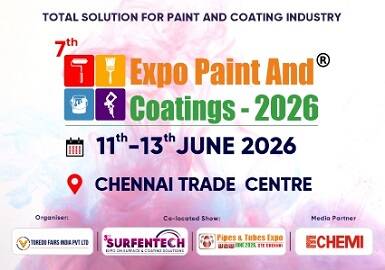
Expo Paint & Coatings 2026- Chennai: A proven marketplace for being the most comprehensive Exhibition on Paint & Coatings Industry from the Indian sub-continent
-

2027 Shanghai International Exhibition of Surfactant and Detergent
-
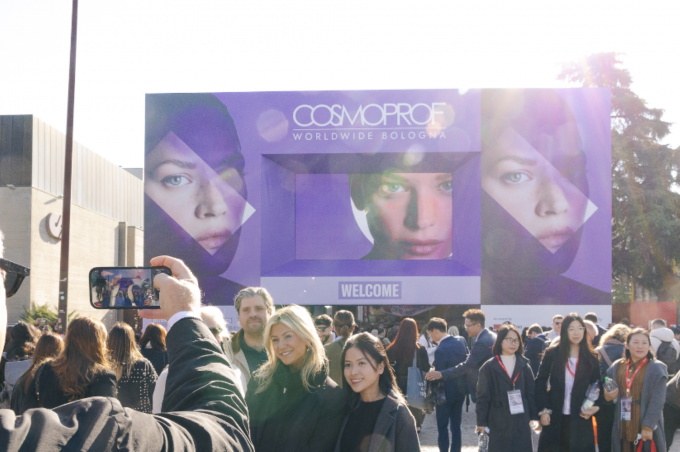
COSMOPROF WORLDWIDE BOLOGNA 2026: A GLOBAL BEAUTY ECOSYSTEM IN CONTINUOUS EVOLUTION
-
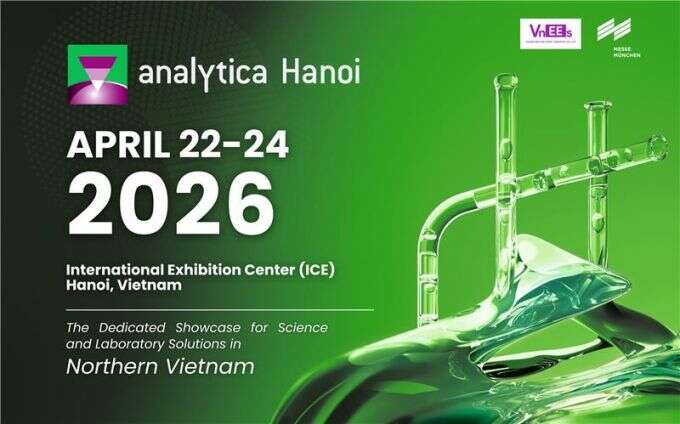
analytica Hanoi 2026 Makes Its Debut, Bringing the Global Science and Laboratory Platform to Northern Vietnam
-
ADIPEC 2026 Event Listing
-

Dibutyl Phthalate: Plastic Applications, Properties & Safety
-
Lido Limited: Polyethylene Operates Weakly
-
FDA Issues Import Alert 99-38 for Guangxi Wuzhou Company Herbal Jelly Products Face Automatic Detention
-

China Fuel Oil 180CST Market Trends Show Slight Decline in Mid-August
-
China's Soda Ash Market Trend Weak (8.11-8.18)