
October 31st, according to reports
Ethylene oxide operated at a high level and remained stable in October 2026
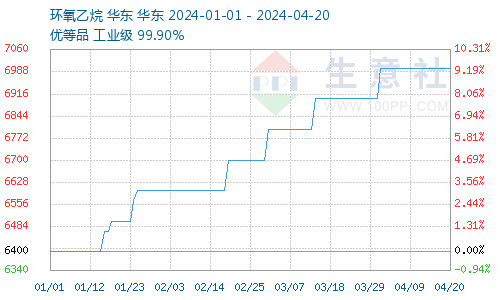
In 2026, the price of ethylene oxide remained high and stable in October. According to the data, as of October 31, the average market price of ethylene oxide in China was 9,700 CNY/ton, unchanged from the beginning of the month (October 1); and it increased by 27.63% compared to the average market price of 7,600 CNY/ton on August 1.
As of October 31, 2026, the ex‑factory listed prices for ethylene oxide in China’s major regional markets are as follows: East China—9,200–9,700 CNY/ton; South China—9,600–9,700 CNY/ton; North China—9,500 CNY/ton; Central China—10,100 CNY/ton.
Reasons for the High and Stable Operation of Ethylene Oxide Prices in China in October 2026
In October, the epoxy ethane price remained high and stable; mainly due to supply-side maintenance support and acceptable cost support from ethylene. However, downstream demand was divergent, with weak follow-up of new orders, primarily based on contracts and limited spot circulation, resulting in an overall tight balance but insufficient momentum for price increases.
Supply side, there is no shortage of total production capacity, but the amount of ethylene oxide available for circulation is relatively low. Maintenance further tightens the supply of spot goods, supporting the price floor.
From the perspective of industry operation, the industry's operation rate in late October was about 53%, which is relatively low. This is mainly due to concentrated maintenance in East China (Shanghai Petrochemical, Jiangsu Oxide, etc., have shut down their facilities), and the logic of actively switching production to ethylene glycol continues, limiting the circulation of commodity ethylene oxide.
Specifically, plant maintenance is concentrated in East China, forming the core support for this month: multiple facilities of Sinopec Shanghai Petrochemical and OKE Group have successively shut down, with the reduction mainly focused in the main production area of commercial ethylene oxide, directly compressing the volume of spot supply; large plants that have not undergone maintenance prioritize long-term contract customers, leaving limited spot sales.
In terms of co-production structure, the profit margin for ethylene glycol is relatively better, and integrated refineries in China continue to favor producing more MEG and less merchant EO. This has been an ongoing underlying constraint since September. It's not a complete shutdown, but a switch in product structure, with the volume of merchant products being continuously reduced.
In terms of inventory, overall port and factory inventories in China are at low levels, mainly locked by orders, with very little speculative stockpiling. Traders are hesitant to take large quantities, leading to a narrow spot circulation pool.
Cost Side: Ethylene prices remain relatively firm, providing decent support but limited upward momentum. In October, ethylene prices were underpinned by crude oil and the CFR Northeast Asia benchmark, resulting in a narrow but generally stronger price trend that helped sustain a floor for ethylene oxide. However, as the transmission of crude‑oil volatility has slowed, ethylene has failed to rally sharply; cost pressures are now more supportive than bullish, lacking the strong upward impetus seen in September. Meanwhile, with ethylene oxide processing margins remaining reasonable, integrated producers have maintained steady production levels and have not proactively cut output despite margin pressures.
Demand side, there is a clear divergence, with rigid demand providing a floor but insufficient growth. In October, there was rigid demand but no growth in demand. As the peak season comes to an end, downstream buyers are less willing to accept high prices and have a weak desire to chase higher prices. This is the core reason why epoxy ethane prices have stabilized at a high level.
Specifically, the downstream of ethylene oxide in China is divided into three main lines, with significant differences in temperature.
The monomer for polycarboxylate superplasticizers—this month’s strongest downstream segment—has seen sustained demand due to accelerated infrastructure construction, resulting in ample early‑order backlogs. Monomer producers have been holding firm on prices and are able to absorb higher‑priced ethylene oxide, making it the primary driver of demand in October. However, as the month draws to a close, end‑user payment cycles and funding pressures have become apparent, leading to a slowdown in new order growth. With manufacturers now focusing on fulfilling existing orders, it has become difficult to sustain upward pressure on ethylene oxide prices.
Non-ionic surfactants, AEO, ethanolamines, and PEG demand is weak. The rigid demand from the daily chemical and textile industries in China remains stable, but downstream profits have been squeezed. The price increase of ethylene oxide has not been effectively passed on, and there is significant resistance to high prices. Most purchases are made in small quantities as needed, with low inventory levels. Some surfactant plants have passively reduced their production load, resulting in weaker demand for ethylene oxide.
Ethylene glycol co-production route: This is for internal consumption and does not create a demand for purchasing commodity ethylene oxide; instead, it diverts the output of ethylene oxide, acting as a counter factor on the supply side.
Epoxy Ethane Market Trading Status in China
Currently, the epoxy ethane market is dominated by contracts, as it is a highly contract-based commodity, with over 70% locked in long-term agreements. The spot market is small and its fluctuations are easily magnified by market sentiment. In October, the market was characterized by "contract execution, limited spot availability, and narrow negotiation space." Downstream sectors experienced varying profitability; the profit margin for water-reducing agent monomers was acceptable, while the margins for fine ethers such as surfactants and ethanolamines were squeezed by upstream costs, leading to losses or minimal profits, making them resistant to high-priced raw materials. In October, traders mainly adopted a wait-and-see approach, operating with low inventories, avoiding one-sided bets, buying on sharp dips, and refraining from chasing high prices.
Ethylene Oxide Market Forecast
In November, as epoxy ethane maintenance gradually returns and the traditional peak season for infrastructure in China comes to an end, demand is expected to weaken marginally, and high-level support will loosen. If there are no new concentrated maintenance periods or a significant increase in crude oil prices, the price of epoxy ethane is expected to decline.