




How many of the six misunderstandings about fatty liver have you recruited?
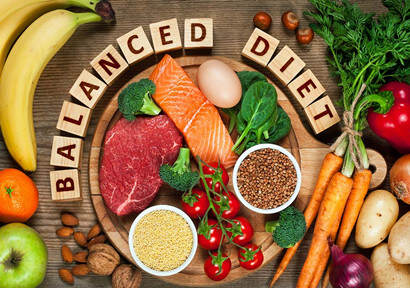
How many of the six misunderstandings of fatty liver did you recruit? With the continuous improvement of living standards, more and more people suffer from fatty liver in China. But in the understanding, treatment and prevention of fatty liver, many people have fallen into some misunderstandings. Professor Zhou Dinghua, Chief Physician of Hepatobiliary Surgery, Rocket Army Characteristic Medical Center, combined with clinical experience and observation, summarized and reminded this.
Misconception 1: Lean people will not have fatty liver
Normal people's liver tissue contains a small amount of fat, such as triglycerides, phospholipids, glycolipids and cholesterol, whose weight is about 3%-5% of liver weight. Fatty liver can be called if there is too much fat in the liver, more than 5% of the weight of the liver, or when more than 50% of the hepatocytes have steatosis histologically. Many people think that fatty liver is the patent of middle-aged and old people, and thin people feel that fatty liver is far away from themselves. But many people in their 20s are surprised to find that they are already suffering from mild or moderate fatty liver disease. How on earth did fatty liver get? Why can't even thin people escape? The Guidelines for the Treatment of Fatty Liver in China shows that the prevalence of fatty liver in adults in China has reached 12.5%-35.4%, and the incidence of fatty liver disease has ranked first. Liver is the place where lipids are synthesized, transported and utilized, and it can not store fat in large quantities. Fatty liver is formed when the fat in the liver is out of balance and accumulates in the hepatocytes. Authoritative data show that obesity, alcoholism and diabetes are the three main causes of fatty liver. The potential causal relationship between obesity and fatty liver has long been well known. But many doctors have found an interesting fact: many Westerners look fat, but they don't have fatty liver; many Chinese look thin, but the liver is surrounded by fat; about 30% of the people who belong to the standard stature have fatty liver. This is because most Westerners are overweight and obese, while the Chinese are overweight and obscure, and most of them are buttocks and abdomen obesity, also known as central obesity, which is the manifestation of excessive visceral fat. Many Chinese gain slightly in weight, which is clearly reflected in their waist circumference. Their limbs are not fat and their trunks are not bulky, but when they take off their clothes, "fat belly" is exposed. China has added an additional condition to the classification of BMI (body mass index), that is, the cut-off point of waist circumference. If the waist circumference of men exceeds 85 centimeters and that of women exceeds 80 centimeters, the central obesity can be judged, especially the possibility of fatty liver diseases should be vigilant. In addition, the age of many outpatients with fatty liver has fallen below 20 years old, which is mainly related to the bad habits of eating big fish and meat, drinking excessively and not exercising.
Misconception 2: Fatty liver is painless and itchy, so it is unnecessary to ignore
Fatty liver is mainly divided into two categories: alcoholic fatty liver and non-alcoholic fatty liver. This disease seems simple, but the incidence is increasing, and the age of onset is earlier than before. It has become a chronic disease threatening human health. It should also be the focus of our attention. In theory, simple fatty liver can be completely restored to normal after removing the etiology of the disease.
In theory, simple fatty liver can be completely restored to normal after removing the etiology. Even at the stage of steatohepatitis, if active treatment is given, the diseased liver can be completely reversed. However, if it develops to the stage of cirrhosis, it is impossible for the diseased liver to return to normal even after active treatment. Therefore, we should treat fatty liver as soon as possible, and patients should not take it lightly. If we do not find fatty liver in time or check it out, but do not pay attention to it. If we do not seize the opportunity to treat fatty liver and allow it to develop, when there is pain and nausea and vomiting in the liver area, fatty liver has reached a very serious level. Long-term neglect of treatment will eventually lead not only to cirrhosis and liver cancer, but also to some cardiovascular diseases such as obesity, hyperlipidemia, hypertension, fatty liver fibrosis, and even to hepatocellular carcinoma, threatening people's lives and safety. People suffering from fatty liver should pay special attention to diet, exercise, work and rest habits. If it is reasonable, simple fatty liver can be cured. For the more serious, reasonable living habits can also help them alleviate symptoms.
Misconception 3: Fatty liver can be cured by just controlling diet
Wine for patients with fatty liver, it is absolutely impossible to touch. Because the liver is damaged, alcohol can not be completely decomposed, leading to the long-term existence of alcohol in the body, not only will cause more serious damage to liver cells, but also reduce the liver's decomposition of fat, and continue to aggravate the progress of fatty liver; fried food contains a lot of cholesterol, into the body will produce fat, which is tantamount to increasing the body's fat content, in addition, because Fatty liver patients themselves form obstacles to the metabolism of fatty substances. If they eat this kind of food for a long time, it will aggravate fatty liver. On the other hand, if the body intakes too much sugar, it will bring unnecessary burden to the metabolism of the liver, which will lead to the body can not absorb, and these excess sugar will be converted into fat, and then.

You May Interested In


High Quality β-Nicotinamide adenine dinucleotide CAS 53-84-9 NADwith ready stock and best price
$3/UNIT FOB


2026-10-14
Trade Alert
Delivering the latest product trends and industry news straight to your inbox.
(We'll never share your email address with a third-party.)

Related News
-
Pfizer Warns Germany Over Drug-Pricing Policy
-
India Raises Cancer Drug Price Caps by 50%
-
New York Targets Additives and GRAS Disclosure
-
Spain’s Data-Protection Confusion Hits Pesticide Competitiveness
-
Spain’s Data-Protection Confusion Hits Pesticide Competitiveness
-
Laboratoire PYC showcases its collagen-driven nutricosmetic innovations
-
U.S. Issues Final Anti-Dumping Ruling on Chinese MDI: Dumping Margins Reduced from Over 500% to 85%+
-
Kemira to Acquire SIDRA Wasserchemie, Expanding European Water Treatment Footprint
-
Biologicals Move from Trial Plots to Real Distribution
-
Japan Tightens Additive Use Standards
Recommend Reading
-
![India’s Tariff Cuts Could Lower Agrochemical Costs]()
India’s Tariff Cuts Could Lower Agrochemical Costs
-
![China Moves Lycopene Toward Filing-Based Health Food Management]()
China Moves Lycopene Toward Filing-Based Health Food Management
-
![March Brought a Faster Global Food Rule Cycle]()
March Brought a Faster Global Food Rule Cycle
-
![Brazil Rewrites the Supplement Rulebook]()
Brazil Rewrites the Supplement Rulebook
-
![The Chemical Market Is No Longer Just Raising Prices — It Has Started Stopping Quotations]()
The Chemical Market Is No Longer Just Raising Prices — It Has Started Stopping Quotations
-
![Port inventory rises, November ethylene glycol price center shifts downward]()
Port inventory rises, November ethylene glycol price center shifts downward
-
![Business Society’s Market Outlook for Caustic Soda on September 10, 2026: Downside Limited]()
Business Society’s Market Outlook for Caustic Soda on September 10, 2026: Downside Limited
-
![This week, the price of polyester bottle chips in China showed a slight decline]()
This week, the price of polyester bottle chips in China showed a slight decline
-
![Rising Costs Drive Up Phosphate Market Prices in China (6.1-6.11)]()
Rising Costs Drive Up Phosphate Market Prices in China (6.1-6.11)
-
![November Cyclohexane Market Demand Insufficient, Prices Remain Stable]()
November Cyclohexane Market Demand Insufficient, Prices Remain Stable






- Hot Searches
- benzene and styrene prices
- propylene glycol msds
- where can i get reta peptide
- tirzepatide research peptide for sale
- sr 17018 buy online usa cheap
- vanillim
- dipotassium phosphate distributor
- ethylene vinyl acetate price
- ethylene prices
- 1 8-cineole
- food grade tannic acid for sale
- propylene price