In 2018, China's urban economic competitiveness ranked first in Shenzhen
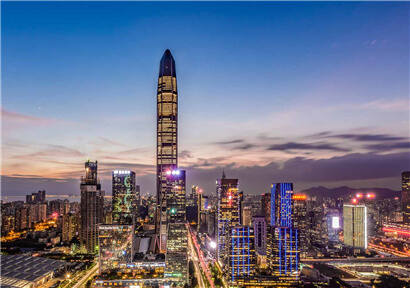
There are several happy families and several sad ones in the list every year. The 17th Report on the Competitiveness of Chinese Cities was released today. From this report, we can see the comprehensive economic competitiveness of the major cities in China. According to the report, in 2018, the top 20 cities in China are Shenzhen, Hong Kong, Shanghai, Guangzhou, Beijing, Suzhou, Nanjing, Wuhan, Taipei, Dongguan, Wuxi, Foshan, Chengdu, Macau, New Beijing, Tianjin, Xiamen, Changzhou, Hangzhou and Changsha. It is worth mentioning that Shenzhen, Hong Kong and Shanghai ranked first three places in a row.
Through the ranking of the top 20 cities, we can see that 18 of them are located in the south, only Beijing and Tianjin belong to the north, and the number of cities in the north is seriously insufficient. From the east to the west, most of the top 20 cities are located in the eastern region.
In addition, according to the average level of urban economic competitiveness index, the well-developed metropolitan area in China can be divided into four echelons: the Pearl River Delta metropolitan area ranks first, and its economic competitiveness is strong. The Yangtze River Delta Metropolitan Area, the Capital Economic Circle and the Xiamen Metropolitan Circle rank second, while the rest of the Metropolitan Circle rank third and fourth respectively.
The widening gap between North and South
Publishing the report on China's urban competitiveness is the "practice" of the Chinese Academy of Social Sciences, and this is the 17th report on China's urban competitiveness.
Compared with the rankings in 2017, the comprehensive economic competitiveness of northern cities decreased by an average of 6.2 places in 2018, while that of southern cities increased by an average of 5.4 places, aggravating the differentiation between North and South.
Such as Tianjin, Zhengzhou and Qingdao in the north. Tianjin ranked 7th in 2017, but ranked 16th in 2018, down 9 places. Zhengzhou and Qingdao rank 16th and 17th respectively in the 2017 list, but in this list, neither city has entered the top 20.
In 2017, Nanjing, Chengdu and Hangzhou ranked ninth, fifteenth and twenty-first respectively, but in this list, the three cities ranked seventh, thirteenth and nineteenth respectively, rising two places. In addition, Xiamen, Suzhou, Changzhou and Wenzhou increased by two places in the southern cities. Chen Yao, Vice-President and Secretary-General of China Regional Economic Society, once attended the forum sponsored by China News Agency, pointed out that the trend of "strengthening the South and weakening the North" in China's economic development was intensifying. Due to the backward industry, serious population outflow and inadequate scientific and technological innovation, the economic growth in Northeast, North China and some Northwest China has been weak in recent years, which needs special attention. Liu Shangxi, president of the Chinese Academy of Financial Sciences, also said that the gap between North and South was widening.
The economic growth rate of southern and Northern China has gradually opened up since 2013, and the gap of growth rate has expanded from 0.3 percentage points in 2013 to 1.9 percentage points in 2017. The trend of "rising from south to falling from north" in the proportion of total economic output is further intensified. According to the data, the share of GDP in the North declined from 29% in 2012 to 25.2% in 2017, while that in the South rose from 71% to 74.8%.
Chen Yao believes that in order to solve the problem of unbalanced development between North and South, first of all, the direction of national regional coordination should be adjusted appropriately, focusing on the north, and paying attention to industrial transformation and upgrading and regional economic revitalization. Secondly, we should optimize the industrial structure appropriately and increase new industries. At the same time, we should improve the business environment and take measures to curb the brain drain. According to Wei Houkai, director of Rural Development Research Institute of the Chinese Academy of Social Sciences, the northern region has a solid industrial foundation, complete industrial categories and relatively perfect infrastructure. In order to achieve the North-South ratio, the key to the north is to deepen market-oriented reform, stimulate the vitality of various market players, form an internal mechanism for regional economic coordination and sustainable development, and promote high-quality development.
Central China is rising constantly
Looking from the East and west, although most of the cities with strong competitive advantages in 2018 are located in the eastern region, the report points out that the central cities in the central region are rising constantly, and the overall ranking of comprehensive economic competitiveness is rising slowly, which further highlights the trend of "East-Central Integration" in China's economic space. At present, the rising momentum of the central region is vigorous. In 2017, the total GDP of the six central provinces (Shanxi, Anhui, Jiangxi, Henan, Hubei and Hunan) was about 18 trillion yuan, exceeding 20% of the total GDP of the whole country. Four of the six central provinces ranked in the top ten in the country's GDP growth rate ranking in 2018.
"The central region spans the three most important rivers of the Yangtze River, the Yellow River and the Huaihe River, with convenient land, water and air transportation, abundant resources and good combination conditions, solid agro-industrial foundation and huge potential market. In addition, in recent years, the scientific and technological level of the central region has made rapid progress, and the innovative force has been growing. Fiber optic technology, electronic information and new materials are all in the leading position in the country, with unlimited development potential. Chen Yao told Guoshi a through-train reporter. The report points out that the Eastern Center is gradually expanding to the central part, and the trend of "integration of the eastern and central parts" is beginning to emerge. In order to achieve overall regional prosperity, we can deal with the North-South differentiation through the strategy of "integration of East and Central China".
Specifically, first of all, let the eastern and central regions promote the rise and transformation of the central region in mutual sharing, and also promote the further upgrading and development of the eastern region. Secondly, we will further promote higher-level regional cooperation between the upper and lower reaches of the economic belts of the Yellow River, the Pearl River, the Huaihe River and the Hanjiang River. Thirdly, through the integration strategy of multiple economic zones, the spillover benefits of central cities can be spread, and the development of marginal areas can be promoted.

You May Interested In


High Quality β-Nicotinamide adenine dinucleotide CAS 53-84-9 NADwith ready stock and best price
$3/UNIT FOB


2026-10-19
Trade Alert
Delivering the latest product trends and industry news straight to your inbox.
(We'll never share your email address with a third-party.)

Related News
-
A total investment of 260 million yuan! Axalde high performance coating project trial production
-
Best ever report card! Bank of Communications posts double-digit net profit growth, faces multiple challenges in 2022
-
China is Becoming a Global Mega Market for Snow and Ice Consumption
-
GDP growth of 5.5% within reach this year in China
-
China's economic outlook amid COVID-19 outbreak
-
Crude oil price decline transmitted to coal market
-
Symposium on economic operation of central enterprises
-
Blue Book of the city: more than 80% of the cities in China are 'sub healthy'
-
Guangdong and Jiangsu lead the way with 7 trillion yuan
-
IMF forecasts that China's economy will grow by 6.1% in 2019
Recommend Reading
-
![China's National Narcotics Control Commission Issues Important Notice: Beware of These 8 Chemicals Being Diverted for Drug Production]()
China's National Narcotics Control Commission Issues Important Notice: Beware of These 8 Chemicals Being Diverted for Drug Production
-
![Global Countries Impose Tariffs on Chinese Chemical Products]()
Global Countries Impose Tariffs on Chinese Chemical Products
-
![Retinol in Cosmetics: Regulatory Tightening and Market Changes]()
Retinol in Cosmetics: Regulatory Tightening and Market Changes
-
![Saudi East-West Oil Pipeline Shut Down After Attack, Disrupting 4 Million bpd of Oil Flow]()
Saudi East-West Oil Pipeline Shut Down After Attack, Disrupting 4 Million bpd of Oil Flow
-
![US-Iran Conflict Escalates Again as Oil Tops $90 and Petrochemical Feedstock Risks Return]()
US-Iran Conflict Escalates Again as Oil Tops $90 and Petrochemical Feedstock Risks Return
-
![Since March, the ethanol market price increase in China has been significant]()
Since March, the ethanol market price increase in China has been significant
-
![Business Society October 15, 2026 Epoxy Chloropropane Trend Analysis: Sideways Consolidation]()
Business Society October 15, 2026 Epoxy Chloropropane Trend Analysis: Sideways Consolidation
-
![Butadiene Rubber Market Prices Drop Sharply]()
Butadiene Rubber Market Prices Drop Sharply
-
![Costs Rise, Adipic Acid Prices Continue to Soar]()
Costs Rise, Adipic Acid Prices Continue to Soar
-
![Business Society October 16, 2026 Urea Trend Analysis: Volatility]()
Business Society October 16, 2026 Urea Trend Analysis: Volatility