What Is The O Chlorobenzoic Acid Solubility
To talk about o chlorobenzoic acid solubility, first it is necessary to clarify what we are talking about when we refer to this acid, we must know what it is, what are its most outstanding properties and characteristics, as well as the uses that are given to this chemical compound.
What is chlorobenzoic acid?
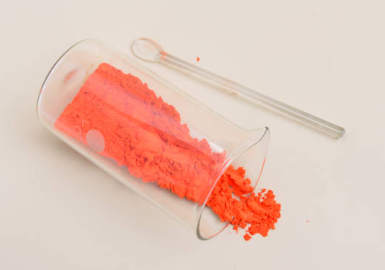
This substance is an organic chemical compound, which is included among the so-called weak acids, and among the aromatic carboxylic acids, this acid has the appearance of the materials found in nature in solid state, and the shape it has is that of a dust, it can also be found in the form of colorless crystals, which can sometimes turn to a very light white, and is distinguished by having a very characteristic odor.
Chlorobenzoic acid is also known by other names such as p-chlorobenzoic acid, 4-chloro, chlorodracylic acid, p-chloro, 4-chloro-benzoic acid, p-carboxychlorobenzene.
Uses of chlorobenzoic acid
For the o chlorobenzoic acid solubility of this compound, is used in the synthesis of cationic etherifying agents, as an emulsifier, in solubilization, in dispersion, in the pharmaceutical industry for wetting, and manufacture of a diversity of medicines, and dyes, in chemistry it is used as a reagent to determine methoxy and ethoxy groups, it is also used in organic synthesis.
The company Echemi has available products related to the needs of this acid, such as:
Chlorobenzene 99%
https://www.echemi.com/produce/pr1703256808-chlorobenzene.html
Properties of chlorobenzoic acid
The o chlorobenzoic acid solubility, is largely related to the properties that this acid possesses, which are listed below:
Its molecular formula is C7H5ClO2, which means that each molecule of this acid, is made up of 7 carbon atoms C, 5 hydrogen atoms H, 1 chlorine atom Cl, and 2 oxygen atoms.
It has a carboxyl group -COOH attached to an aromatic ring.
The melting point of chlorobenzoic acid is 142 degrees Celsius.
The boiling point of the acid is stipulated between 284 and 286 degrees Celsius.
This acid has a flash point of 238 degrees Celsius.
The vapor pressure that chlorobenzoic acid has is 0.3 Pa when it is at 25 degrees Celsius.
This acid has a density of 1.5 grams per cubic centimeter, with a relative vapor density, for air equal to 1, of 5.4, and the relative density of a vapor mixture over air is 1, when the air is equal to 1, and it is at a temperature of 20 degrees Celsius.
Chlorobenzoic acid has an autoignition temperature of 545 degrees Celsius.
The molecular mass of this acid is 156.6.
One of the properties by which the solubility of this acid can be affirmed, is the partition coefficient, this characteristic that results from the quotient between the two concentrations of a mixture when they are immiscible, in this acid, expressed in the logarithm decimal log P, is only 2.65. In relation to the appearance and physical appearance, the chlorobenzoic acid is solid, odorless, white, and can be presented in different forms.
Chlorobenzoic acid has a pH of 3.4 at 0.02 percent.
After knowing the most outstanding properties of chlorobenzoic acid, we can talk about the o chlorobenzoic acid solubility, stating that it is very poorly soluble in water, this chemical compound when mixed with water sinks in it without dissolving, and on the contrary presents solubility properties in substances such as acetone, ethanol, ether, and methanol.
In general, it is a chemical compound with very good stability under normal conditions.
Risks of chlorobenzoic acid
According to o chlorobenzoic acid solubility, it is a compound that presents health risks to the eyes and respiratory system, as it is irritating to the mucous membranes of these organs, as well as to the skin due to its corrosive character, which can cause skin irritations.
However, in other areas such as the environment, it does not represent a risk of danger, since it is not classified by the international organizations that regulate the matter, and it is not included among the chemical materials associated with fluorinated gases, which are those that produce the greenhouse effect, causing damage to the environment, nor does it appear as a dangerous element that can aggravate the ozone layer, nor does it produce damage to the aquatic environment, not representing a danger to the life of fish.
Looking for chemical products? Let suppliers reach out to you!
You May Interested In


2026-10-08
Trade Alert
Delivering the latest product trends and industry news straight to your inbox.
(We'll never share your email address with a third-party.)

Related News
-
Sodium Nitrate: Fertilizer, Food Curing, and Explosive History
-
Aluminum Oxide (Al2O3): Abrasive Uses, Ceramic Applications, and Safety
-
What are Acetoglycerides? (Definition & Food Industry Uses)
-
What is Aconitic Acid? (Chemistry & Occurrence)
-
A New Weapon Against Spider Mites: Canada Moves to Approve Novel Miticide for Greenhouse Growers
-
Chemical Properties and Applications of Cyclopropen
-
Key Reactions of Cobalt Chloride
-
Aluminum Sulfate: Industrial and Water Treatment Applications
-
Sodium Dodecyl Sulfate (SDS): Properties, Uses, and Safety
-
Uses and Benefits of Sodium Selenite
Recommend Reading
-
![Applications and Safety of Sodium Dichromate]()
Applications and Safety of Sodium Dichromate
-
![EDTA (Ethylenediaminetetraacetic acid): Chelation Therapy & Industrial Uses]()
EDTA (Ethylenediaminetetraacetic acid): Chelation Therapy & Industrial Uses
-
![Phosphoric Acid: Uses in Cola, Rust Removal, and Fertilizers Explained]()
Phosphoric Acid: Uses in Cola, Rust Removal, and Fertilizers Explained
-
![Silver Nitrate: Medical Uses, Photography History, and Staining Properties]()
Silver Nitrate: Medical Uses, Photography History, and Staining Properties
-
![Magnesium Stearate in Supplements: Is it Safe? (Vegan Status & Function)]()
Magnesium Stearate in Supplements: Is it Safe? (Vegan Status & Function)
-
![Business Society’s Market Outlook for DOP on September 8, 2026: Weak Rebound]()
Business Society’s Market Outlook for DOP on September 8, 2026: Weak Rebound
-
![Since August, China's natural rubber market has been fluctuating and rising]()
Since August, China's natural rubber market has been fluctuating and rising
-
![Business Society’s Market Outlook for Acrylic Acid on August 21, 2026: A Trend Favoring Resistance to Decline]()
Business Society’s Market Outlook for Acrylic Acid on August 21, 2026: A Trend Favoring Resistance to Decline
-
![Business Society’s Market Outlook for Phthalic Anhydride on September 8, 2026: More Likely to Resist Decline]()
Business Society’s Market Outlook for Phthalic Anhydride on September 8, 2026: More Likely to Resist Decline
-
![Formic Acid Upward Cycle Ends as Scheduled]()
Formic Acid Upward Cycle Ends as Scheduled