The order of financial reform is the key to the internationalization of RMB
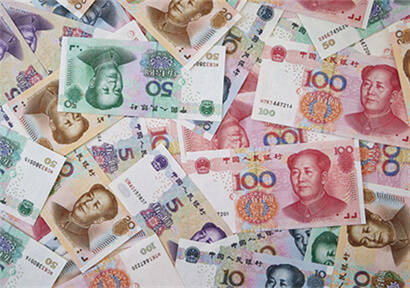
At a forum held by the Shanghai Institute of Finance and Law on June 28, Charles, Asia Chief Economist of the Asian Research Department of the Spanish Foreign Bank, said that the internationalization of RMB should follow the order of first interest rate liberalization, exchange rate liberalization, capital account financial reform, and then RMB internationalization. In his view, when the RMB tends to depreciate, if the order is reversed, it will have a negative impact.
Xialou takes the exchange rate reform on August 11, 2015 as an example, and points out the important relationship between RMB internationalization and exchange rate. On August 11, 2015, the People's Bank of China announced that it would adjust the quotation mechanism of the intermediate price of the RMB exchange rate against the US dollar, and market makers would provide the intermediate price quotation to the China Foreign Exchange Exchange Trading Center with reference to the closing exchange rate of the previous day's inter-bank foreign exchange market. This is a major reform of the RMB exchange rate formation mechanism. On August 11, the US dollar quoted an intermediate price of 6.2298 against the RMB, which was 1.86% lower than that of the previous trading day. However, the expectation of devaluation is too explicit, which makes the RMB continue to devalue. In October 2015, the central bank formally introduced macro-prudential measures to regulate cross-border capital flows in order to curb excessive volatility in the foreign exchange market.
Xia Le believes that one of the lessons of "811 Exchange Rate Reform" is to pay attention to the order of financial reform in the internationalization of RMB.
"When the RMB is expected to appreciate and the outside world has enough confidence in its economy and currency, everything is good. Because if we expand the capital account a little, everyone will rush to seize the RMB; if we widen the exchange rate range a little, it means that the RMB can rise more. Xia Le pointed out that under such circumstances, all aspects of reform can go hand in hand. But when RMB tends to depreciate, every step of RMB internationalization will have strong side effects on interest rate marketization and capital account opening. In Xia Le's view, the internationalization of RMB will bring uncertainties to exchange rate reform, because the two are mutually restrictive. He pointed out that the internationalization of the RMB means the net outflow of the RMB, and how long the net outflow can last depends on people's confidence in the RMB. Once confidence disappears, it becomes a net inflow, which means a net outflow of the corresponding amount of foreign exchange.
"[After 811], net outflow becomes net inflow, and foreign exchange reserve drops substantially, which will naturally affect people's confidence in the RMB, thus further depreciating the exchange rate." He said.
Xia Le also said that in the future deployment of RMB internationalization strategy, in addition to considering the affordability of the exchange rate market, we should also pay attention to the offshore market and the return of RMB overseas. He cited two examples. First, the offshore market, he said, before the "811" exchange rate reform, the RMB exchange rate tended to influence the decisions of both domestic and overseas markets, but because of the devaluation of the RMB after the exchange rate reform, the central bank was forced to intervene in the market, which led domestic traders to begin to pay attention to overseas prices. In less than a month, the pricing power of RMB has shifted from domestic market to overseas market. "This situation is very unfavorable, because the RMB can not be as strong as the US dollar, allowing overseas pricing." The second example is currency swap. Charles mentioned that Argentina suffered a serious currency devaluation in 2015. In order to stabilize the Argentine peso, the Central Bank of Arab Republic exchanged RMB for US dollars on the international market according to the currency swap agreement reached with the Central Bank of China. "Argentina's central bank has become the biggest short RMB in the international market. How much negative impact will this have on the exchange rate? If every swap opponent does this, the pressure of RMB exchange rate can be imagined. Therefore, Xia Le pointed out that it is not feasible to open up the free flow of RMB under capital alone. From the current point of view, Xia Le believes that under the background of Sino-US trade frictions, China's choice to open up to the outside world means that China will promote the reform of exchange rate and capital account, which will lay a solid foundation for the internationalization of RMB.

You May Interested In


High Quality β-Nicotinamide adenine dinucleotide CAS 53-84-9 NADwith ready stock and best price
$3/UNIT FOB


2026-10-16
Trade Alert
Delivering the latest product trends and industry news straight to your inbox.
(We'll never share your email address with a third-party.)

Related News
-
Renminbi loans increased by 1.06 trillion yuan in July
-
Will the Renminbi 'break 7'?
-
Glyphosate Faces New UK Pressure as EU Trade Alignment Returns to the Debate
-
U.S. API Dependence Turns Pharmaceutical Ingredients Into a National Security Issue
-
FDA Dye Phase-Out Push Opens a Bigger Window for Natural Color Solutions
-
Saudi Energy Facilities Hit as Middle East Feedstock Risk Spreads Toward the Red Sea
-
China Methanol Futures Hit Limit-Up as More Than 60% of Middle East Capacity Remains Offline
-
European Chemical Firms Face Pressure on First-Quarter Earnings as the War Shock Continues to Spread
-
Pharma Tariff Risk Pushes Global Drugmakers to Rebuild U.S. Supply Chains
-
Congo Copper and Cobalt Miners Are Being Forced to Cut Chemical Use as Middle East Conflict Hits the New Energy Supply Chain
Recommend Reading
-
![Global Bunker Fuel Deficit Widens, Raising the Risk of a Second Cost Shock for Chemical Shipping]()
Global Bunker Fuel Deficit Widens, Raising the Risk of a Second Cost Shock for Chemical Shipping
-
![Agrochemical Markets at a Crossroads: Winter Stockpiling Begins Amid Cost Pressures and Fragmented Demand]()
Agrochemical Markets at a Crossroads: Winter Stockpiling Begins Amid Cost Pressures and Fragmented Demand
-
![Jiangsu Fengshan Biochem Gears Up for Strategic Expansion in Selective Herbicide Intermediates and Active Ingredients]()
Jiangsu Fengshan Biochem Gears Up for Strategic Expansion in Selective Herbicide Intermediates and Active Ingredients
-
![Afidopyropen: The Silent Assassin of Sap-Sucking Pests—Promise, Pitfalls, and the Path to Sustainable Deployment]()
Afidopyropen: The Silent Assassin of Sap-Sucking Pests—Promise, Pitfalls, and the Path to Sustainable Deployment
-
![Moldova Proposes Stricter Quality Standards for Edible Casein and Caseinates]()
Moldova Proposes Stricter Quality Standards for Edible Casein and Caseinates
-
![How the Jianxiawo Lithium Mine Is Driving Trends in Lithium Carbonate Prices]()
How the Jianxiawo Lithium Mine Is Driving Trends in Lithium Carbonate Prices
-
![Business Society’s Market Outlook for Ammonium Sulfate on September 8, 2026: Clearly Upward Trend]()
Business Society’s Market Outlook for Ammonium Sulfate on September 8, 2026: Clearly Upward Trend
-
![关于加强防范钓鱼邮件的通知 Notification on Strengthening Anti-Phishing Measures]()
关于加强防范钓鱼邮件的通知 Notification on Strengthening Anti-Phishing Measures
-
![Business Society’s August 19, 2026 Cyclohexanone Market Outlook: Clearly Upward Trend]()
Business Society’s August 19, 2026 Cyclohexanone Market Outlook: Clearly Upward Trend
-
![Business Society’s September 9, 2026 Melamine Market Outlook: Market Sentiment is Bearish]()
Business Society’s September 9, 2026 Melamine Market Outlook: Market Sentiment is Bearish