Japan has extended its anti-dumping investigation into bisphenol A imports from South Korea and Taiwan by six months, moving the deadline to February 19, 2027.
The Ministry of Finance and the Ministry of Economy, Trade and Industry said the additional time was required to review evidence and documents submitted by interested parties while maintaining transparency and fairness in the investigation.
The extension does not mean that Japan has concluded that dumping occurred, and no anti-dumping duty has yet been imposed. A final measure would require the authorities to establish that the products were imported below their normal value and that those imports caused material injury to the corresponding Japanese industry.
For Korean and Taiwanese suppliers, however, the decision prolongs uncertainty over market access, contract pricing and future landed costs in Japan.
The case began with applications from two Japanese producers
The investigation was launched on August 20, 2025, after Mitsubishi Chemical Corporation and Mitsui Chemicals submitted an application to Japan’s finance minister on June 2 of that year.
After reviewing the application under Japanese law and World Trade Organization rules, the authorities concluded that sufficient evidence existed to begin a formal investigation. The process involves collecting and examining information from exporters, importers and domestic producers.
Japanese investigations are generally expected to be completed within one year, but the period may be extended by up to six months in special circumstances. The new February 2027 deadline uses the maximum extension permitted under that framework.
The decision suggests that the authorities still need time to reconcile complex information concerning export prices, production costs, trade flows and alleged injury to Japanese manufacturers.
The government has not disclosed a preliminary view on whether duties should be imposed, nor has it announced a possible duty rate. The extension should therefore not be interpreted as a finding against the suppliers under investigation.
A key feedstock for polycarbonate and epoxy resin
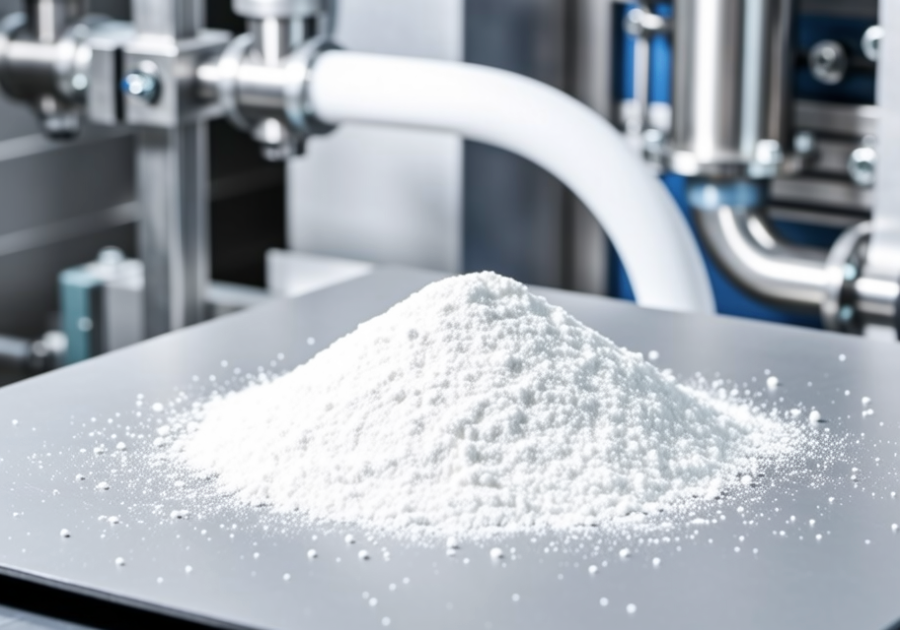
Bisphenol A is generally supplied as a white granular or powdered solid and is used mainly to manufacture polycarbonate and epoxy resins.
Polycarbonate is used in electrical equipment, automotive components, optical products, construction sheets and engineering plastics. Epoxy resins are important in coatings, adhesives, composites, electronic encapsulation and wind-turbine blades.
The commercial consequences of the investigation could therefore extend beyond the BPA market itself. Any eventual tariff could raise the cost of imported feedstock and affect downstream resin economics.
BPA is a comparatively standardized chemical intermediate, meaning purchasing decisions are particularly sensitive to price and supply reliability. A change in import duties could quickly alter the relative competitiveness of different suppliers.
South Korea and Taiwan are important Northeast Asian petrochemical and synthetic-material production centers. BPA plants in the region may be integrated with phenol, acetone, polycarbonate or epoxy-resin operations.
If access to the Japanese market becomes more expensive, producers may redirect cargoes to other Asian destinations or reduce prices to retain Japanese customers.
Japanese downstream manufacturers face a different risk. Reduced import competition could support the margins and utilization rates of domestic BPA producers, but it could also increase costs for companies that consume BPA in resin production.
Commercial uncertainty arrives before any tariff
Before the final determination, the most immediate impact may come from risk management rather than actual duty payments.
Japanese importers may add tariff-sharing clauses, price-adjustment mechanisms or alternative-supply provisions to long-term contracts. Exporters may shorten the validity of quotations to avoid being locked into prices that could become uneconomic after a duty decision.
Some buyers may temporarily reduce purchases from the investigated origins and increase procurement from Japanese producers or alternative overseas suppliers. Such precautionary changes can affect trade flows before the government reaches a final conclusion.
Suppliers must therefore manage two parallel tasks: defending their pricing during the investigation and maintaining customer confidence while the eventual outcome remains unknown.
If the investigation ends without duties, uncertainty should gradually recede. If Japan confirms both dumping and material injury, it may impose an additional customs duty not exceeding the calculated dumping margin.
A high duty could materially reduce Korean and Taiwanese sales into Japan. A lower rate might preserve trade but place more pressure on exporter margins.
Japan is making greater use of trade-remedy investigations
The BPA case forms part of a wider group of recent Japanese trade-remedy actions.
On the same day that the BPA investigation was extended, Japan issued a preliminary anti-dumping determination on hot-dipped galvanized steel from South Korea and China and extended that investigation. Other recent cases have involved stainless steel and potassium chemicals.
This does not amount to a general restriction on chemical imports. It does show, however, that Japanese manufacturers are increasingly prepared to use trade-remedy procedures as global overcapacity and aggressive pricing place pressure on domestic operations.
For Asian chemical suppliers, competitiveness in Japan can no longer be assessed through price alone. Export documentation, cost accounting, related-party transactions and changes in market share are becoming increasingly important compliance issues.
The final outcome of the BPA case remains open. What is already clear is that Korean and Taiwanese suppliers will face at least another six months of policy uncertainty, while Japanese buyers must prepare for several possible cost and sourcing scenarios.