Demand for clean labels in the United States, sensitive to cosmetic ingredient
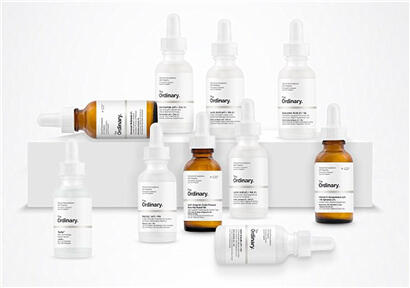
According to KOTRA New York Trade Museum news, because of the prevalence of health-care boom, consumers in the purchase of cosmetics, "clean", "sustainable", "natural", "non-added", "non-toxic", "vegetarian" and other products are greatly welcomed by consumers. With the increasing concern of consumers about whether to add preservatives, sulfates, talcum powder and other harmful ingredients in cosmetics, it is considered that "what ingredients and what ingredients are contained in products" is very important. Whether or not contains super food or vitamins, anti-aging, whitening, improving sleep disorders, and controlling emotional effects all have an impact on purchase decisions. Recently, skin care and body care products containing CBD in cannabis have attracted much attention.
KOTRA said that the demand for cosmetics will continue to expand due to the fitness and health boom, skin care sales continue to show a strong trend, men's beauty boom and active display of appearance through social platforms. With the increasing number of constituent parties, it is suggested that the focus of marketing should be on making good use of this point and applying for relevant certification.
The size of the cosmetics and personal care market in the United States has reached 89.57 billion US dollars, and has been growing steadily. According to Euromonitor data, the U.S. cosmetics and personal care market grew by 3.9% in 2017-201, reaching $98.192 billion by 2023. At present, L'Oreal USA and P&G account for more than 20% of the cosmetics and personal care market in the United States, while Estee Lauder, Unilever USA and Johnson & Johnson account for 36.4% of the market.
Recently, the United States has set off an online shopping boom, adding a number of small-scale emerging brands. In 2018, the sales created by cosmetics and personal care enterprises with less than 0.4% market share accounted for 24.9% of the total market, an increase of 3% over the same period of last year.
Especially with the expansion of online retail channels, online shopping products are increasing, and consumers'dependence on the Internet is increasing.
In 2018, the proportion of online sales in the US cosmetics and personal care market accounted for 13.5% of total sales, more than doubling compared with 2013, while the proportion of offline sales in physical stores decreased from 82.3% to 77% in the same period.
Online brands that sell directly to consumers through the Internet are also increasing. In order to strengthen consumers'brand experience and expand sales, increasing online retailing and increasing investment in digitization are becoming a trend.
KOTRA said that with the increasing proportion of online sales in the cosmetics market, online markets can be opened through online direct sales or through e-commerce platforms such as Amazon. With the increasing impact of the Internet on consumers'purchase decisions, marketing through social platforms should be formulated. Publicity strategy and commentary management.

You May Interested In


SS-31 Cosmetic peptides, discounted price improving cognitive impairment factory supply
$8E+1/UNIT FOB


2026-09-14
Trade Alert
Delivering the latest product trends and industry news straight to your inbox.
(We'll never share your email address with a third-party.)

Related News
-
Dubai clean energy power generation accounts for 14% of total power generation
-
Australia requires restaurants to show the country of origin of seafood on their menus
-
Some Lactobacillus genus names change, product labels must be updated
-
Epidemic accelerates shift toward clean fuels
-
To build a clean heating cooperation and development conference in the fields
-
Glyphosate Faces New UK Pressure as EU Trade Alignment Returns to the Debate
-
FDA’s Review of BHT and ADA Signals a New Era for Food Additive Compliance
-
Syngenta Bee Pesticide Protest Shows the Pressure Building Around Crop Protection Giants
-
FDA Delays Beetroot Red and Spirulina Color Orders
-
GM Crop Area Reaches 216 Million Hectares
Recommend Reading
-
![GM Crop Area Reaches 216 Million Hectares]()
GM Crop Area Reaches 216 Million Hectares
-
![FDA Pushes New Approach to “No Artificial Colors” Claims]()
FDA Pushes New Approach to “No Artificial Colors” Claims
-
![FDA approves bemotrizinol, a long-used UV filter, for U.S. sunscreens]()
FDA approves bemotrizinol, a long-used UV filter, for U.S. sunscreens
-
![FDA Slams Door on Chinese Food Exports: Inspection Refusals Trigger Automatic Detentions]()
FDA Slams Door on Chinese Food Exports: Inspection Refusals Trigger Automatic Detentions
-
![U.S. Formally Publishes India PFA Trade Cases, Raising New Barriers for Fluoropolymer Supply]()
U.S. Formally Publishes India PFA Trade Cases, Raising New Barriers for Fluoropolymer Supply
-
![MTBE Market Trend Consolidates Weakly]()
MTBE Market Trend Consolidates Weakly
-
![Premium Global Chemical Sourcing Requests (26 - 30 Jan, 2026)]()
Premium Global Chemical Sourcing Requests (26 - 30 Jan, 2026)
-
![Widening Downward Spread, Weekly Decline in n-Butanol Exceeds 5%]()
Widening Downward Spread, Weekly Decline in n-Butanol Exceeds 5%
-
![This Week's Isopropanol Market Prices First Increased Then Decreased in China (5.18-5.22)]()
This Week's Isopropanol Market Prices First Increased Then Decreased in China (5.18-5.22)
-
![Sodium Metabisulfite Prices Declined in September]()
Sodium Metabisulfite Prices Declined in September