




July's decline in automobile production and sales narrowed
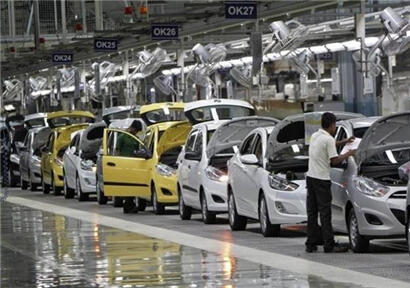
On August 12, the China Automobile Industry Association (hereinafter referred to as the "China Automobile Association") released July automobile production and sales data. July automobile production and sales completed 1.8 million and 1.08 million vehicles respectively, with a 5% and 12.1% annualized decrease respectively, 11.9% and 4.3% year-on-year decrease respectively, and a 5.4 and 5.3 percentage points decreased year-on-year compared with June respectively. From January to July, the production and sales of automobiles were 13.933 million and 14.132 million, respectively, which decreased by 13.5% and 11.4% year-on-year respectively, and the decline in production and sales was 0.2 and 1 percentage point narrower than that in January to June, respectively.
In this regard, Assistant Secretary-General Chen Shihua of the China Automobile Association said that although production and sales fell in July compared with the same period last year, the decline was narrower than that in June. The low value of production and sales in the same period last year was an important reason, which could not explain that the overall market had improved. From January to July, the production and sales of automobiles are still at a low level. In addition , another noteworthy point is that the new energy automobile market, which has been showing a hot performance, declined for the first time in nearly two years in July. Xu Haidong, Assistant Secretary-General of the China Automobile Association, said that the main reason was that the new energy automobile market had released a lot of sales before the end of the policy in June, which constituted a certain overdraft to the July market.
Other industry analysts believe that in the post-subsidy era, the sales of new energy vehicles still depend on the double-point policy and the 2B-end rental market to stimulate.
Passenger cars continued to narrow year-on-year decline in autonomous share and then decreased again. In July, China's automobile production and sales were 1.8 million and 1.08 million vehicles, respectively, down 5% and 12.1% annually, down 11.9% and 4.3% year-on-year respectively, and 5.4% and 5.3% year-on-year decline respectively. The production and sales of commercial vehicles were 277,000 and 281,000 respectively, which were 6.4% and 14.6% lower than that of the previous year, and 12.7% and 6.4% lower than that of the previous year, respectively. The production and sales of passenger vehicles decreased by 4.7% and 11.6% respectively, 11.7% and 3.9% respectively. The decline in production and sales was slightly smaller than the overall level of automobiles, which was 5.5 and 3.9 percentage points narrower than that of last month.
Sales of 553,000 brand passenger cars in China dropped 13.3% year on year, and market share dropped 3.9 percentage points to 36.2%. July entered the off-season of traditional automobile sales, and the ring ratio showed a decline. This month, only SUVs and buses showed growth year on year, while the rest showed a downward trend.
Chen Shihua said that from January to July, the overall production and sales of automobiles are still at a low level. With the increasing number of Guoliu vehicles, the promotion efforts of enterprises will be reduced, and the consumer's wait-and-see mood is expected to be improved.
Xu Haidong said that although the decline in July deviated from his personal expectations, he believed that the data in August would be better, and the following factors, such as seasonal consumption of "gold, nine silver and ten silver", were expected to pick up in the second half of this year when the base of last year was not high. However, Shi Jianhua, deputy secretary-general of the Chinese Automobile Association, stressed that the current Chinese automobile market has departed from the era promoted by the state's "real gold and silver" financial subsidies, and that even the new support policy is adjusting towards improving the long-term development environment. As for the decline in sales of commercial vehicles, Chen Shihua believes that it is mainly affected by trucks, especially heavy trucks, which are directly related to national infrastructure investment, while medium and light trucks are affected by this year's "big tonnage and small standard" governance and suffer a large decline in sales.
In addition, in July, 553,000 brand passenger cars were sold in China, down 13.3% from the same period last year, and the market share dropped by 3.9 percentage points to 36.2%.
From January to July, the sales of self-owned brand passenger cars totaled 4551,000, down 20.8% from the same period last year, and the market share was 39.1%, down 3.9% from the same period last year. From January to July, the market share of self-owned brand cars, SUVs and MVPs were 19.9%, 52.7% and 75.1% respectively, which were 0.9 percentage points, 7.3 percentage points and 2 percentage points lower than the same period last year. Xiao/p>Xu Haidong believes that in the face of pressure, there is no shortcut and no "fresh" way. Enterprises still need to return to the product itself, steadfastly improve their product quality, enhance competitiveness, and obtain consumer recognition in order to survive in the competition.
New energy vehicles declined. Analysts: Relying on double integrals and 2B stimulation
July, new energy vehicles production and sales showed the first year-on-year decline, and the ring-to-ring ratio and the same ratio decreased. In the same month, 84,000 and 80,000 vehicles were produced and sold, respectively, which were 37.2% and 47.5% lower than the previous month, and 6.9% and 4.7% lower than the previous year. Among them, the ratio of production and marketing rings of pure electric vehicles and plug-in hybrid electric vehicles decreased, and the decline of pure electric vehicles was more obvious.
From January to July, the production and sales of new energy vehicles increased by 39.1% and 40.9% respectively, compared with the same period of last year, with a slight drop in growth rate from January to June, and a sharp drop compared with the same period of last year.
Among them, 558,000 and 551,000 pure electric vehicles were produced and sold, respectively, up 46.3% and 47.8% over the same period last year; 141,000 and 146,000 plug-in hybrid electric vehicles were produced and sold, respectively, up 15.6% and 18.9% over the same period last year; 1176 and 1106 fuel cell vehicles were produced and sold, respectively, compared with the previous year. In the same period, they increased 8.8 times and 10.1 times respectively.
Regarding the decline in sales of new energy vehicles in July, Chen Shihua said that due to the expiration of new energy vehicle subsidies in June, sales of new energy vehicles, especially passenger vehicles, fell sharply in July, and sales were also lower than the same period last year.
"The new energy automobile market in June rushed to release a batch of sales before the end of the policy, which constituted a certain overdraft to the July market." Xu Haidong said.

You May Interested In


High Quality β-Nicotinamide adenine dinucleotide CAS 53-84-9 NADwith ready stock and best price
$3/UNIT FOB


2026-10-09
Trade Alert
Delivering the latest product trends and industry news straight to your inbox.
(We'll never share your email address with a third-party.)

Related News
-
China丨Hot weather continues, fertiliser companies shut down in Sichuan and Chongqing
-
Anhui Huaplastics to build 120,000 tonnes PBAT/PBS integrated project
-
China February Epichlorohydrin Production and March Forecast
-
Earning Nearly 100 Million a day, Tesla Has a Way
-
Burst! Nearly 10,000 Chemical Plants Shut Down! 'Suspension' Comes Anytime!
-
Companies have 'holidays' one after another! A new round of 'price hikes' is coming...
-
Angel Yeast Yunnan Plant adds a new yeast extract production line with a production capacity of 15,000 tons
-
OPEC + reduction of production scale, international oil prices fluctuate
-
SweeGen Stevia Sweetener Reb B achieves commercial production
-
Bachem invests one million Swiss francs in emergency production of propofol
Recommend Reading
-
![“Oil Sheikhs” Buy Germany’s Chemical Crown: A €14.7 Billion Green Gamble or a Power Play in the Age of Carbon Neutrality?]()
“Oil Sheikhs” Buy Germany’s Chemical Crown: A €14.7 Billion Green Gamble or a Power Play in the Age of Carbon Neutrality?
-
![UAE Withdraws from OPEC]()
UAE Withdraws from OPEC
-
![From “10,000-Ton Bet” to “5,000-Ton Test”: Acore’s Polyetheramine Dilemma—Is This a Symptom of Industry Winter or the Prelude to Strategic Retreat?]()
From “10,000-Ton Bet” to “5,000-Ton Test”: Acore’s Polyetheramine Dilemma—Is This a Symptom of Industry Winter or the Prelude to Strategic Retreat?
-
![The US Fertilizer Probe Is About More Than Pricing — It Is About Power]()
The US Fertilizer Probe Is About More Than Pricing — It Is About Power
-
![TAKAI Is Being Sold as More Than an Insecticide, and That Is the Point]()
TAKAI Is Being Sold as More Than an Insecticide, and That Is the Point
-
![High Inventory Levels Lead to Stable Operation in the Coke Market]()
High Inventory Levels Lead to Stable Operation in the Coke Market
-
![Cost Pressure Rises, Anhydrous Hydrogen Fluoride Prices Increase in China]()
Cost Pressure Rises, Anhydrous Hydrogen Fluoride Prices Increase in China
-
![Cost Support, Supply Tightening, PTA Prices Fluctuating and Rising]()
Cost Support, Supply Tightening, PTA Prices Fluctuating and Rising
-
![Cost Benefits Drive Shandong Cyclohexanone Prices Upward Along with Raw Material Prices]()
Cost Benefits Drive Shandong Cyclohexanone Prices Upward Along with Raw Material Prices
-
![Raw Material Support Drives Uptick in Adipic Acid Prices]()
Raw Material Support Drives Uptick in Adipic Acid Prices





- Hot Searches
- ethylene price
- samarium oxide 3n price 2025
- industrial carbon black pigment supplier
- phosphorus oxychloride sds
- n-isopropylbenzylamine for sale
- price acetic acid
- research chemicals benzodiazepines
- price of barite
- saudi chevron phillips s chem
- 1 bromo 4 fluorobenzene
- raw steroid powders
- cost of graphite