Bulk Coal Treatment is the Key to Clean and Efficient Utilization of Coal
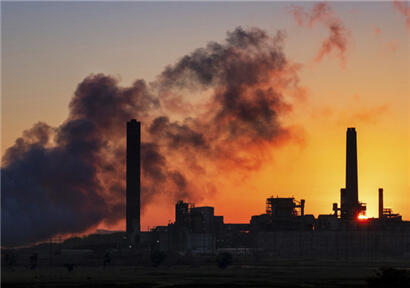
Bulk coal treatment is an urgent task for energy saving, emission reduction and environmental improvement in China. It is also a necessary means to improve energy consumption structure and reduce pollutant emissions in China. As soon as the heating season enters, scattered coal heating with a wide range of points has once again become the focus of attention from all walks of life.
Recently, the International Clean Heating Summit was held in Xi'an, Shaanxi Province in 2019. Wu Xianfeng, deputy director of the Department of Atmospheric Environmental Management of the Ministry of Ecology and Environment, said that by the end of 2018, 10 million households of loose coal had been treated in Beijing, Tianjin, Hebei and surrounding areas, of which about 5.8 million households had been converted from coal to gas, 3.6 million had been converted from coal to electricity and centralized geothermal heating had been completed. It can replace about 600,000 households. Bulk coal management is an important measure to promote the structural reform of supply side and improve the rural human settlements environment, and it is also the key to promote the clean and efficient utilization of coal.
The consumption of bulk coal in China is about 600 million tons
Bulk coal refers to bulk coal burning other than centralized coal burning in power and industry, including coal burning in small boilers and kilns, and dispersed coal burning in residential and service industries. Most of them are high-sulfur and inferior coal burned directly without clean treatment. According to Professor Zhang Qiang of Tsinghua University, "Bulk coal is usually inferior coal with high ash and sulfur content. When burning, there is often a lack of desulfurization, denitrification and dust removal treatment. Direct-fired direct-fired direct-fired direct-fired exhaust has a wide range of points, and the pollution is very serious, and it is difficult to supervise." According to statistics, the atmospheric pollution from 1 ton of bulk coal is 10-15 times as much as that from electric coal. About 20%~25% of coal combustion in China is loose coal, with annual consumption of 600 million to 700 million tons. Among them, civil domestic coal burning is about 234 million tons per year, and rural domestic coal burning is 220 million tons per year, accounting for 94% of civil domestic bulk coal consumption. The consumption of civil bulk coal has obvious spatial and temporal distribution characteristics. The peak of consumption is the winter heating period, and mainly in the northern rural areas.
Since 2013, with the vigorous promotion of air pollution prevention and control, bulk coal treatment and clean heating in the north have been put on an important agenda as an important popular and livelihood project. In recent years, under the background of controlling coal haze and promoting clean heating in the north, this important livelihood project has been significantly accelerated. Beijing-Tianjin-Hebei and its surrounding "2+26" air pollution transmission channel cities, Fenwei Plain 11 cities and other key areas have been increasing efforts to control loose coal. The purpose is to take air pollution control as the goal, to transform energy consumption as the grasp, to combine comprehensive control of loose coal with clean heating in the north, and to win the "Blue Sky Defense War". Upgrading to a new and higher level, the clean and efficient use of coal as a popular project, people's livelihood project to do a good job. At present, clean and efficient utilization of coal in China has been on the right track and achieved good results in emission reduction of coal-fired power plants, but the path of clean and efficient utilization of loose coal is still unclear. Compared with coal-fired power plants, the scattering of loose coal has become the key to its governance difficulties. According to incomplete statistics, among 160 million rural households in China, about 93 million households adopt decentralized heating mode, of which 66 million households adopt coal-fired heating and 200-300 million tons of bulk coal are used, accounting for about 10% of the total consumption of coal. There are about 120 million civil heating cookers. Nearly 80% of the residents use inefficient cookers and use low-quality and high-sulfur bituminous coal. The pollutants discharged from low-altitude direct combustion of low-quality bulk coal are 10-20 times as much as those from super-clean large-scale boilers, accounting for more than 50% of the total pollutants discharged from coal combustion. At present and in the future, the combustion and emission of civil bulk coal is still an important cause of large-scale heavy pollution. Therefore, it is of great practical significance to strengthen clean and efficient utilization of coal and control of loose coal for prevention and control of air pollution and improvement of ecological environment.
In order to control loose coal, the control measures are constantly increasing, and the national level pays special attention to the control of loose coal. In June 2018, the State Council promulgated the "Three-year Action Plan for Winning the Blue Sky Defense War", which made a systematic deployment for the next three years. That is to say, before the heating season 2020, on the premise of ensuring energy supply, the plain areas of Beijing, Tianjin, Hebei and the surrounding areas, Fenwei Plain basically completed the life and winter heating of loose coal substitution.
Bulk coal control should be combined with energy revolution
Bulk coal control is obviously not only about loose coal. The use of low-quality and low-efficiency coal is not in line with the national strategy of clean and efficient utilization of coal. Liu Weiming, Secretary-General of the Economic and Social Council of China, once lamented: "Bulk coal has become the difficulty of clean and efficient utilization of coal in China." It is no exaggeration to say that the success or failure of bulk coal management is related to the progress of transformation and upgrading of China's coal industry. Luo Guoliang, a professor in the School of Economics and Management, North China Electric Power University, believes that clean development and utilization of rural energy is not only related to energy development and environmental protection, but also to rural energy equity. It challenges the traditional way of energy production and consumption in rural areas. The realistic requirement is to change from "extensive supply to meet the demand of excessive growth" to "scientific supply to meet reasonable demand". Promoting the energy consumption revolution is an important way to solve this problem. In this regard, Wu Yin, former deputy director of the State Energy Administration, proposed that we should combine the management of loose coal with the promotion of the energy revolution and the structural reform of the coal supply side to make a breakthrough in concept and realize the importance of the management of loose coal. Through optimizing production layout, strengthening site management and increasing coal washing rate, coal enterprises should ensure that their production and processing meet the quality standards of coal products; through strict control of coal circulation links, promote the use of energy-saving and environmental protection stoves, etc.

You May Interested In


High Quality β-Nicotinamide adenine dinucleotide CAS 53-84-9 NADwith ready stock and best price
$3/UNIT FOB


2026-10-18
Trade Alert
Delivering the latest product trends and industry news straight to your inbox.
(We'll never share your email address with a third-party.)

Related News
-
Coal Price Surge Coupled with El Niño Drives Urea Up by RMB 100/Ton in a Single Day
-
Coal prices soared, South Africa's Thungela company doubled its annual profit
-
Chemical Enterprises Collectively Stop Production! Supply 'Urgent'
-
Power coal price in Zhejiang Province decreased by 4.0% YoY
-
Oil And Coal Fell, With Collapse And Plasticization Market! PE, PP Fell Over 300
-
The Output Of Major Energy Products Increased Year-on-year in November
-
Mitsubishi Chemical Announces: Withdrawal from Petrochemical And Coal Chemical Business
-
Pure benzene price rebound
-
[ethylene glycol] : Coal fell rapidly, ethylene glycol followed
-
The National Bureau of Statistics release China's energy production in July
Recommend Reading
-
![Trinseo Faces Pressure in Resin Markets but Sees Growth in Recycled Products]()
Trinseo Faces Pressure in Resin Markets but Sees Growth in Recycled Products
-
![Sika Undertakes Structural Adjustments Amid Weak Markets]()
Sika Undertakes Structural Adjustments Amid Weak Markets
-
![European Chemical Firms Face Pressure on First-Quarter Earnings as the War Shock Continues to Spread]()
European Chemical Firms Face Pressure on First-Quarter Earnings as the War Shock Continues to Spread
-
![Congo Copper and Cobalt Miners Are Being Forced to Cut Chemical Use as Middle East Conflict Hits the New Energy Supply Chain]()
Congo Copper and Cobalt Miners Are Being Forced to Cut Chemical Use as Middle East Conflict Hits the New Energy Supply Chain
-
![Pharma Tariff Risk Pushes Global Drugmakers to Rebuild U.S. Supply Chains]()
Pharma Tariff Risk Pushes Global Drugmakers to Rebuild U.S. Supply Chains
-
![Production and Sales Pressure Eases; PC Prices Stabilize for Late November]()
Production and Sales Pressure Eases; PC Prices Stabilize for Late November
-
![Traditional Peak Season Arrives, Palm Oil Prices Expected to Rise in China]()
Traditional Peak Season Arrives, Palm Oil Prices Expected to Rise in China
-
![Palm Oil Market Strengthens in March]()
Palm Oil Market Strengthens in March
-
![DMF Market Primarily Operates Strongly]()
DMF Market Primarily Operates Strongly
-
![On March 18, the Chinese epichlorohydrin market continued to decline]()
On March 18, the Chinese epichlorohydrin market continued to decline