




Is A Nucleic Acid A Polymer
Have you considered that is a nucleic acid a polymer? The development of nucleic acid polymers (NAPs) has led to drug candidates in the field of hepatitis B and D research, especially in the last two years, and the potential of NAPs in the treatment of hepatitis D has been demonstrated by researchers and is under further development.
The sudden sight of nucleic acid polymers for the treatment of hepatitis B virus co-infection with hepatitis D virus at last year's Liver Congress caused us some concern about their development in terms of new drugs for hepatitis B. In fact, NAPs are only being used by researchers for clinical development in HBV/HDV because of their potential drug development value in either HBV or HBV/HDV. Scientists study that is a nucleic acid a polymer.
In the case of Replicor's investigational hepatitis B or combined hepatitis D drug REP 2139, for example, researchers conducted clinical studies of REP 301 and REF 301-LTF in HBV/HDV co-infected subjects based on promising results in HBV infection with REP 2139 alone. 12 chronic hepatitis D subjects (CHD) received weekly intravenous ( IV) REP 2139-Ca (500 mg) for 15 weeks, followed by 15 weeks of IV REP 2139-Ca (250 mg) in combination with PEG IFN-α and finally 33 weeks of PEG IFN-α treatment alone.
The results showed that a total of 11 of 12 subjects (91%) were HDVRNA negative during the above therapy, 9 subjects (75%) remained HDVRNA negative at the end of treatment, and 7 subjects (77%) had persistently undetectable HDVRNA during the 1-year follow-up at the end of treatment. the most common adverse effects during treatment were thrombocytopenia, neutropenia, and elevated ALT levels.
To further evaluate the long-term safety, tolerability and durability of virologic control and functional cure, the researchers continued the REP 301-LTF study with a 3.5-year follow-up of 11 subjects. Results showed that 7 of the 11 subjects (63%) achieved sustained virologic responses, with no additional safety or tolerability signals observed. While these results above look promising in terms of specifically treating hepatitis D, researchers have begun broader studies to understand the mechanism of action and safety of these NAPs compounds. Some experiments argue that is a nucleic acid a polymer. So, is a nucleic acid a polymer?
In terms of hepatitis B research, the nucleic acid polymer REP2139 therapy itself has been accompanied by rapid downregulation of hepatitis B surface antigen HBsAg levels in the blood and liver in preclinical and clinical studies of HBV infection. As chronic hepatitis B is burdened by immunosuppression, the elimination of these burdens with NAPs is accompanied by other antiviral response treatment outcomes (in terms of efficacy), including HBsAg serologic conversion, HBeAg seroconversion (in HBeAg-positive patients), HBVDNA clearance and HBVRNA clearance (specifically for defective non-infectious viruses) and inhibition of viral replication at an early stage ( cccDNA).
In preclinical studies, REP2139 achieved sustained control of HBV infection in the liver (inactive) cccDNA with lower levels or undetectable HBsAg (functional cure) after removal of all treatments for HBVDNA and early cccDNA reduction. With HBsAg levels regulated down to levels below 1 IU/mL (down to 0.005 IU/mL), the majority of subjects (typically 4-7 log reduction from baseline) increased different immunotherapies, also accompanied by restoration of human immune control (trial data and conclusions from: Replicor's published progress at liver conferences in previous years).
Looking for chemical products? Let suppliers reach out to you!
Are All Proteins Enzymes?
You May Interested In


Glow70/KLOW80 99% China Peptides Warehouse Direct Delivery Lyophilized Powder in Stock
$169/UNIT FOB


2026-10-19
Trade Alert
Delivering the latest product trends and industry news straight to your inbox.
(We'll never share your email address with a third-party.)

Related News
-
A Look At The Importance Of Taking Vitamin Supplements
-
Is it feasible to obtain abiogenesis replicated in lab? Amino acids found on the asteroid by Hayabusa 2
-
Is There Water On The Moon
-
Proteins Are Made Of AI
-
Ddiels Alder Reaction Rates And 'Bioorthogonal Engineering' Based Membrane Potential Probes In The Far Red Zone
-
The Role And Color Of Potassium Permanganate Solution
-
Materials That Keep You Warm Under The Spotlight At The Beijing Winter Olympics
-
Which Of The Following Require The Cell To Use Atp
-
Why Is Borax Banned In Uk
-
Have You Noticed Things That Are Gray In The Scientific Community?
Recommend Reading
-
![Benzoylecgonine: Detection and Testing Methods]()
Benzoylecgonine: Detection and Testing Methods
-
![Why You Should Never Mix Bleach and Vinegar]()
Why You Should Never Mix Bleach and Vinegar
-
![Understanding the Arsenate Symbol and Its Uses]()
Understanding the Arsenate Symbol and Its Uses
-
![What Color Should a Zinc-Copper Couple Be?]()
What Color Should a Zinc-Copper Couple Be?
-
![Raw Material Strength and Weak Demand Lead to PC Fluctuations in January in China]()
Raw Material Strength and Weak Demand Lead to PC Fluctuations in January in China
-
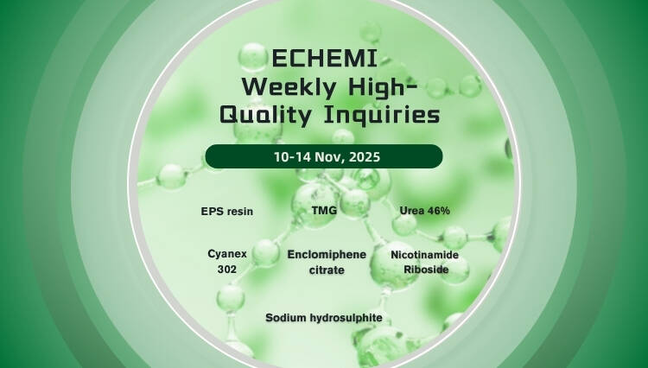
![Premium Global Chemical Sourcing Requests (10-14 Nov 2025)]()
Premium Global Chemical Sourcing Requests (10-14 Nov 2025)
-
![Geopolitical Risks Ease & Demand Weakens—Crude Oil Slides to a Phase-Low Level]()
Geopolitical Risks Ease & Demand Weakens—Crude Oil Slides to a Phase-Low Level
-
![On January 15, China's titanium dioxide market remains firm and upward]()
On January 15, China's titanium dioxide market remains firm and upward
-
![Jin Jiu Kicks Off with a Strong Start; Cyclohexanone Prices Rise 5.44% Over Two Days]()
Jin Jiu Kicks Off with a Strong Start; Cyclohexanone Prices Rise 5.44% Over Two Days



- Hot Searches
- 5 aminolevulinic acid price
- where can i buy reta peptide
- retatrutide where can i get it
- chemical market prices
- alpha olefin sulfonate price
- lithium nitrate
- where can you buy sulfur hexafluoride
- best research chemical websites
- johnson matthey chemical products
- penetane
- caustic soda pearls supplier
- zirconium silicate