the power industry is facing a reshaping
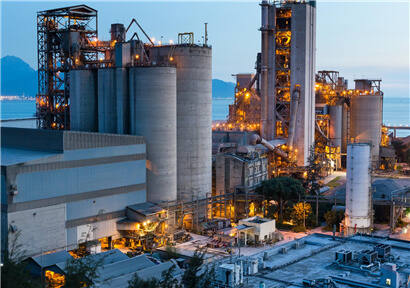
The executive meeting of the State Council held on September 26 pointed out that from January 1, next year, the linkage mechanism of coal and electricity prices will be abolished and the benchmark price mechanism will be replaced by the market mechanism of "benchmark price + fluctuation".
coal and electricity price linkage mechanism has a long history. In December 2004, the national development and Reform Commission issued the "opinions on establishing coal electricity price linkage mechanism", called for strengthening the monitoring of the price of electric coal, implementing the linkage of coal and electricity prices, regulating the price of electric coal properly, and strengthening the supervision and inspection of the price of electric coal. The background of this mechanism is that coal-fired power units account for more than 50% of total power generation and 60% of total power generation, while fuel costs account for about 70% of the operating costs of coal-fired power units. The change of coal price has a great impact on the marginal profit margin of units.
Coal-electricity price linkage mechanism aims at straightening out the relationship between coal-electricity price and promoting comprehensive, coordinated and sustainable development of coal and power industry. The above opinions also put forward some measures, such as linkage between electricity price on the grid and coal price, linkage between sales price and electricity price on the grid, and determination of linkage period of electricity price.
Statistics show that, after the establishment of the coal-electricity linkage regulation mechanism, up to 2015, the coal-electricity linkage has undergone 20 adjustment window periods. Among them, 11 adjustments have been made to the benchmark price of coal-power units nationwide, of which 8 have been carried out, including 6 increases and 2 decreases.
In view of the operation of the coal-electricity linkage regulation mechanism up to 2015, Ping An Securities believes that there is no strong correlation between the implementation of the coal-electricity linkage and the operation of the national economy. The main factor depends on the non-policy factors which are flexibly adjusted according to the actual situation, except for the change of coal price. Journalist
noted that the National Development and Reform Commission issued the Notice on Improving the Linkage Mechanism of Coal and Electricity Prices in December 2015, and adjusted the Linkage Mechanism of Coal and Electricity Prices, which has been implemented for 12 years. It made clear that the formulas for calculating the benchmark price of coal-fired units on-line and the sale price are strictly determined according to the Linkage Mechanism of Coal and Electricity Prices.
Judging from the operation of the new mechanism, 2017 is the first window period of the new mechanism, but in fact it does not trigger the implementation conditions of the new mechanism. At that time, a special case was that coal prices began to rise rapidly in mid 2016, and nearly doubled in half a year. Thermal power enterprises were basically in a state of overall deficit, which was later eased by government departments.
2018 is the second window period of the new mechanism. The data of Ping An Securities show that the average grid price of coal-fired units on January 1, 2018 should theoretically increase by about 3.67 cents/kWh compared with the benchmark price adjusted on July 1, 2017. However, due to the 10% reduction in industrial and commercial electricity prices in 2018, the price linkage of coal and electricity is stranded here.
As the price of electricity and coal in the whole year of 2018 is further higher than that in 2017, the average electricity price of coal-fired units on the grid on January 1, 2019 should be increased by about 4.40 cents/kWh compared with the benchmark price adjusted on July 1, 2017. However, one factor that can not be ignored is that the government work report in 2019 once again proposed that the average electricity price of general industry and commerce should be reduced by 10%.
Ping An Securities holds that it is only a luxury to reduce the general industrial and commercial electricity price in downstream sales for two consecutive years, and to implement the coal-electricity linkage increase on the upstream generation side. The coal-electricity price linkage mechanism is either in existence or extinct. From the information disclosed by the executive meeting of the State Council, it can be seen that the linkage mechanism of coal and electricity prices has indeed reached the end of its fate. Ping An Securities analysis said that behind the abolition of the coal-electricity linkage mechanism is the challenge or even subversion of the coal-electricity benchmark price system; with the end of the benchmark price system, the era of bidding on the Internet is coming.
Ping An Securities believes that bidding for the Internet will have a huge impact on the entire power sector. The industry pattern may change dramatically, or the system will be reshaped. In the case of the same-field game of different types of power sources, hydropower and nuclear power, which have more advantages at the cost side, will be more competitive than coal-fired power.
An industry analyst who did not want to be named told reporters that the overall demand for coal had not been affected by the constant total thermal power generation. It stipulates that the price of electricity should not rise more than 15%, which is essentially a kind of protection for power plants, fearing that the price war is too fierce and the impact is slightly smaller than previously expected. In addition, he also believes that the profits of power plants will be divided and increased, and that enterprises with strong cost advantages will increase the hours of generating electricity through price reduction, and that the growth of generating capacity will compensate for the limited price reduction, so that profits may not necessarily decline or rise. Cost-effective power plants may have both hours and electricity prices falling. In the long run, it is conducive to the concentration of production capacity of thermal power enterprises. The abolition of the linkage mechanism of coal and electricity prices will benefit the coal enterprises in Western China and the enterprises with a high proportion of the sales volume of the CPPCC.

You May Interested In


High Quality β-Nicotinamide adenine dinucleotide CAS 53-84-9 NADwith ready stock and best price
$3/UNIT FOB


2026-10-17
Trade Alert
Delivering the latest product trends and industry news straight to your inbox.
(We'll never share your email address with a third-party.)

Related News
-
The operating conditions of the German chemical industry have further deteriorated
-
How can we use nitrogen as fuel in various industry?
-
Nepal consumes 800 metric tons of pesticides every year
-
China's pesticide and fertilizer market seeks biological alternatives
-
China丨“Top 50 Exporting Companies of China Agrochemical in Year 2021” List Released
-
CBI faces up to triple risks at home and abroad, will focus on five areas
-
Three Capabilities Activates New Kinetic Energy of Future Industry.
-
Rising Global Demand for Shrimp Products will Boost Indian Seafood Export Earnings
-
The economic performance of the rubber industry has improved in May
-
The pharmaceutical industry will undergo four major changes
Recommend Reading
-
![South Africa Wants Lenacapavir at Home, Not Just Imported]()
South Africa Wants Lenacapavir at Home, Not Just Imported
-
![USDA Puts Fresh Money Into Local Food Markets]()
USDA Puts Fresh Money Into Local Food Markets
-
![Affordable GLP-1s Could Rewrite the Global Obesity Market]()
Affordable GLP-1s Could Rewrite the Global Obesity Market
-
![India’s Latest Manufacturing Clarification Is Really a Delayed Regulatory Line in the Sand]()
India’s Latest Manufacturing Clarification Is Really a Delayed Regulatory Line in the Sand
-
![Global Ag M&A in 2025 Looked Less Like Expansion and More Like Selection]()
Global Ag M&A in 2025 Looked Less Like Expansion and More Like Selection
-
![Bovine Serum Albumin (BSA): Role in Cell Culture & Laboratory Applications]()
Bovine Serum Albumin (BSA): Role in Cell Culture & Laboratory Applications
-
![February 10 Isopropanol Market Remains Stable in China]()
February 10 Isopropanol Market Remains Stable in China
-
![Premium Global Chemical Sourcing Requests (4-7Jun, 2026)]()
Premium Global Chemical Sourcing Requests (4-7Jun, 2026)
-
![This Week's Caustic Soda Prices Remain Firm (3.16-3.20)]()
This Week's Caustic Soda Prices Remain Firm (3.16-3.20)
-
![Understanding PCl5: Compound Name and Uses]()
Understanding PCl5: Compound Name and Uses