What are the Chemical properties of phenolphthalein
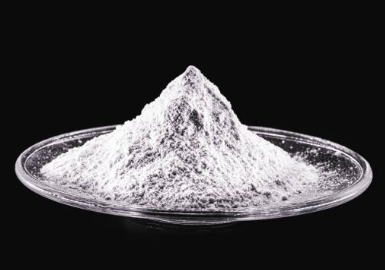
Many people need to know what are chemical properties of phenolphthalein that phenolphthalein is a weak acid that is mainly used as an indicator in titrations, but also has other uses. Phenolphthalein is a chemical that is used mostly in an aqueous solution, but can be used in other media such as alcohol. Phenolphthalein has a high melting point. The melting point of phenolphthalein depending on what type of solvent it is in. When phenolphthalein is mixed with water, the melting point of phenolphthalein goes up to 228 degrees Celsius and when mixed with an organic solvent (alcohol), the melting point of phenolphthalein goes up to 240 degrees Celsius.
Chemical properties of phenolphthalein
1. Phenolphthalein is a weak acid
This means that when phenolphthalein comes in contact with a stronger base it will donate a proton(H+) to the stronger base. Phenolphthalein has a pKa of 9.1, this means that when phenolphthalein is in water it has a very high concentration of H+. Thus, when phenolphthalein comes in contact with an alkali hydroxide, like sodium hydroxide, it will dissociate and give up its H+ to the hydroxide ion from the sodium hydroxide.
2. Phenolphthalein has a high melting point
When a compound has a high melting point there are many strong intermolecular interactions that hold the molecules together when the compound is solid. Phenolphthalein's boiling point is about 320 degrees Celsius and its melting point is 228 degrees Celsius; this is above room temperature. The stronger intermolecular interactions neutralize each other and prevent the molecules from breaking apart in the liquid state at room temperature. The more polar compounds have higher melting points than compounds with less polarity since the polar bonds are stronger than non-polar bonds.
3. Phenolphthalein is soluble in both water and organic solvents
Phenolphthalein's solubility depends upon the solvent that it is dissolved in. When phenolphthalein is dissolved in water the concentration of phenolphthalein is less than 1 g/L since phenolphthalein is a weak acid it will dissociate and produce free H+ ions that will cause many of the molecules to come out of solution. When phenolphthalein is dissolved in an organic solvent, (e.g. alcohol), the phenolphthalein itself is dissolved but the base that phenolphthalein gives up its proton to will not be able to come out of solution since there are no free H+ ions that can come out of solution.
4. Phenolphthalein has few solubility restrictions
Phenolphthalein's solubility is not very dependent upon temperature. The solubility of phenolphthalein has large positive entropies of solutions, but large negative entropies of mixing at 25 degrees Celsius. This means that phenolphthalein is mainly soluble in water, but also soluble in other organic solvents, but there is an increase in entropy of the solvent when added to phenolphthalein which would cause a decrease in phenolphthalein's solubility. Since entropy has a negative sign the value of the entropy of mixing is greater than or equal to zero because H+ ions are not formed when mixing with other polar compounds. Thus, although there are many compounds that can dissolve phenolphthalein it has a high solubility and thus does not form an insoluble suspension.
5. Phenolphthalein is an aqueous solution
Phenolphthalein is a weak acid and when it comes in contact with water it dissociates and thus being in water at room temperature. The concentration of H+ ions is higher than the solubility of phenolphthalein and so many phenolphthalein molecules come out of solution and thus there is not enough phenolphthalein to cause any precipitation. If this happens the pH level will decrease unevenly because of the lack of phenolphthalein causing some reactions to take place, causing the pH level to become too high.
6. Phenolphthalein is a dyes
Phenolphthalein is used as a dye in organic chemistry; phenolphthalein is incorporated into other organic molecules and allows them to absorb light. This allows them to be seen under microscope. The compound that absorbs the light allows the compound that emits light, which are the other compounds, to be seen. Phenolphthalein has about five absorption maxima; it absorbs UV light wavelengths from 320 nm-370 nm and UV-A from 350nm - 400nm and blue and violet light from 450nm - 500nm. It does not absorb any red or far red light.
In conclusions, Chemical properties of phenolphthalein are that it is a weak acid that has a high melting point, is soluble in both water and organic solvent; it is an aqueous solution and when dissolved in an organic solvent the phenolphthalein itself remains dissolved but the base that phenolphthalein gives up its proton to will not be able to come out of solution since there are no free H+ ions. Phenolphthalein is used as a dyes because of its absorption properties. Phenolphthalein has few solubility restrictions and so it's solubility is not very dependent upon temperature.
Looking for chemical products? Let suppliers reach out to you!
You May Interested In


Glow70/KLOW80 99% China Peptides Warehouse Direct Delivery Lyophilized Powder in Stock
$169/UNIT FOB


2026-10-22
Trade Alert
Delivering the latest product trends and industry news straight to your inbox.
(We'll never share your email address with a third-party.)

Related News
-
What is phenolphthalein used for? Know more about Phenolphthalein.
-
Nature’s Blueprint, Science’s Edge: Corteva Unveils Twin Breakthroughs to Tackle the $70 Billion Insect Threat
-
SiO2: Properties, Uses, and Applications
-
Sodium Hydroxide (Caustic Soda): Soap Making, Cleaning, and pH Control Guide
-
Lanolin: Benefits for Skin, Cosmetic Uses, and Allergy Risks
-
Paraffin Wax vs. Beeswax: Candles, Cosmetics, and Industrial Applications
-
Chemical Raw Materials: How to Source Quality Suppliers & Understand Grades
-
Sodium Chloride (NaCl): Food Grade vs Industrial Grade Uses & Safety Data
-
Potassium Hydroxide (KOH): Soap Making, Batteries, and Safety
-
Thymol Gel Wins EPA Approval for Beekeepers
Recommend Reading
-
![EDTA (Ethylenediaminetetraacetic acid): Chelation Therapy & Industrial Uses]()
EDTA (Ethylenediaminetetraacetic acid): Chelation Therapy & Industrial Uses
-
![Vanillin: Properties, Uses, and Safety]()
Vanillin: Properties, Uses, and Safety
-
![Polystyrene (PS): Properties, Foam Applications, and Recycling Challenges]()
Polystyrene (PS): Properties, Foam Applications, and Recycling Challenges
-
![Magnesium Stearate in Supplements: Is it Safe? (Vegan Status & Function)]()
Magnesium Stearate in Supplements: Is it Safe? (Vegan Status & Function)
-
![Uses and Benefits of Sodium Selenite]()
Uses and Benefits of Sodium Selenite
-
![Supply at Low Levels, PC Prices Remain Firm in May in China]()
Supply at Low Levels, PC Prices Remain Firm in May in China
-
![Sulfate of Ammonia Market Prices Stop Falling and Rise (7.13-7.20)]()
Sulfate of Ammonia Market Prices Stop Falling and Rise (7.13-7.20)
-
![Supply Tightens, Polypropylene Prices Expected to Rise After May’s Consolidation]()
Supply Tightens, Polypropylene Prices Expected to Rise After May’s Consolidation
-
![Escalation of Conflict in the Middle East Drives Oil Prices Above $110; Supply Concerns Continue to Intensify]()
Escalation of Conflict in the Middle East Drives Oil Prices Above $110; Supply Concerns Continue to Intensify
-
![Weak Demand Pressures Adipic Acid Prices in China]()
Weak Demand Pressures Adipic Acid Prices in China