How to dissolve ammonia in water and its uses
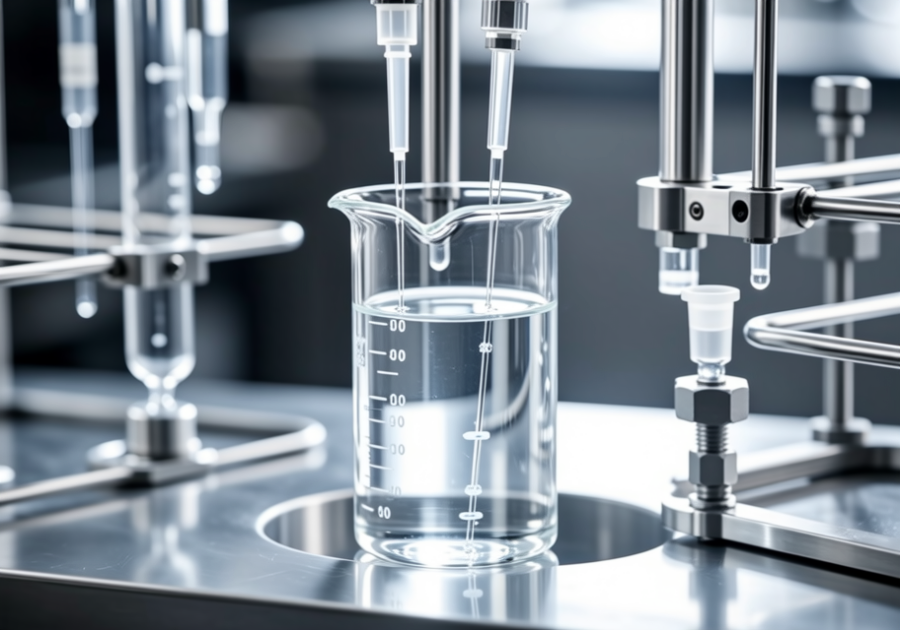
How to dissolve ammonia in water is a question many people ask. The process of dissolving ammonia in water is much more complicated than one might think. It is possible to dissolve ammonia in water, but it takes a lot of effort and time. Ammonia can also be dissolved through titrating the substance with hydrochloric acid or sodium hydroxide, but this works only if the concentration is low enough that it doesn't interfere with either solution's normal properties. However, much better results are obtained when ammonium chloride is used to dissolve aqueous ammonia by adding one gram per litre of solution.
Properties of the ammonia
1. Ammonia is a colourless gas and has pungent smell
It can a gas or liquid in its pure form. If it is solid, it is either ammonium chloride or ammonium nitrate, depending on its composition. It is also known as a alkaline, as it reacts with acids to create salt and water. It reacts with all the halogens, rapidly to form hydrogen halide. It is corrosive in nature, irritating in its pure form and toxic.
2. Ammonia is a chemical "dehydration" product of nitrogen oxides and nitric acid, created by oxidation of atmospheric nitrogen
Ammonia can be easily prepared by "hydrogenation" of at least one primary amine, such as methylamine or ethylamine (see Ullman's Encyclopedia). Ammonia can also be produced by the action of bacteria upon nitrogen-containing organic compounds, which occur abundantly in nature.
3. Ammonia is usually classified as a base, though it has acidic properties as well
Ammonia is a weak base, with a basicity of 1.16 defined at 0C (i.e., -17 pK ). It can be easily reconverted to its hydroxide by treatment with HCl acid: it forms ammonium chloride in hydriodic acid solution and ammonium hydride (NH) when treated with sodium hydride (2NaH + NH → 2NaNH). Ammonium hydroxide does not strongly react with acids, when it reacts with water, it releases ammonia and hydrogen gas.
4. It is lighter than air
The gas can be produced from the aqueous solutions of ammonium chloride, ammonium bicarbonate, or phosphates. It is also lighter than air, only about 1.4 times as dense as air at standard temperature and pressure (about 14.5 kPa). It is lighter than nitrogen or oxygen
5. Ammonia forms a hydrate,NH(s)H2O(l)
The ammonia hydrate derivate is ammonium chloride
In its aqueous solution, ammonia mixes with water to form a number of soluble salts, such as sodium and potassium salts: 2NH(s)H2O(l) → 2NH4 + (aq), Na(aq), and K(aq). The soluble salts are called amino acids. This shows how to dissolve ammonia in water.
Uses of ammonia
1. Ammonia is used in the manufacture of adhesives and explosives, for which it is a precursor.
This compound is used to make ammonium carbonate, which is an important ingredient of the presumed "plastic explosives" found in the wreckage of Pan Am Flight 103. It is also used to make ammonium nitrate, which has been implicated in many terrorist bombings around the world. It can be used as an oxidizer in solid rocket fuel.
2. Ammonium sulphate is used as a fertilizer and in animal feed.
The compound can be used to make various kinds of nitrogen-containing compounds that have a variety of applications in commercial products, such as cosmetics and pharmaceuticals. Ammonia is used for the manufacture of agricultural fertilizers like ammonium phosphates and ammonium nitrate, which are widely employed as fertilizers for crops such as maize and wheat. It is also employed in animal feed (fish meal), where it provides protein (nitrogen) for growth.
3. Its presence in urine is diagnostic of kidney failure.
The presence of this gas in a sample of urine is diagnostic of kidney failure. It may also be detected in the breath as a result of gut fermentation, or it may be used as a tracer for ammonia transport. In the neonate, ammonia concentration can exceed levels found in adult blood and can be life-threatening if left untreated.
4. It is used to harden steel and cast iron for making tools or other items that require an extremely hard surface.
It is used to harden steel and cast iron for making tools or other items that require an extremely hard surface, such as drill bits, saw blades, and files.
In conclusion, how to dissolve ammonia in water is a complicated process. One can easily do it by using sodium hydroxide or hydrochloric acid. However, much better results will be achieved through the use of ammonium chloride to dissolve ammonia in water. Perhaps this is not such bad news after all.
Looking for chemical products? Let suppliers reach out to you!
You May Interested In



2026-10-10
Trade Alert
Delivering the latest product trends and industry news straight to your inbox.
(We'll never share your email address with a third-party.)

Related News
-
Urea Rises Strongly & Supply Shrinks, Liquid Ammonia Rises to A Record High
-
Tight Supply and Demand Balance & The End of Spring Ploughing Season, Liquid Ammonia Continued to Push Up in April
-
Under The Trend of Tight Supply And Demand Balance, The Domestic Liquid Ammonia Market Stabilizes at A High Level
-
What Color Should a Zinc-Copper Couple Be?
-
Understanding the Arsenate Symbol and Its Uses
-
Zoledronic Acid: Uses, Mechanism, and Side Effects
-
Anastrozole Side Effects: What You Need to Know
-
Why You Should Never Mix Bleach and Vinegar
-
Benzoylecgonine: Detection and Testing Methods
Recommend Reading
-
![Chemical Properties and Applications of Cyclopropen]()
Chemical Properties and Applications of Cyclopropen
-
![China NMPA Issues Priority Review Pathway for Four Categories of Chemical Active Pharmaceutical Ingredients, Effective August 1, 2026]()
China NMPA Issues Priority Review Pathway for Four Categories of Chemical Active Pharmaceutical Ingredients, Effective August 1, 2026
-
![Premium Global Chemical Sourcing Requests (6-10 Dec 2025)]()
Premium Global Chemical Sourcing Requests (6-10 Dec 2025)
-
![Coke market mainly maintains stable operation with overall balanced supply and demand in China]()
Coke market mainly maintains stable operation with overall balanced supply and demand in China
-
![Methylene Chloride Price Increase Slows, Expected to Stabilize with Slight Strength in the Short Term in China]()
Methylene Chloride Price Increase Slows, Expected to Stabilize with Slight Strength in the Short Term in China