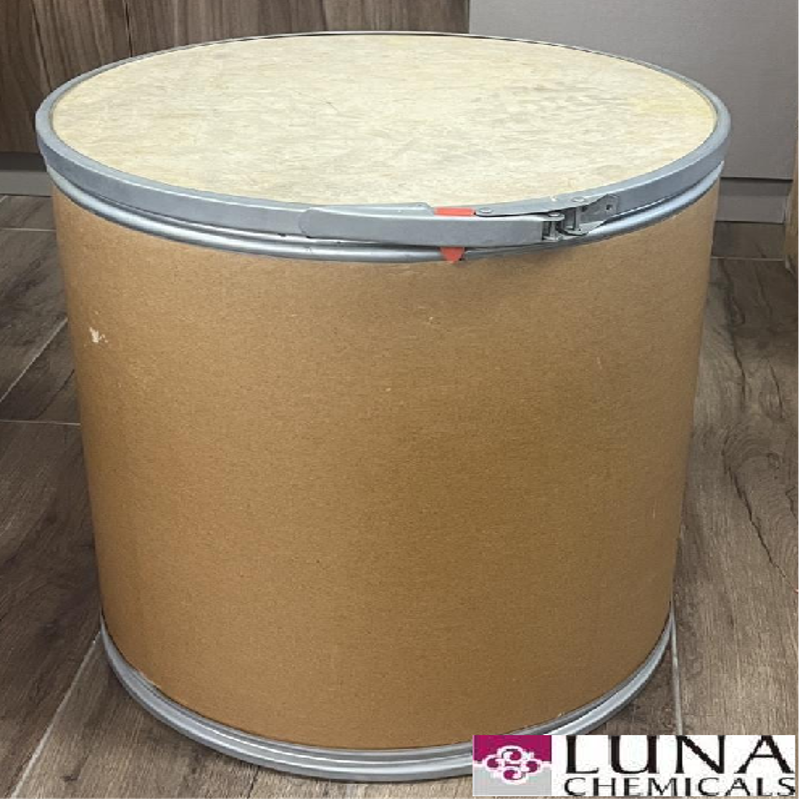
Urea 46% with ISO
TDS 253 Inquiries
57-13-6
Agricultural Grade
46%
TIANJIN
50kg/0.25kg White Kraft Paper Bag
2017-11-30

Nylon Series Products,Flame Retardant Series Products
-
Product Description
-
Seller Information
-
Inquiry History
-
Description
Agriculture uses
More than 90% of world industrial production of urea is destined for use as a nitrogen-release fertilizer. Urea has the highest nitrogen content of all solid nitrogenous fertilizers in common use. Therefore, it has the lowest transportation costs per unit of nitrogen nutrient.
In the soil, it hydrolyses back to ammonia and carbon dioxide. The ammonia is oxidized by bacteria in the soil to nitrate, which can be absorbed by the plants. Urea is also used in many multi-component solid fertilizer formulations. Urea is highly soluble in water, therefore, very suitable for use in fertilizer solutions (in combination with ammonium nitrate: UAN), e.g., in ‘foliar feed’ fertilizers. For fertilizer use, granules are preferred because of their narrower particle size distribution, an advantage for mechanical application. The most common impurity of synthetic urea, biuret, must be present at less than 2 percent of the time, as it impairs plant growth.
Fig.7 Urea fertilizer and farmer’s fertilization process
Pharmacaeutical
Urea and malonic acid react to form barbituric acid. This was discovered by Adolf Bayer in 1864. But the barbiturates were not exploited as hypnotics until the early 1900's.Urea is also used in the production of various acylureas and urethanes for use as sedatives and hypnotics.Fig.8 Synthesis of barbituric acid
Chemical industry
Urea is a raw material for the manufacture of two main classes of materials: urea-formaldehyde resins and urea-melamine-formaldehyde used in marine plywood. They all have very varied uses including adhesives, laminates, moulding compounds, coatings and textile finishes.
Urea has the ability to trap many organic compounds in the form of clathrates. The organic compounds are held in channels formed by interpenetrating helices comprising of hydrogen-bonded urea molecules. This behavior can be used to separate mixtures, and has been used in the production of aviation fuel and lubricating oils, and in the separation of paraffin.
As the helices are interconnected, all helices in a crystal must have the same molecular handedness. This is determined when the crystal is nucleated and can thus be forced by seeding. The resulting crystals have been used to separate racemic mixtures.
Laboratory uses
Urea in concentrations up to 10 M is a powerful protein denaturant as it disrupts the noncovalent bonds in the proteins. This property can be exploited to increase the solubility of some proteins. A mixture of urea and choline chloride is used as a deep eutectic solvent, a type of ionic liquid.
Urea can in principle serve as a hydrogen source for subsequent power generation in fuel cells. Urea present in urine/wastewater can be used directly (though bacteria normally quickly degrade urea.) Producing hydrogen by electrolysis of urea solution occurs at a lower voltage (0.37 V) and thus consumes less energy than the electrolysis of water (1.2 V).
Urea in concentrations up to 8 M can be used to make fixed brain tissue transparent to visible light while still preserving fluorescent signals from labeled cells. This allows for much deeper imaging of neuronal processes than previously obtainable using conventional one photon or two photon confocal microscopes.
Automobile systems
Urea is used in SNCR and SCR reactions to reduce the NOx pollutants in exhaust gases from combustion, for example, from power plants and diesel engines. The BlueTec system, for example, injects water-based urea solution into the exhaust system. The ammonia produced by decomposition of the urea reacts with the nitrogen oxide emissions and is converted into nitrogen and water within the catalytic converter.Urea is a powerful protein denaturant via both direct and indirect mechanisms. A potent emollient and keratolytic agent. Used as a diuretic agent. Blood urea nitrogen (BUN) has been utilized to evaluate renal function[3]. Widely used in fertilizers as a source of nitrogen and is an important raw material for the chemical industry.Certificates-
 TDS
TDS
Basic Info-
Product Name:
Urea
Other Name:Urea;Carbamide;UR;Isourea;Carbamimidic acid;Carbonyl diamide;Urevert;Ureaphil;Ureophil;Pseudourea;B-I-K;Varioform II;Benural 70;Urepearl;Urea perhydrate;Urepeal;Keratinamin Kowa;Pastaron;Pastaron 20;Pastaron 20 soft;Urepeal L;Pastaron 10;Eucerin 10% Urea Lotion;Optigen 1200;Aquacare;Basodexan;Keratinamin;Aquadrate;Hyanit;Elaqua XX;Onychomal;Nutraplus;NSC 34375;Pastaron soft;Rubinol ST 010;Carmol 40;SGN 250;Uroderm;Ultra Low Biuret Urea;Low Biuret Urea;Duration III;ESN;Optigen II;Uria;Cellton NP;Cellpaste K 4;AUS 32;Onyster;Diesel exhaust fluid;DEF;DEF (diesel exhaust fluid);AdBlue;U 6504;30535-50-3;118548-06-4;860639-56-1;923953-70-2;1202865-46-0;1228376-38-2;1262769-89-0;1637232-71-3;2060607-07-8;2417243-36-6
CAS No.:57-13-6
Molecular Formula:CH4N2O
InChIKeys:InChIKey=XSQUKJJJFZCRTK-UHFFFAOYSA-N
Molecular Weight:60.05530
Exact Mass:60.06
EC Number:200-315-5
UNII:8W8T17847W
ICSC Number:0595
NSC Number:757375|34375
DSSTox ID:DTXSID4021426
NCI Thesaurus Code:C29531
Color/Form:White crystals or powder|Tetragonal prisms
ATC Code:B - Blood and blood forming organs|D - Dermatologicals
HScode:3102100001
Categories:
Characteristics-
PSA:
69.11000
XLogP3:-1.4
Appearance:white powder
Density:1.3230 g/cm3 @ Temp: 20 °C
Melting Point:132.70 °C
Boiling Point:317-389 °C
Flash Point:53.7±22.6 °C
Refractive Index:1.528
Water Solubility:1080 g/L (20 ºC)
Vapor Pressure:<0.1 hPa (20 °C)
Toxicity:LD50 orally in Rabbit: 8471 mg/kg LD50 dermal Rat 8200 mg/kg
Explosive limit:Reacts with sodium hypochlorite or calcium hypochlorite to form the explosive nitrogen trichloride.
Odor:MAY GRADUALLY DEVELOP SLIGHT ODOR OF AMMONIA, ESP IN PRESENCE OF MOISTURE
Taste:Cooling, saline taste
PH:7.2 (10% solution)
PKA:0.1(at 21 °C)
Dissociation Constants:pKa = 0.10 at 21 °C (conjugate acid)
Air and Water Reactions:Water soluble.
Reactive Group:Amides and Imides
Reactivity Profile:UREA is a weak base. Reacts with hypochlorites to form nitrogen trichloride which explodes spontaneously in air [J. Am. Chem. Soc. 63:3530-32]. Same is true for phosphorus pentachloride. It reacts with azo and diazo compounds to generate toxic gases. Reacts with strong reducing agents to form flammable gases (hydrogen). The heating of improper stoichiometric amounts of urea and sodium nitrite lead to an explosion. Heated mixtures of oxalic acid and urea yielded rapid evolution of gases, carbon dioxide, carbon monoxide and ammonia (if hot, can be explosive). Titanium tetrachloride and urea slowly formed a complex during 6 weeks at 80° C, decomposed violently at 90 C, [Chem. Abs., 1966, 64, 9219b]. Urea ignites spontaneously on stirring with nitrosyl perchlorate due to the formation of the diazonium perchlorate. Oxalic acid and urea react at high temperatures to form toxic and flammable ammonia and carbon monoxide gases, and inert CO2 gas [Von Bentzinger, R. et al., Praxis Naturwiss. Chem., 1987, 36(8), 41-42].
Autoignition Temperature:Not flammable (USCG, 1999)
Hazard IdentificationClassification of the substance or mixture
Not classified.
GHS label elements, including precautionary statements
Pictogram(s) No symbol. Signal word No signal word
Hazard statement(s) none
Precautionary statement(s) Prevention none
Response none
Storage none
Disposal none
Other hazards which do not result in classification
no data available
Handling and StoragePrecautions for safe handling
Handling in a well ventilated place. Wear suitable protective clothing. Avoid contact with skin and eyes. Avoid formation of dust and aerosols. Use non-sparking tools. Prevent fire caused by electrostatic discharge steam.
Conditions for safe storage, including any incompatibilities
Separated from incompatible materials. See Chemical Dangers.
-
-
Seller Information
-
Business Type:
Manufactory
-
Main Products:
Nylon Series Products,Flame Retardant Series Products
-
Location:
Bucun Town, Zhangqiu District, Jinan, Shandong, China250215
-
Payment Terms:
TT against copy of documents,D/P,L/C
-
Average lead Time:
60
-
Total Annual Revenue:
Above $100 million
-
Total Employees:
Above 1000
-
Year of Establishment:
1958
-
Certifications:
Shandong Provincial-level Civilization Enterprise,Grade A Taxpayer Enterprise,The Patent of PA 612 Preparation Technology,The famous Brand products(Aluminum Hydroxide/Zinc Borate) of Shandong Province
Shandong Xinsheng Industries Development Co.,Ltd (Hereinafter referred to as the “Xinsheng Company”) is a state-owned enterprise which is affiliated to Shandong Energy Group company.Its registered capital is 547 million RMB. The company currently covers a number of industries products series such as Nylon, Halogen-free flame retardants, Sapphire ,Titanium Dioxide ,Caustic Soda, Calcium Chloride,Urea and so on. It has 7 branch companies .Now,Let me mainly introduce the following companies:
Shandong Dongchen Resin New Materials Co,Ltd
Jinan Taixing Fine Chemicals Co., Ltd.,
Jinan Hangyida International Trade Co., Ltd.
Xinsheng Company is located in Zhangqiu District, Jinan, Shandong Province. The location and traffic of are quite convenient. Its distance from the Jinan Yaoqiang International Airport and the Jinan High-speed Railway West Station are 45 km and 60 km respectively.
Xinsheng Company is looking forward to cooperation with the more and more customers from all over the world in future.
-
-
Inquiry History253 Inquiries
Country Product Purchase Quantity Date Posted  Israel
Feed grade urea content 99% 57-13-6
500 MT Nov 8, 2023  Uganda
Urea 46% White Powder Cas: 57-13-6
6000 MT Sep 10, 2023  Germany
Carbamide
450 TON Jun 14, 2024  Netherlands
Urea
1 MT May 28, 2026  India
India
Urea Grade: IP / USP
3000.00 KG Sep 6, 2023  Brazil
Feed Grade Urea
28 MT Jan 12, 2024  Hongkong, China
Prilled urea
20000 MT Apr 14, 2025
Hongkong, China
urea
20000 MT Apr 14, 2025  United Kingdom
urea
1 20' Fcl Feb 28, 2024  United States
Fertilizer
20 MT Aug 22, 2025
United Kingdom
UREA granular fertilizer. Product name: CH4N2O
3 40' Fcl Mar 24, 2026
United Kingdom
UREA granular fertilizer. Product name: CH4N2O
3 40' Fcl Mar 26, 2026
Brazil
Feed grade urea
1 40' Fcl Feb 28, 2024  Chile
Chile
Urea
200 MT Aug 11, 2026  Colombia
Urea
600 MT Aug 5, 2026  United Arab Emirates
Urea 46%
1 KG Aug 3, 2026  Egypt
Egypt
Urea N46
6000 MT Jul 29, 2026
Colombia
Urea
1 KG Jul 23, 2026  South Korea
Urea
100 KG Jul 13, 2026  Pakistan
Urea 46%
1 KG Jul 1, 2026 Post an enquiry for this product
- Hot Searches
- naphthenic rubber processing oil market
- polybutylene terephthalate price
- cosmetic raw material suppliers
- rubbing alcohol molecular structure
- dimethylformamide sds
- buying adrenochrome
- commercial emulsifier
- perfume ingredients supplier
- reta peptides where to buy
- kalium oxide
- msds of acetaminophen
- retatrutide peptide supplier
Hot Related Products
-
 TCCA 90% Trichloroisocyanuric Acid
 -
 TCCA 90% Trichloroisocyanuric Acid Chlorine Tablet Granular Powder for swimming pool
 -
 Potassium chloride ClK
$40-50/KG FOB
-
 Chinese high-quality acetic acid supplier
 -
 Ammonium Chloride 99.5% white powder JD-AC995-FG JD
 -
 Industrial Grade 99.8% Glacial Acetic Acid for Multiple Industrial Manufacturing