
VINYL FLUORIDE 99% Gas Dideu
1 Inquiries
75-02-5
Industrial Grade
99%
Ang port in China
Dideu
25Kg/Drum
2023-01-01

Chemical Pesticides,Food Additives,Agrochemicals,Active Pharm Ingredients,Flavors and Fragrances,Chemical Catalyst
-
Product Description
-
Seller Information
-
Inquiry History
-
DescriptionBasic Info
-
Product Name:
VINYL FLUORIDE
Other Name:vinylfluoride(vf);vinylfluoride,inhibited;Fluoroethene~Fluoroethylene;Vinylfluorideinhibitedwithdlimonene;VINYL FLUORIDE 98%;inhibied;vinyl;Vinylfluoride98%
CAS No.:75-02-5
Molecular Formula:C2H3F
InChIKeys:InChIKey=XUCNUKMRBVNAPB-UHFFFAOYSA-N
Molecular Weight:46.04
Exact Mass:46.04
EC Number:200-832-6
UNII:2598465ICX
ICSC Number:0598
UN Number:1860
TSCA:TSCA listed
DSSTox ID:DTXSID3021435
Color/Form:Colorless gas [Note: Shipped as a liquefied compressed gas].
HScode:2903290000
Categories:
Characteristics-
PSA:
0
XLogP3:1.19 /Estimated/
Appearance:Vinyl fluoride, stabilized appears as a colorless gas with a faint ethereal odor. Shipped as a confined liquid under its vapor pressure. Any leak can either be liquid or vapor. Contact with the liquid can cause frostbite. Easily ignited. Vapors are heavier than air. Can asphyxiate by the displacement of air. Under prolonged exposure to fire or intense heat the containers may rupture violently and rocket.
Density:0,615 g/cm3
Melting Point:-160,5°C
Boiling Point:-72°C
Flash Point:NA (Gas)
Refractive Index:1.34
Water Solubility:Insoluble
Storage Conditions:Storage site should be as close as practical to lab in which carcinogens are to be used, so that only small quantities required for expt need to be carried. Carcinogens should be kept in only one section of cupboard, an explosion-proof refrigerator or freezer (depending on chemicophysical properties ) that bears appropriate label. An inventory should be kept, showing quantity of carcinogen & date it was acquired Facilities for dispensing should be contiguous to storage area.
Vapor Pressure:25.2 atm
Vapor Density:1.60
Toxicity:VF is readily absorbed after administration by inhalation. Its metabolism is saturable and dose dependent.VF is metabolized via the same pathway as for other carcinogenic vinyl halides like vinyl chloride (VC) and vinyl bromide. VF is metabolized to DNA-reactive intermediates fluoroethylene oxide and fluoroacetaldehyde via a human cytochrome P450 2E1 (CYP) dependent pathway. These reactive metabolites react with DNA bases and form promutagenic DNA adducts mainly 1, N6-ethenoadenine and N2,3- -ethenoguanine and cause DNA miscoding by modifying base-pairing sites. These cyclic etheno adducts lead to misincorporation of bases upon replication or transcription and cause critical lesions in VF-induced carcinogenesis. The fluoroacetaldehyde is metabolized to fluoroacetic acid, a potent inhibitor of the Krebs cycle. As a consequence, its incorporation into the citric acid cycle disrupts energy metabolism and leads to increased production of mitochondrial acetyl coenzyme A and causes excretion of ketone bodies and free F. So, administration of VF has been shown to increase acetone exhalation and F excretion in urine of experimental animals. On the other hand, fluoroacetaldehyde alkylates the prosthetic heme group of CYP resulting irreversible inactivation of the enzyme, which catalyzes the VF metabolism. The alkylate has been identified as N-(2-oxoethyl) protoporphyrin IX or green porphyrin.
Flammability characteristics:Flammable; decomposes toxic hydrogen fluoride gas in case of heat
Explosive limit:vol% in air: 2.61.7
Odor:Faint, ethereal odor.
OH:5.56e-12 cm3/molecule*sec
Henrys Law Constant:8.2×10⁻⁵mol/(m3Pa) at 25℃, HSDB (2015)
Experimental Properties:1 mg/cu m = 2.62 ppm|Liquid molar volume = 0.053091 cu m/kmol; Heat of formation = -1.3891X10+08 J/kmol|Hydroxyl radical reaction rate constant = 5.56X10⁻¹² cu cm/molec-sec at 25 °C
Air and Water Reactions:Highly flammable, reacts with air to form peroxides
Reactive Group:Fluorinated Organic Compounds
Reactivity Alerts:Highly Flammable
Reactivity Profile:VINYL FLUORIDE is light sensitive, peroxidizable monomer may initiate exothermic polymerization of the bulk material [Handling Chemicals Safely 1980. p. 958]. Sensitive to many oxidants.
Autoignition Temperature:860 °F (USCG, 1999)|860 °F (460 °C)|385 °C
Heat of Combustion:-1.01E+8 J/kmol
Ionization Potential:10.37 eV
Flammable Limits:Lower flammable limit: 2.6% by volume; Upper flammable limit: 21.7% by volume|Flammable Gas
Physical Dangers:The vapour is heavier than air and may travel along the ground; distant ignition possible.
Heat of Vaporization:2.2243X10+07 J/kmol at melting point
Critical Temperature & Pressure:Critical tempurature = 54.7 °C; Critical pressure = 5.1 MPa
Hazard IdentificationClassification of the substance or mixture
Flammable gases, Category 1A, Flammable gas
Gases under pressure: Liquefied gas
Germ cell mutagenicity, Category 2
Carcinogenicity, Category 1B
Specific target organ toxicity â repeated exposure, Category 2
GHS label elements, including precautionary statements
Pictogram(s) 

Signal word Danger
Hazard statement(s) H220 Extremely flammable gas
H280 Contains gas under pressure; may explode if heated
H341 Suspected of causing genetic defects
H350 May cause cancer
H373 May cause damage to organs through prolonged or repeated exposure
Precautionary statement(s) Prevention P210 Keep away from heat, hot surfaces, sparks, open flames and other ignition sources. No smoking.
P203 Obtain, read and follow all safety instructions before use.
P280 Wear protective gloves/protective clothing/eye protection/face protection/hearing protection/...
P260 Do not breathe dust/fume/gas/mist/vapours/spray.
Response P377 Leaking gas fire: Do not extinguish, unless leak can be stopped safely.
P381 In case of leakage, eliminate all ignition sources.
P318 IF exposed or concerned, get medical advice.
P319 Get medical help if you feel unwell.
Storage P403 Store in a well-ventilated place.
P410+P403 Protect from sunlight. Store in a well-ventilated place.
P405 Store locked up.
Disposal P501 Dispose of contents/container to an appropriate treatment and disposal facility in accordance with applicable laws and regulations, and product characteristics at time of disposal.
Other hazards which do not result in classification
no data available
Handling and StoragePrecautions for safe handling
NO open flames, NO sparks and NO smoking. Closed system, ventilation, explosion-proof electrical equipment and lighting. Handling in a well ventilated place. Wear suitable protective clothing. Avoid contact with skin and eyes. Avoid formation of dust and aerosols. Use non-sparking tools. Prevent fire caused by electrostatic discharge steam.
Conditions for safe storage, including any incompatibilities
Fireproof. Separated from strong oxidants. Cool. Store only if stabilized.Fireproof. Separated from strong oxidants. Cool. Store only if stabilized.
-
-
Seller Information
-
Business Type:
Manufactory
-
Main Products:
Chemical Pesticides,Food Additives,Agrochemicals,Active Pharm Ingredients,Flavors and Fragrances,Chemical Catalyst
-
Location:
https://www.dideu.com/en/
-
Payment Terms:
TT against copy of documents,D/P,L/C,D/A,O/A,TT against B/L draft before shipment,100% TT in advance
-
Average lead Time:
7
-
Total Annual Revenue:
Above $100 million
-
Total Employees:
Above 1000
-
Year of Establishment:
2016
-
Certifications:
ISO Certificate,REACH
-
-
Inquiry History1 Inquiries
Country Product Purchase Quantity Date Posted  United Kingdom
Vinyl Fluoride
1 KG Jan 26, 2026 Post an enquiry for this product




Hot Related Products
-
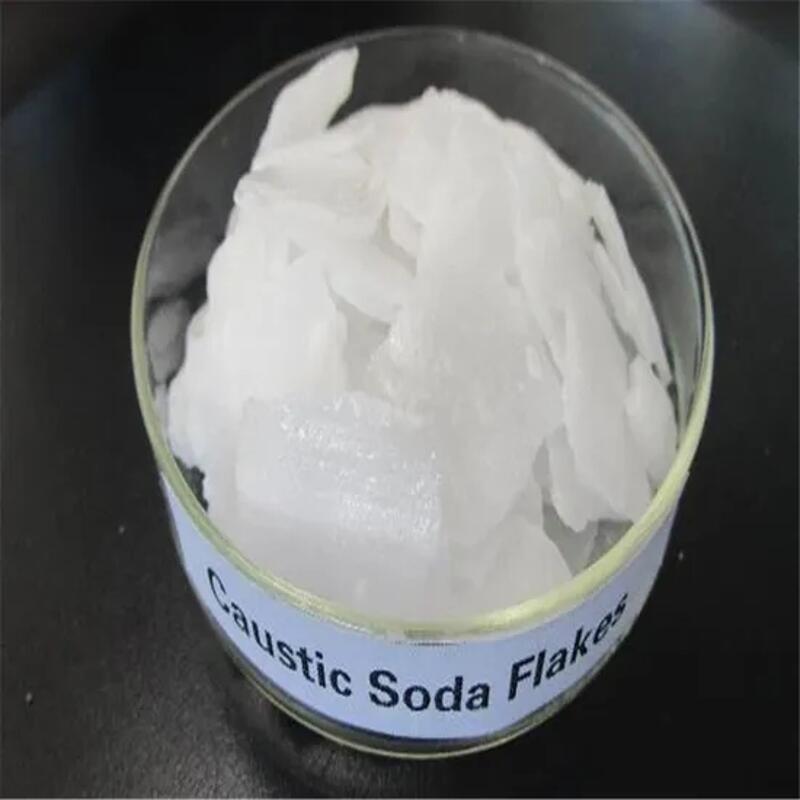
 Caustic Soda-Batong
 -
 Caustic Soda Flakes / Pearl Sodium Hydroxide Naoh High Purity 99% 98.5% 98% price
$450-550/MT FOB
-
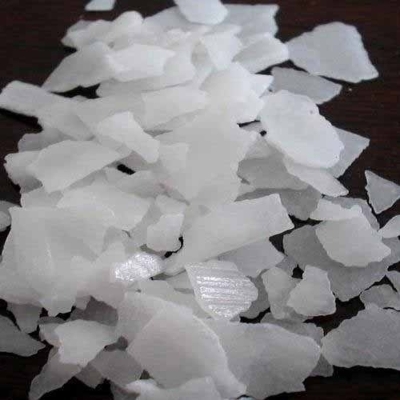
 Caustic Soda Flakes White
 -
 Industrial Grade 99% Caustic Soda in Flake Pearl and Solid Forms
 -
 Sodium hydroxide White translucent crystalline solid
 -
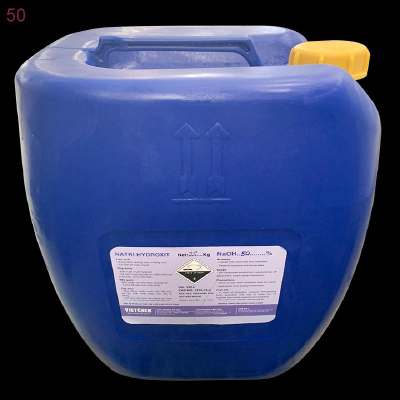
 Sodium Hydroxide 50% Liquid Vietchem Vietchem