HYDROXYLAMINE 7803-49-8
2 Inquiries
7803-49-8
QINGDAO
200kg/drum
2024-02-18

Dichloromethane,Linocaine hydrochloride
-
Product Description
-
Seller Information
-
Inquiry History
-
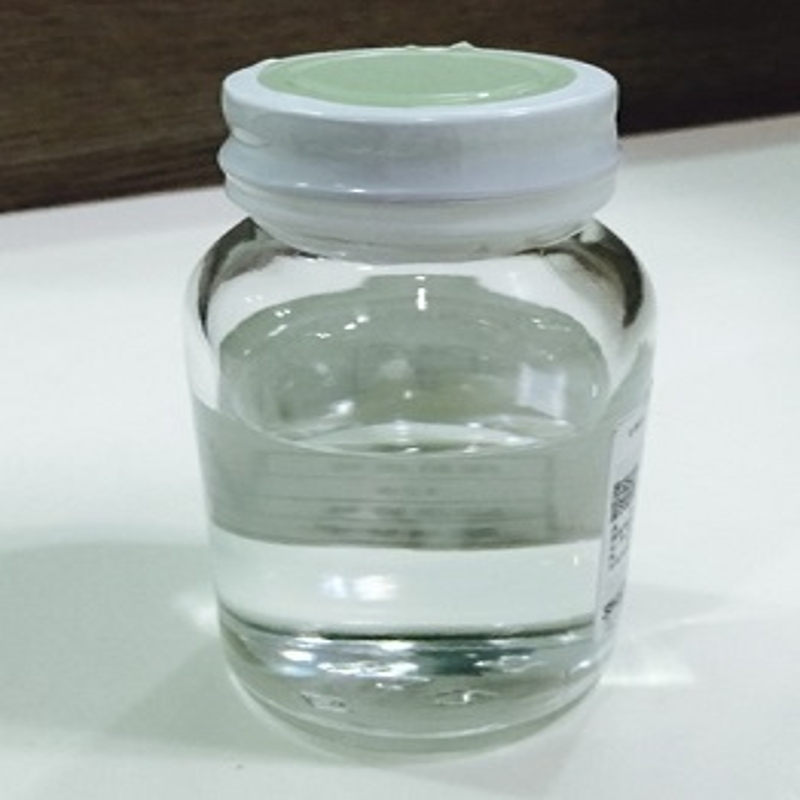
DescriptionECHEMI Editorial Referenceslightly yellow liquid
Hydroxylamine is an odorless white crystalline solid. Sinks and mixes with water. (USCG, 1999)|Liquid|Solid|VERY HYGROSCOPIC WHITE NEEDLES OR FLAKES.
Hydroxylamine is an odorless white crystalline solid. Sinks and mixes with water. (USCG, 1999)|Hydroxylamine is the simplest hydroxylamine, consisting of ammonia bearing a hydroxy substituent. It is an intermediate in the biological nitrification by microbes like bacteria. It has a role as a nitric oxide donor, an EC 1.1.3.13 (alcohol oxidase) inhibitor, a nucleophilic reagent, an EC 4.2.1.22 (cystathionine beta-synthase) inhibitor, an EC 4.3.1.10 (serine-sulfate ammonia-lyase) inhibitor, a bacterial xenobiotic metabolite and an algal metabolite. It is a conjugate acid of a hydroxyazanide and an aminooxidanide. It derives from a hydride of an ammonia.|A colorless inorganic compound (HONH2) used in organic synthesis and as a reducing agent, due to its ability to donate nitric oxide.Basic Info-
Product Name:
Hydroxylamine
Other Name:Hydroxylamine;Hydroxyamine;Telclean 1200A;HDA;EKC 270T
CAS No.:7803-49-8
Molecular Formula:H3NO
InChIKeys:InChIKey=AVXURJPOCDRRFD-UHFFFAOYSA-N
Molecular Weight:33.03
Exact Mass:33.03
EC Number:232-259-2
UNII:2FP81O2L9Z
ICSC Number:0661
UN Number:2735
DSSTox ID:DTXSID7041043
Color/Form:Colorless cyrstals|Large white flakes or white needles
HScode:28251090
Categories:
Characteristics-
PSA:
46.25000
XLogP3:-0.81
Appearance:Hydroxylamine is an odorless white crystalline solid. Sinks and mixes with water. (USCG, 1999)
Density:1.227 g/cm3
Melting Point:33 °C
Boiling Point:70 °C @ Press: 60 Torr
Flash Point:265 °F (USCG, 1999)|explodes at 129 °C
Refractive Index:1.395
Water Solubility:Miscible with water, liquid ammonia and methanol. Slightly miscible with ether, benzene, carbon disulfide and chloroform.
Storage Conditions:Separate from oxidizing materials. store in a cool, dry, well-ventilated location. store away from heat, oxidizers, and sunlight. Outside or detached storage is preferred.
Vapor Pressure:9 mm Hg ( 40 °C)
Vapor Density:Relative vapor density (air = 1): 1.1
Toxicity:Celiac-rat LD50: 59 mg/kg; Celiac-mouse LD50: 60 mg/kg
Flammability characteristics:Thermal decomposition of toxic nitrogen oxide fumes
Dissociation Constants:pKa= 5.94 @ 25 °C
Experimental Properties:VERY HYGROSCOPIC; ALKALINE REACTION; DECOMP BY HOT WATER; HEAT OF FORMATION (SOLID): -27.60 KCAL/MOL AT 18 °C & 1 ATM; (LIQ): -25.5 KCAL/MOL AT 18 °C & 1 ATM|REDUCING AGENT IN ALKALINE, OXIDIZING AGENT IN ACID MEDIUM|COLORLESS MONOCLINIC CRYSTALS; BP: DECOMP; SLIGHTLY SOL IN ALC; SOL IN ETHER /SULFATE/|Decomposes in hot water|Monoclinic columnar crystals; slowly decomp when moist; density: 1.67 at 17 °C; mp: about 151 °C; pK of 0.2 molar aq soln 3.2; 1 g sol in 1 ml H2O, 19 ml alc, 8 ml methanol; sol in glycerol, propylene glycol; insol in cold ether /Hydroxylamine hydrochloride/
Air and Water Reactions:Decomposes rapidly at room temperature or when dissolved in hot water by internal oxidation-reduction. Reacts with water or steam to produce heat and corrosive liquids.
Reactive Group:Bases, Strong
Reactivity Alerts:Explosive
Reactivity Profile:HYDROXYLAMINE is a white solid, thermally unstable, decomposes rapidly at room temperature or when dissolved in hot water by internal oxidation-reduction. It should be stored below 10° C [Bailar, 1973, vol. 2, p. 272]. Explosive reaction with strong oxidizers (chromium trioxide, potassium dichromate) or powdered zinc upon heat. Reaction with zinc or calcium produces explosive bishydroxylamides. It ignites on contact with cupric sulfate, alkali metals (sodium, potassium), oxidants (e.g., barium oxide, barium peroxide, lead dioxide, potassium permanganate, chlorine), phosphorus trichloride and pentachloride. It reacts vigorously with hypochlorites, pyridine, carbonyls [Sax, 9th ed., 1996, p. 1875]. On contact with organic materials in thin layer (e.g., crystals on filter paper), it may ignite spontaneously in air. It explodes when heated above 70° C [Brauer, 1963, vol. 1, p. 502]. During a distillation process, an explosion occurred. Potassium hydroxide is thought to be involved in the explosion. Employees in the plant complained of chest pains and suffered chemical burns. Five people were killed by the explosion.
Autoignition Temperature:265 °F (USCG, 1999)
Hazard IdentificationClassification of the substance or mixture
Explosives, Unstable explosive
Corrosive to metals, Category 1
Acute toxicity - Category 4, Oral
Acute toxicity - Category 4, Dermal
Skin irritation, Category 2
Serious eye damage, Category 1
Skin sensitization, Category 1
Specific target organ toxicity â single exposure, Category 3
Carcinogenicity, Category 2
Specific target organ toxicity â repeated exposure, Category 2
Hazardous to the aquatic environment, short-term (Acute) - Category Acute 1
GHS label elements, including precautionary statements
Pictogram(s) 
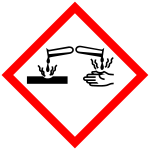



Signal word Danger
Hazard statement(s) H200 Unstable explosive
H290 May be corrosive to metals
H302 Harmful if swallowed
H312 Harmful in contact with skin
H315 Causes skin irritation
H318 Causes serious eye damage
H317 May cause an allergic skin reaction
H335 May cause respiratory irritation
H351 Suspected of causing cancer
H373 May cause damage to organs through prolonged or repeated exposure
H400 Very toxic to aquatic life
Precautionary statement(s) Prevention P203 Obtain, read and follow all safety instructions before use.
P250 Do not subject to grinding/shock/friction/â¦.
P280 Wear protective gloves/protective clothing/eye protection/face protection/hearing protection/...
P234 Keep only in original packaging.
P264 Wash ... thoroughly after handling.
P270 Do not eat, drink or smoke when using this product.
P261 Avoid breathing dust/fume/gas/mist/vapours/spray.
P272 Contaminated work clothing should not be allowed out of the workplace.
P271 Use only outdoors or in a well-ventilated area.
P260 Do not breathe dust/fume/gas/mist/vapours/spray.
P273 Avoid release to the environment.
Response P370+P372+P380+P373 In case of fire: Explosion risk. Evacuate area. DO NOT fight fire when fire reaches explosives.
P390 Absorb spillage to prevent material damage.
P301+P317 IF SWALLOWED: Get medical help.
P330 Rinse mouth.
P302+P352 IF ON SKIN: Wash with plenty of water/...
P317 Get medical help.
P321 Specific treatment (see ... on this label).
P362+P364 Take off contaminated clothing and wash it before reuse.
P332+P317 If skin irritation occurs: Get medical help.
P305+P354+P338 IF IN EYES: Immediately rinse with water for several minutes. Remove contact lenses, if present and easy to do. Continue rinsing.
P333+P317 If skin irritation or rash occurs: Get medical help.
P304+P340 IF INHALED: Remove person to fresh air and keep comfortable for breathing.
P319 Get medical help if you feel unwell.
P318 IF exposed or concerned, get medical advice.
P391 Collect spillage.
Storage P401 Store in accordance withâ¦
P406 Store in a corrosion resistant/...container with a resistant inner liner.
P403+P233 Store in a well-ventilated place. Keep container tightly closed.
P405 Store locked up.
Disposal P503 Refer to manufacturer/supplier⦠for information on disposal/recovery/recycling.
P501 Dispose of contents/container to an appropriate treatment and disposal facility in accordance with applicable laws and regulations, and product characteristics at time of disposal.
Other hazards which do not result in classification
no data available
Handling and StoragePrecautions for safe handling
NO open flames, NO sparks and NO smoking. NO contact with hot surfaces. Handling in a well ventilated place. Wear suitable protective clothing. Avoid contact with skin and eyes. Avoid formation of dust and aerosols. Use non-sparking tools. Prevent fire caused by electrostatic discharge steam.
Conditions for safe storage, including any incompatibilities
Fireproof. Separated from incompatible materials. See Chemical Dangers. Cool. Dry. Well closed.Separate from oxidizing materials. store in a cool, dry, well-ventilated location. store away from heat, oxidizers, and sunlight. Outside or detached storage is preferred.
-
-
Seller Information
-
Business Type:
Manufactory
-
Main Products:
Dichloromethane,Linocaine hydrochloride
-
Location:
BUILDING 1,HISENSE INTELLIGENCE VALLEY,NO.2116,OF PHOEIX ROAD, HIGH-TECH ZONE ,JINAN CITY ,SHANDONG PROVINCE,CHINA
-
Payment Terms:
D/P,L/C,D/A
-
Average lead Time:
15 days
-
Total Annual Revenue:
$10 million-$25 million
-
Total Employees:
11-50
-
Year of Establishment:
2016
-
-
Inquiry History2 Inquiries
Country Product Purchase Quantity Date Posted  South Korea
[LG Chem] Product Inquiry - Hydroxylamine solution (CAS No. 7803-49-8)
1 MT Jan 18, 2024  Italy
Italy
Hydroxylamine 50% water solution
250 KG Sep 13, 2026 Post an enquiry for this product
More from this Seller




Hot Related Products
-
 - High Quality 90%") Potassium Hydroxide (KOH) - High Quality 90%
Potassium Hydroxide (KOH) - High Quality 90% -
 Potassium hydroxide White Powder CAS NO.: 1310-58-3
 -
 Sodium nitrite 99% White powder NaNO2 Senwayer
 -
 Sodium nitrite99%
 -
 WATER DEMINERALIZED
 -
 10ml/3ml. CAS No, 7732-18-5") Bacteriostatic Water (BAC water) 10ml/3ml. CAS No, 7732-18-5
Bacteriostatic Water (BAC water) 10ml/3ml. CAS No, 7732-18-5$7-9/UNIT EXW
-
White solid") Potassium hydroxide (Caustic Potash)White solid
Potassium hydroxide (Caustic Potash)White solid -
 BAC water High Quality 99% Purity of CAS-7732-18-5 Wholesale
$9.32-11.18/UNIT FOB
-
 CAS 7632-00-0 Sodium Nitrite Food Grade 99.9% White Powder
 -
 99% Purity of BAC Water CAS-7732-18-5 Wholesale Price