Product
Supplier
Encyclopedia
Inquiry
Home > Chemical Reagents > Organic Reagents > Hydroxylamine for Sale > Hydroxylamine7803-49-8
Hydroxylamine7803-49-8 buy - large image1
Hydroxylamine7803-49-8 buy - image1
Hydroxylamine7803-49-8 buy - image2
Hydroxylamine7803-49-8 buy - image3
Hydroxylamine7803-49-8 buy - image4
Hydroxylamine7803-49-8 buy - image5
Hydroxylamine7803-49-8 buy - image6

Hydroxylamine7803-49-8

2 Inquiries

Unit Price: Get Latest Price
CAS No.:

7803-49-8

Grade:

Pharmaceutical Grade

Content:

99.5%

Port:

shanghai

Brand:

OORENT

Packaging:

Vial/Bottle/Bag/Carton

Sample Available:

Yes

Price valid (until):

2026-10-14

Company Type:
Trader
Location:
China
Payment Terms:
100% TT in advance
Average Lead Time:
10 days
Qualification:
Main Products:

pharmaceutical intermediates,peptides,electronic chemicals

  • Product Details

  • Seller Information

  • Inquiry History

  • Description

    Product Detail

    Hydroxylamine Basic information
    Description References
    Product Name: Hydroxylamine
    Synonyms: hydroxylamine,freebase;hydroxylaminefree-base;Oxyammonia;FH-50;FH-50TM;Hydroxylamine solution;HYDROXYLAMINE, 50 WT. % SOLUTION IN WATE R;HYDROXYLAMINE, 99.999%, 50 WT. SOLUTION IN WATER
    CAS: 7803-49-8
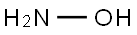
    MF: H3NO
    MW: 33.03
    EINECS: 232-259-2
    Product Categories: Pharmaceutical Intermediates;C-X Bond Formation (Non-Halogen);Others;Synthetic Reagents;7803-49-8
    Mol File: 7803-49-8.mol
    Shop Hydroxylamine7803-49-8-Detailed Image 1

    Hydroxylamine Chemical Properties
    Melting point  7°C
    Boiling point  >100 °C
    density  1.078 g/mL at 25 °C
    vapor pressure  9 mm Hg ( 40 °C)
    refractive index  n20/D 1.393
    RTECS  NC2975000
    storage temp.  Store below +30°C.
    solubility  Water
    pka pK (20°) 7.97
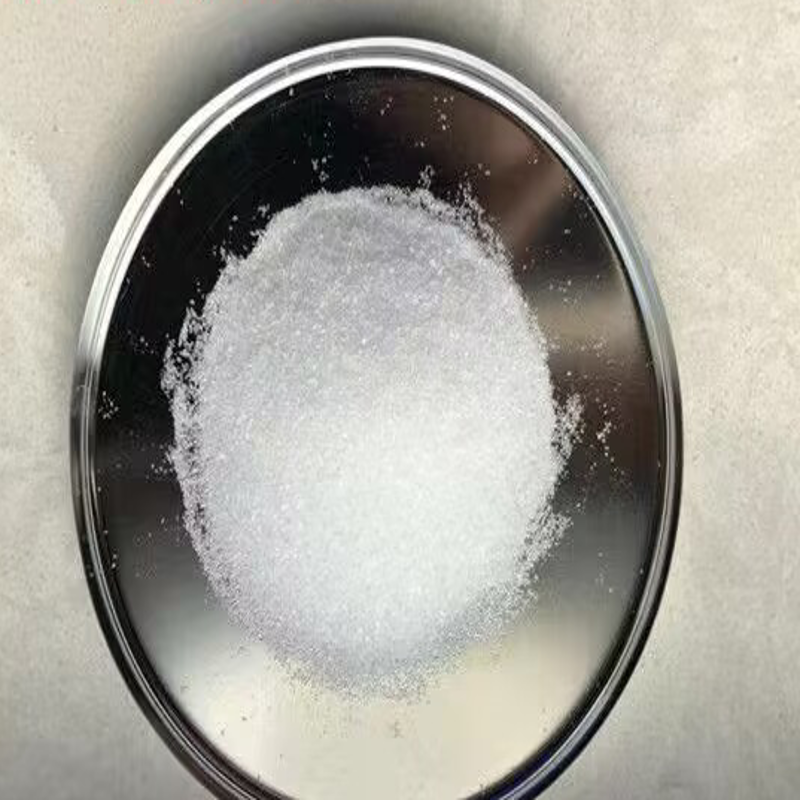
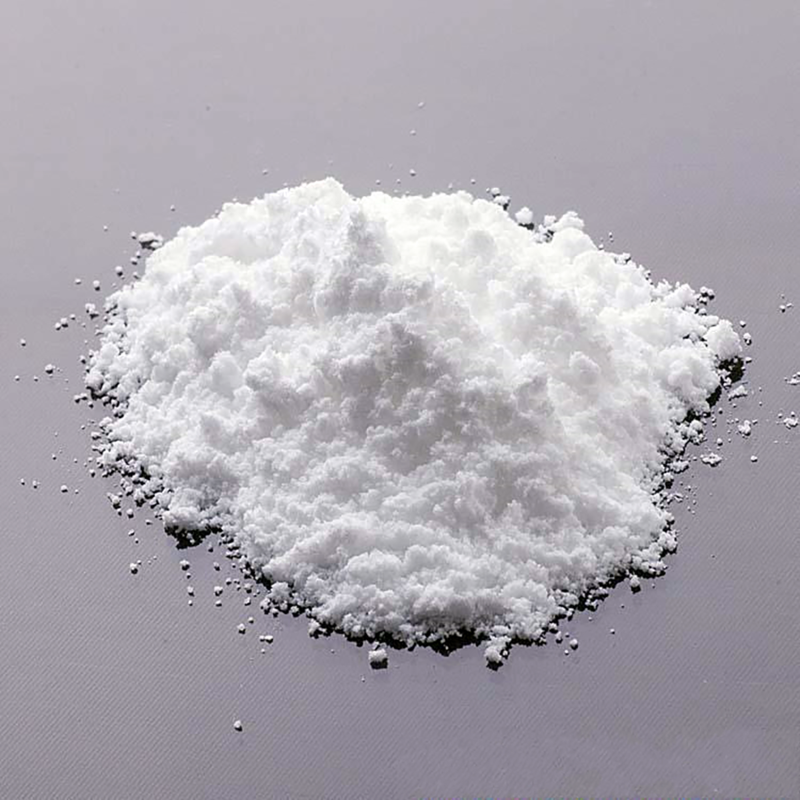
    form  white flakes or needles
    color  white orthorhombic flakes or needles
    PH 10.6 (20°C in H2O)
    Water Solubility  Miscible with water, liquid ammonia and methanol. Slightly miscible with ether, benzene, carbon disulfide and chloroform.
    Merck  13,4853
    Henry's Law Constant 1.4×10³ mol/(m3Pa) at 25℃, HSDB (2015)
    Stability: Stable. Incompatible with oxidizing agents, potassium dichromate, chromium trioxide, zinc, calcium, copper, sodium, ammonia, carbonyls, phosphorus halides, pyridine, hypochlorites.
    InChI 1S/H3NO/c1-2/h2H,1H2
    InChIKey AVXURJPOCDRRFD-UHFFFAOYSA-N
    SMILES NO
    CAS DataBase Reference 7803-49-8(CAS DataBase Reference)
    NIST Chemistry Reference Hydroxylamine(7803-49-8)
    EPA Substance Registry System Hydroxylamine (7803-49-8)

    Safety Information
    Hazard Codes  Xn,N
    Risk Statements  5-22-37/38-41-43-48/22-50-40-21/22
    Safety Statements  23-26-36/37/39-47-61-22-46
    RIDADR  UN 3082 9/PG 3
    WGK Germany  3
    F  4.8
    Autoignition Temperature 215°C
    TSCA  TSCA listed
    HazardClass  8
    PackingGroup  II
    HS Code  28251090
    Storage Class 3 - Flammable liquids
    Hazard Classifications Acute Tox. 4 Oral
    Aquatic Acute 1
    Carc. 2
    Desen. Expl. 4
    Eye Dam. 1
    Met. Corr. 1
    Skin Irrit. 2
    Skin Sens. 1
    STOT RE 2
    STOT SE 3
    Hazardous Substances Data 7803-49-8(Hazardous Substances Data)
    Toxicity LD50 i.p. in mice: 1.83 mmol/kg (Smith, Layne)
    MSDS Information
    Provider Language
    SigmaAldrich English
    ALFA English

    Hydroxylamine Usage And Synthesis
    Description Hydroxylamine is the hydroxyl derivative of ammonia. Hydroxylamine is used as a nucleophile in aromatic substitution reactions and as a reducing agent. By the reaction with aldehydes, hydroxylamine forms oximes, which are intermediates in the commercial production of polyamide plastics. Some hydroxylamine converted oximes are used in smaller amounts as pharmaceuticals, pesticides, and varnishes to prevent formation of a skin. With it is reduction ability, hydroxylamine is used as an antioxidant in photographic developers, to stabilize polymerization monomers, and to reduce Cu2+ in the dyeing of acrylic fibers. Hydroxylamine can be converted into hydroxylamine-O-sulphonic acid, which is a good aminating agent. Hydroxylamine can also be used as an intermediate in nitrification. It is further used in semiconductor industry in the cleaning formations, such as for aluminum interconnect.
    References
    1. Stephen A. Lawrence, Amines: Synthesis, Properties and Applications, 2004, ISBN 0521782848
    2. Howard Lees, Hydroxylamine as an intermediate in nitrification, Nature, 1951, vol. 169, 156-157
    3. Egon Wiberg and Nils Wiberg, Inorganic Chemistry, 2001, ISBN 0123526515
    4. https://www.britannica.com/science/hydroxylamine
    5. Karen A. Reinhardt and Richard F. Reidy, Handbook for Cleaning for Semiconductor Manufacturing: Fundamentals and Applications, 2011, ISBN 9780470625958
    Description Hydroxylamine was first synthesized by Wilhem Clemens Lossen in 1865 in the laboratory of Wilhelm Heinrich Heintz while working in Halle. The Lossen synthesis originally generated hydroxylamine in aqueous solution. Anhydrous hydroxylamine was prepared later by Lobry de Bruyn and Crismer in 1891. The free base is extremely volatile, and industrial-scale production has been fraught with problems, including large explosions at facilities in the United States and Japan. Much of the hydroxylamine produced and transported is in salt form or as a dilute aqueous solution.
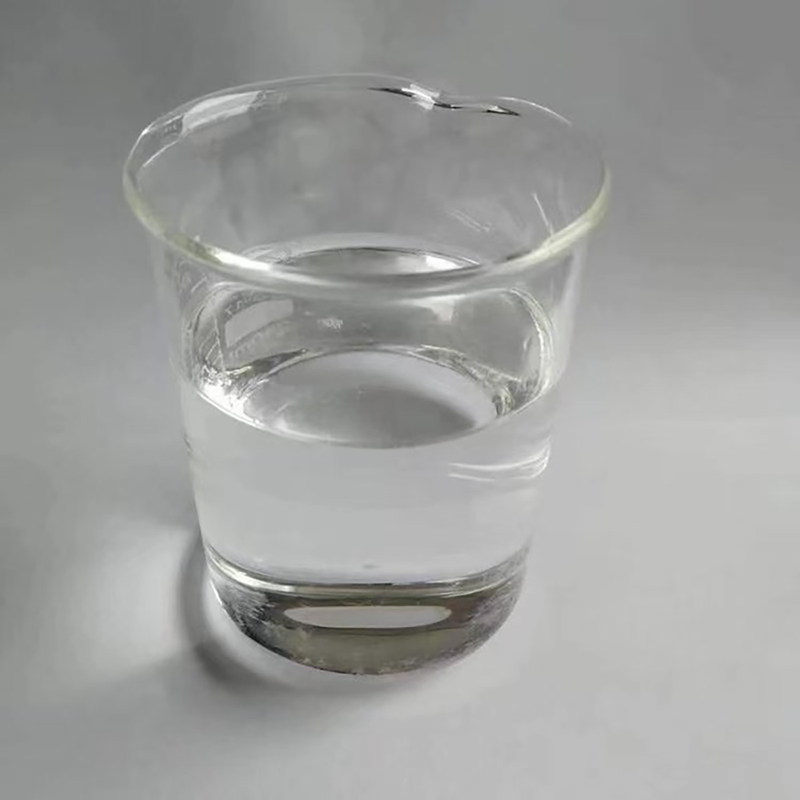
    Chemical Properties slightly yellow liquid
    Physical properties White crystalline solid; orthogonal plates or needles; unstable; density 1.21g/cm3at 20°C; melts at 33°C; vaporizes at 58°C; very soluble in water, liquidammonia and lower alcohols; sparingly soluble in most other organic solvents;decomposes in hot water; pKa5.94 at 25°C.
    Uses Reducing agent used in photographic processing, leather tanning, manufacturing of nylon and other polymers; as a stabilizer for natural rubber; to prevent the development of objectionable tastes and odors during the refining of fatty materials.
    Uses Hydroxylamine is used as a reducing agent in photography, in synthetic and analytical chemistry, as an antioxidant for fatty acids and soaps, and as a dehairing agent for hides. In addition, hydroxylamine is used in the production of cyclohexanone oxime, an isomer of caprolactam, which is an intermediate in the production of nylon-6. In the semiconductor industry, hydroxylamine can be a component of a solution that dissolves a photoresist following lithography. Hydroxylamine can also be used to selectively cleave asparaginyl-glycine peptide bonds.
    Uses Reducing agent, organic synthesis.
    Definition ChEBI: The simplest hydroxylamine, consisting of ammonia bearing a hydroxy substituent. It is an intermediate in the biological nitrification by microbes like bacteria.
    Definition hydroxylamine: A colourless solid,NH2OH, m.p. 33°C. It explodes onheating and may be employed as anoxidizing agent or reducing agent. Itis made by the reduction of nitratesor nitrites, and is used in makingnylon. With aldehydes and ketones itforms oximes.
    Preparation Hydroxylamine is unstable as a free base. It is prepared from hydroxy-lamine hydrochloride, NH2OHHCl, which is obtained by electrolytic reduc-tion of ammonium chloride solution. The hydrochloride undergoes alkalinedecomposition to hydroxylamine, which is collected by vacuum distillation.
    General Description Odorless white crystalline solid. Sinks and mixes with water.
    Air & Water Reactions Decomposes rapidly at room temperature or when dissolved in hot water by internal oxidation-reduction. Reacts with water or steam to produce heat and corrosive liquids.
    Reactivity Profile HYDROXYLAMINE is a white solid, thermally unstable, decomposes rapidly at room temperature or when dissolved in hot water by internal oxidation-reduction. HYDROXYLAMINE should be stored below 10° C [Bailar, 1973, vol. 2, p. 272]. Explosive reaction with strong oxidizers (chromium trioxide, potassium dichromate) or powdered zinc upon heat. Reaction with zinc or calcium produces explosive bishydroxylamides. HYDROXYLAMINE ignites on contact with cupric sulfate, alkali metals (sodium, potassium), oxidants (e.g., barium oxide, barium peroxide, lead dioxide, potassium permanganate, chlorine), phosphorus trichloride and pentachloride. HYDROXYLAMINE reacts vigorously with hypochlorites, pyridine, carbonyls [Sax, 9th ed., 1996, p. 1875]. On contact with organic materials in thin layer (e.g., crystals on filter paper), HYDROXYLAMINE may ignite spontaneously in air. HYDROXYLAMINE explodes when heated above 70° C [Brauer, 1963, vol. 1, p. 502]. During a distillation process, an explosion occurred. Potassium hydroxide is thought to be involved in the explosion. Employees in the plant complained of chest pains and suffered chemical burns. Five people were killed by the explosion.
    Hazard Decomposes rapidly at room temperature, violently when heated, detonates in flame-heated test tube. Irritant to tissue.
    Health Hazard INHALATION: Moderately toxic by inhalation and oral routes with the following symptoms possible: headache, vertigo, tinnitus, dyspnea, nausea and vomiting, cyanosis, proteinuria and hematuria, jaundice, restlessness, and convulsion. Methemoglobinemia has been reported. EYES: Corrosive - highly irritating. SKIN: Irritating or corrosive to skin. INGESTION: Moderately toxic by inhalation and oral routes with the following symptoms possible; headache, vertigo, tinnitus, dyspnea, nausea and vomiting, cyanosis, proteinuria and hematuria, jaundice, restlessness, and convulsion. Methemoglobinemia has been reported.
    Contact allergens Hydroxylamine and its salts are used in various branches of industry, as reducing agents in color film developers or as reagents in laboratories.
    Potential Exposure Potential Exposure:Mutagen.Those involved in chemical synthesis or use of hydroxyI-amine. Used as a reducing agent.
    First aid If this chemical gets into the eyes, remove any con-tact lenses at once and irrigate immediately for at least 15 min,occasionally lifting upper and lower lids. Seek medical atten-tion immediately. If this chemical contacts the skin, removecontaminated clothing and wash immediately with soap andwater. Seek medical attention immediately. If this chemicalhas been inhaled, remove from exposure, begin rescue breath-ing (using universal precautions, including resuscitation mask)if breathing has stopped and CPR if heart action has stopped.Transfer promptly to a medical facility. When this chemicalhas been swallowed, get medical attention. If victim is con-scious, administer water or milk. Do not induce vomiting.Note to physician: Treat for methemoglobinemia. Test urineformethemoglobinemia. Spectrophotometry may berequired for precise determination of levels of methemoglo-bin in urine.
    Carcinogenicity Carcinogenicity of hydroxylamine and its salts has not been demonstrated. Several studies have shown a decreased incidence of spontaneous mammary tumors in mice exposed to the sulfate and hydrochloride.3–7 There was some indication of an increase in the incidence of spontaneous mammary tumors when the sulfate was administered to older animals whose mammary glands were already well developed.
    Environmental Fate The large-scale production and use of hydroxylamine may result in its release to the environment through various waste streams. Hydroxylamine will exist solely as a vapor in the ambient atmosphere, and will be degraded in the atmosphere by reaction with photochemically produced hydroxyl radicals; the half-life for this reaction in air is estimated to be 18 h.
    Abiotic degradation of hydroxylamine by photochemically produced peroxy radicals is an important environmental fate process in surface waters, with the half-life of the reaction measured at approximately 2 h. An estimated bioconcentration factor of 3 suggests that the potential for bioconcentration in aquatic organisms is low. If released terrestrially, hydroxylamine will most likely exist in its protonated form due to its pKa of 5.94; the protonated form is nonvolatile. Koc estimates of 14 for hydroxylamine suggest that it may have very high mobility in soil.
    storage (1) Color Code- Yellow Stripe (strong reducingagent): Reactivity Hazard; Store separately in an area iso-lated from flammables, combustibles, or other yellow-codedmaterials. (2) Color Code- Blue: Health Hazard/Poison:Store in a secure poison location. Prior to working with thischemical you should be trained on its proper handling andstorage. Protect against physical damage. Store in cool, non-combustible buildings and separate from oxidizing materi-als. Open airtight containers occasionally to relieve pressurefrom decomposition products.
    Shipping Toxic solid, corrosive, inorganic, n.o.s. requires ashipping label of“POISONOUS/TOXIC MATERIALS,CORROSIVE.”It falls in DOT/UN Hazard Class 6.1 andPacking Group II.
    Purification Methods Crystallise it from n-butanol at -10o, collect it by vacuum filtration and wash it with cold diethyl ether. Harmful vapours. [Hurd Inorg Synth I 87 1939, Semon in Org Synth Coll Vol I 318 1932.]
    Toxicity evaluation Hydroxylamine acts as a reducing agent when absorbed systemically, producing methemoglobin and the formulation of Heinz bodies in the blood. It can induce hemolytic anemia. It inhibits platelet aggregation and is a nitric oxide vasodilator. Oxylamines such as hydroxylamine and methoxylamine disturb DNA replication and act as potent mutagens, causing nucleotide transition from one purine to another or one pyrimidine to another.
    Allergic reactions of the skin following dermal exposure to hydroxylamine resemble contact eczema, or possibly urticaria of Quincke’s edema. The pathogenesis of this reaction appears to be mediated by a delayed type T-lymphocyte reaction.
    Incompatibilities Self reactive. Contaminants, tempera-tures above 129.4℃, or open flame can cause explosivedecomposition, especially in the presence of moisture andcarbon dioxide. Incompatible with strong acids, organicanhydrides, isocyanates, aldehydes, sodium, finely dividedzinc, some metal oxides. Aqueous solution is a weak base.Contact with strong oxidizers may cause a fire and explo-sion hazard. Attacks some metals. Contact with calcium orzinc forms a heat-sensitive explosive [bis(hydroxylamide)](Sax).


    Shop Tirzepatide2023788-19-2-Detailed Image 2 Shop Tirzepatide2023788-19-2-Detailed Image 3 Shop Tirzepatide2023788-19-2-Detailed Image 4 Shop Tirzepatide2023788-19-2-Detailed Image 5 Shop Tirzepatide2023788-19-2-Detailed Image 6 Shop Tirzepatide2023788-19-2-Detailed Image 7


    ECHEMI Editorial Reference
    slightly yellow liquid
    Hydroxylamine is an odorless white crystalline solid. Sinks and mixes with water. (USCG, 1999)|Liquid|Solid|VERY HYGROSCOPIC WHITE NEEDLES OR FLAKES.
    Hydroxylamine is an odorless white crystalline solid. Sinks and mixes with water. (USCG, 1999)|Hydroxylamine is the simplest hydroxylamine, consisting of ammonia bearing a hydroxy substituent. It is an intermediate in the biological nitrification by microbes like bacteria. It has a role as a nitric oxide donor, an EC 1.1.3.13 (alcohol oxidase) inhibitor, a nucleophilic reagent, an EC 4.2.1.22 (cystathionine beta-synthase) inhibitor, an EC 4.3.1.10 (serine-sulfate ammonia-lyase) inhibitor, a bacterial xenobiotic metabolite and an algal metabolite. It is a conjugate acid of a hydroxyazanide and an aminooxidanide. It derives from a hydride of an ammonia.|A colorless inorganic compound (HONH2) used in organic synthesis and as a reducing agent, due to its ability to donate nitric oxide.

    Basic Info
    Product Name:

    Hydroxylamine

    Other Name:

    Hydroxylamine;Hydroxyamine;Telclean 1200A;HDA;EKC 270T

    CAS No.:

    7803-49-8

    Molecular Formula:

    H3NO

    InChIKeys:

    InChIKey=AVXURJPOCDRRFD-UHFFFAOYSA-N

    Molecular Weight:

    33.03

    Exact Mass:

    33.03

    EC Number:

    232-259-2

    UNII:

    2FP81O2L9Z

    ICSC Number:

    0661

    UN Number:

    2735

    DSSTox ID:

    DTXSID7041043

    Color/Form:

    Colorless cyrstals|Large white flakes or white needles

    HScode:

    28251090

    Categories:

    Organic Reagents

    Characteristics
    PSA:

    46.25000

    XLogP3:

    -0.81

    Appearance:

    Hydroxylamine is an odorless white crystalline solid. Sinks and mixes with water. (USCG, 1999)

    Density:

    1.227 g/cm3

    Melting Point:

    33 °C

    Boiling Point:

    70 °C @ Press: 60 Torr

    Flash Point:

    265 °F (USCG, 1999)|explodes at 129 °C

    Refractive Index:

    1.395

    Water Solubility:

    Miscible with water, liquid ammonia and methanol. Slightly miscible with ether, benzene, carbon disulfide and chloroform.

    Storage Conditions:

    Separate from oxidizing materials. store in a cool, dry, well-ventilated location. store away from heat, oxidizers, and sunlight. Outside or detached storage is preferred.

    Vapor Pressure:

    9 mm Hg ( 40 °C)

    Vapor Density:

    Relative vapor density (air = 1): 1.1

    Toxicity:

    Celiac-rat LD50: 59 mg/kg; Celiac-mouse LD50: 60 mg/kg

    Flammability characteristics:

    Thermal decomposition of toxic nitrogen oxide fumes

    Dissociation Constants:

    pKa= 5.94 @ 25 °C

    Experimental Properties:

    VERY HYGROSCOPIC; ALKALINE REACTION; DECOMP BY HOT WATER; HEAT OF FORMATION (SOLID): -27.60 KCAL/MOL AT 18 °C & 1 ATM; (LIQ): -25.5 KCAL/MOL AT 18 °C & 1 ATM|REDUCING AGENT IN ALKALINE, OXIDIZING AGENT IN ACID MEDIUM|COLORLESS MONOCLINIC CRYSTALS; BP: DECOMP; SLIGHTLY SOL IN ALC; SOL IN ETHER /SULFATE/|Decomposes in hot water|Monoclinic columnar crystals; slowly decomp when moist; density: 1.67 at 17 °C; mp: about 151 °C; pK of 0.2 molar aq soln 3.2; 1 g sol in 1 ml H2O, 19 ml alc, 8 ml methanol; sol in glycerol, propylene glycol; insol in cold ether /Hydroxylamine hydrochloride/

    Air and Water Reactions:

    Decomposes rapidly at room temperature or when dissolved in hot water by internal oxidation-reduction. Reacts with water or steam to produce heat and corrosive liquids.

    Reactive Group:

    Bases, Strong

    Reactivity Alerts:

    Explosive

    Reactivity Profile:

    HYDROXYLAMINE is a white solid, thermally unstable, decomposes rapidly at room temperature or when dissolved in hot water by internal oxidation-reduction. It should be stored below 10° C [Bailar, 1973, vol. 2, p. 272]. Explosive reaction with strong oxidizers (chromium trioxide, potassium dichromate) or powdered zinc upon heat. Reaction with zinc or calcium produces explosive bishydroxylamides. It ignites on contact with cupric sulfate, alkali metals (sodium, potassium), oxidants (e.g., barium oxide, barium peroxide, lead dioxide, potassium permanganate, chlorine), phosphorus trichloride and pentachloride. It reacts vigorously with hypochlorites, pyridine, carbonyls [Sax, 9th ed., 1996, p. 1875]. On contact with organic materials in thin layer (e.g., crystals on filter paper), it may ignite spontaneously in air. It explodes when heated above 70° C [Brauer, 1963, vol. 1, p. 502]. During a distillation process, an explosion occurred. Potassium hydroxide is thought to be involved in the explosion. Employees in the plant complained of chest pains and suffered chemical burns. Five people were killed by the explosion.

    Autoignition Temperature:

    265 °F (USCG, 1999)

    Hazard Identification

    Classification of the substance or mixture

    Explosives, Unstable explosive

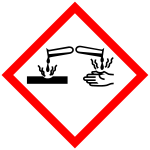
    Corrosive to metals, Category 1

    Acute toxicity - Category 4, Oral

    Acute toxicity - Category 4, Dermal

    Skin irritation, Category 2

    Serious eye damage, Category 1

    Skin sensitization, Category 1

    Specific target organ toxicity – single exposure, Category 3

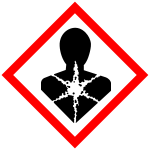
    Carcinogenicity, Category 2

    Specific target organ toxicity – repeated exposure, Category 2

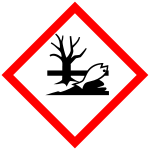
    Hazardous to the aquatic environment, short-term (Acute) - Category Acute 1

    GHS label elements, including precautionary statements

    Pictogram(s)
    Signal word

    Danger

    Hazard statement(s)

    H200 Unstable explosive

    H290 May be corrosive to metals

    H302 Harmful if swallowed

    H312 Harmful in contact with skin

    H315 Causes skin irritation

    H318 Causes serious eye damage

    H317 May cause an allergic skin reaction

    H335 May cause respiratory irritation

    H351 Suspected of causing cancer

    H373 May cause damage to organs through prolonged or repeated exposure

    H400 Very toxic to aquatic life

    Precautionary statement(s)
    Prevention

    P203 Obtain, read and follow all safety instructions before use.

    P250 Do not subject to grinding/shock/friction/….

    P280 Wear protective gloves/protective clothing/eye protection/face protection/hearing protection/...

    P234 Keep only in original packaging.

    P264 Wash ... thoroughly after handling.

    P270 Do not eat, drink or smoke when using this product.

    P261 Avoid breathing dust/fume/gas/mist/vapours/spray.

    P272 Contaminated work clothing should not be allowed out of the workplace.

    P271 Use only outdoors or in a well-ventilated area.

    P260 Do not breathe dust/fume/gas/mist/vapours/spray.

    P273 Avoid release to the environment.

    Response

    P370+P372+P380+P373 In case of fire: Explosion risk. Evacuate area. DO NOT fight fire when fire reaches explosives.

    P390 Absorb spillage to prevent material damage.

    P301+P317 IF SWALLOWED: Get medical help.

    P330 Rinse mouth.

    P302+P352 IF ON SKIN: Wash with plenty of water/...

    P317 Get medical help.

    P321 Specific treatment (see ... on this label).

    P362+P364 Take off contaminated clothing and wash it before reuse.

    P332+P317 If skin irritation occurs: Get medical help.

    P305+P354+P338 IF IN EYES: Immediately rinse with water for several minutes. Remove contact lenses, if present and easy to do. Continue rinsing.

    P333+P317 If skin irritation or rash occurs: Get medical help.

    P304+P340 IF INHALED: Remove person to fresh air and keep comfortable for breathing.

    P319 Get medical help if you feel unwell.

    P318 IF exposed or concerned, get medical advice.

    P391 Collect spillage.

    Storage

    P401 Store in accordance with…

    P406 Store in a corrosion resistant/...container with a resistant inner liner.

    P403+P233 Store in a well-ventilated place. Keep container tightly closed.

    P405 Store locked up.

    Disposal

    P503 Refer to manufacturer/supplier… for information on disposal/recovery/recycling.

    P501 Dispose of contents/container to an appropriate treatment and disposal facility in accordance with applicable laws and regulations, and product characteristics at time of disposal.

    Other hazards which do not result in classification

    no data available

    Handling and Storage

    Precautions for safe handling

    NO open flames, NO sparks and NO smoking. NO contact with hot surfaces. Handling in a well ventilated place. Wear suitable protective clothing. Avoid contact with skin and eyes. Avoid formation of dust and aerosols. Use non-sparking tools. Prevent fire caused by electrostatic discharge steam.

    Conditions for safe storage, including any incompatibilities

    Fireproof. Separated from incompatible materials. See Chemical Dangers. Cool. Dry. Well closed.Separate from oxidizing materials. store in a cool, dry, well-ventilated location. store away from heat, oxidizers, and sunlight. Outside or detached storage is preferred.

  • Seller Information
    Business Type:

    Trader

    Main Products:

    pharmaceutical intermediates,peptides,electronic chemicals

    Location:

    Room 102, 1st Floor, East Office Building, No. 45 Pengwan Road, Qianwan Bonded Port Area, Qingdao Zone, China (Shandong) Pilot Free Trade Zone

    Payment Terms:

    100% TT in advance

    Average lead Time:

    10 days

    Total Annual Revenue:

    $10 million-$25 million

    Total Employees:

    51-100

    Year of Establishment:

    2024

    A reliable supplier is like insurance.

    We are mainly specilized in supply of pharmaceutical intermediates, electronic chemicals,food additives, and other fine chemical products.
    Integrity is the foundation, quality is life. We would like to work together with you to build a greener and brighter future.

    Website: orientchem.cc
    Email: scarlett@orientchem.cc
    WhatsApp: +86 17753254221

  • Inquiry History
    2 Inquiries
    Country Product Purchase Quantity Date Posted
    Italy

    Hydroxylamine 50% water solution

    250 KG Sep 13, 2026
    South Korea

    [LG Chem] Product Inquiry - Hydroxylamine solution (CAS No. 7803-49-8)

    1 MT Jan 18, 2024
    Post an enquiry for this product
pic ×

Scan the QR Code to Share

All products displayed on this website are only for non-medical purposes such as industrial applications or scientific research, and cannot be used for clinical diagnosis or treatment of humans or animals. They are not medicinal or edible.

According to relevant laws and regulations and the regulations of this website, units or individuals who purchase hazardous materials should obtain valid qualifications and qualification conditions.

The information shown above is provided by the enterprise itself, and the authenticity, accuracy and legitimacy of the content are the responsibility of the publishing company. ECHEMI does not bear any guarantee responsibility for this. Please be aware that risks in internet transactions objectively exist.

Feedback & Suggestions
Send Message

Thank you for your feedback. If you require further assistance, please contact us by email at info@echemi.com or call us at +86-532-55729510.