Product
Supplier
Encyclopedia
Inquiry
Home > Food Additives > Acidity Regulators > Salicylic acid for Sale > Salicylic Acid FOOD GRADE
Salicylic Acid FOOD GRADE buy - large image1
Salicylic Acid FOOD GRADE buy - image1

Salicylic Acid FOOD GRADE

TDS 22 Inquiries

Unit Price: Get Latest Price
CAS No.:

69-72-7

Grade:

Food Grade

Content:

99%

Port:

QINGDAO

Brand:

EAST CHEMSOURCES LIMITED

Packaging:

25KG BAGS

Price valid (until):

2024-03-04

Company Type:
Trader
Location:
China
Qualification:
Main Products:

Food additives,Pharmaceutical raw materials,Chemicals,Comestic raw materials

  • Product Description

  • Seller Information

  • Inquiry History

  • Description

    Shop Salicylic Acid FOOD GRADE-Detailed Image 1

    1. Product Identification

    Synonyms: 2-Hydroxybenzoic acid; o-hydroxybenzoic acid

    CAS No.: 69-72-7

    Molecular Weight: 138.12

    Chemical Formula: HO.C6H4.COOH

    Shop Salicylic Acid FOOD GRADE-Detailed Image 2


    2. Composition/Information on Ingredients


    Ingredient

    Benzoic Acid, 2-hydroxy-

    CAS No

    69-72-7

    Percent

    90 - 100%

    Hazardous

    Yes

    Shop Salicylic Acid FOOD GRADE-Detailed Image 3


    3. Hazards Identification


    Emergency Overview


    WARNING! HARMFUL IF SWALLOWED, INHALED OR ABSORBED THROUGH SKIN.

    AFFECTS CENTRAL NERVOUS SYSTEM, KIDNEYS, AND PANCREAS. CAUSES IRRITATION TO SKIN, EYES AND RESPIRATORY TRACT.


    SAF-T-DATA(tm) Ratings (Provided here for your convenience)

    Health Rating: 2 - Moderate (Life)

    Flammability Rating: 1 - Slight

    Reactivity Rating: 1 - Slight

    Contact Rating: 2 - Moderate (Life)

    Lab Protective Equip: GOGGLES; LAB COAT; VENT HOOD; PROPER GLOVES Storage Color Code: Green (General Storage)

    Potential Health Effects

    Inhalation:

    Inhalation of dust may cause irritation due to its acidic character. Coughing, sneezing, and shortness of breath may occur.

    Ingestion:

    Ingestion of sizable amounts can cause "salicylism", as evidenced by abdominal pain, vomiting, increased respiration, and mental disturbances. Fatalities resulting from respiratory or cardiovascular failure are

    known. Mean lethal adult dose of salicylates is between 20 and 30 grams.

    Skin Contact:


    Mild irritant, may cause skin rash in sensitive individuals. Absorption of large amounts may produce symptoms paralleling ingestion exposure.

    Eye Contact:

    Severe irritant by animal testing.

    Chronic Exposure:

    Central nervous system disturbances such as rapid breathing, confusion and even convulsions may develop. Kidneys and pancreas can be affected by prolonged ingestion.

    Aggravation of Pre-existing Conditions:

    Persons with pre-existing skin disorders or eye problems or impaired kidney function may be more susceptible to the effects of the substance.


    4. First Aid Measures


    Inhalation:

    Remove to fresh air. If not breathing, give artificial respiration. If breathing is difficult, give oxygen. Get medical attention.

    Ingestion:

    Induce vomiting immediately as directed by medical personnel. Never give anything by mouth to an

    unconscious person. Get medical attention.

    Skin Contact:

    Immediately flush skin with plenty of water for at least 15 minutes while removing contaminated clothing and shoes. Wash clothing before reuse. Thoroughly clean shoes before reuse. Get medical attention if

    symptoms occur.

    Eye Contact:

    Immediately flush eyes with plenty of water for at least 15 minutes, lifting lower and upper eyelids occasionally. Get medical attention immediately.


    5. Fire Fighting Measures


    Fire:

    Flashpoint: 157C (315F) CC

    As with most organic solids, fire is possible at elevated temperatures or by contact with an ignition source.

    Explosion:

    Fine dust dispersed in air in sufficient concentrations, and in the presence of an ignition source is a potential dust explosion hazard.

    Fire Extinguishing Media:

    Water spray, dry chemical, alcohol foam, or carbon dioxide.

    Special Information:

    In the event of a fire, wear full protective clothing and NIOSH-approved self-contained breathing apparatus with full facepiece operated in the pressure demand or other positive pressure mode.


    6. Accidental Release Measures

    Remove all sources of ignition. Ventilate area of leak or spill. Wear appropriate personal protective

    equipment as specified in Section 8. Spills: Clean up spills in a manner that does not disperse dust into the air. Use non-sparking tools and equipment. Reduce airborne dust and prevent scattering by moistening

    with water. Pick up spill for recovery or disposal and place in a closed container.


    7. Handling and Storage

    Keep in a tightly closed container, stored in a cool, dry, ventilated area. Protect against physical damage.  Isolate from any source of heat or ignition. Isolate from oxidizing materials. Store in the dark. Avoid dust formation and control ignition sources. Employ grounding, venting and explosion relief provisions in

    accord with accepted engineering practices in any process capable of generating dust and/or static    electricity. Empty only into inert or non-flammable atmosphere. Emptying contents into a non-inert atmosphere where flammable vapors may be present could cause a flash fire or explosion due to

    electrostatic discharge.


    8. Exposure Controls/Personal Protection


    Airborne Exposure Limits:

    None established.

    Ventilation System:

    A system of local and/or general exhaust is recommended to keep employee exposures as low as possible. Local exhaust ventilation is generally preferred because it can control the emissions of the contaminant at  its source, preventing dispersion of it into the general work area. Please refer to the ACGIH document,

    Industrial Ventilation, A Manual of Recommended Practices, most recent edition, for details.

    Personal Respirators (NIOSH Approved):

    For conditions of use where exposure to dust or mist is apparent and engineering controls are not feasible, a particulate respirator (NIOSH type N95 or better filters) may be worn. If oil particles (e.g. lubricants,

    cutting fluids, glycerine, etc.) are present, use a NIOSH type R or P filter. For emergencies or instances where the exposure levels are not known, use a full-face positive-pressure, air-supplied respirator.

    WARNING: Air-purifying respirators do not protect workers in oxygen-deficient atmospheres.

    Skin Protection:

    Wear protective gloves and clean body-covering clothing.

    Eye Protection:

    Use chemical safety goggles. Maintain eye wash fountain and quick-drench facilities in work area.


    9. Physical and Chemical Properties


    Appearance:

    Fine, white crystals.


    Odor:

    Odorless or slight phenolic odor.

    Solubility:

    1 g/460 ml water.

    Density:

    1.44 @ 20C (68F)

    pH:

    2.4

    % Volatiles by volume @ 21C (70F):

    0

    Boiling Point:

    211C (412F) @ 20 mm Hg. Decomposes on heating at atmospheric pressure.

    Melting Point:

    157 - 159C (315 - 318F) Sublimes @ 76C (169F)

    Vapor Density (Air=1):

    4.8

    Vapor Pressure (mm Hg):

    1.0 @ 114C (237F)

    Evaporation Rate (BuAc=1):

    No information found.


    10. Stability and Reactivity


    Stability:

    Stable under ordinary conditions of use and storage. Darkens on exposure to air or light.

    Hazardous Decomposition Products:

    Toxic gases and vapors may be released if involved in a fire. When rapidly heated at atmospheric pressure it decomposes into phenol and carbon monoxide.

    Hazardous Polymerization:

    Will not occur.

    Incompatibilities:

    Iron salts, lead acetate, iodine, nitrous ether.

    Conditions to Avoid:

    Moisture, light, heat and incompatibles.

    11. Toxicological Information

    Oral rat LD50: 891 mg/kg. Inhalation rat LC50: > 900 mg/m3/1hr. Irritation: skin rabbit: 500 mg/24H mild. Eye rabbit: 100 mg severe. Investigated a mutagen and reproductive effector.

    --------\Cancer Lists\------------------------------------------------------

    ---NTP Carcinogen---

    Ingredient

    Benzoic Acid, 2-hydroxy- (69-72-7)

    Known

    No

    Anticipated No

    IARC  Category

    None


    12. Ecological Information


    Environmental Fate:

    When released into the soil, this material is expected to readily biodegrade. When released into water, this material is expected to readily biodegrade. When released into the air, this material is expected to be

    readily degraded by reaction with photochemically produced hydroxyl radicals. When released into the     air, this material is expected to be readily removed from the atmosphere by dry and wet deposition. When released into the air, this material is expected to have a half-life between 1 and 10 days. This material has  a log octanol-water partition coefficient of less than 3.0.

    Environmental Toxicity:

    No information found.


    13. Disposal Considerations

    Whatever cannot be saved for recovery or recycling should be managed in an appropriate and approved waste disposal facility. Processing, use or contamination of this product may change the waste

    management options. State and local disposal regulations may differ from federal disposal regulations. Dispose of container and unused contents in accordance with federal, state and local requirements.


    14. Transport Information

    Not regulated.


    15. Regulatory Information

    --------\Chemical Inventory Status - Part 1\---------------------------------

    Ingredient                                                                      TSCA    EC      Japan    Australia

    Benzoic Acid, 2-hydroxy- (69-72-7)                              Yes      Yes      Yes            Yes

    --------\Chemical Inventory Status - Part 2\---------------------------------

    --Canada--

    Ingredient                                                                        Korea    DSL      NDSL        Phil.

    Benzoic Acid, 2-hydroxy- (69-72-7)                                Yes      Yes          No          Yes

    --------\Federal, State & International Regulations - Part 1\----------------

    -SARA 302-        ------SARA 313------

    Ingredient                                                            RQ        TPQ           List        Chemical Catg.

    Benzoic Acid, 2-hydroxy- (69-72-7)                  No          No            No                  No

    --------\Federal, State & International Regulations - Part 2\----------------

    -RCRA-        -TSCA-

    Ingredient                                                        CERCLA           261.33              8(d)

    Benzoic Acid, 2-hydroxy- (69-72-7)                  No                    No                  No

    Chemical Weapons  Convention:    No          TSCA   12(b):    No          CDTA:    No

    SARA  311/312:    Acute:  Yes             Chronic: Yes    Fire:  No    Pressure:  No


    Reactivity: No                    (Pure  / Solid)

    Australian Hazchem Code: None allocated.

    Poison Schedule: None allocated.

    WHMIS:

    This MSDS has been prepared according to the hazard criteria of the Controlled Products Regulations (CPR) and the MSDS contains all of the information required by the CPR.

    Shop Salicylic Acid FOOD GRADE-Detailed Image 4


    16. Other Information


    NFPA Ratings: Health: 1 Flammability: 1 Reactivity: 0

    Label Hazard Warning:

    WARNING! HARMFUL IF SWALLOWED, INHALED OR ABSORBED THROUGH SKIN.

    AFFECTS CENTRAL NERVOUS SYSTEM, KIDNEYS, AND PANCREAS. CAUSES IRRITATION TO SKIN, EYES AND RESPIRATORY TRACT.

    Label Precautions:

    Avoid contact with eyes, skin and clothing.

    Avoid breathing dust.

    Wash thoroughly after handling.

    Use only with adequate ventilation.

    Keep container closed.

    Label First Aid:

    If swallowed, induce vomiting immediately as directed by medical personnel. Never give anything by

    mouth to an unconscious person. In case of contact, immediately flush eyes or skin with plenty of water    for at least 15 minutes. Remove contaminated clothing and shoes. Wash clothing before reuse. If inhaled, remove to fresh air. If not breathing, give artificial respiration. If breathing is difficult, give oxygen. In all cases, get medical attention.

    Product Use:

    Laboratory Reagent.

    Items Specifications


    Certificates

    Basic Info
    Product Name:

    Salicylic acid

    Other Name:

    Benzoic acid,2-hydroxy-;Salicylic acid;2-Hydroxybenzoic acid;o-Hydroxybenzoic acid;Retarder W;Salicylic acid collodion;Rutranex;Salonil;Psoriacid-S-Stift;Phenol-2-carboxylic acid;2-Hydroxybenzenecarboxylic acid;2-Carboxyphenol;o-Carboxyphenol;Duoplant;Salicylic Acid Soap;337;Advanced Pain Relief Callus Removers;380;Dr. Scholl's Callus Removers;311;51;334;Stri-Dex;Compound W;Freezone;Clear away Wart Remover;171;Duofil Wart Remover;Saligel;Advanced Pain Relief Corn Removers;Dr. Scholl's Wart Remover Kit;Ionil Plus;K 557;Ionil;K 537;Dr. Scholl's Corn Removers;NSC 180;Trans-Ver-Sal;Salvona Nanosal;Verrugon;7681-06-3;8052-31-1;1186130-36-8

    CAS No.:

    69-72-7

    InChIKeys:

    InChIKey=YGSDEFSMJLZEOE-UHFFFAOYSA-N

    Molecular Weight:

    138.121

    Exact Mass:

    138.12

    EC Number:

    200-712-3

    HScode:

    2918211000

    Categories:

    Acidity Regulators

    Characteristics
    PSA:

    57.53

    XLogP3:

    2.3

    Appearance:

    White to off-white crystalline powder

    Density:

    1.443 g/cm3 @ Temp: 20 °C

    Melting Point:

    157-159 °C

    Boiling Point:

    211 °C (approx) @ Press: 20 Torr

    Flash Point:

    157 °C

    Refractive Index:

    1.565

    Water Solubility:

    H2O: 1.8 g/L (20 ºC)

    Storage Conditions:

    Store at RT.

    Vapor Pressure:

    1 mm Hg ( 114 °C)

    Vapor Density:

    4.8 (vs air)

    Toxicity:

    LD50 i.v. in mice: 500 mg/kg (Sota)

    Flammability characteristics:

    Lower 1.1% @ 392 deg F (200 deg C)

    Explosive limit:

    DUST IS EXPLOSIVE IN AIR .

    Hazard Identification

    Classification of the substance or mixture

    Acute toxicity - Category 4, Oral

    Serious eye damage, Category 1

    Reproductive toxicity, Category 2

    GHS label elements, including precautionary statements

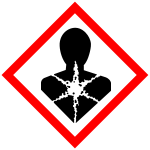
    Pictogram(s)
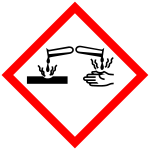
    Signal word

    Danger

    Hazard statement(s)

    H302 Harmful if swallowed

    H318 Causes serious eye damage

    Precautionary statement(s)
    Prevention

    P264 Wash ... thoroughly after handling.

    P270 Do not eat, drink or smoke when using this product.

    P280 Wear protective gloves/protective clothing/eye protection/face protection/hearing protection/...

    P203 Obtain, read and follow all safety instructions before use.

    Response

    P301+P317 IF SWALLOWED: Get medical help.

    P330 Rinse mouth.

    P305+P354+P338 IF IN EYES: Immediately rinse with water for several minutes. Remove contact lenses, if present and easy to do. Continue rinsing.

    P317 Get medical help.

    P318 IF exposed or concerned, get medical advice.

    Storage

    P405 Store locked up.

    Disposal

    P501 Dispose of contents/container to an appropriate treatment and disposal facility in accordance with applicable laws and regulations, and product characteristics at time of disposal.

    Other hazards which do not result in classification

    no data available

    Handling and Storage

    Precautions for safe handling

    NO open flames. Closed system, dust explosion-proof electrical equipment and lighting. Prevent deposition of dust. Handling in a well ventilated place. Wear suitable protective clothing. Avoid contact with skin and eyes. Avoid formation of dust and aerosols. Use non-sparking tools. Prevent fire caused by electrostatic discharge steam.

    Conditions for safe storage, including any incompatibilities

    Separated from strong oxidants.Salicylic acid should be stored in well-closed containers. Salicylic acid collodion should be stored in tight containers at 15-30 deg C. Because the collodion is flammable, it should not be stored near heat or an open flame. Salicylic acid plaster should be stored in well-closed containers, preferably at 15-30 deg C. The Trans-Ver-Sal plaster should be stored at a temperature less than 37.8 deg C.

  • Seller Information
    Business Type:

    Trader

    Main Products:

    Food additives,Pharmaceutical raw materials,Chemicals,Comestic raw materials

    Location:

    Room 501, Unit 6, No. 40, hushan road,Licang,Qingdao

    Payment Terms:

    TT against copy of documents,TT against B/L draft before shipment,100% TT in advance

    Average lead Time:

    10

    Total Annual Revenue:

    $1 million-$2.5 million

    Total Employees:

    11-50

    Year of Establishment:

    2017

    QINGDAO EASTCHEMSORCES TRADE LIMITED is a leading Manufactory supplier of Sorbitol, Citric acid, Sodium hypochlorite based in Qingdao, Shandong, China. With a commitment to quality and customer satisfaction, QINGDAO EASTCHEMSORCES TRADE LIMITED has become a trusted name in the industry. Our product line includes a range of high-quality Sorbitol, Citric acid, Sodium hypochlorite, which are available at competitive prices. QINGDAO EASTCHEMSORCES TRADE LIMITED has established itself as a reliable supplier of chemical products on the echemi.com.

  • Inquiry History
    22 Inquiries
    Country Product Purchase Quantity Date Posted
    Albania

    Bulk Price Chemical Intermediate 99% Pure Salicylic Acid 69-72-7

    3 MT May 29, 2023
    Bangladesh

    Pharmaceutical Grade High Quality Salicylic Acid CAS 69-72-7 in Stock

    2.5 MT Oct 24, 2023
    Singapore

    Salicylic acid ≥99%, fg

    1 KG Dec 23, 2024
    India

    Salicylic acid

    25 KG May 9, 2026
    India

    Salicylic acid natural

    100.00 KG Feb 24, 2026
    India

    Salicylic acid natural

    100.00 KG Nov 20, 2025
    India

    SALICYLIC ACID

    5 20' Fcl Jan 10, 2025
    India

    SALICYLIC ACID

    5 20' Fcl Dec 4, 2024
    India

    Salicylic Acid

    10 MT Nov 18, 2024
    Kuwait

    SALICYLIC ACID

    600 KG May 23, 2024
    Egypt

    Salicylic acid

    2000 KG Apr 22, 2024
    India

    Salicylic acid

    18 TON Feb 3, 2024
    India

    Salicylic Acid

    3.00 MT Sep 28, 2023
    Bolivia

    Salicylic Acid

    8000 KG Mar 20, 2026
    Egypt

    Salicylic Acid

    500 KG May 8, 2025
    India

    salicylic acid

    1.00 KG Nov 18, 2024
    Bangladesh

    Salicylic Acid BP pharma grade

    3500 KG Feb 19, 2024
    India

    Salicylic acid Technical grade

    18 TON Feb 3, 2024
    Russia

    Salicic acid

    1.00 TON Jan 18, 2024
    Algeria

    Acide salicylique 100 %

    03 KG Dec 25, 2023
    • 1
    • 2
    • Go to Page Go
    Post an enquiry for this product
pic ×

Scan the QR Code to Share

All products displayed on this website are only for non-medical purposes such as industrial applications or scientific research, and cannot be used for clinical diagnosis or treatment of humans or animals. They are not medicinal or edible.

According to relevant laws and regulations and the regulations of this website, units or individuals who purchase hazardous materials should obtain valid qualifications and qualification conditions.

The information shown above is provided by the enterprise itself, and the authenticity, accuracy and legitimacy of the content are the responsibility of the publishing company. ECHEMI does not bear any guarantee responsibility for this. Please be aware that risks in internet transactions objectively exist.

Feedback & Suggestions
Send Message

Thank you for your feedback. If you require further assistance, please contact us by email at info@echemi.com or call us at +86-532-55729510.