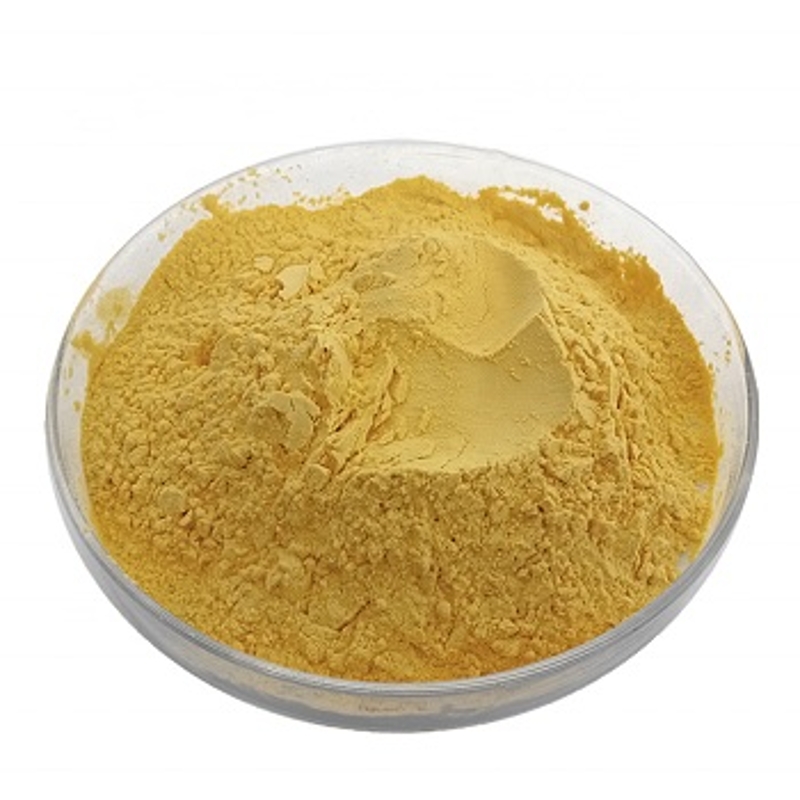
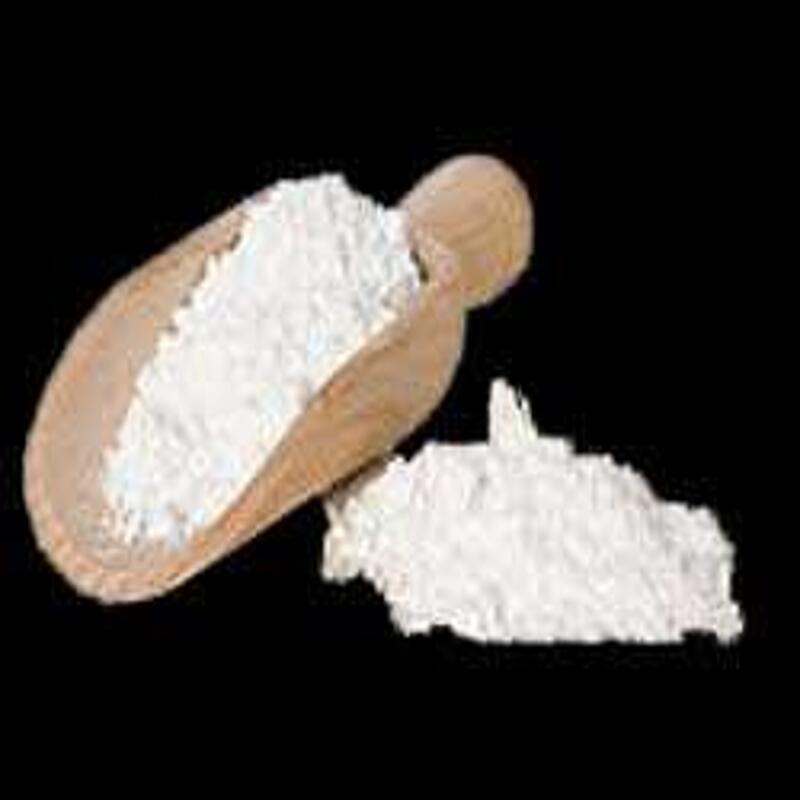
Best Selling Trichloroisocyanuric Acid (TCCA) CAS 87-90-1 in bulk
224 Inquiries
87-90-1
Industrial Grade
99%
Durban
Custom
As per customer requirement
2024-05-06
Sodium Lauryl Ether Sulfate,Caustic Soda,Soda Ash,Citric Acid,Calcium Hypochlorite,Oxalic Acid
-
Product Description
-
Seller Information
-
Inquiry History
-
DescriptionECHEMI Editorial ReferenceTCCA has an excellent bactericidal property and is a new generation of broad-spectrum, high efficiency, low-toxicity fungicides, bleacher and anti-shrinking agent. It is mainly used in the disinfection and sterilization of drinking water, industrial water recycling, swimming pool, restaurants, hotels, public places, homes, hospitals, eggs and prevention of fish diseases. It has a killing effect on almost all fungi, bacteria, viruses, and spores. It is safe and convenient to use. This product ca
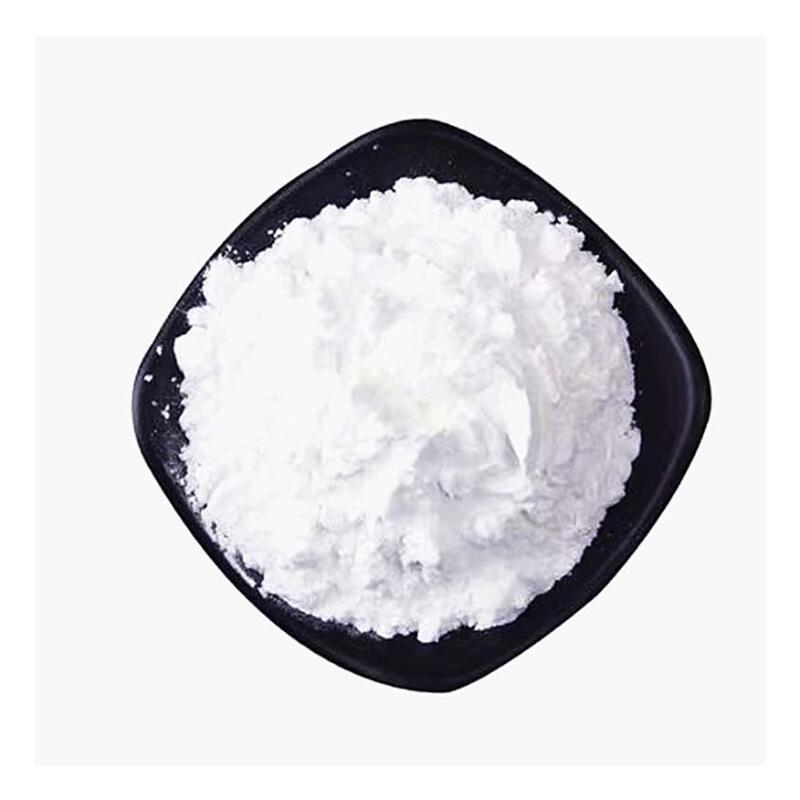
Trichloro-s-triazinetrione, dry appears as a white slightly hygroscopic crystalline powder or lump solid with a mild chlorine-like odor. Said to have 85 percent available chlorine. Decomposes at 225°C. Moderately toxic by ingestion. May irritate skin and eyes. Active ingredient in household dry bleaches. Used in swimming pools as a disinfectant .|DryPowder; OtherSolid|WHITE CRYSTALLINE POWDER WITH PUNGENT ODOUR.
Trichloro-s-triazinetrione, dry appears as a white slightly hygroscopic crystalline powder or lump solid with a mild chlorine-like odor. Said to have 85 percent available chlorine. Decomposes at 225°C. Moderately toxic by ingestion. May irritate skin and eyes. Active ingredient in household dry bleaches. Used in swimming pools as a disinfectant .|1,3,5-trichloro-1,3,5-triazinane-2,4,6-trione is a member of 1,3,5-triazinanes and an organochlorine compound.Basic Info-
Product Name:
Trichloroisocyanuric acid
Other Name:1,3,5-Triazine-2,4,6(1H,3H,5H)-trione,1,3,5-trichloro-;s-Triazine-2,4,6(1H,3H,5H)-trione,1,3,5-trichloro-;s-Triazine-2,4,6(1H,3H,5H)-trione,trichloro-;1,3,5-Trichloro-1,3,5-triazine-2,4,6(1H,3H,5H)-trione;ACL 85;Symclosene;Trichlorocyanuric acid;Trichloroisocyanuric acid;Trichloro-s-triazine-2,4,6(1H,3H,5H)-trione;1,3,5-Trichloro-2,4,6-trioxohexahydro-s-triazine;Fi Clor 91;1,3,5-Trichloroisocyanuric acid;Isocyanuric chloride;1,3,5-Trichloro-1,3,5-triazine-2,4,6-trione;N,N′,N′′-Trichloroisocyanuric acid;Symclosen;Trichloro-s-triazinetrione;CDB 90;Neochlor 90;Chloreal;ACL 90;ACL 90 Plus;Hi-Lite 90;Hi-Lite 90G;Neochlor 90G;Superclean 90TH;Trichloroiminocyanuric acid;NSC 405124;TICA-G;Neochlor 90FG;Doristrip W;TCCA;1,3,5-Trichloro-2,4,6-triazinetrione;1,3,5-Trichlorotriazine-2,4,6-trione;1,3,5-Trichloro-1,3,5-triazinane-2,4,6-trione;499583-31-2;1062228-50-5
CAS No.:87-90-1
UN No.:2468
Molecular Formula:C3Cl3N3O3
InChIKeys:InChIKey=YRIZYWQGELRKNT-UHFFFAOYSA-N
Molecular Weight:232.40900
Exact Mass:232.41
EC Number:201-782-8
UNII:RL3HK1I66B
ICSC Number:1675
NSC Number:760417|405124
UN Number:2468
DSSTox ID:DTXSID2026523
Color/Form:Needles from ethylene chloride|White crystalline powder or granules|White crystals
HScode:2933692200
Categories:
Characteristics-
PSA:
66.00000
XLogP3:-0.82260
Appearance:Trichloro-s-triazinetrione, dry appears as a white slightly hygroscopic crystalline powder or lump solid with a mild chlorine-like odor. Said to have 85 percent available chlorine. Decomposes at 225°C. Moderately toxic by ingestion. May irritate skin and eyes. Active ingredient in household dry bleaches. Used in swimming pools as a disinfectant .
Density:2.19 g/cm3
Melting Point:47-246 °C (decomp)
Boiling Point:272.3ºC at 760 mmHg
Flash Point:225ºC
Refractive Index:1.686
Water Solubility:Solubility in water, g/100ml at 25°C: 1.2
Storage Conditions:Keep away from heat, sparks, and flame. Do not store near combustible materials. Corrosives area. Keep away from acids. Store pr
Vapor Pressure:negligible
Toxicity:LD50 orally in Rabbit: 406 mg/kg LD50 dermal Rabbit > 2000 mg/kg
Explosive limit:Calcium hypochlorite and trichloro-s-triazinetrione were tested in a bomb apparatus measuring temperature and gas production. Combining the two chlorinators at 2, 6, 12, or 18 g of each produced a progressive increase in gas production from 234 to 1422 mL
Odor:Chlorine odor
PH:pH = 4.4
Henrys Law Constant:Henry's Law constant = 6.2X10⁻¹¹ atm-cu m/mol at 25 °C (est)
Experimental Properties:Loose bulk: 31 lb/cu ft; granular: 60 lb/cu ft|pH (1% aqueous solution) = 2.7-3.3|Releases hypochlorous acid on contact with water|Slightly hygroscopic. Strong oxidixing agent. Fire risk in contact with organic materials.|For more Other Experimental Properties (Complete) data for Trichloroisocyanuric acid (6 total), please visit the HSDB record page.
Air and Water Reactions:Slightly hygroscopic [Hawley]. Slightly soluble in water. May react with water releasing gaseous chlorine. If mixed with a small amount of water, the concentrated solution (with pH at about 2.0) may explode due to the evolution of unstable nitrogen trichloride. (explanation in Bretherick 5th ed.)
Reactive Group:Salts, Acidic
Reactivity Alerts:Strong Oxidizing Agent
Reactivity Profile:TRICHLORO-S-TRIAZINETRIONE, [DRY, CONTAINING > 39% AVAILABLE CHLORINE] is an oxidizer. It reacts with combustible materials or ammonium salts, resulting in fire. It is thermally unstable, and reacts with small amounts of water to release toxic chlorine gas and explosive nitrogen trichloride. Reaction of this compound with ammonia or amines also produces nitrogen trichloride. This compound reacts explosively with calcium hypochlorite and water. [NFPA 49, 14th ed. 2010]
Hazard IdentificationClassification of the substance or mixture
Oxidizing solids, Category 2
Acute toxicity - Category 4, Oral
Eye irritation, Category 2
Specific target organ toxicity â single exposure, Category 3
Hazardous to the aquatic environment, short-term (Acute) - Category Acute 1
Hazardous to the aquatic environment, long-term (Chronic) - Category Chronic 1
GHS label elements, including precautionary statements
Pictogram(s) 


Signal word Danger
Hazard statement(s) H272 May intensify fire; oxidizer
H302 Harmful if swallowed
H319 Causes serious eye irritation
H335 May cause respiratory irritation
H410 Very toxic to aquatic life with long lasting effects
Precautionary statement(s) Prevention P210 Keep away from heat, hot surfaces, sparks, open flames and other ignition sources. No smoking.
P220 Keep away from clothing and other combustible materials.
P280 Wear protective gloves/protective clothing/eye protection/face protection/hearing protection/...
P264 Wash ... thoroughly after handling.
P270 Do not eat, drink or smoke when using this product.
P261 Avoid breathing dust/fume/gas/mist/vapours/spray.
P271 Use only outdoors or in a well-ventilated area.
P273 Avoid release to the environment.
Response P370+P378 In case of fire: Use ... to extinguish.
P301+P317 IF SWALLOWED: Get medical help.
P330 Rinse mouth.
P305+P351+P338 IF IN EYES: Rinse cautiously with water for several minutes. Remove contact lenses, if present and easy to do. Continue rinsing.
P304+P340 IF INHALED: Remove person to fresh air and keep comfortable for breathing.
P319 Get medical help if you feel unwell.
P391 Collect spillage.
Storage P403+P233 Store in a well-ventilated place. Keep container tightly closed.
P405 Store locked up.
Disposal P501 Dispose of contents/container to an appropriate treatment and disposal facility in accordance with applicable laws and regulations, and product characteristics at time of disposal.
Other hazards which do not result in classification
no data available
Handling and StoragePrecautions for safe handling
NO contact with combustible substances. Handling in a well ventilated place. Wear suitable protective clothing. Avoid contact with skin and eyes. Avoid formation of dust and aerosols. Use non-sparking tools. Prevent fire caused by electrostatic discharge steam.
Conditions for safe storage, including any incompatibilities
Dry. Well closed. Separated from amines, combustible substances and reducing agents. See Chemical Dangers. Store in an area without drain or sewer access. Provision to contain effluent from fire extinguishing.
-
-
Seller Information
-
Business Type:
Distributor
-
Main Products:
Sodium Lauryl Ether Sulfate,Caustic Soda,Soda Ash,Citric Acid,Calcium Hypochlorite,Oxalic Acid
-
Location:
13 PROTEA PARK MILKWOOD STREET RANGEVIEW GAUTENG 1739
-
Payment Terms:
TT against copy of documents,TT against B/L draft before shipment
-
Average lead Time:
60 days
-
Total Annual Revenue:
$1 million-$2.5 million
-
Total Employees:
11-50
-
Year of Establishment:
2012
-
-
Inquiry History224 Inquiries
Country Product Purchase Quantity Date Posted  Egypt
Egypt
Trichloroisocyanuric acid 99% powder 87-90-1
100 MT Nov 1, 2023  India
India
TCCA
25.00 KG Jun 5, 2025
India
TCCA
25.00 KG Jun 5, 2025
India
TCCA
100.00 KG May 27, 2025
India
TCCA
100.00 KG May 28, 2025
India
TCCA
40.00 KG May 27, 2025
India
TCCA
20.00 KG May 26, 2025
India
TCCA
50.00 KG May 27, 2025
India
TCCA
30.00 KG May 25, 2025
India
TCCA
50.00 KG May 27, 2025
India
TCCA
40.00 KG May 28, 2025
India
TCCA
20.00 KG May 26, 2025
India
Trichloroisocyanuric Acid
2.00 20' Fcl Oct 9, 2023
India
TCCA 90% Trichloroisocyanuric Acid Chlorine Tablet Granular Powder for swimming pool
1.00 20' Fcl Feb 18, 2024
India
TCCA 90% Trichloroisocyanuric Acid Chlorine Tablet Granular Powder for swimming pool
10.00 MT Dec 15, 2023
India
TCCA 90% Trichloroisocyanuric Acid Chlorine Tablet Granular Powder for swimming pool
5.00 MT Dec 29, 2023
India
TCCA 90% Trichloroisocyanuric Acid Chlorine Tablet Granular Powder for swimming pool
10.00 MT Oct 11, 2023
India
TCCA 90% Trichloroisocyanuric Acid Chlorine Tablet Granular Powder for swimming pool
20.00 MT Oct 9, 2023  Argentina
TCCA 90% Chlorine Tablets (Triple Action)
1 MT Jun 18, 2025  Indonesia
TCCA
25.00 KG Jun 13, 2025 Post an enquiry for this product

More from this Seller
-
-
")
-
Top Quality White Powder Arbutin CAS NO (497-76-7)
Industrial Grade / 99%
-
-
-
")
-
Best Manufacturer of Sodium butyl naphthalene sulfonate CAS NO (25638-17-9)
Pharmaceutical Grade / 99%
-
-
-
 Industrial Grade")
-
Sodium lignosulfonate 99% CAS NO (8061-51-6) Industrial Grade
Industrial Grade / 99%
-
-
-

-
High quality Silicone rubber CAS NO.63394-02-5
Industrial Grade / 99%
-
-
-

-
100% virgin PET resin PET raw material 100% new PET material price
Industrial Grade / 100%
-
-
-

-
High quality TiO2 lemon BLR 698 titanium dioxide Industrial whitener food Grade
Pharmaceutical Grade / 99%
-


Hot Related Products
-
 Waste water Treatment Chemicals
 -
 Sodium Lauryl Ether Sulphate - SLES 70%
$1000-1300/MT EXW
-
 Aluminum chlorohydrate supplier
 -
 Urea 46 %
 -
 Industry/Food-grade Poly Aluminum Chloride20%-30% For water treatment Additive
$235.22/MT EXW
-
 Sodium Hypochlorite 1
 -
 Caustic Soda-Batong
 -
 Sodium hypochlorite 99% Light yellow liquid ZSHHY-7681-52-9 SHANDONG ZHISHANG CHEMICAL
 -
 urea good
 -
 Hope--Zinc oxide