Product
Supplier
Encyclopedia
Inquiry
Home > Organic Chemistry > Amides > Acetyl chloride for Sale > acetyl chloride CAS No.: 75-36-5 Grade: industrial Grade Content: 99.8%
acetyl chloride CAS No.: 75-36-5  Grade: industrial Grade  Content: 99.8% buy - large image1
acetyl chloride CAS No.: 75-36-5  Grade: industrial Grade  Content: 99.8% buy - image1
acetyl chloride CAS No.: 75-36-5  Grade: industrial Grade  Content: 99.8% buy - image2
acetyl chloride CAS No.: 75-36-5  Grade: industrial Grade  Content: 99.8% buy - image3
acetyl chloride CAS No.: 75-36-5  Grade: industrial Grade  Content: 99.8% buy - image4
acetyl chloride CAS No.: 75-36-5  Grade: industrial Grade  Content: 99.8% buy - image5
acetyl chloride CAS No.: 75-36-5  Grade: industrial Grade  Content: 99.8% buy - image6

acetyl chloride CAS No.: 75-36-5 Grade: industrial Grade Content: 99.8%

4 Inquiries

Unit Price: Get Latest Price
CAS No.:

75-36-5

Grade:

Industrial Grade

Content:

99%

Port:

Shanghai

Brand:

EAST CHEMSOURCES LIMITED

Packaging:

200L drum

Price valid (until):

2024-06-11

Company Type:
Trader
Location:
China
Qualification:
Main Products:

Food additives,Pharmaceutical raw materials,Chemicals,Comestic raw materials

  • Product Description

  • Seller Information

  • Inquiry History

  • Description

    Shop Acetyl Chloride CAS 75-36-5-Detailed Image 1

    SAFETY DATA SHEETS

    According to the UN GHS revision 9

    Version: 1.0

    Creation Date: July 15, 2019

    Revision Date: July 15, 2019

    SECTION 1: Identification

    1.1GHS Product identifier

    Product name

    Acetyl chloride

    1.2Other means of identification

    Product number

    -

    Other names

    acetylchloride313; Acetic chloride; Acetylchlorid

    1.3Recommended use of the chemical and restrictions on use

    Identified uses

    Industrial and scientific research use.

    Uses advised against

    no data available


    SECTION 2: Hazard identification

    2.1Classification of the substance or mixture

    Flammable liquids, Category 2

    Skin corrosion, Sub-category 1B

    2.2GHS label elements, including precautionary statements

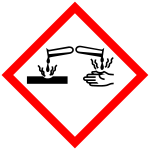
    Pictogram(s) Shop Acetyl Chloride CAS 75-36-5-Detailed Image 2 Shop Acetyl Chloride CAS 75-36-5-Detailed Image 3
    Signal word

    Danger

    Hazard statement(s)

    H225 Highly flammable liquid and vapour

    H314 Causes severe skin burns and eye damage

    Precautionary statement(s)
    Prevention

    P210 Keep away from heat, hot surfaces, sparks, open flames and other ignition sources. No smoking.

    P233 Keep container tightly closed.

    P240 Ground and bond container and receiving equipment.

    P241 Use explosion-proof [electrical/ventilating/lighting/...] equipment.

    P242 Use non-sparking tools.

    P243 Take action to prevent static discharges.

    P280 Wear protective gloves/protective clothing/eye protection/face protection/hearing protection/...

    P260 Do not breathe dust/fume/gas/mist/vapours/spray.

    P264 Wash ... thoroughly after handling.

    Response

    P303+P361+P353 IF ON SKIN (or hair): Take off immediately all contaminated clothing. Rinse affected areas with water [or shower].

    P370+P378 In case of fire: Use ... to extinguish.

    P301+P330+P331 IF SWALLOWED: Rinse mouth. Do NOT induce vomiting.

    P363 Wash contaminated clothing before reuse.

    P304+P340 IF INHALED: Remove person to fresh air and keep comfortable for breathing.

    P316 Get emergency medical help immediately.

    P321 Specific treatment (see ... on this label).

    P305+P351+P338 IF IN EYES: Rinse cautiously with water for several minutes. Remove contact lenses, if present and easy to do. Continue rinsing.

    Storage

    P403+P235 Store in a well-ventilated place. Keep cool.

    P405 Store locked up.

    Disposal

    P501 Dispose of contents/container to an appropriate treatment and disposal facility in accordance with applicable laws and regulations, and product characteristics at time of disposal.

    2.3Other hazards which do not result in classification

    no data available

    SECTION 3: Composition/information on ingredients

    3.1Substances

    Chemical name Common names and synonyms CAS number EC number Concentration
    Acetyl chloride Acetyl chloride 75-36-5 200-865-6 100%

    SECTION 4: First-aid measures

    4.1Description of necessary first-aid measures

    If inhaled

    Fresh air, rest. Half-upright position. Artificial respiration may be needed. Refer for medical attention.

    Following skin contact

    Remove contaminated clothes. Rinse skin with plenty of water or shower. Refer for medical attention .

    Following eye contact

    First rinse with plenty of water for several minutes (remove contact lenses if easily possible), then refer for medical attention.

    Following ingestion

    Rinse mouth. Do NOT induce vomiting. Give nothing to drink. Refer for medical attention .

    4.2Most important symptoms/effects, acute and delayed

    Vapor irritates mucous membranes. Ingestion of liquid or contact with eyes or skin causes severe irritation. (USCG, 1999)

    4.3Indication of immediate medical attention and special treatment needed, if necessary

    Basic treatment: Establish a patent airway. Suction if necessary. Watch for signs of respiratory insufficiency and assist respirations if necessary. Administer oxygen by nonrebreather mask at 10 to 15 L/min. Monitor for pulmonary edema and treat if necessary . Monitor for shock and treat if necessary . For eye contamination, flush eyes immediately with water. Irrigate each eye continuously with normal saline during transport . Do not use emetics. For ingestion, rinse mouth and administer 5 ml/kg up to 200 ml of water for dilution if the patient can swallow, has a strong gag reflex, and does not drool. Activated charcoal is not effective . Do not attempt to neutralize because of exothermic reaction. Cover skin burns with dry, sterile dressings after decontamination . Organic acids and related compounds

    SECTION 5: Fire-fighting measures

    5.1Suitable extinguishing media

    Evacuate surrounding area.

    5.2Specific hazards arising from the chemical

    Special Hazards of Combustion Products: When heated to decomposition, hydrogen chloride and phosgene, extremely poisonous gases, are evolved. Behavior in Fire: Vapor is heavier than air and may travel a considerable distance to a source of ignition and flash back. (USCG, 1999)

    5.3Special protective actions for fire-fighters

    Use powder, carbon dioxide. NO hydrous agents, water. In case of fire: keep drums, etc., cool by spraying with water. NO direct contact with water.

    SECTION 6: Accidental release measures

    6.1Personal precautions, protective equipment and emergency procedures

    Evacuate danger area! Consult an expert! Personal protection: complete protective clothing including self-contained breathing apparatus. Do NOT let this chemical enter the environment. Do NOT wash away into sewer. Collect leaking and spilled liquid in sealable containers as far as possible. Absorb remaining liquid in sand or inert absorbent. Then store and dispose of according to local regulations.

    6.2Environmental precautions

    Evacuate danger area! Consult an expert! Personal protection: complete protective clothing including self-contained breathing apparatus. Do NOT wash away into sewer. Collect leaking and spilled liquid in sealable containers as far as possible. Absorb remaining liquid in sand or inert absorbent. Then store and dispose of according to local regulations.

    6.3Methods and materials for containment and cleaning up

    Cover any spills with sufficient amt of sodium bicarbonate. Remove the mixture in a container such as a fiber drum, plastic bag or carton box for easy disposal in an incinerator, and dispose by burning in a furnace. Wash the spilled spot thoroughly with water.

    SECTION 7: Handling and storage

    7.1Precautions for safe handling

    NO open flames, NO sparks and NO smoking. NO contact with hot surfaces. Closed system, ventilation, explosion-proof electrical equipment and lighting. Prevent build-up of electrostatic charges (e.g., by grounding). Do NOT use compressed air for filling, discharging, or handling. Use non-sparking handtools. Handling in a well ventilated place. Wear suitable protective clothing. Avoid contact with skin and eyes. Avoid formation of dust and aerosols. Use non-sparking tools. Prevent fire caused by electrostatic discharge steam.

    7.2Conditions for safe storage, including any incompatibilities

    Fireproof. Separated from incompatible materials. See Chemical Dangers. Dry. Well closed.Separate from alcohols, alkalies, amines, and strong oxidizing materials. Store in a cool, dry well-ventilated location. Outside or detached storage is preferred. Inside storage should be in a standard flammable liquids storage warehouse, room, or cabinet.

    SECTION 8: Exposure controls/personal protection

    8.1Control parameters

    Occupational Exposure limit values

    no data available

    Biological limit values

    no data available

    8.2Appropriate engineering controls

    Ensure adequate ventilation. Handle in accordance with good industrial hygiene and safety practice. Set up emergency exits and the risk-elimination area.

    8.3Individual protection measures, such as personal protective equipment (PPE)

    Eye/face protection

    Wear safety spectacles, face shield or eye protection in combination with breathing protection.

    Skin protection

    Protective gloves. Protective clothing.

    Respiratory protection

    Use breathing protection. Use closed system or ventilation.

    Thermal hazards

    no data available

    SECTION 9: Physical and chemical properties and safety characteristics

    Physical state

    Liquid.

    Colour

    Colourless.

    Odour

    Pungent odor

    Melting point/freezing point

    -112 °C.

    Boiling point or initial boiling point and boiling range

    51 °C. Atm. press.:1 013 mBar.

    Flammability

    Highly flammable. Many reactions may cause fire or explosion. Gives off irritating or toxic fumes (or gases) in a fire.

    Lower and upper explosion limit/flammability limit

    no data available

    Flash point

    -12 °C. Atm. press.:1 013.3 hPa.

    Auto-ignition temperature

    360 °C. Atm. press.:102.9 - 103.7 kPa.

    Decomposition temperature

    no data available

    pH

    no data available

    Kinematic viscosity

    no data available

    Solubility

    Reaction (NTP, 1992)

    Partition coefficient n-octanol/water

    log Pow = -0.47.

    Vapour pressure

    309 mBar. Temperature:20 °C.;982 mBar. Temperature:50 °C.

    Density and/or relative density

    1.1 g/cm³. Temperature:20 °C.

    Relative vapour density

    2.7 (vs air)

    Particle characteristics

    no data available

    SECTION 10: Stability and reactivity

    10.1Reactivity

    Decomposes on heating and on burning. This produces toxic and corrosive fumes including hydrogen chloride (see ICSC 0163) and phosgene (see ICSC 0007). Reacts violently with water, alcohols, acids, bases, certain powdered metals and many other compounds. This generates fire and explosion hazard. Attacks many metals in the presence of water. Products of hydrolysis in water include corrosive hydrochloric acid and acetic acid.

    10.2Chemical stability

    Readily hydrolyzes to form hydrogen chloride & acetic acid

    10.3Possibility of hazardous reactions

    DANGEROUS, WHEN EXPOSED TO HEAT OR FLAME. ...The vapour is heavier than air and may travel along the ground; distant ignition possible.ACETYL CHLORIDE reacts violently with water, steam, methanol or ethanol to form hydrogen chloride and acetic acid. Reacts vigorously with bases, both organic and inorganic. Incompatible with oxidizing agents and alcohols. Produces highly toxic fumes of phosgene gas and chlorine when heated to decomposition [Sax, 9th ed., 1996, p. 35]. Reaction in a confined space with even a small amount of water may cause a violent eruption of gases [Bretherick, 5th ed., 1995, p. 281]. Vapor forms an explosive mixture with air [Kirk-Othmer, 3rd ed., Vol. 1, 1978, p. 162]. Polymerization reaction with dimethyl sulfoxide is particularly violent [Buckley, A., J. Chem. Ed., 1965, 42, p. 674]. May react vigorously or explosively if mixed with diisopropyl ether or other ethers in the presence of trace amounts of metal salts [J. Haz. Mat., 1981, 4, 291].

    10.4Conditions to avoid

    no data available

    10.5Incompatible materials

    Water reactive. Violent exothermic decomposition with water produces corrosive hydrochloric and acetic acids. Reacts violently with alcohols, alkalies, amines, and strong oxidizing materials.

    10.6Hazardous decomposition products

    May decompose during preparation. ... when heated to decomposition, emits highly toxic fumes of phosgene and hydrogen chloride (cl-).

    SECTION 11: Toxicological information

    Acute toxicity

    • Oral: LD50 - rat - 910 mg/kg bw.
    • Inhalation: no data available
    • Dermal: no data available

    Skin corrosion/irritation

    no data available

    Serious eye damage/irritation

    no data available

    Respiratory or skin sensitization

    no data available

    Germ cell mutagenicity

    no data available

    Carcinogenicity

    CLASSIFICATION: D; not classifiable as to human carcinogenicity. BASIS FOR CLASSIFICATION: No human data or animal data. HUMAN CARCINOGENICITY DATA: None. ANIMAL CARCINOGENICITY DATA: None.

    Reproductive toxicity

    no data available

    STOT-single exposure

    The substance is corrosive to the eyes and skin. The vapour is severely irritating to the eyes and respiratory tract. Corrosive on ingestion. Exposure at high concentrations could cause asphyxiation due to swelling in the throat. Inhalation of high concentrations may cause lung oedema, but only after initial corrosive effects on the eyes and the upper respiratory tract have become manifest. The effects may be delayed. See Notes. Medical observation is indicated.

    STOT-repeated exposure

    Repeated or chronic inhalation of the vapour may cause chronic inflammation of the upper respiratory tract. Repeated or prolonged inhalation of high concentrations may cause effects on the lungs.

    Aspiration hazard

    No indication can be given about the rate at which a harmful concentration of this substance in the air is reached.

    SECTION 12: Ecological information

    12.1Toxicity

    • Toxicity to fish: LC50 - Pimephales promelas - 42 mg/L - 96 h.
    • Toxicity to daphnia and other aquatic invertebrates: EC50 - Daphnia magna - 65 mg/L - 48 h.
    • Toxicity to algae: EC50 - Navicula seminulum - 73.4 mg/L - 96 h.
    • Toxicity to microorganisms: no data available

    12.2Persistence and degradability

    no data available

    12.3Bioaccumulative potential

    Acetyl chloride will decompose violently in water(1) forming acetic acid and hydrochloric acid(2). Because of its short half-life in water, bioconcentration of acetyl chloride in aquatic organisms is very unlikely(SRC).

    12.4Mobility in soil

    Using a structure estimation method based on molecular connectivity indices(1), the Koc for acetyl chloride can be estimated to be 2(SRC). According to a classification scheme(2), this estimated Koc value suggests that acetyl chloride is expected to have very high mobility in soil. However, in view of its violent decomposition in the presence of water(3) and the high reactivity of this compound towards molecules with active hydrogen groups such as natural products containing amine, phenol, and alcohol functional groups that occur in soil(4), it is unlikely that acetyl chloride would persist for long in moist soils(SRC).

    12.5Other adverse effects

    no data available

    SECTION 13: Disposal considerations

    13.1Disposal methods

    Product

    The material can be disposed of by removal to a licensed chemical destruction plant or by controlled incineration with flue gas scrubbing. Do not contaminate water, foodstuffs, feed or seed by storage or disposal. Do not discharge to sewer systems.

    Contaminated packaging

    Containers can be triply rinsed (or equivalent) and offered for recycling or reconditioning. Alternatively, the packaging can be punctured to make it unusable for other purposes and then be disposed of in a sanitary landfill. Controlled incineration with flue gas scrubbing is possible for combustible packaging materials.

    SECTION 14: Transport information

    14.1UN Number

    ADR/RID: UN1717 (For reference only, please check.) IMDG: UN1717 (For reference only, please check.) IATA: UN1717 (For reference only, please check.)

    14.2UN Proper Shipping Name

    ADR/RID: ACETYL CHLORIDE (For reference only, please check.) IMDG: ACETYL CHLORIDE (For reference only, please check.) IATA: ACETYL CHLORIDE (For reference only, please check.)

    14.3Transport hazard class(es)

    ADR/RID: 3 (For reference only, please check.) IMDG: 3 (For reference only, please check.) IATA: 3 (For reference only, please check.)

    14.4Packing group, if applicable

    ADR/RID: II (For reference only, please check.) IMDG: II (For reference only, please check.) IATA: II (For reference only, please check.)

    14.5Environmental hazards

    ADR/RID: No IMDG: No IATA: No

    14.6Special precautions for user

    no data available

    14.7Transport in bulk according to IMO instruments

    no data available

    SECTION 15: Regulatory information

    15.1Safety, health and environmental regulations specific for the product in question

    Chemical name Common names and synonyms CAS number EC number
    Acetyl chloride Acetyl chloride 75-36-5 200-865-6
    European Inventory of Existing Commercial Chemical Substances (EINECS) Listed.
    EC Inventory Listed.
    United States Toxic Substances Control Act (TSCA) Inventory Listed.
    China Catalog of Hazardous chemicals 2015 Listed.
    New Zealand Inventory of Chemicals (NZIoC) Listed.
    Philippines Inventory of Chemicals and Chemical Substances (PICCS) Listed.
    Vietnam National Chemical Inventory Listed.
    Chinese Chemical Inventory of Existing Chemical Substances (China IECSC) Listed.
    Korea Existing Chemicals List (KECL) Listed.

    SECTION 16: Other information

    Information on revision

    Creation Date July 15, 2019
    Revision Date July 15, 2019

    Abbreviations and acronyms

    • CAS: Chemical Abstracts Service
    • ADR: European Agreement concerning the International Carriage of Dangerous Goods by Road
    • RID: Regulation concerning the International Carriage of Dangerous Goods by Rail
    • IMDG: International Maritime Dangerous Goods
    • IATA: International Air Transportation Association
    • TWA: Time Weighted Average
    • STEL: Short term exposure limit
    • LC50: Lethal Concentration 50%
    • LD50: Lethal Dose 50%
    • EC50: Effective Concentration 50%

    Pls input...

    Shop Acetyl Chloride CAS 75-36-5-Detailed Image 4

    Items Specifications
    Appearance Colorless smoky liquid
    Assay ≥ 99.0

    Shop Acetyl Chloride CAS 75-36-5-Detailed Image 5Shop Acetyl Chloride CAS 75-36-5-Detailed Image 6Shop Acetyl Chloride CAS 75-36-5-Detailed Image 7Shop Acetyl Chloride CAS 75-36-5-Detailed Image 8

    Basic Info
    Product Name:

    Acetyl chloride

    Other Name:

    Acetyl chloride;Ethanoyl chloride;Acetic chloride;Acetic acid chloride

    CAS No.:

    75-36-5

    Molecular Formula:

    C2H3ClO

    InChIKeys:

    InChIKey=WETWJCDKMRHUPV-UHFFFAOYSA-N

    Molecular Weight:

    78.5

    Exact Mass:

    78.50

    BRN:

    605303

    EC Number:

    200-865-6

    UNII:

    QD15RNO45K

    ICSC Number:

    0210

    UN Number:

    1717

    DSSTox ID:

    DTXSID2023852

    Color/Form:

    Liquid|Colorless fuming liquid

    HScode:

    2915900090

    Categories:

    Amides

    Characteristics
    PSA:

    17.1

    XLogP3:

    -0.47

    Appearance:

    Clear colorless Liquid

    Density:

    1.1051 g/cm3 @ Temp: 20 °C

    Melting Point:

    -112 °C

    Boiling Point:

    52 °C

    Flash Point:

    40 °F

    Refractive Index:

    1.379

    Water Solubility:

    Miscible with acetone, chloroform, glacial acetic acid, petroleum ether, ether and benzene.

    Storage Conditions:

    Store at RT

    Vapor Pressure:

    11.69 psi ( 20 °C)

    Vapor Density:

    2.7 (vs air)

    Toxicity:

    Oral-Rat LD50: 910 mg/kg

    Flammability characteristics:

    Inflammable in case of fire, high temperature and oxidant; decomposes toxic phosgene in high heat; emits toxic chloride fumes in water

    Explosive limit:

    7.3-19%(V)

    Odor:

    Pungent odor

    OH:

    9.10e-15 cm3/molecule*sec

    Experimental Properties:

    Decomposed violently by water or alcohol|Highly refractive|Ratio of specific heats of vapor (gas): 1.1467|Liquid heat capacity: 0.350 Btu/lb-F at 70 °F|For more Other Experimental Properties (Complete) data for Acetyl chloride (8 total), please visit the HSDB record page.

    Air and Water Reactions:

    Highly flammable. Fumes in air. Reacts violently with water producing heat and acidic HCl [Merck 11th ed. 1989]. Acetyl chloride reacts vigorously with water to generate gaseous HCl. Based on a scenario where the chemical is spilled into an excess of water (at least 5 fold excess of water), half of the maximum theoretical yield of Hydrogen Chloride gas will be created in 0.11 minutes. Experimental details are in the following: "Development of the Table of Initial Isolation and Protective Distances for the 2008 Emergency Response Guidebook", ANL/DIS-09-2, D.F. Brown, H.M. Hartmann, W.A. Freeman, and W.D. Haney, Argonne National Laboratory, Argonne, Illinois, June 2009.

    Reactive Group:

    Acyl Halides, Sulfonyl Halides, and Chloroformates

    Reactivity Alerts:

    Highly Flammable

    Reactivity Profile:

    ACETYL CHLORIDE reacts violently with water, steam, methanol or ethanol to form hydrogen chloride and acetic acid. Reacts vigorously with bases, both organic and inorganic. Incompatible with oxidizing agents and alcohols. Produces highly toxic fumes of phosgene gas and chlorine when heated to decomposition [Sax, 9th ed., 1996, p. 35]. Reaction in a confined space with even a small amount of water may cause a violent eruption of gases [Bretherick, 5th ed., 1995, p. 281]. Vapor forms an explosive mixture with air [Kirk-Othmer, 3rd ed., Vol. 1, 1978, p. 162]. Polymerization reaction with dimethyl sulfoxide is particularly violent [Buckley, A., J. Chem. Ed., 1965, 42, p. 674]. May react vigorously or explosively if mixed with diisopropyl ether or other ethers in the presence of trace amounts of metal salts [J. Haz. Mat., 1981, 4, 291].

    Autoignition Temperature:

    734 °F (USCG, 1999)|734 °F (390 °C)|390 °C

    Heat of Combustion:

    -6,000 btu/lb = -3,000 cal/g = -140X10X5 J/kg

    Flammable Limits:

    Lower: 5.0% by volume

    Physical Dangers:

    The vapour is heavier than air and may travel along the ground; distant ignition possible.

    Corrosivity:

    Corrosive|Corrosive to metals and tissue

    Heat of Vaporization:

    160 btu/Lb = 88 cal/g = 3.7X10X5 J/kg

    Critical Temperature & Pressure:

    Critical temperature: 475 °F = 246 °C = 519 deg K; Critical pressure: 845 psia = 57.5 atm = 5.83 MN/sq m

    Hazard Identification

    Classification of the substance or mixture

    Flammable liquids, Category 2

    Skin corrosion, Sub-category 1B

    GHS label elements, including precautionary statements

    Pictogram(s)
    Signal word

    Danger

    Hazard statement(s)

    H225 Highly flammable liquid and vapour

    H314 Causes severe skin burns and eye damage

    Precautionary statement(s)
    Prevention

    P210 Keep away from heat, hot surfaces, sparks, open flames and other ignition sources. No smoking.

    P233 Keep container tightly closed.

    P240 Ground and bond container and receiving equipment.

    P241 Use explosion-proof [electrical/ventilating/lighting/...] equipment.

    P242 Use non-sparking tools.

    P243 Take action to prevent static discharges.

    P280 Wear protective gloves/protective clothing/eye protection/face protection/hearing protection/...

    P260 Do not breathe dust/fume/gas/mist/vapours/spray.

    P264 Wash ... thoroughly after handling.

    Response

    P303+P361+P353 IF ON SKIN (or hair): Take off immediately all contaminated clothing. Rinse affected areas with water [or shower].

    P370+P378 In case of fire: Use ... to extinguish.

    P301+P330+P331 IF SWALLOWED: Rinse mouth. Do NOT induce vomiting.

    P363 Wash contaminated clothing before reuse.

    P304+P340 IF INHALED: Remove person to fresh air and keep comfortable for breathing.

    P316 Get emergency medical help immediately.

    P321 Specific treatment (see ... on this label).

    P305+P351+P338 IF IN EYES: Rinse cautiously with water for several minutes. Remove contact lenses, if present and easy to do. Continue rinsing.

    Storage

    P403+P235 Store in a well-ventilated place. Keep cool.

    P405 Store locked up.

    Disposal

    P501 Dispose of contents/container to an appropriate treatment and disposal facility in accordance with applicable laws and regulations, and product characteristics at time of disposal.

    Other hazards which do not result in classification

    no data available

    Handling and Storage

    Precautions for safe handling

    NO open flames, NO sparks and NO smoking. NO contact with hot surfaces. Closed system, ventilation, explosion-proof electrical equipment and lighting. Prevent build-up of electrostatic charges (e.g., by grounding). Do NOT use compressed air for filling, discharging, or handling. Use non-sparking handtools. Handling in a well ventilated place. Wear suitable protective clothing. Avoid contact with skin and eyes. Avoid formation of dust and aerosols. Use non-sparking tools. Prevent fire caused by electrostatic discharge steam.

    Conditions for safe storage, including any incompatibilities

    Fireproof. Separated from incompatible materials. See Chemical Dangers. Dry. Well closed.Separate from alcohols, alkalies, amines, and strong oxidizing materials. Store in a cool, dry well-ventilated location. Outside or detached storage is preferred. Inside storage should be in a standard flammable liquids storage warehouse, room, or cabinet.

  • Seller Information
    Business Type:

    Trader

    Main Products:

    Food additives,Pharmaceutical raw materials,Chemicals,Comestic raw materials

    Location:

    Room 501, Unit 6, No. 40, hushan road,Licang,Qingdao

    Payment Terms:

    TT against copy of documents,TT against B/L draft before shipment,100% TT in advance

    Average lead Time:

    10

    Total Annual Revenue:

    $1 million-$2.5 million

    Total Employees:

    11-50

    Year of Establishment:

    2017

    QINGDAO EASTCHEMSORCES TRADE LIMITED is a leading Manufactory supplier of Sorbitol, Citric acid, Sodium hypochlorite based in Qingdao, Shandong, China. With a commitment to quality and customer satisfaction, QINGDAO EASTCHEMSORCES TRADE LIMITED has become a trusted name in the industry. Our product line includes a range of high-quality Sorbitol, Citric acid, Sodium hypochlorite, which are available at competitive prices. QINGDAO EASTCHEMSORCES TRADE LIMITED has established itself as a reliable supplier of chemical products on the echemi.com.

  • Inquiry History
    4 Inquiries
    Country Product Purchase Quantity Date Posted
    Thailand

    Acetyl chloride

    200 KG Oct 11, 2023
    Canada

    Acetyl chloride

    100 G Jun 15, 2026
    Bangladesh

    Hot selling high quality paracetamol 99% white powder 103-90-2 Ainuodi

    70 MT Oct 20, 2023
    Romania

    Hot selling high quality paracetamol 99% white powder 103-90-2 Ainuodi

    10000 MT Aug 28, 2023
    Post an enquiry for this product
pic ×

Scan the QR Code to Share

All products displayed on this website are only for non-medical purposes such as industrial applications or scientific research, and cannot be used for clinical diagnosis or treatment of humans or animals. They are not medicinal or edible.

According to relevant laws and regulations and the regulations of this website, units or individuals who purchase hazardous materials should obtain valid qualifications and qualification conditions.

The information shown above is provided by the enterprise itself, and the authenticity, accuracy and legitimacy of the content are the responsibility of the publishing company. ECHEMI does not bear any guarantee responsibility for this. Please be aware that risks in internet transactions objectively exist.

Feedback & Suggestions
Send Message

Thank you for your feedback. If you require further assistance, please contact us by email at info@echemi.com or call us at +86-532-55729510.