Product
Supplier
Encyclopedia
Inquiry
Home > Agrochemicals > Herbicides > Prometryn for Sale > prometryn 25% WP acetochlor 20% + prometryn 5% EC manufacturer
prometryn 25% WP acetochlor 20% +  prometryn 5% EC manufacturer buy - large image1
prometryn 25% WP acetochlor 20% +  prometryn 5% EC manufacturer buy - image1
prometryn 25% WP acetochlor 20% +  prometryn 5% EC manufacturer buy - image2
prometryn 25% WP acetochlor 20% +  prometryn 5% EC manufacturer buy - image3
prometryn 25% WP acetochlor 20% +  prometryn 5% EC manufacturer buy - image4
prometryn 25% WP acetochlor 20% +  prometryn 5% EC manufacturer buy - image5
prometryn 25% WP acetochlor 20% +  prometryn 5% EC manufacturer buy - image6

prometryn 25% WP acetochlor 20% + prometryn 5% EC manufacturer

TDS

Unit Price: Get Latest Price
CAS No.:

7287-19-6

Grade:

Pesticide Grade

Content:

25%

Port:

shanghai

Brand:

Agrowonderful

Packaging:

1L/bottle,10L/carton

Price valid (until):

2025-02-21

Company Type:
Trader
Location:
China
Qualification:
Main Products:

glyphosate,herbicide,agrochemical,sniper ddvp,abamectin,emamectin benzoate

  • Product Description

  • Seller Information

  • Description

    prometryn 25% WP acetochlor 20% + prometryn 5% EC manufacturer

    NOMENCLATURE

    Common name prometryn (BSI from 1984, E-ISO, ANSI, WSSA); prometryne ((f) F-ISO, JMAF and, until 1984, BSI)

    IUPAC name N2,N4-di-isopropyl-6-methylthio-1,3,5-triazine-2,4-diamine  

    Chemical Abstracts name N,N'-bis(1-methylethyl)-6-(methylthio)-1,3,5-triazine-2,4-diamine  

    CAS RN [7287-19-6]  EEC no. 230-711-3  Development codes G 34 161 (Geigy)  


    COMMERCIALISATION

    History Herbicide reported by H. Gysin (Chem. Ind. (London), 1962, p. 1393). Introduced by J. R. Geigy S.A. (now  AG).  Patents CH 337019; GB 814948 


    APPLICATIONS

    Biochemistry Photosynthetic electron transport inhibitor at the photosystem II receptor site. Also inhibits oxidative phosphorylation.  Mode of action Selective systemic herbicide, absorbed by the leaves and roots, with translocation acropetally through the xylem from the roots and foliage, and accumulation in the apical meristems.  Uses Used pre-emergence, at 0.8-2.5 kg/ha, in cotton, sunflowers, peanuts, potatoes, carrots, peas and beans; post-emergence, at 0.8-1.5 kg/ha, in cotton, potatoes, carrots, celery and leeks. Phytotoxicity Used as a directed spray on cotton while young, to avoid foliar injury.  Formulation types FW; SC; WP.  Selected products: 'Caparol' (USA) (); 'Gesagard' (); 'Cotton-Pro' (Griffin); 'Efmetryn' (Efthymiadis); 'Prometrex' (Makhteshim-Agan); mixtures: 'Cotralin' (+ alachlor) (Efthymiadis); 'Cottonex Pro' (+ fluometuron) 


    ANALYSIS

    Product analysis by glc with FID (CIPAC Handbook, 1998, H, 228; AOAC Methods, 17th Ed., 971.08; R. T. Murphy et al., J. Assoc. Off. Anal. Chem., 1971, 54, 703). Residues determined by glc with ECD or FID (K. Ramsteiner et al., ibid., 1974, 57, 192; E. Knli, Anal. Methods Pestic. Plant Growth Regul., 1972, 6, 680; B. G. Tweedy & R. A. Kahrs, ibid., 1978, 10, 493).  


    MAMMALIAN TOXICOLOGY

    Oral Acute oral LD50 for rats >2000 mg/kg.  Skin and eye Acute percutaneous LD50 for rats >3100, rabbits >2020 mg/kg. Not irritant to skin and slightly irritant to eyes of rabbits. Not a skin sensitiser (guinea pigs).  Inhalation LC50 (4 h) for rats >5170 mg/m3.  NOEL (2 y) for rats 750, dogs 150 ppm; (21 mo) for mice 10 ppm.  ADI 0.01 mg/kg.  Toxicity class WHO (a.i.) U; EPA (formulation) III (80 WP), II (4 L)  


    ECOTOXICOLOGY

    Birds Dietary LC50 (8 d) for bobwhite quail >5000, mallard ducks >500 ppm.  Fish LC50 (96 h) for rainbow trout 5.5, bluegill sunfish 7.9 mg/l.  Daphnia LC50 (48 h) 12.66 mg/l.  Algae EC50 (5 d) for Selenastrum capricornutum 0.023 mg/l.  Other aquatic spp. EC50 for mysid shrimp (Mysidopsis bahia) 1.7 mg/l.  Bees Not toxic to bees. LD50 (oral) >99 mg/bee; (contact) >130 mg/bee.  Worms LC50 (14 d) for earthworms 153 mg/kg soil.  


    ENVIRONMENTAL FATE

    Animals For metabolism in rats and rabbits, see C. Boehme & F. Baer, Food Cosmet. Toxicol., 1967, 5, 23.  Plants Metabolised by tolerant plants, and, to a lesser extent, by sensitive plants, by oxidation of the methylthio group to hydroxy metabolites, and by dealkylation of the side-chains. Degradation in plants is generally slow.  Soil/Environment In soil, microbial degradation takes place, with oxidation of the methylthio group to hydroxy metabolites, and dealkylation of the side-chains. Median DT50 in soil 50 d (14-158 d). Koc 400, indicating low mobility in soil. Degradation in aquatic systems is caused by microbial processes; further dissipation results from adsorption to the suspended and bottom sediments.  

    Items Specifications
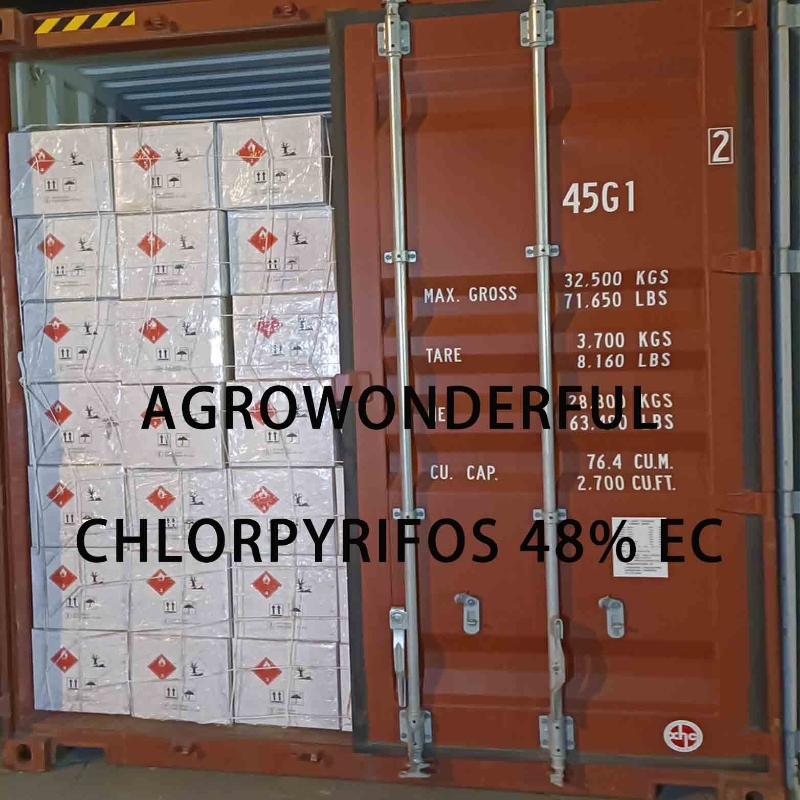
    acetochlor 20% + prometryn 5% EC manufacturer package size can be from 100ml to IBC drum
    prometryn 25% WP  from 100g per bag to 25kg per bag
    Shop prometryn 25% WP acetochlor 20% +  prometryn 5% EC manufacturer-Detailed Image 1
    Shop prometryn 25% WP acetochlor 20% +  prometryn 5% EC manufacturer-Detailed Image 2
    Shop prometryn 25% WP acetochlor 20% +  prometryn 5% EC manufacturer-Detailed Image 3

    Certificates

    Basic Info
    Product Name:

    Prometryn

    Other Name:

    1,3,5-Triazine-2,4-diamine,N2,N4-bis(1-methylethyl)-6-(methylthio)-;s-Triazine,2,4-bis(isopropylamino)-6-(methylthio)-;1,3,5-Triazine-2,4-diamine,N,N′-bis(1-methylethyl)-6-(methylthio)-;N2,N4-Bis(1-methylethyl)-6-(methylthio)-1,3,5-triazine-2,4-diamine;G 34161;2,4-Bis(isopropylamino)-6-(methylthio)-s-triazine;Caparol;2-Methylmercapto-4,6-bis(isopropylamino)-s-triazine;2-Methylthio-4,6-bis(isopropylamino)-s-triazine;Prometryn;A 1114;Gesagard 50;Gesagard;Prometryne;Selectin 50;Uvon;4,6-Bis(isopropylamino)-2-(methylthio)-1,3,5-triazine;Mercazin;Selectin;2,4-Bis(isopropylamino)-6-methylmercapto-s-triazine;2-Methylthio-4,6-bis(isopropylamino)-1,3,5-triazine;4,6-Bis(isopropylamino)-2-(methylthio)-s-triazine;2-Methylmercapto-4,6-bis(isopropylamino)-1,3,5-triazine;2-(Methylthio)-4,6-diisopropylamino-1,3,5-triazine;Selektin;Promepin;Prohelan;2-Methylthio-4,6-bis(isopropylamino)-sym-triazine;Cosatrin;Prometrin S 50;Cotogard;Selectin (herbicide);Azogard;Prometrex;NSC 163049;N,N′-Bis(1-methylethyl)-6-methylthio-1,3,5-triazine-2,4-diamine;Promethryn;83653-07-0

    CAS No.:

    7287-19-6

    Molecular Formula:

    C10H19N5S

    InChIKeys:

    InChIKey=AAEVYOVXGOFMJO-UHFFFAOYSA-N

    Molecular Weight:

    241.36

    Exact Mass:

    241.36

    EC Number:

    230-711-3

    HScode:

    29336990

    Categories:

    Herbicides

    Characteristics
    PSA:

    88

    XLogP3:

    3.51

    Appearance:

    Prometryn appears as colorless crystals. Used as an herbicide.

    Density:

    1.15 g/cm3 @ Temp: 20 °C

    Melting Point:

    118-120 °C

    Boiling Point:

    >300 °C

    Flash Point:

    2 °C

    Refractive Index:

    1.602

    Water Solubility:

    In water solubility, 33 mg/L at 25 deg C

    Storage Conditions:

    APPROX 4°C

    Vapor Pressure:

    1.24X10⁻⁶ mm Hg at 25 deg C

    Toxicity:

    Oral-Rat LD50: 2100 mg/kg; Oral-Mouse LD50: 2138 mg/kg

    Flammability characteristics:

    Combustion produces toxic nitrogen oxide and sulfur oxide gas

    Odor:

    Odorless.

    Hazard Identification

    Classification of the substance or mixture

    Hazardous to the aquatic environment, short-term (Acute) - Category Acute 1

    Hazardous to the aquatic environment, long-term (Chronic) - Category Chronic 1

    GHS label elements, including precautionary statements

    Pictogram(s)

    Signal word

    Warning

    Hazard statement(s)

    H410 Very toxic to aquatic life with long lasting effects

    Precautionary statement(s)
    Prevention

    P273 Avoid release to the environment.

    Response

    P391 Collect spillage.

    Storage

    none

    Disposal

    P501 Dispose of contents/container to an appropriate treatment and disposal facility in accordance with applicable laws and regulations, and product characteristics at time of disposal.

    Other hazards which do not result in classification

    no data available

    Handling and Storage

    Precautions for safe handling

    Handling in a well ventilated place. Wear suitable protective clothing. Avoid contact with skin and eyes. Avoid formation of dust and aerosols. Use non-sparking tools. Prevent fire caused by electrostatic discharge steam.

    Conditions for safe storage, including any incompatibilities

    Store the container tightly closed in a dry, cool and well-ventilated place. Store apart from foodstuff containers or incompatible materials.

  • Seller Information
    Business Type:

    Trader

    Main Products:

    glyphosate,herbicide,agrochemical,sniper ddvp,abamectin,emamectin benzoate

    Location:

    Room 1018, 10th Floor, No. 78, Taigu Road, Waigaoqiao Free Trade Zone, Pudong New Area, China (Shanghai) Pilot Free Trade Zone

    Payment Terms:

    TT against copy of documents,L/C,TT against B/L draft before shipment,100% TT in advance

    Average lead Time:

    40

    Total Annual Revenue:

    $2.5 million-$5 million

    Total Employees:

    51-100

    Year of Establishment:

    2022

  • Country Product Purchase Quantity Date Posted
    Post an enquiry for this product
pic ×

Scan the QR Code to Share

All products displayed on this website are only for non-medical purposes such as industrial applications or scientific research, and cannot be used for clinical diagnosis or treatment of humans or animals. They are not medicinal or edible.

According to relevant laws and regulations and the regulations of this website, units or individuals who purchase hazardous materials should obtain valid qualifications and qualification conditions.

The information shown above is provided by the enterprise itself, and the authenticity, accuracy and legitimacy of the content are the responsibility of the publishing company. ECHEMI does not bear any guarantee responsibility for this. Please be aware that risks in internet transactions objectively exist.

Feedback & Suggestions
Send Message

Thank you for your feedback. If you require further assistance, please contact us by email at info@echemi.com or call us at +86-532-55729510.