





Metaldehyde Effective Slug and Snail Control for Agriculture & Horticulture
COA 1 Inquiries
108-62-3
98%
Durban Port
UMGS
Request
2025-06-14

Chemicals bulk
-
Product Description
-
Seller Information
-
Inquiry History
-
DescriptionECHEMI Editorial Referencewhite fine crystalline powder Metaldehyde is a white crystalline powder with a mild menthol odor.
Metaldehyde (CAS: 108-62-3) is a polymer of acetaldehyde that is used as a pesticide against snails and slugs, and also as a fuel. It was discovered by von Liebig in 1835, and a century later its use as a molluscicide was proposed by Gimingham and Newton in 1937. It is manufactured by reacting acetaldehyde with various acids at a low temperature. As a molluscicide, metaldehyde is used for controlling slugs and snails in gardens of a variety of vegetable and ornamental crops. For this purpose it is available in both solid and liquid formulations with metaldehyde concentrations ranging from 1.8 to 8% in pellet form, or in concentrations of up to 20% in liquid formulations. Some metaldehyde formulations may consist of other pesticides, such as arsenic; while others may contain toxic solvents like ethylene glycol. Therefore, a thorough forensic analysis of the product is recommended to assess complete risk associated with ingestion of these products.Children under the age of 3 years and pets are most commonly poisoned by ingestion of pellets or cakes containing metaldehyde. Intoxication by metaldehyde is typically acute, characterized initially by gastrointestinal and subsequently followed predominantly by neurologic signs. Vomiting, diarrhea, ataxia, tremors, convulsions, and hyperthermia are among the most common toxic signs in children and animals. Other clinical signs in children include mental confusion, muscle cramps and tremors, loss of consciousness, and coma. The proximate neurotoxic mechanisms are not known but reduced levels of neurotransmitters such as serotonin and g-aminobutryric acid (GABA) are implicated. Delayed effects of acute exposure include hepatotoxicity characterized by hepatic necrosis and increased serum liver enzymes. In general, males metabolize metaldehyde twice as fast as females. Therefore, female animals are more sensitive to metaldehyde poisoning compared to males. Most of the neurotoxic signs are seen at dose levels greater than 100 mg of metaldehyde per kilogram. Developmental studies have shown that metaldehyde exposure during pregnancy does not adversely affect fetuses.Chronic metaldehyde exposure is unlikely. However, experimental research has shown that metaldehyde is toxic under chronic exposure conditions. In males, chronic metaldehyde exposure causes testicular atrophy and is also toxic to the prostate gland. It causes atrophy of the prostate gland. It is not clear whether the effects on male gonads are due to endocrine disruption or through a different mechanism. There is also suggestive evidence of carcinogenic potential based on the presence of benign tumors in female rats and mice of both sexes.Provided treatment is initiated early in cases of acute exposure, prognosis is good. In dogs, the mortality rate in a recently completed study was 16%. Because there is no specific antidote, treatment consists of decontamination measures and symptomatic therapy. Recent formulations of metaldehyde pesticides contain denatonium benzoate, a bittering agent. The purpose of adding the bittering agent is to deter excessive ingestion of the products. This, along with new labeling guidelines highlighting the risk to children and pets has caused annual cases to drop significantly since 2006.
white fine crystalline powder
ChEBI: Metaldehyde is a member of the class of tetroxocanes that is 1,3,5,7-tetroxocane which carries four methyl groups at positions 2,4,6 and 8. It is a potent molluscicide and the active ingredient in most slug pellets used for crop protection. It has a role as a molluscicide and a fuel.
Human poison by ingestion. Human systemic effects by ingestion: convulsions or effect on seizure threshold. Moderately toxic by inhalation and skin contact. Experimental reproductive effects. Mutation data reported. A flammable solid. When heated to decomposition it emits acrid smoke and irritating fumes. See also ALDEHYDES.CertificatesBasic Info-
Product Name:
2,4,6,8-Tetramethyl-1,3,5,7-Tetraoxacyclooctane
Other Name:1,3,5,7-Tetroxocane, 2,4,6,8-tetramethyl-;tetraacetaldehyde;Tetramer;Tetramethyl-1,3,5,7-tetroxocane;Totroxocane, 2,4,6,8-tetramethyl-;Vassgro mini slug pellets;ACETALDEHYDE TETRAMER;Metaldehyde,97%
CAS No.:108-62-3
Molecular Formula:C8H16O4
InChIKeys:InChIKey=GKKDCARASOJPNG-UHFFFAOYSA-N
Molecular Weight:176.21
Exact Mass:176.21
EC Number:203-600-2
Color/Form:White
HScode:29125000
Categories:
Characteristics-
PSA:
36.9
XLogP3:0.12
Appearance:White Fine Crystalline Powder
Density:1.27
Melting Point:246 °C
Boiling Point:65°C/15mmHg(lit.)
Flash Point:50°C
Refractive Index:1.4220 (estimate)
Water Solubility:0.02 g/100 mL (20 ºC)
Storage Conditions:0-6°C
Vapor Pressure:6.6Pa at 25℃
Toxicity:The toxic mechanism in snails and slugs is different from that in mammals and birds. Metaldehyde irreversibly damages mucous secreting cells of snails and slugs on which these organisms depend. In animals and birds, the proximate toxic mechanism of metaldehyde is not known, but is either due to toxicity of metaldehyde itself or of its metabolite acetaldehyde on the brain and other tissues. The fundamental neurotoxic molecular mechanisms are not known, but a depression of serotonin and GABA is suspected to play a role.
Flammability characteristics:Flammable
Odor:Menthol odor
Henrys Law Constant:1.9×10⁻¹mol/(m3Pa) at 25℃, HSDB (2015)
Critical Temperature & Pressure:Keep in dark place,Sealed in dry,2-8°C
Hazard IdentificationClassification of the substance or mixture
Flammable solids, Category 2
Acute toxicity - Category 3, Oral
Hazardous to the aquatic environment, long-term (Chronic) - Category Chronic 3
Reproductive toxicity, Category 2
GHS label elements, including precautionary statements
Pictogram(s) 
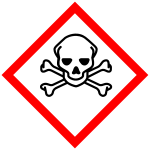

Signal word Warning
Hazard statement(s) H228 Flammable solid
H301 Toxic if swallowed
H412 Harmful to aquatic life with long lasting effects
Precautionary statement(s) Prevention P210 Keep away from heat, hot surfaces, sparks, open flames and other ignition sources. No smoking.
P240 Ground and bond container and receiving equipment.
P241 Use explosion-proof [electrical/ventilating/lighting/...] equipment.
P280 Wear protective gloves/protective clothing/eye protection/face protection/hearing protection/...
P264 Wash ... thoroughly after handling.
P270 Do not eat, drink or smoke when using this product.
P273 Avoid release to the environment.
P203 Obtain, read and follow all safety instructions before use.
Response P370+P378 In case of fire: Use ... to extinguish.
P301+P316 IF SWALLOWED: Get emergency medical help immediately.
P321 Specific treatment (see ... on this label).
P330 Rinse mouth.
P318 IF exposed or concerned, get medical advice.
Storage P405 Store locked up.
Disposal P501 Dispose of contents/container to an appropriate treatment and disposal facility in accordance with applicable laws and regulations, and product characteristics at time of disposal.
Other hazards which do not result in classification
no data available
Handling and StoragePrecautions for safe handling
Handling in a well ventilated place. Wear suitable protective clothing. Avoid contact with skin and eyes. Avoid formation of dust and aerosols. Use non-sparking tools. Prevent fire caused by electrostatic discharge steam.
Conditions for safe storage, including any incompatibilities
Regulated by IATA.
-
-
Seller Information
-
Business Type:
Distributor
-
Main Products:
Chemicals bulk
-
Location:
1 WOODMEAD DR WOODMEAD SANDTON JOHANNESBURG GAUTENG 2191
-
Payment Terms:
TT against B/L draft before shipment,100% TT in advance
-
Year of Establishment:
2023
-
-
Inquiry History1 Inquiries
Country Product Purchase Quantity Date Posted  Albania
Metaldehyde
10 TON Jan 6, 2025 Post an enquiry for this product
More from this Seller
-
-

-
Product Name: Bromuconazole
Industrial Grade / 95%
-
-
-

-
Hexaconazole For Sale
Pharmaceutical Grade / 75%
-
-
-

-
Zineb Fungicide
/ 75%
-
-
-

-
Ziram Broad-Spectrum Protective Fungicide
Industrial Grade / 97%
-
-
-

-
Bentone High-Performance Rheological Additive for Solvent-Based Systems
Industrial Grade / 98%
-


Hot Related Products
-
 Acetaldehyde 40% liquid ZSLPF Zhishang
-
 Acetaldehyde 99% clearless liquid
-
 Acetaldehyde Liquid High Purity
-
 Acetaldehyde Colorless Flammable Liquid Acetaldehyde Flavour Fragrance Ethyl Aldehyde 99% Liquid Fast form SAA89653232187855 SAA
-
 Acetaldehyde 99% 100% Liquid
-
 Acetaldehyde from China
-
 Acetaldehyde 99% Purity CAS 75-07-0 High Purity Aldehyde Building Block for Organic Synthesis, Pharmaceutical Intermediate, and Chemical Research Appl
-
 Ethylene Oxide Supplier EO Gas
-
 Factory Supplies High Purity Organic Intermediate Acetaldehyde with CAS 75-07-0


