Iodide3
20 Inquiries
12190-71-5
Industrial Grade
100%
Rotterdam
50KG
2025-07-06

Food Chemicals,Industrial Chemicals,Organic Chemicals
-
Product Description
-
Seller Information
-
Inquiry History
-
DescriptionECHEMI Editorial ReferenceViolet solid with a sharp, characteristic odor.
Iodine,I, is a nonmetallic element with an orthorhombic crystal structure, a violet to black color. This poisonous element sublimes readily and is easily purified in this manner. It is insoluble in water,but is soluble in common solvents such as alcohol, ether,and carbon tetrachloride. Iodine is used as a germicide, an antiseptic, in dyes,tinctures, and pharmaceuticals. It is also used in the production of vanadium metal in the McKechnie-Seybolt process, which is the reduction of vanadium pentoxide in the presence of iodine. Iodine is used in a similar manner in the production of high-purity zirconium.For many years, iodine tincture(3% to 7% dissolved in ethyl alcohol) has been an important antiseptic. The commercial tinctures also usually contain 5% potassium iodide to provide stability. This form produces a mild burning of the skin and stains both skin and fabrics. A milder preparation is available in which about 2% iodine is contained in an oil-water emulsion which also contains lecithin.
Heavy, grayish-black plates or granules having a metallic luster; characteristic odor. Readily sublimed having a violet vapor.Soluble in alcohol, carbon disulfide, chloroform, ether, carbon tetrachloride, glycerol, and alkaline iodide solutions; insoluble
Iodine was first discovered by Barnard Courtois, a French chemist in 1811 while extracting potassium and sodium from seaweed ash. When he accidentally added sulfuric acid, a violet colored cloud evolved from the mass. The resulting gas was condensed into dark crystals-the first occurrence of observed solid iodine.Courtois analyzed them and then gave some of them to a fellow chemist, Joseph Louis Gay-Lussac, for further study.Two years later, Gay-Lussac presented his study to the scientific community, announcing the discovery of a new element that he named "iodine," after the Greek word "ioeides" meaning violet colored.A Swiss physician by the name of J.F. Coindet had previously used burnt sponge and seaweed for the treatment of goiter (an enlargement of the thyroid gland). This treatment had been in use since 3600 B.C., when it appeared in Chinese medical writings, as well as writings by the Greek physician Hippocrates. Upon hearing of the work of Courtois and Gay-Lussac, Coindet suspected that iodine might be the active ingredient in seaweed that cured goiter. In 1819, he successfully tested a tincture of iodine on 150 patients, significantly reducing the size of their goiter within one week. As a result of these early studies, in the 1830s the medical community started advocating for iodine supplements to decrease the occurrence of goiter.
A dark-violet volatile solid element belonging to the halogens (group 17 of the periodic table). It occurs in seawater and is concentrated by various marine organisms in the form of iodides. Significant deposits also occur in the form of iodates. The element is conveniently prepared by the oxidation of iodides in acid solution (using MnO2). Industrial methods similarly use oxidation of iodides or reduction of iodates to iodides by sulfur(IV) oxide (sulfur dioxide) followed by oxidation, depending on the source of the raw materials. Iodine and its compounds are used in chemical synthesis, photography, pharmaceuticals, and dyestuffs manufacture.Iodine has the lowest electronegativity of the stable halogens and consequently is the least reactive. It combines only slowly with hydrogen to form hydroiodic acid, HI. Iodine also combines directly with many electropositive elements, but does so much more slowly than does bromine or chlorine. Because of the larger size of the iodine ion and the consequent low lattice energies, the iodides are generally more soluble than related bromides or chlorides. As with the other halides, iodides of Ag(I), Cu(I), Hg(I), and Pb(II) are insoluble unless complexing ions are present.Iodine also forms a range of covalent iodides with the metalloids and non-metallic elements (this includes a vast range of organic iodides) but these are generally less thermodynamically stable and are more readily hydrolyzed than chlorine or bromine analogs.Basic Info-
Product Name:
iodine
Other Name:Iodine;Iodide (I21-) (8CI,9CI);Iodine test solution(ChP);Iodine Crystals or Liquid;iodien;Iodine solution standard substance;Iodine test solution;TIANFU-CHEM Iodine
CAS No.:12190-71-5
Molecular Formula:I2
InChIKeys:PNDPGZBMCMUPRI-UHFFFAOYSA-N
Molecular Weight:253.81
Exact Mass:253.808914
EC Number:231-442-4
HScode:2801200000
Categories:
Characteristics-
PSA:
0
Physical Properties:Iodine in its pure state is a black solid that sublimates (changes from a solid to a gas withoutgoing through a liquid state) at room temperature. It produces a deep purple vapor that is irritatingto the eyes, nose, and throat. Iodine tends to form nonmetallic diatomic molecules (I2).It is the heaviest of the naturally occurring halogens. (Although astatine, the fifth element ingroup 17, is heavier than iodine, it is a synthetic element and does not occur in nature exceptas a very small trace.) Iodine is the least reactive of the five halogens.Iodine’s melting point is 113.7°C, its boiling point is 184.4°C, and its density is 4.93g/cm3.
XLogP3:2.49
Appearance:Violet-black crystals with a metallic luster and a sharp odor. Mp: 133.5°C, bp: 185°C. Emits toxic vapor at room conditions; vapor becomes visibly purple when its concentration builds up in a confined space. Nearly insoluble in water but very soluble in aqueous solutions of iodides.
Density:4.93
Melting Point:236°F
Boiling Point:365°F
Refractive Index:1.788
Water Solubility:0.01%
Storage Conditions:Materials which are toxic as stored or which can decompose into toxic components Should be stored in a cool, well-ventilated place, out of the direct rays of the sun, away from areas of high fire hazard, and should be periodically inspected. Incompatible materials should be isolated .
Vapor Pressure:Vapour pressure, kPa at 25°C: 0.04
Vapor Density:Relative vapour density (air = 1): 8.8
Flammability characteristics:Noncombustible Solid
Odor:Sharp characteristic odor.
Taste:Sharp, acrid
Hazard IdentificationClassification of the substance or mixture
no data available
GHS label elements, including precautionary statements
Pictogram(s) no data available Signal word no data available
Hazard statement(s) no data available
Precautionary statement(s) Prevention no data available
Response no data available
Storage no data available
Disposal no data available
Other hazards which do not result in classification
no data available
Handling and StoragePrecautions for safe handling
Handling in a well ventilated place. Wear suitable protective clothing. Avoid contact with skin and eyes. Avoid formation of dust and aerosols. Use non-sparking tools. Prevent fire caused by electrostatic discharge steam.
Conditions for safe storage, including any incompatibilities
Store the container tightly closed in a dry, cool and well-ventilated place. Store apart from foodstuff containers or incompatible materials.
-
-
Seller Information
-
Business Type:
Trader
-
Main Products:
Food Chemicals,Industrial Chemicals,Organic Chemicals
-
Location:
BINNEN PARALLELWEG 00027 5701PH HELMOND
-
Payment Terms:
TT against copy of documents
-
Average lead Time:
300 days
-
Total Annual Revenue:
$1 million-$2.5 million
-
Total Employees:
5-10
-
Year of Establishment:
1969
-
-
Inquiry History20 Inquiries
Country Product Purchase Quantity Date Posted  China
China
Iodide (I21-) (8CI,9CI)
2000 KG Jun 6, 2025  Czech
Czech
iodine
3 KG Sep 19, 2026
Czech
Iodine
3 KG Sep 19, 2026  India
India
Iodine (Prills)(99 % purity)
100.00 KG Oct 23, 2024  Russia
Iodine
10 MT Sep 18, 2024
India
Iodine
1.00 KG Jan 17, 2024  Netherlands
Iodine
10 KG Jul 9, 2026  Saudi Arabia
Iodine
1 20' Fcl Aug 19, 2024
India
Iodine
1.00 MT Jun 17, 2024
India
Iodine
1 MT May 14, 2024  United States
Iodine crystals
5 MT Nov 10, 2023
United States
Iodine 99.5% black crystals
10 KG Aug 7, 2026
India
Iodide (I21-) (8CI,9CI)
5 MT Feb 26, 2026
United States
iodine
4000000 KG Aug 9, 2024
India
Iodine
50.00 MT Aug 5, 2024
India
Iodine
80.00 MT Jul 1, 2024  Pakistan
Iodine
25 KG Apr 25, 2024
India
Iodine
1 KG Mar 27, 2024
India
Iodine (Resublimed)
100.00 KG Mar 18, 2024  Egypt
Egypt
Iodine
10 KG Nov 25, 2023 Post an enquiry for this product
More from this Seller
-
-

-
sodium percarbonate 100% White Powder
Food Grade / 100%
-
-
-

-
Sodium Silicofluoride256
Industrial Grade / 100%
-
-
-

-
Monomeric Fatty Acid
Industrial Grade / 100%
$400-500/MT FOB
-
-
-

-
Dicaprylyl Carbonate 100% White Powder
Industrial Grade / 100%
-
-
-
 sulfate monohydrate 100% White Powder")
-
Manganese (ll) sulfate monohydrate 100% White Powder
Industrial Grade / 100%
-
-
-

-
Hydroxylamine456
Industrial Grade / 100%
$400-500/MT FOB
-



Hot Related Products
-
 Caustic Soda-Batong
 -
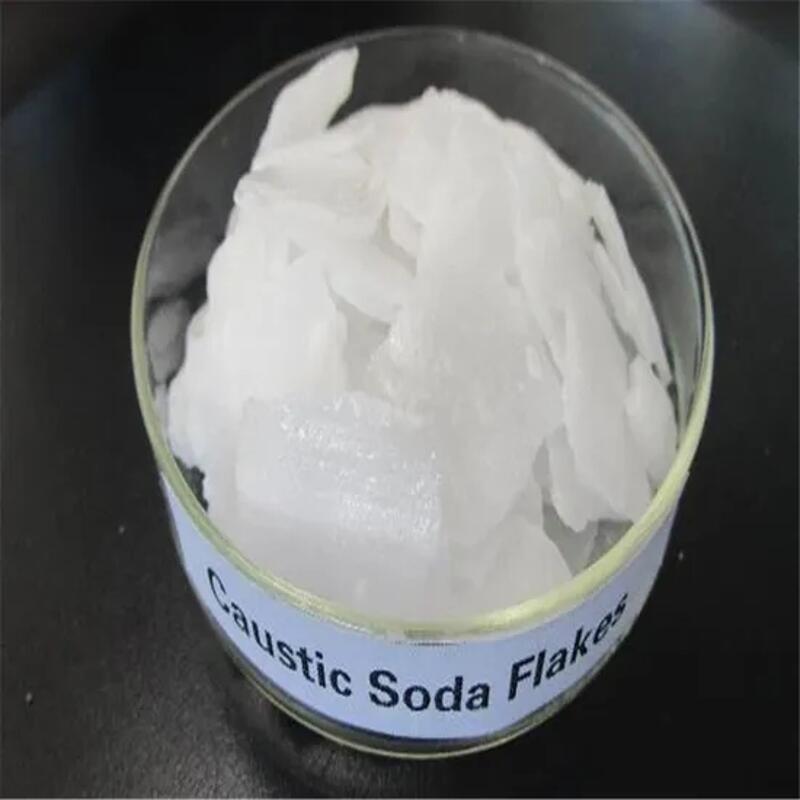
 Caustic Soda Flakes / Pearl Sodium Hydroxide Naoh High Purity 99% 98.5% 98% price
$450-550/MT FOB
-
 Industrial Grade 99% Caustic Soda in Flake Pearl and Solid Forms
 -
 Caustic Soda Flakes White
 -
 Caustic soda and Sodium hydroxide
 -
 Sodium hydroxide White translucent crystalline solid
 -
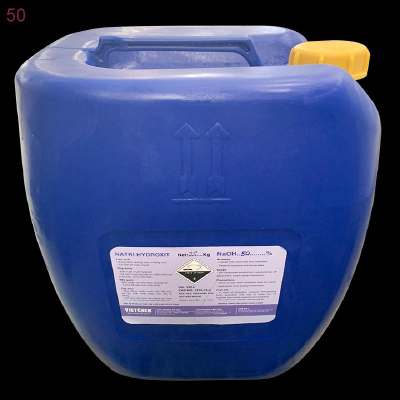
 Sodium Hydroxide 50% Liquid Vietchem Vietchem
 -
 Caustic soda flakes/pearls 99% 99% flakes or pearls
 -
 Caustic Soda Cas; 1310-73-2
 -
 Caustic soda Flakes NaOH 1310-73-2 Sodium hydroxide
$430-490/MT FOB