Product
Supplier
Encyclopedia
Inquiry
2-Naphthol135-19-3 buy - large image1
2-Naphthol135-19-3 buy - image1
2-Naphthol135-19-3 buy - image2
2-Naphthol135-19-3 buy - image3
2-Naphthol135-19-3 buy - image4
2-Naphthol135-19-3 buy - image5
2-Naphthol135-19-3 buy - image6

2-Naphthol135-19-3

7 Inquiries

Unit Price:

$33-34/MT FOB

Get Latest Price
CAS No.:

135-19-3

Grade:

Pharmaceutical Grade

Content:

99.5%

Port:

shanghai

Brand:

OORENT

Packaging:

Vial/Bottle/Bag/Carton

Price valid (until):

2026-10-16

Company Type:
Trader
Location:
China
Payment Terms:
100% TT in advance
Average Lead Time:
10 days
Qualification:
Main Products:

pharmaceutical intermediates,peptides,electronic chemicals

  • Product Description

  • Seller Information

  • Inquiry History

  • Description

    Product Detail


    2-Naphthol Chemical Properties
    Melting point  120-122 °C(lit.)
    Boiling point  285-286 °C(lit.)
    density  1,28 g/cm3
    bulk density 300kg/m3
    vapor density  4.97 (vs air)
    vapor pressure  10 mm Hg ( 145.5 °C)
    refractive index  1.5762 (estimate)
    Fp  153 °C
    storage temp.  Store below +30°C.
    solubility  methanol: soluble1g/10 mL, clear, colorless to light yellow
    pka 9.51(at 25℃)
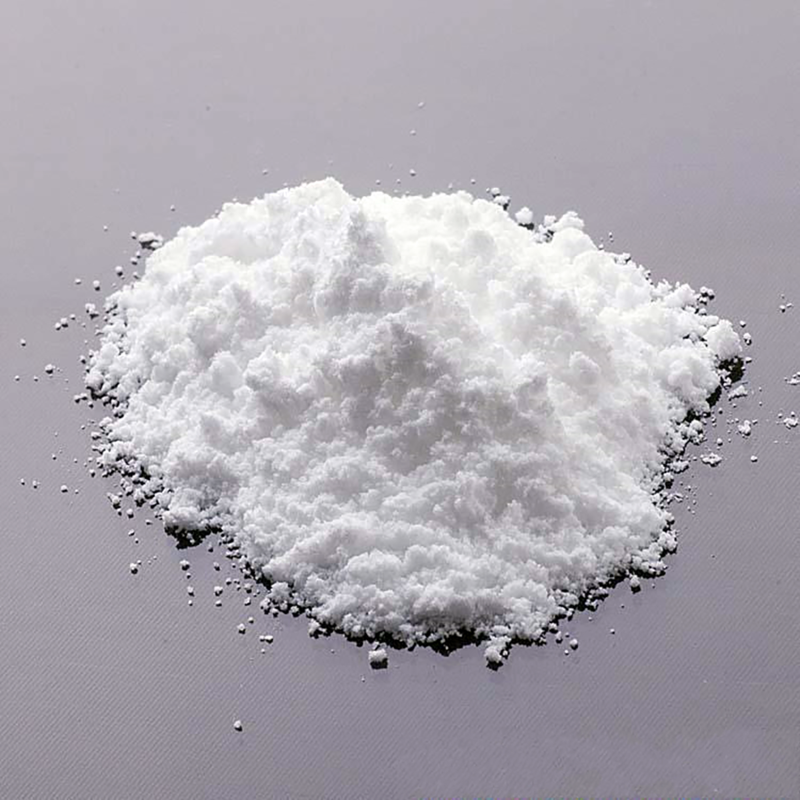
    form  Powder, Crystals or Granules
    color  White
    Odor faint phenol-like odor
    PH Range Non& uorescence (8.5) to blue & uorescence (9.5)
    Water Solubility  1 g/L (20 ºC)
    Specific Heat Capacity Cp(crystal): 1.2 J/(g·K); Cp(gas): 1.03 J/(g·K), at 25℃
    λmax 226nm, 265nm, 275nm, 286nm, 320nm, 331nm
    Merck  14,6384
    BRN  742134
    Henry's Law Constant 1.1×10² mol/(m3Pa) at 25℃, Mackay et al. (2006)
    Exposure limits PC-TWA: 0.25 mg/m3; PC-STEL: 0.5 mg/m3
    Stability: Stable. Combustible. Dust may form explosive mixture with air. Incompatible with strong oxidizing agents, phenol.
    Major Application Display device, semiconductors, photoimaging materials, inks, toner, chalk, security paper, molding materials, tin plating method, rubber, adhesive, leather, detergent, hair dyes, antimitotic drug, anticancer agent, antiinflammatory agent, treatment of acne vulgaris (pimples) and other dermal ailments (rashes, scratches, blemishes, hair loss), disorders
    Cosmetics Ingredients Functions PERFUMING
    HAIR DYEING
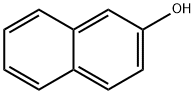
    InChI 1S/C10H8O/c11-10-6-5-8-3-1-2-4-9(8)7-10/h1-7,11H
    InChIKey JWAZRIHNYRIHIV-UHFFFAOYSA-N
    SMILES Oc1ccc2ccccc2c1
    LogP 1.89 at 20℃
    CAS DataBase Reference 135-19-3(CAS DataBase Reference)
    NIST Chemistry Reference 2-Naphthalenol(135-19-3)
    EPA Substance Registry System 2-Naphthalenol (135-19-3)

    Safety Information
    Hazard Codes  Xn,N
    Risk Statements  20/22-50
    Safety Statements  24/25-61
    RIDADR  UN 3077 9/PG 3
    WGK Germany  2
    RTECS  QL2975000
    8
    Autoignition Temperature 430 °C
    TSCA  TSCA listed
    HazardClass  9
    PackingGroup  III
    HS Code  29071590
    Storage Class 11 - Combustible Solids
    Hazard Classifications Acute Tox. 4 Inhalation
    Acute Tox. 4 Oral
    Aquatic Acute 1
    Eye Dam. 1
    Skin Sens. 1
    Hazardous Substances Data 135-19-3(Hazardous Substances Data)
    Toxicity LD50 orally in Rabbit: 1960 mg/kg LD50 dermal Rabbit > 10000 mg/kg
    MSDS Information
    Provider Language
    Naphthyl alcohol English
    SigmaAldrich English
    ACROS English
    ALFA English

    2-Naphthol Usage And Synthesis
    Chemical Properties 2-Naphthol is a white, crystalline solid. Slight phenolic odor. Darkens in air and on exposure to light. 2-Naphthol [135-19-3] b-naphthol, 2- naphthalenol, 2-hydroxynaphthalene, C10H8O, Mr 144.16, forms colorless plates upon sublimation, which darken on exposure to air or light. Unlike 1-naphthol it is nonvolatile in steam. 2-Naphthol is reduced with sodium or with hydrogen in the presence of a catalyst to give mainly 1,2,3,4-tetrahydro-2-naphthol (unlike 1- naphthol which gives the arylphenol under the same conditions). 
    Physical properties White glossy flakes or white powder. Insoluble in water, soluble in ethanol, ether, chloroform, glycerol and alkali solution.
    Uses Has been used as antiseptic, anthelmintic and counter-irritant in alopecia.
    Uses 2-Naphthol is used in the manufacture of dyes, perfumes, and medicinal organics, and in the production of antioxidants for synthetic rubber.
    Definition ChEBI: 2-naphthol is a naphthol carrying a hydroxy group at position 2. It has a role as an antinematodal drug, a genotoxin, a human xenobiotic metabolite, a mouse metabolite, a human urinary metabolite and a radical scavenger.
    Application It is used to produce Tobias acid, J acid, 2-hydroxy-3-naphthoic acid and azo dyes, and it is the raw material for rubber antioxidants, mineral dressing agents, fungicides, antiseptics, preservatives, etc.
    As feed preservative. In China, it can be used for citrus preservation, the maximum dosage amount is 0.1 g/kg and the residue amount should be no more than 70 mg/kg.
    2-Naphthol, also called β-naphthol, 2-naphthalenol, is the intermediate for plant growth regulator, 2-naphthoxyacetic acid.
    As analytic agent, absorbent of ethylene and carbon monoxide, and fluorescence indicator.
    Important organic raw material and dye intermediate, used to produce Tobias acid, butyric acid, β-hydroxynaphthoic acid and used to produce N-phenyl-2-naphthylamine, Diafen NN and other antioxidant, organic pigments, and fungicides.
    For the detection of bromine, chlorine, chlorate, niobium, copper, nitrite, and potassium. Substrate for fluorometric assay of phenol sulfotransferase. Acid and alkali indicator, dyes, organic synthesis, qualitative determination of allyl alcohol, methanol, chloroform, etc. Absorbent of carbon monoxide, ethanol, and fluorescence indicator. Determination of carbon monoxide, copper, nitrite, and potassium. Ethylene absorbent.
    Preparation 2-Naphthol is produced by caustic fusion of naphthalene-2-sulfonic acid. Typically, the sodium salt of the sulfonic acid is added gradually to 50 % sodium hydroxide liquor at 300℃; the melt is then heated further at 320℃ in a gas-fired iron vessel with vigorous agitation. After completion of the reaction, the melt is run into excess water, possibly including filtrate from the previous batch at a proven tolerable level, and the naphtholate solution is neutralized to pH 8 with dilute sulfuric acid. If the temperature is maintained at >100℃ during neutralization, the crude product comes out of solution as an oil, which is separated, washed with hot water, and distilled under vacuum to give pure 2-naphthol. The molten material is processed through a flaker to give the final product for packaging. The fusion yield is about 80 % of the theoretical value, resulting in an overall yield of 70 % based on naphthalene. Typical specifications for 2-naphthol are clear solution in dilute caustic soda,  mp 120.5℃, and 1-naphthol content<0.3 %.
    Reactions 2-Naphthol is naphthalene homologues of phenol, with the hydroxyl group being more reactive than in the phenols.2-Naphthol converts to 2-naphthalenethiol by reaction with dimethylthiocarbamoyl chloride via the Newman–Kwart rearrangement.
    Synthesis Reference(s) Journal of the American Chemical Society, 72, p. 4884, 1950 DOI: 10.1021/ja01167a009
    Synthesis, p. 437, 1985 DOI: 10.1055/s-1985-31235
    General Description 2-Naphthol is a hydroxyarene molecule, which when electronically excited forms strong acid. Excited 2-Naphthol dissociates only in water. It has a slight phenolic odor. It is incompatible with strong oxidizing agents, strong bases, acid chlorides and acid anhydrides. It is one of the most commonly used fluorescence dye.
    Health Hazard Although the toxicity of 2-naphthol is of low order in test animals, ingestion of large amounts may result in nausea, vomiting, diarrhea, abdominal pain, convulsions, and hemolytic anemia. Death may result from respiratory failure. The oral LD50 value in rats is in the range 2000 mg/kg. 2-Naphthol is slightly more toxic than 1-naphthol [9015-3], the oral LD50 value of which is in the range 2500 mg/kg.
    Skin contact can produce peeling of the skin and pigmentation.
    Fire Hazard Noncombustible solid.
    Chemical Reactivity 2-naphthol can be oxidation with ferric chloride forms 2,20 -dihydroxy-1,10 -binaphthyl, with any blue coloration indicating the presence of 1- naphthol.
    Air oxidation at 300℃ with a vanadium pentoxide catalyst also yields 1,10 -bi-2-naphthol, which dehydrates at higher temperature to the oxide and finally decomposes to give benzoic acid.
    2-naphthol can reacte with phosphorus pentachloride at 150℃ gives 2-chloronaphthalene or at lower temperature, tri-2-naphthyl phosphate (mp 111℃), which can be isolated after treatment of the reaction mixture with alkali.
    Reaction with one equivalent of bromine in acetic acid gives 1-bromo-2-naphthol, whereas excess bromine yields 1,6-dibromo-2-naphthol. The latter is readily debrominated in dilute mineral acid to yield 6-bromo-2-naphthol. 
    Safety Profile Poison by ingestion, inhalation, and subcutaneous routes. Mutation data reported. A skin and eye irritant. Combustible when exposed to heat or flame. To fight fire, use CO2, dry chemical. Incompatible with antipyrine, camphor, phenol, ferric salts, menthol, potassium permanganate and other oxidzing materials, urethane.
    Potential Exposure A potential danger to those involved in rubber antioxidant production, synthesis of dyes; leather processing; fungicides, pharmaceuticals, and perfumes. Used as an antioxidant for fats, oils; as an antiseptic; in insecticides.
    Shipping UN2811 Toxic solids, organic, n.o.s., Hazard Class: 6.1; Labels: 6.1-Poisonous materials, Technical Name Required. UN3077 Environmentally hazardous substances, solid, n.o.s., Hazard Class: 9; Labels: 9-Miscellaneous hazardous material, Technical Name Required.
    Purification Methods Crystallise 2-naphthol from aqueous 25% EtOH (charcoal), H2O, *benzene, toluene or CCl4. Alternatively, extract it repeatedly with small amounts of EtOH, followed by dissolution in a minimum volume of EtOH and precipitation with distilled water, then drying over P2O5 under vacuum. It has also been dissolved in aqueous NaOH and precipitated by adding acid (repeat several times), then precipitated from *benzene by addition of heptane. Final purification can be by zone melting or sublimation in vacuo. The 4-nitrobenzoate has m 104o (from EtOH). [Bardez et al. J Phys Chem 89 5031 1985, Kikuchi et al. J Phys Chem 91 574 1987, Beilstein 6 IV 4253.]
    Properties and Applications white crystalline, with phenol smell. Industrial goods for hoar chip or powder. Melting point 121 ~ 123 ℃, 285 ℃ ~ 286 boiling point, flash point 161 ℃. This product soluble in water, ethanol, ethyl ether, chloroform, glycerin and alkali solution, can the sublimation, with steam evaporate out; Long storage or light color in turn dark, can happen oxidation, reduction, nitrification and nitrosation reaction, and products, light and heat, halogenating role, etc.
    Incompatibilities Dust or powder may form explosive mixture with air. Incompatible with oxidizers (chlorates, nitrates, peroxides, permanganates, perchlorates, chlorine, bromine, fluorine, etc.); contact may cause fires or explosions. Keep away from alkaline materials, strong bases, strong acids, oxoacids, epoxides, iron salts; 2,3-dimethyl-1- phenyl-3-pyrazolin-5-one (antipyrine); camphor, phenol, menthol, urethane.
    Waste Disposal Mix with flammable solvent and atomize into an incinerator.


    Shop Tirzepatide2023788-19-2-Detailed Image 2 Shop Tirzepatide2023788-19-2-Detailed Image 3 Shop Tirzepatide2023788-19-2-Detailed Image 4 Shop Tirzepatide2023788-19-2-Detailed Image 5 Shop Tirzepatide2023788-19-2-Detailed Image 6 Shop Tirzepatide2023788-19-2-Detailed Image 7


    ECHEMI Editorial Reference
    2-Naphthol is a metabolite of naphthalene, catalyzed by cytochrome P450 (CYP) isozymes (CYP 1A1, CYP 1A2, CYP 2A1, CYP 2E1 and CYP 2F2).

    Basic Info
    Product Name:

    2-Naphthol

    Other Name:

    2-Naphthalenol;2-Naphthol;C.I. 37500;Azogen Developer A;C.I. Azoic Coupling Component 1;C.I. Developer 5;Developer A;Developer AMS;Developer BN;Developer NA;β-Hydroxynaphthalene;Isonaphthol;2-Hydroxynaphthalene;Naphthol B;β-Naphthol;Betanaphthol;β-Naphthyl alcohol;NSC 2044;NSC 5737;Bordeaux Base GP;860440-31-9

    CAS No.:

    135-19-3

    UN No.:

    3077

    Molecular Formula:

    C10H8O

    InChIKeys:

    InChIKey=JWAZRIHNYRIHIV-UHFFFAOYSA-N

    Molecular Weight:

    144.17000

    Exact Mass:

    144.17

    EC Number:

    205-182-7

    UNII:

    P2Z71CIK5H

    ICSC Number:

    0719

    NSC Number:

    758883|2044

    UN Number:

    3077

    DSSTox ID:

    DTXSID5027061

    Color/Form:

    White, lustrious, bulky leaflets or white powder. Darkens with age

    HScode:

    2907151000

    Characteristics
    PSA:

    20.23000

    XLogP3:

    2.7

    Appearance:

    DryPowder; Liquid

    Density:

    1.28 g/cm3 @ Temp: 20 °C

    Melting Point:

    121.6 °C

    Boiling Point:

    285 °C

    Flash Point:

    160ºC

    Refractive Index:

    1.548

    Water Solubility:

    H2O: 1 g/L (20 ºC)

    Storage Conditions:

    Keep away from heat, sparks, and flame. Keep away from sources of ignition. Do not store in direct sunlight. Keep container clos

    Vapor Pressure:

    10 mm Hg ( 145.5 °C)

    Vapor Density:

    4.97 (vs air)

    Odor:

    Faint phenol-like odor

    OH:

    1.70e-10 cm3/molecule*sec

    Henrys Law Constant:

    2.74e-08 atm-m3/mole|Henry's Law constant = 2.74X10⁻⁸ atm-cu m/mol at 25 °C

    Dissociation Constants:

    pKa = 9.51 at 25 °C

    Experimental Properties:

    Hydroxyl radical reaction rate constant= 1.70X10⁻¹⁰ cu cm/molec-sec at 25 °C

    Autoignition Temperature:

    550 °C

    Physical Dangers:

    Dust explosion possible if in powder or granular form, mixed with air.

    Hazard Identification

    Classification of the substance or mixture

    Acute toxicity - Category 4, Oral

    Acute toxicity - Category 4, Inhalation

    Hazardous to the aquatic environment, short-term (Acute) - Category Acute 1

    GHS label elements, including precautionary statements

    Pictogram(s)

    Signal word

    Warning

    Hazard statement(s)

    H302 Harmful if swallowed

    H332 Harmful if inhaled

    H400 Very toxic to aquatic life

    Precautionary statement(s)
    Prevention

    P264 Wash ... thoroughly after handling.

    P270 Do not eat, drink or smoke when using this product.

    P261 Avoid breathing dust/fume/gas/mist/vapours/spray.

    P271 Use only outdoors or in a well-ventilated area.

    P273 Avoid release to the environment.

    Response

    P301+P317 IF SWALLOWED: Get medical help.

    P330 Rinse mouth.

    P304+P340 IF INHALED: Remove person to fresh air and keep comfortable for breathing.

    P317 Get medical help.

    P391 Collect spillage.

    Storage

    none

    Disposal

    P501 Dispose of contents/container to an appropriate treatment and disposal facility in accordance with applicable laws and regulations, and product characteristics at time of disposal.

    Other hazards which do not result in classification

    no data available

    Handling and Storage

    Precautions for safe handling

    NO open flames. Closed system, dust explosion-proof electrical equipment and lighting. Prevent deposition of dust. Handling in a well ventilated place. Wear suitable protective clothing. Avoid contact with skin and eyes. Avoid formation of dust and aerosols. Use non-sparking tools. Prevent fire caused by electrostatic discharge steam.

    Conditions for safe storage, including any incompatibilities

    Store in an area without drain or sewer access.Conditions for safe storage, including any incompatibilities: Keep container tightly closed in a dry and well-ventilated place. Light sensitive.

  • Seller Information
    Business Type:

    Trader

    Main Products:

    pharmaceutical intermediates,peptides,electronic chemicals

    Location:

    Room 102, 1st Floor, East Office Building, No. 45 Pengwan Road, Qianwan Bonded Port Area, Qingdao Zone, China (Shandong) Pilot Free Trade Zone

    Payment Terms:

    100% TT in advance

    Average lead Time:

    10 days

    Total Annual Revenue:

    $10 million-$25 million

    Total Employees:

    51-100

    Year of Establishment:

    2024

    A reliable supplier is like insurance.

    We are mainly specilized in supply of pharmaceutical intermediates, electronic chemicals,food additives, and other fine chemical products.
    Integrity is the foundation, quality is life. We would like to work together with you to build a greener and brighter future.

    Website: orientchem.cc
    Email: scarlett@orientchem.cc
    WhatsApp: +86 17753254221

  • Inquiry History
    7 Inquiries
    Country Product Purchase Quantity Date Posted
    Thailand

    β-Naphthol (2-Naphthol)

    4 MT Sep 16, 2026
    India

    Betanapthnol

    50.00 KG Jan 23, 2025
    India

    Beta naphthol

    20.00 MT Oct 9, 2023
    Pakistan

    Beta napthol

    10000 KG Aug 3, 2026
    Nigeria

    2-naphthol

    1 KG Feb 12, 2026
    India

    Beta Naphthol

    1 20' Fcl Jun 28, 2024
    India

    Beta naphthol 

    10.00 MT Jan 5, 2024
    Post an enquiry for this product
pic ×

Scan the QR Code to Share

All products displayed on this website are only for non-medical purposes such as industrial applications or scientific research, and cannot be used for clinical diagnosis or treatment of humans or animals. They are not medicinal or edible.

According to relevant laws and regulations and the regulations of this website, units or individuals who purchase hazardous materials should obtain valid qualifications and qualification conditions.

The information shown above is provided by the enterprise itself, and the authenticity, accuracy and legitimacy of the content are the responsibility of the publishing company. ECHEMI does not bear any guarantee responsibility for this. Please be aware that risks in internet transactions objectively exist.

Feedback & Suggestions
Send Message

Thank you for your feedback. If you require further assistance, please contact us by email at info@echemi.com or call us at +86-532-55729510.