




Betacarotene

-
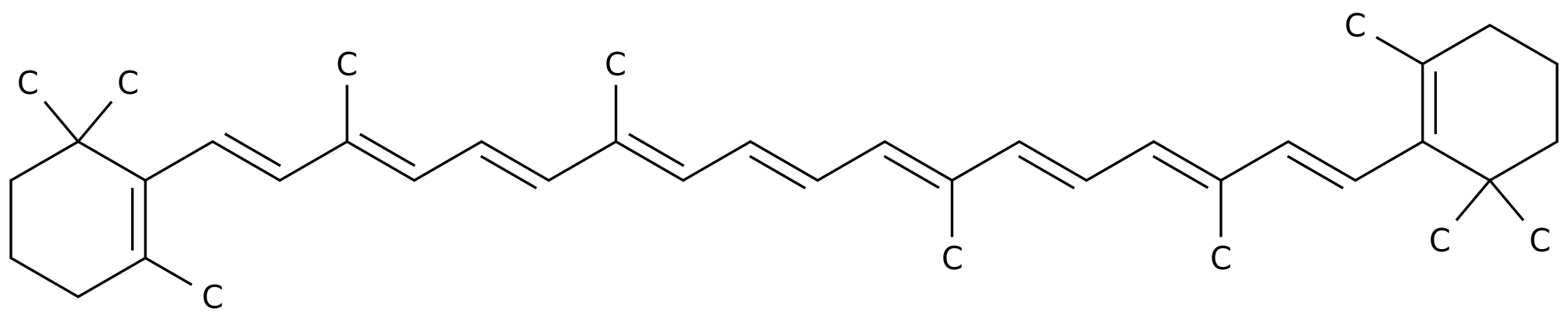
Betacarotene
structure -
-
CAS No:
7235-40-7
-
Formula:
C40H56
-
Chemical Name:
Betacarotene
-
Synonyms:
β,β-Carotene;β-Carotene,all-trans-;β-Carotene;Cyclohexene,1,1′-(3,7,12,16-tetramethyl-1,3,5,7,9,11,13,15,17-octadecanonaene-1,18-diyl)bis[2,6,6-trimethyl-,(all-E)-;all-trans-β-Carotene;Serlabo;(all-E)-1,1′-(3,7,12,16-Tetramethyl-1,3,5,7,9,11,13,15,17-octadecanonaene-1,18-diyl)bis[2,6,6-trimethylcyclohexene];KPMK;all-E-β-Carotene;C.I. Food Orange 5;Betacarotene;Food Orange 5;Provatenol;Rovimix β-carotene;Lucarotin;Lucaratin;Solatene;Provatene;BetaVit;Carotaben;NSC 62794;Carotene Base 80S;Lurotin;C.I. 40800;Lucarotin 10CWD/O;CoroCare;Lucarotin 30SUN;Caroten Base 35468;Carofertin;Lucarotin 20MCT;Carotene Base 80;Carotene Base 80SV;116-32-5;31797-85-0;2321332-51-6
- Categories:
-
CAS No:
Description
Beta Carotene is an organic compound and classified as a terpenoid. It is a precursor (inactive form) of vitamin A.Target: OthersBeta Carotene is a strongly colored red-orange pigment abundant in plants and fruits.β-Carotene is biosynthesized from geranylgeranyl pyrophosphate. It is a member of the carotenes, which are tetraterpenes, synthesized biochemically from eight isoprene units and thus having 40 carbons. Among this general class of carotenes, β-carotene is distinguished by having
Red to brownish-red crystals or crystalline powder|Red, brownish-red or purple-violet crystals or crystalline powder (colour varies according to extraction solvent used and conditions of crystallisation)|Solid
Beta-carotene is a cyclic carotene obtained by dimerisation of all-trans-retinol. A strongly-coloured red-orange pigment abundant in plants and fruit and the most active and important provitamin A carotenoid. It has a role as a biological pigment, a provitamin A, a plant metabolite, a human metabolite, a mouse metabolite, a cofactor, a ferroptosis inhibitor and an antioxidant. It is a cyclic carotene and a carotenoid beta-end group.|Beta-carotene, with the molecular formula C40H56, belongs to the group of carotenoids consisting of isoprene units. The presence of long chains of conjugated double bonds donates beta-carotene with specific colors. It is the most abundant form of carotenoid and it is a precursor of the vitamin A. Beta-carotene is composed of two retinyl groups. It is an antioxidant that can be found in yellow, orange and green leafy vegetables and fruits. Under the FDA, beta-carotene is considered as a generally recognized as safe substance (GRAS).|Beta-Carotene is a naturally-occurring retinol (vitamin A) precursor obtained from certain fruits and vegetables with potential antineoplastic and chemopreventive activities. As an anti-oxidant, beta carotene inhibits free-radical damage to DNA. This agent also induces cell differentiation and apoptosis of some tumor cell types, particularly in early stages of tumorigenesis, and enhances immune system activity by stimulating the release of natural killer cells, lymphocytes, and monocytes. (NCI04)|A carotenoid that is a precursor of VITAMIN A. Beta carotene is administered to reduce the severity of photosensitivity reactions in patients with erythropoietic protoporphyria (PORPHYRIA, ERYTHROPOIETIC).
Betacarotene Basic Attributes
536.87
536.87
230-636-6
01YAE03M7J
755910
DTXSID3020253
C1016
Deep purple, hexagonal prisms from benzene and methanol|Red, rhombic, almost square leaflets from petroleum ether; dil soln are yellow|CRYSTALLINE FORM APPEARS DEEP ORANGE OR COPPER-COLORED|Red-brown hexagonal prisms from benzene and methanol
D02BB01|A - Alimentary tract and metabolism|D - Dermatologicals
2932999099
Characteristics
0
13.5
red to purple powder
1.00 g/cm3 @ Temp: 20 °C
183 °C
654.7°C at 760 mmHg
103 °C
1.566
soluble in hexane, dimethyl sulfoxide, benzene, chloroform, cyclohexane. Insoluble in water.hexane: 100 μg/mL, soluble
−20°C
1.8X10⁻¹¹ mm Hg at 25 deg C (est)
Henry's Law constant = 1.1X10+2 atm-cu m/mol at 25 °C (est)
Sensitive to alkali and very sensitive to air and light, particularly at high temperatures.|UV: 7-1258 (Organic Electronic Spectral Data, Phillips et al, John Wiley & Sons, New York) /Alpha-carotene/|UV: 7-1258 (Organic Electronic Spectral Data, Phillips et al, John Wiley & Sons, New York) /Gamma-carotene/
Safety Information
II; III
4.1
NONH for all modes of transport
1
44-36/37/38-20/21/22
7-15-18-36-26-24/25
FI0329500
Xn
Stable, but sensitive to air, heat and light. Store at -20C under nitrogen. Pyrophoric - may ignite spontaneously in air at room temperature.
P264, P273, P280, P302+P352, P305+P351+P338, P321, P332+P313, P337+P313, P362, P501
H315
SRP: At the time of review, criteria for land treatment or burial (sanitary landfill) disposal practices are subject to significant revision. Prior to implementing land disposal of waste residue (including waste sludge), consult with environmental regulatory agencies for guidance on acceptable disposal practices.
Certification of this color additive when used as a food is not necessary for the protection of the public health and therefore batches thereof are exempt from the requirements of section 706(c) of the Federal Food, Drug, and Cosmetic Act.|Certification of this color additive when used as a drug is not necessary for the protection of the public health and therefore batches thereof are exempt from the requirements of section 706(c) of the Federal Food, Drug, and Cosmetic Act.|Certification of this color additive when used as a cosmetic is not necessary for the protection of the public health and therefore batches thereof are exempt from the requirements of section 706(c) of the Federal Food, Drug, and Cosmetic Act.|Substance added directly to human food affirmed as generally recognized as safe (GRAS).|For more FDA Requirements (Complete) data for BETA-CAROTENE (7 total), please visit the HSDB record page.
Bendich A; The Safety of beta-Carotene. Nutr Cancer 11 (4): 207-14 (1988). Epidemiological studies have associated low dietary and/or plasma level of carotenoids with higher incidences of certain cancers. This evidence has led the NCI to initiate more than a dozen prospective clinical trials in which supplements of beta-carotene alone, or in combination with other micronutrients, are being taken.|WHO/IPCS; Toxicological Evaluation of Certain Food Additives and Contaminants WHO Food Additives Series 32 (1993)
|Warning|H315 (46.3%): Causes skin irritation [Warning Skin corrosion/irritation]|P264, P273, P280, P302+P352, P305+P351+P338, P321, P332+P313, P337+P313, P362, and P501|Aggregated GHS information provided by 347 companies from 7 notifications to the ECHA C&L Inventory. Each notification may be associated with multiple companies.
Toxicity
Beta-carotene is not toxic but the high and constant administration of this substance can translate into skin yellow coloration. Some reports have indicated that administration of high and periodic doses of beta-carotene are correlated to the increase in cancer incidence. This risk seems to be very elevated in the case of smokers. The registered LD50 of beta-carotene is >5000 mg/kg.[MSDS]
Cigarette smoking is associated with decreased plasma levels of ascorbate and beta-carotene, which indicates that the smoking related chronic inflammatory response leads to an imbalance of oxidant/antioxidant homeostasis and possible predisposition to oxidant inflicted tissue damage and disease.|Weanling male Sprague-Dawley rats were pair-fed beta-carotene (56.5 mg/L of diet) for 8 weeks, with and without ethanol. As expected, ethanol increased CYP2E1 (measured by Western blots) from 67 + or - 8 to 317 + or - 27 densitometric units (p < 0.001). Furthermore, beta-carotene potentiated the ethanol induction to 442 + or - 38 densitometric units (p < 0.01) with a significant interaction (p = 0.012). The rise was confirmed by a corresponding increase in the hydroxylation of p-nitrophenol, a specific substrate for CYP2E1, and by the inhibition with diethyl dithiocarbamate (50 microM). Beta-carotene alone also significantly induced CYP4A1 protein (328 + or - 49 vs. 158 + or - 17 densitometric units, p < 0.05). The corresponding CYP4A1 mRNA (measured by Northern blots) was also increased (p < 0.05) and there was a significant interaction of the two treatments (p = 0.015). The combination of ethanol and beta-carotene had no significant effect on either total cytochrome P-450 or CYP1A1/2, CYP2B, CYP3A, and CYP4A2/3 contents. Beta-carotene potentiates the CYP2E1 induction by ethanol in rat liver and also increases CYP4A1, which may, at least in part, explain the associated hepatotoxicity.|AFLATOXIN B1 (4 MG/KG/DAY, ORALLY) ADMIN TO RATS FOR 26 DAYS INHIBITED THE FORMATION OF VITAMIN A FROM BETA-CAROTENE IN THE INTESTINAL MUCOSA.|SULFITE-MEDIATED BETA-CAROTENE DESTRUCTION WAS INVESTIGATED; IT WAS INHIBITED BY ALPHA-TOCOPHEROL, 1,2-DIHYDROXYBENZENE-3,5-DISULFONIC ACID & BUTYLATED HYDROXYTOLUENE|For more Interactions (Complete) data for BETA-CAROTENE (25 total), please visit the HSDB record page.
Two large studies have found an increased incidence in lung cancers when beta-carotene supplements were given to individuals with a history of smoking and/or asbestos exposure. One study of 29,000 males with a history of smoking found an 18% increase in the incidence of lung cancer in the group receiving 20 mg of beta-carotene a day for 5 to 8 years as compared with those receiving placebo . Another study of 18,000 individuals found 28% more lung cancers in individuals with a history of smoking and/or asbestos exposure who took 30 mg of beta-carotene in addition to 25,000 Units of retinol a day for 4 years as compared with those receiving placebo . However, one study of 22,000 male physicians, some of them smokers and former smokers, found no increased risk of lung cancer at doses of 50 mg of beta-carotene every other day for 12 years .
Beta-carotene is thought to be highly bound to plasma proteins. It is registered to be retained by the chylomicron and transported in VLDL. After absorption, beta-carotene is rapidly transformed to retinol which is highly bound to a high number of plasma proteins.
ORANGE-YELLOW PIGMENT IN PLANTS, ALGAE, & SOME MARINE ANIMALS, ESP IN LEAVES, VEGETATION, & ROOT CROPS, IN TRACE CONCN. NOTABLY PRESENT IN BUTTER & CARROTS. /CAROTENE/|RICHEST SOURCES OF CAROTENE ARE YELLOW & GREEN (LEAFY) VEGETABLES & YELLOW FRUITS.
EXPERIMENTAL: This study investigated milk carotenoid concentrations during days 4-32 postpartum and assessed the effects of maternal beta-carotene supplementation. Subjects (n = 21; aged 19-39 y) were randomly assigned to receive beta-carotene (30 mg/d) or placebo from days 4 to 32 postpartum. Each subject provided 8 diet records and 8 milk samples during the study. Diet records were analyzed for energy, macronutrients, vitamins A and E, and carotenoids. Milk samples were analyzed with HPLC for concentrations of carotenoids, retinol, and alpha-tocopherol. Data were analyzed by using repeated-measures analysis and orthogonal contrasts. No significant differences in average dietary intakes, body mass index, age, or parity were found between groups at baseline or after supplementation. Milk carotenoid concentrations decreased over time (P < 0.01), as did retinol and alpha-tocopherol concentrations (P < 0.003). Concentrations of most carotenoids decreased to those reported for mature milk by day 32 postpartum. Milk lutein concentrations remained elevated throughout the study compared with values reported for mature milk, whereas plasma lutein concentrations decreased significantly over time. beta-carotene supplementation did not significantly change the milk concentrations of beta-carotene, the other carotenoids, retinol, or alpha-tocopherol. CONCLUSIONS: The lack of increase in milk beta-carotene despite supplementation suggests that transitional milk may be already nearly saturated with beta-carotene. The elevated milk lutein concentration and simultaneous decrease in plasma lutein suggest that lutein metabolism may be altered during early lactation.
Drug Information
Beta-carotene is FDA approved to be used as a nutrient supplement and to be even added in infant formula as a source of vitamin A. It is also approved to be used as a color additive for food products, drugs (with the label of "only as a color additive") and cosmetics. It is used commonly for the reduction of photosensitivity in patients with erythropoietic protoporphyria and other photosensitivity diseases.
Antioxidants|THERAPY WITH ORAL BETA-CAROTENE IN PATIENT WITH POLYMORPHOUS LIGHT ERUPTION; COMPLETE REMISSION OCCURRED IN 32% (6/19) TREATED WITH BETA-CAROTENE.|MEDICATION (VET): VITAMIN A PRECURSOR FOR ALL SPECIES EXCEPT CATS.|The effects of chronic oral administration of beta-carotene, a carotenoid partially metabolized to retinol, on plasma lipid concentrations have not been well studied; therefore, 61 subjects were studied over 12 mo while they were enrolled in a skin cancer prevention study in which patients were randomly assigned to receive either placebo (n = 30) or 50 mg beta-carotene/day orally (n = 31). At study entry and 1 yr later, fasting blood samples were obtained for measurement of triglycerides, total cholesterol, high density lipoprotein cholesterol, retinol, and beta-carotene. Retinol concentrations changed minimally in both groups; beta-carotene concentration increased an average of 12.1 + or - 47 nmol/L in the placebo group and 4279 + or - 657 nmol/l in the active treatment group. Both groups experienced similar small increases in triglyceride and total cholesterol concentrations and small decreases in high density lipoprotein cholesterol. Daily oral administration of 50 mg beta-carotene/day did not affect plasma lipid concentrations.|For more Therapeutic Uses (Complete) data for BETA-CAROTENE (10 total), please visit the HSDB record page.
NOT EFFECTIVE AS SUNSCREEN IN NORMAL INDIVIDUALS & SHOULD NOT BE USED FOR THAT PURPOSE ... USED WITH CAUTION IN PT WITH IMPAIRED RENAL OR HEPATIC FUNCTION BECAUSE SAFE USE ... HAS NOT BEEN ESTABLISHED.|Beta carotene is well tolerated. Carotenodermia is usually the only adverse effect. Patients should be forewarned that carotenodermia will develop after 2-6 weeks of therapy, usually first noticed as yellowness of the palms of the hands or soles of the feet and to a lesser extent of the face. Some patients may experience loose stools during beta carotene therapy, but this is sporadic and may not require discontinuance of therapy. Ecchymoses and arthralgia have been reported rarely|Beta carotene should be used with caution in patients with impaired renal or hepatic function because safe use of the drug in the presence of these conditions has not been established. Although abnormally high blood concentrations of vitamin A do not occur during beta carotene therapy, patients receiving beta carotene should be advised against taking supplementary vitamin A because beta carotene will fulfill normal vitamin A requirements. Patients should be cautioned that large quantities of green or yellow vegetables or their juices or extracts are not suitable substitutes for crystalline beta carotene because consumption of excessive quantities of these vegetables may cause adverse effects such as leukopenia or menstrual disorders. Patients should be warned that the protective effect of beta carotene is not total and that they may still develop considerable burning and edema after sufficient exposure to sunlight. Each patient must establish his own time limit of exposure.|There are no adequate and controlled studies to date in humans. Beta carotene should be used during pregnancy only when the potential benefits justify the possible risks to the fetus. The effect of beta carotene on fertility in humans is not known.|For more Drug Warnings (Complete) data for BETA-CAROTENE (11 total), please visit the HSDB record page.
Oral administration of beta-carotene increases the serum concentration of beta-carotene by 60% but it does not change the concentration found in the heart, liver or kidneys. In vitro studies in hepatocytes have shown that beta-carotene ameliorates oxidative stress, enhances antioxidant activity and decreases apoptosis. Other than the antioxidant activities, some other actions have been correlated to beta-carotene. It is thought to have detoxifying properties, as well as to help increase resistance to inflammation and infection and increase immune response and enhance RNA production.
Precursor forms of vitamins. (See all compounds classified as Provitamins.)
After administration of beta-carotene, some of the administered dose is absorbed into the circulatory system unchanged and stored in the fat tissue. The coadministration of beta-carotene and a high-fat content diet is correlated to a better absorption of beta-carotene. The absorption is also dependent on the isomeric form of the molecule where the cis conformation seems to present a higher bioavailability. The absorption of beta-carotene is thought to be performed in 6-7 hours. The reported AUC of beta-carotene when administered orally from 0 to 440 hours after initial administration was reported to be 26.3 mcg.h/L. The maximal concentration of beta-carotene is attained in a dual pharmacokinetic profile after 6 hours and again after 32 hours with a concentration of 0.58 micromol/L.|The unabsorbed carotene is excreted in feces. It is also excreted in feces and urine as metabolites. The consumption of dietary fiber can increase the fecal excretion of fats and other fat-soluble compounds such as beta-carotene.|No pharmacokinetic studies have been performed regarding the volume of distribution of beta-carotene.|The clearance rate of beta-carotene administered orally is 0.68 nmol/L each hour.|Carotenoids are absorbed and transported via lymphatics to the liver. They circulate in association with lipoproteins, and are found in liver, adrenal, testes, and adipose tissue, and can be converted to vitamin A in numerous tissues, including the liver. Some beta carotene is absorbed as such and circulates in association with lipoproteins; it apparently partitions into body lipids and can be converted to vitamin A in numerous tissues, including the liver.|Absorption of beta-carotene depends on the presence of dietary fat and bile in the intestinal tract.|Unchanged beta-carotene is found in various tissues, primarily fat tissues, adrenal glands, and ovaries. Small concentrations are found in the liver.|Only about one-third of beta-carotene or other carotenoids is absorbed by human beings. The absorption of carotenoids takes place in a relatively nonspecific fashion and depends upon the presence of bile and absorbable fat in the intestinal tract; it is greatly decreased by steatorrhea, chronic diarrhea, and very-low-fat diets.|For more Absorption, Distribution and Excretion (Complete) data for BETA-CAROTENE (9 total), please visit the HSDB record page.
Beta-carotene is broken down in the mucosa of the small intestine and liver by beta-carotene dioxygenase to retinal which is a form of vitamin A. The function of this enzyme is vital as it decides if the beta-carotene is transformed to vitamin A or if it circulates in the plasma as beta-carotene. Less than a quarter of the ingested beta-carotene from root vegetables and about half of the beta-carotene from leafy green vegetables are converted to vitamin A.|A portion of the beta-carotene is converted to retinol in the wall of the small intestine, principally by its initial cleavage at the 15,15' double bond to form two molecules of retinal. Some of the retinal is further oxidized to retinoic acid; only one-half is reduced to retinol, which is then esterified and transported in the lymph. ...|Approximately 20 to 60% of beta-carotene is metabolized to retinaldehyde and then converted to retinol, primarily in the intestinal wall. A small amount of beta-carotene is converted to vitamin A in the liver. The proportion of beta-carotene converted to vitamin A diminishes inversely to the intake of beta-carotene, as long as the dosages are higher than one to two times the daily requirements. High doses of beta-carotene do not lead to abnormally high serum concentrations of vitamin A.|Beta carotene may be converted to 2 molecules of retinal by cleavage at the 15-15' double bond in the center of the molecule. Most of the retinal is reduced to retinol which is then conjugated with glucuronic acid and excreted in urine and feces. Some retinal may be further oxidized to retinoic acid which can be decarboxylated and further metabolized, secreted into bile, and excreted in feces as the glucuronide.|Two pathways have been suggested for the conversion of carotenoids to vitamin A in mammals, central cleavage and excentric cleavage. An enzyme, beta-carotenoid-15,15'-dioxygenase, has been partly purified from the intestines of several species and has been identified in several other organs and species. The enzyme, which converts beta-carotene into two molecules of retinal in good yield, requires molecular oxygen and is inhibited by sulfhydryl binding reagents and iron binding reagents. Most provitamin A carotenoids, including the beta-apo-carotenals, are cleaved to retinal by this enzyme. Its maximal activity in the rabbit is approximately 200 times that required to meet nutritional needs but is less than 50% of that expected to produce signs of vitamin A toxicity. Excentric cleavage unquestionably occurs in plants and some microorganisms and might occur in mammals. Thus far, however, carotenoid dioxygenase with excentric bond specificity has been identified in mammals, the yield of beta-apo-carotenals from beta-carotene in vivo and in vitro is very low, and beta-apo-carotenals are formed nonbiologically from beta-carotene.|The carotenes are not converted to retinol very rapidly, so that overdoses of the carotenes do not cause vitamin A toxicity. /Carotenes/
The apparent half-life of beta-carotene is of 6-11 days after initial administration.
Beta-carotene is an antioxidant that presents significant efficacy against the reactive oxygen species singlet oxygen. Beta-carotene acts as a scavenger of lipophilic radicals within the membranes of every cell compartments. It also presents an oxidative modification of LDL. The presence of long chains of conjugated double bonds is responsible for its antioxidative properties by allowing beta-carotene to chelate oxygen-free radicals and dissipate their energy. The chelation of free radicals inhibits the peroxidation of lipids. The effect of beta-carotene in the immune response is thought to be related to the direct effect on the thymus which increases the production of immune cells.|IN HEMATOPORPHYRIN PHOTOSENSITIZED MICE BETA-CAROTENE SHOWED PHOTOPROTECTION WAS DUE TO FREE RADICAL SCAVENGING OR SINGLET O QUENCHING BUT ALSO A POSSIBLE ROLE OF 400 NM LIGHT ABSORPTION, A PROPERTY OF BETA-CAROTENE.|Beta carotene protects patients with erythropoietic protoporphyria against severe photosensitivity reactions (burning sensation, edema, erythema, pruritus, and/or cutaneous lesions). The drug has no effect on the basic biochemical abnormality of erythropoietic protoporphyria (eg, erythrocyte, plasma, and stool concentrations of protoporphyrins are not altered by the drug). The precise mechanism by which the drug exerts photoprotection has not been established. There is some evidence that photosensitizers may act through the formation of singlet excited oxygen and/or free radicals. Since in vitro studies indicate that beta carotene can quench free radicals and singlet excited oxygen, this may be the mechanism by which the drug acts. It is unlikely that beta carotene acts simply as a filter for the wavelengths of light that induce phototoxic effects.|beta-Carotene inhibits UV-B carcinogenesis. beta-Carotene is an excellent quencher of singlet oxygen, and can quench free radicals. beta-Carotene has been shown to quench singlet oxygen/free radical reactions in the skin of porphyric mice, and has been found to quench excited species formed on irradiation of mouse skin by UV-B.
/SRP:/ Basic treatment: Establish a patent airway (oropharyngeal or nasopharyngeal airway, if needed). Suction if necessary. Watch for signs of respiratory insufficiency and assist ventilations if needed. Administer oxygen by nonrebreather mask at 10 to 15 L/min. Monitor for pulmonary edema and treat if necessary ... . Monitor for shock and treat if necessary ... . Anticipate seizures and treat if necessary ... . For eye contamination, flush eyes immediately with water. Irrigate each eye continuously with 0.9% saline (NS) during transport ... . Do not use emetics. For ingestion, rinse mouth and administer 5 ml/kg up to 200 ml of water for dilution if the patient can swallow, has a strong gag reflex, and does not drool ... . Cover skin burns with dry sterile dressings after decontamination ... . /Poisons A and B/|/SRP:/ Advanced treatment: Consider orotracheal or nasotracheal intubation for airway control in the patient who is unconscious, has severe pulmonary edema, or is in severe respiratory distress. Positive-pressure ventilation techniques with a bag valve mask device may be beneficial. Consider drug therapy for pulmonary edema ... . Consider administering a beta agonist such as albuterol for severe bronchospasm ... . Monitor cardiac rhythm and treat arrhythmias as necessary ... . Start IV administration of D5W /SRP: "To keep open", minimal flow rate/. Use 0.9% saline (NS) or lactated Ringer's if signs of hypovolemia are present. For hypotension with signs of hypovolemia, administer fluid cautiously. Watch for signs of fluid overload ... . Treat seizures with diazepam or lorazepam ... . Use proparacaine hydrochloride to assist eye irrigation ... . /Poisons A and B/
/SIGNS AND SYMPTOMS/ Two large studies have found an increased incidence in lung cancers when beta-carotene supplements were given to individuals with a history of smoking and/or asbestos exposure. One study of 29,000 males with a history of smoking found an 18% increase in the incidence of lung cancer in the group receiving 20 mg of beta-carotene a day for 5 to 8 years as compared with those receiving placebo . Another study of 18,000 individuals found 28% more lung cancers in individuals with a history of smoking and/or asbestos exposure who took 30 mg of beta-carotene in addition to 25,000 Units of retinol a day for 4 years as compared with those receiving placebo . However, one study of 22,000 male physicians, some of them smokers and former smokers, found no increased risk of lung cancer at doses of 50 mg of beta-carotene every other day for 12 years .|/EPIDEMIOLOGY STUDIES/ Epidemiological studies have suggested a protective effect of vegetables and fruits on urinary tract cancer but the possible protective nutrients are unknown. We studied the effect of alpha-tocopherol (a form of vitamin E) and beta-carotene supplementation on urinary tract cancer in the Alpha-Tocopherol, Beta-Carotene Cancer Prevention (ATBC) Study. A total of 29,133 male smokers aged 50-69 years from southwestern Finland were randomly assigned to receive alpha-tocopherol (50 mg), beta-carotene (20 mg), both agents, or a placebo daily for 5-8 years (median 6.1 years). Incident urothelial cancers (bladder, ureter, and renal pelvis; n = 169) and renal cell cancers (n = 102) were identified through the nationwide cancer registry. The diagnoses were centrally confirmed by review of medical records and pathology specimens. The supplementation effects were estimated using a proportional hazards model. Neither alpha-tocopherol nor beta-carotene affected the incidence of urothelial cancer, relative risk 1.1 (95% confidence interval (CI) 0.8-1.5) and 1.0 (95% CI 0.7-1.3), respectively, or the incidence of renal cell cancer, relative risk 1.1 (95% CI 0.7-1.6) and 0.8 95% CI 0.6-1.3), respectively. Long-term supplementation with alpha-tocopherol and beta-carotene has no preventive effect on urinary tract cancers in middle-aged male smokers.|/EPIDEMIOLOGY STUDIES/ The Beta-Carotene and Retinol Efficacy Trial (CARET) was terminated 21 months ahead of schedule due to an excess of lung cancers. Deaths from cardiovascular disease also increased (relative risk=1.26 (95% confidence interval (CI) 0.99-1.61)) in the group assigned to a combination of 30 mg beta-carotene and 25 000 IU retinyl palmitate (vitamin A) daily. The basis for increased cardiovascular mortality is unexplained. Data on serum lipids, available for 1474 CARET Vanguard participants who were enrolled in the two CARET pilot studies and transitioned to the Vanguard study /were analyzed/. Total cholesterol and triglycerides were measured 2 months prior to, 4 and 12 months following randomization, and annually thereafter for up to 7 y. In the asbestos-exposed pilot (N = 816), participants were assigned to beta-carotene and retinol or to placebo; in the smokers pilot (N = 1029), participants were assigned to beta-carotene, retinol, a combination, or placebo. Serum cholesterol showed a decline over time in both arms; serum triglycerides had a continuous decline over time in the placebo arm, but an initial increase that persisted in the active arm. Both serum cholesterol concentrations (P < 0.0003) and serum triglycerides (P < 0.0001) were significantly higher in the participants receiving vitamin A and/or a combination of vitamin A and beta-carotene (n = 863) as compared to the placebo group (n = 611). Those in this active intervention group had an average cholesterol concentration 5.3 mg/dl (0.137 mmol/l) higher than those in the placebo arm. /It was concluded/ the differences in cholesterol and triglyceride concentrations between the groups following randomization may account in part for the unexpected excess in cardiovascular deaths seen in the active intervention arm of CARET.|/EPIDEMIOLOGY STUDIES/ The Physicians' Health Study (PHS) was a randomized trial of beta-carotene (50 mg, alternate days) and aspirin in primary prevention of cancer and cardiovascular disease among 22,071 US male physicians. This report updates results for beta-carotene and examines effect modification by baseline characteristics. Beta-carotene's effect on cancer over nearly 13 years was examined overall and within subgroups defined by baseline characteristics using proportional-hazards models. 2667 incident cancers were confirmed, with 1117 prostate, 267 colon, and 178 lung cancers. There were no significant differences with supplementation in total (relative risk (RR) = 1.0, 95% confidence interval (CI) = 0.9-1.0); prostate (RR = 1.0, 95% CI = 0.9-1.1); colon (RR = 0.9, 95% CI = 0.7-1.2); or lung (RR = 0.9, 95% CI = 0.7-1.2) cancer, and no differences over time. In subgroup analyses, total cancer was modestly reduced with supplementation among those aged 70+ years (RR = 0.8, 95% CI = 0.7-1.0), daily drinkers of alcohol (RR = 0.9, 95% CI = 0.8-1.0), and those in the highest BMI quartile (RR = 0.9, 95% CI = 0.7-1.0). Prostate cancer was reduced with supplementation among those in the highest BMI quartile (RR = 0.8, 95% CI = 0.6-1.0), and colon cancer was reduced among daily drinkers of alcohol (RR = 0.5, 95% CI = 0.3-0.8). The PHS found no overall effect of beta-carotene on total cancer, or the three most common site-specific cancers. The possibility of risk reduction within specific subgroups remains.|For more Human Toxicity Excerpts (Complete) data for BETA-CAROTENE (15 total), please visit the HSDB record page.
BellaCarotin
Betacarotene Use and Manufacturing
beta-Carotene is ... made by a microbial fermentation process from corn and soybean oil.
Yellow coloring agent for foods. As a nutritional fortifier and food coloring agent. According to my country's regulations, it can be used for all kinds of food and used in appropriate amounts according to production needs. Edible orange pigment; nutrition enhancer. Mainly used in margarine, noodles, cakes, beverages and health foods.
Beta-carotene supplements are available as synthetic beta-carotene and natural beta-carotene. Synthetic beta-carotene is comprised mainly of all-trans beta-carotene with small amounts of 13-cis beta-carotene and even smaller amounts of 9-cis beta-carotene. Natural beta-carotene is principally derived from the algae Dunaliella salina and is comprised of all-trans beta-carotene and 9-cis beta-carotene. Three mg of beta-carotene is equal to 5,000 UIs. Supplemental intake of beta-carotene ranges from 3-15 mg/day.|GRADES: ACCORDING TO USP, UNITS OF VIT A, SOLD AS PURE CRYSTALS, AS SOLN IN VARIOUS OILS, AS COLLOIDAL DISPERSION. ALSO 'FOOD CHEMICAL CODEX' /CAROTENE/|Oral: Capsules: 15 mg, 60 mg (available by nonproprietary name).
.beta.,.beta.-Carotene: ACTIVE|MOST IMPORTANT OF PROVITAMINS A. WIDELY DISTRIBUTED IN PLANT & ANIMAL KINGDOM. IN PLANTS IT OCCURS ALMOST ALWAYS TOGETHER WITH CHLOROPHYLL. ... COMMERCIAL CRYSTALLINE BETA-CAROTENE HAS A VIT A ACTIVITY OF 1.67 MILLION USP UNITS/G. THE IU OF 0.6 UG BETA-CAROTENE IS ALMOST EXACTLY EQUIV TO 0.3 UG VIT A.|ONE IU OF VITMIN A IS SPECIFIC BIOLOGICAL ACTIVITY OF 0.3 UG OF ALL-TRANS-RETINOL OR 0.6 UG OF BETA-CAROTENE. BECAUSE OF RELATIVELY INEFFICIENT DIETARY UTILIZATION OF BETA-CAROTENE COMPARED WITH RETINOL, NOMENCLATURE IS IN THE TERMS OF RETINOL EQUIVALENTS, WHICH REPRESENTS 1 UG OF ALL-TRANS-RETINOL, 6 UG OF DIETARY BETA-CAROTENE, OR 12 UG OF OTHER PROVITAMIN A CAROTENOIDS.|... CONSISTS OF 3 ISOMERS, APPROX 15% ALPHA, 85% BETA, & 0.1% GAMMA. /CAROTENE/|THEORETICALLY ONE MOLECULE OF BETA-CAROTENE SHOULD YIELD TWO MOLECULES OF VIT A1; HOWEVER, AVAILABILITY OF CAROTENE IN FOODS AS SOURCES OF VIT A FOR HUMANS IS LOW & EXTREMELY VARIABLE. ... UTILIZATION EFFICIENCY OF CAROTENE IS GENERALLY CONSIDERED TO BE 1/6 FOR HUMANS ... .|For more General Manufacturing Information (Complete) data for BETA-CAROTENE (6 total), please visit the HSDB record page.
CHROMATOGRAPHY TO DETECT CAROTENOIDS ADDED FOR COLORING PURPOSES, IN MACARONI, NOODLES, FLOUR, SEMOLINA, & EGG YOLK. /CAROTENES/|Method: AOAC 941.15; Procedure: spectrophotometric method; Analyte: carotene; Matrix: fresh plant materials and silages; Detection Limit: not provided.|Determination of alpha- and beta-carotene in some raw fruits and vegetables by HPLC.|Analyte: beta-carotene; matrix: blood (serum); procedure: high-performance liquid chromatography with ultraviolet detection at 450 nm; limit of detection: 10 ng/mL|For more Analytic Laboratory Methods (Complete) data for BETA-CAROTENE (15 total), please visit the HSDB record page.
Simultaneous quantitation and separation of carotenoids and retinol in human milk by HPLC.|Determination of retinol, alpha-tocopherol, and beta-carotene in serum by liquid chromatography.
Food additives|Human Drugs -> FDA Approved Drug Products with Therapeutic Equivalence Evaluations (Orange Book) -> Active Ingredients|Food Additives -> COLOUR; -> JECFA Functional Classes|Lipids -> Prenol Lipids [PR] -> Isoprenoids [PR01] -> C40 isoprenoids (tetraterpenes) [PR0107]|Cosmetics -> Cosmetic colorant; Skin conditioning
Food Additives -> COLOUR;
Computed Properties
Molecular Weight:536.9
XLogP3:13.5
Rotatable Bond Count:10
Exact Mass:536.438201786
Monoisotopic Mass:536.438201786
Heavy Atom Count:40
Complexity:1120
Defined Bond Stereocenter Count:9
Covalently-Bonded Unit Count:1
Compound Is Canonicalized:Yes
Drug Function and Efficacy
No specific description provided

Recommended Suppliers of Betacarotene
-
![China]() CN
CN
YRS
Business licensedTrader Supplier of Pharmaceuticals,Peptide,Cosmetics,Nutritional SupplementsInquiryCAS No.: 7235-40-7Grade: Pharmaceutical GradeContent: 99% -
![China]() CN
CN
YRS
Business licensed Certified factoryManufactory Supplier of BCAA,Ascorbic Acid (Vitamin C),Monk Fruit Extract,Acai Berry Extract,Taurine,AAKG,Glycine,Stevia,Creatine Monohydrate,Allulose,ErythritolInquiryUnit Price: nullnull /null nullCAS No.: 7235-40-7Grade: food gradeContent: 99% -
![China]() CN
CN
YRS
Business licensed Certified factoryManufactory Supplier of botanical extracts,Amino Acids&Derivatives,API&Vitamins,functional food ingredients,nutraceutical supplementsInquiryCAS No.: 7235-40-7Grade: Food GradeContent: 10% -
![China]() CN
CN
YRS
Business licensedTrader Supplier of PVC resin,pvc paste resin,melamineInquiryUnit Price: nullnull /null nullCAS No.: 7235-40-7Grade: Industrial GradeContent: 99% -
![China]() CN
CN
YRS
Business licensed Certified factoryManufactory Supplier of Broccoli extract,Botanical extracts,Natural colorants,Tea

Learn More Other Chemicals
-
Aluminum hydroxide
21645-51-2
-
Pigment Yellow 3
6486-23-3
-
Carbon
7440-44-0
-
Bentonite Formula
1302-78-9
-
Riboflavin Formula
83-88-5
-
Chloroauric acid Formula
16903-35-8
-
Sulforhodamine G Structure
5873-16-5
-
Pigment Yellow 16 Structure
5979-28-2
-
What is Pigment Red 57
5858-81-1
-
What is Ferrate(1-), tris[(1,2-naphthalenedione-κO2) 1-(oximato-κO)]-, sodium (1:1)
16143-80-9