




Organic Chemistry
- • Amides (2627)
- • Alcohols, Phenols, Phenol Alcohols (331)
- • Nitrogen Compounds (260)
- • Nitrile Compound (91)
- • Hydrazine or Hydroxylamine Derivatives (213)
- • Quinones (38)
- • Ethers and Derivatives (188)
- • Aldehydes (117)
- • Carboxylic Acids and Derivatives (798)
- • Hydrocarbons and Derivatives (2317)
- • Ketones (79)
- • Inorganic Acid Esters (172)
- • Heterocyclic Ring (357)
- • Organometallic Compounds (977)
- • Organosulfur Compounds (73)
- • Phosphines (726)
- • Organometalate (285)
- • Organic Fluorine Compound (2126)
- • Triazenes (18)
- • Semicarbazides (33)
- • Organoselenium Compounds (28)
- • Nitro Compounds (96)
- • Nitrates (15)
- • Lactones (240)
- • Imines (24)
- • Free Radicals (48)
- • Dioxins and Dioxin-like Compounds (31)
- • Cyanates (31)
- • Coordination Complexes (3059)
- • Boron Compounds (84)
- • Azides (67)
- • Arsenicals (56)
Related News


Arsenicals
Arsenicals
Sodium arsenate
(7631-89-2)-
 At Best Price")
Industrial Grade / 99%
-

Industrial Grade / 99%
-

-


Request for quotation , get quotes from more suppliers.
Arsenic acid (H3AsO4)
(7778-39-4)-
 acid")
-

-

Industrial Grade / 99%
-

Different Grade / 99.9%
$0.1/KG EXW


Request for quotation , get quotes from more suppliers.
-

Industrial Grade / 99.0%
-
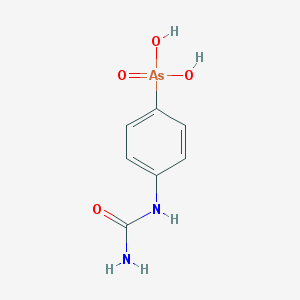
![buy [4-(carbamoylamino)phenyl]arsonic acid]( "[4-(carbamoylamino)phenyl]arsonic acid")
-

-

Industrial Grade / 99%

Request for quotation , get quotes from more suppliers.
10,10′-Oxybisphenoxarsine
(58-36-6)-

- / 99.00%
-
 99% see COA kanbei")
- / 99%
-

- / 99.0%
-

Industrial Grade / 99%


Request for quotation , get quotes from more suppliers.
Arsonic acid, methyl-, iron(3+) salt (3:2)
(6585-53-1)-
,methyl-dioxido-oxo-λ<sup>5</sup>-arsane")
-

Industrial Grade / 99%
-

-


Request for quotation , get quotes from more suppliers.
Sodium arsenate (Na2HAsO4)
(7778-43-0)-

-

-

Industrial Grade / 99%
-

Different Grade / 99.9%
$0.1/KG EXW


Request for quotation , get quotes from more suppliers.
Sulfoxylic acid, mono[[[5-[(3-amino-4-hydroxyphenyl)diarsenyl]-2-hydroxyphenyl]amino]methyl] ester, sodium salt (1:1)
(457-60-3)-

Industrial Grade / 99%
$0.2/KG EXW
-
![buy sodium,[5-(3-amino-4-hydroxyphenyl)arsanylidenearsanyl-2-hydroxyanilino]methanesulfinate]( "sodium,[5-(3-amino-4-hydroxyphenyl)arsanylidenearsanyl-2-hydroxyanilino]methanesulfinate")
-

-


Request for quotation , get quotes from more suppliers.
-

Industrial Grade / 99%
-

Industrial Grade / 99.0%
-

-



Request for quotation , get quotes from more suppliers.
-

-

Pharmaceutical Grade / -
-

Pharmaceutical Grade / 99%
-

Industrial Grade / 99.0%



Request for quotation , get quotes from more suppliers.
-

-

Industrial Grade / 99.0%
-

-



Request for quotation , get quotes from more suppliers.
Frequently Asked Questions
Arsenicals are chemical compounds containing arsenic, commonly used in industrial applications such as wood preservation, pesticide formulation, and semiconductor manufacturing. Historically, some organic arsenicals were also used in veterinary medicine and human therapeutics, though their medical use has significantly declined due to toxicity concerns. Understanding the specific type and application of arsenicals is essential for safe and compliant handling.
Arsenicals can pose serious health and environmental hazards due to the toxic nature of arsenic. Proper safety measures include using personal protective equipment (PPE), ensuring adequate ventilation, and following local regulatory guidelines for storage and disposal. Only trained personnel should handle arsenicals, and facilities must comply with OSHA, EPA, or equivalent international standards to minimize exposure risks.
Common commercial arsenicals include inorganic forms like arsenic trioxide (As₂O₃) and sodium arsenite, as well as organic variants such as roxarsone and cacodylic acid. These compounds have been used in wood preservatives (e.g., chromated copper arsenate or CCA), herbicides, and historically in animal feed additives. Their usage is now heavily regulated in many countries due to environmental and health concerns.
When selecting a supplier for arsenicals, verify that they hold relevant certifications (e.g., ISO, REACH compliance), provide comprehensive safety data sheets (SDS), and adhere to strict quality control protocols. A reputable supplier should also offer regulatory support, clear documentation of sourcing, and demonstrate experience in handling hazardous materials safely and legally.
The production, sale, and use of arsenicals are strictly regulated under frameworks such as the U.S. EPA’s Toxic Substances Control Act (TSCA), the EU’s REACH regulation, and international agreements like the Stockholm Convention. Many applications—especially in agriculture and consumer products—have been banned or restricted globally. Buyers must ensure compliance with local and international laws before procuring or using arsenical compounds.