




Cosmetic Ingredient
- • Abrasive (124)
- • Absorbent (84)
- • Anticaking (66)
- • Anticorrosive (25)
- • Antifoaming (19)
- • Antimicrobials (291)
- • Antioxidant Ingredient (393)
- • Antiperspirant (20)
- • Antiplaque (48)
- • Anti-seborrheic (38)
- • Anti-sebum (38)
- • Antistatic (457)
- • Astringent (162)
- • Binding Agent (171)
- • Bleaching Agent (53)
- • Buffering (190)
- • Bulking (109)
- • Chelating (122)
- • Cleansing (680)
- • Cosmetic Colorant (212)
- • Cosmetic Preservative (158)
- • Denaturant (45)
- • Deodorant (98)
- • Depilatory (27)
- • Dissolving Agent (297)
- • Emollient (795)
- • Emulsifying Agent (481)
- • Emulsion Stabilising (153)
- • Exfoliating (19)
- • Film Forming (299)
- • Flavouring (72)
- • Foam Boosting (161)
- • Foaming (101)
- • Fragrance Ingredient (732)
- • Gel Forming (19)
- • Hair Conditioning (672)
- • Hair Dyeing (363)
- • Hair Fixing (36)
- • Hair Waving or Straightening (45)
- • Humectant (281)
- • Hydrotrope (92)
- • Keratolytic (20)
- • Light Stabilizer (77)
- • Moisturising Agent (50)
- • Nail Conditioning (42)
- • Occlusive (20)
- • Opacifying (119)
- • Oral Care (123)
- • Oxidising (19)
- • Perfuming (2106)
- • Plasticiser (98)
- • Propellant (19)
- • Reducing (51)
- • Refatting (12)
- • Refreshing (27)
- • Skin Cleansing (387)
- • Skin Conditioning (1747)
- • Skin Humectant (21)
- • Skin Protecting (281)
- • Smoothing (32)
- • Soothing (72)
- • Tonics (155)
- • UV Filter (33)
- • Viscosity Controlling (530)
Chemicals as Skincare Ingredients
Related News
-
EAEU Initiates Review of Anti-Dumping Measures on Chinese Titanium Dioxide, Suspends Duties During Investigation
2026-08-14 -
Pakistan Launches Successive Anti-dumping Investigations against Chinese Products, Involving Soda Ash, Ibuprofen and Other Raw Materials
2026-08-10 -
Premium Global Chemical Sourcing Requests (6-9Aug, 2026)
2026-08-10 -
Premium Global Chemical Sourcing Requests (17-19Aug, 2026)
2026-08-20 -
US Tariff Pressure on Canada Raises Risks for North American Chemical Supply Chains
2026-08-22 -
Premium Global Chemical Sourcing Requests (13-16Aug, 2026)
2026-08-17


Emulsifying Agent
Emulsifying Agent
-

- / 98%
-

- / 99.00%
-

Industrial Grade / 99%
$1/KG EXW
-
")
- / 0.99%



Request for quotation , get quotes from more suppliers.
-

Industrial Grade / 99%
-

- / 99.00%
-

Reagent Grade / 99%
$20-25/KG FOB
-

Industrial Grade / 99%


Request for quotation , get quotes from more suppliers.
Dimethyloctadecylamine
(124-28-7)-

Industrial Grade / 99%
-

- / 99.00%
-

-

- / 99%


Request for quotation , get quotes from more suppliers.
Amines, hydrogenated tallow alkyl
(61788-45-2)-
")
$1-1.2/KG FOB
-

- / 99.00%
-

-

Pharmaceutical Grade / 99%


Request for quotation , get quotes from more suppliers.
Sorbitan, trioleate
(26266-58-0)-

Cosmetic Raw Materials / 99%
-

- / 99.00%
-

$30-32/G FOB
-

Pharmaceutical Grade / 99%


Request for quotation , get quotes from more suppliers.
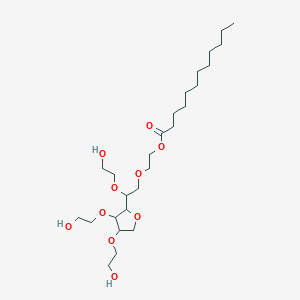
Polyoxyethylene sorbitan monopalmitate
(9005-66-7)-

Cosmetics Grade / 99%
-

Chemical Grade / 95%
-

- / 0.00%
-

- / 99.00%


Request for quotation , get quotes from more suppliers.
SORBITAN TRISTEARATE
(26658-19-5)2. Lonzest(R) STS is a low HLB surfactant suggested for use in cosmetic formulations (w/o emulsifier), household products (w/o emulsifier, viscosity modifier) and textile chemicals (emulsifier).
-

- / 0.00%
-

- / 99.00%
-

Different Grade / 99.9%
$0.1/KG EXW
-

industrial Grade / 98%


Request for quotation , get quotes from more suppliers.
Soya fatty acids
(68308-53-2)-

Cosmetics Grade / 99%
$1550-1780/MT FOB
-

Cosmetics Grade / 99%
-

Industrial Grade / 99%
-

Pharmaceutical Grade / 99%


Request for quotation , get quotes from more suppliers.
Polyethylene Glycol Monocetyl Ether
(9004-95-9)-

- / 0.00%
-
 ISOHEXADECYL ETHER")
- / 99.00%
-

- / 98%
-
ISOHEXADECYLETHER Industrial Grade")
Industrial Grade / -


Request for quotation , get quotes from more suppliers.
Cetyldimethylethylammonium bromide
(124-03-8)-

- / 99.00%
-

Industrial Grade / 99%
-

Industrial Grade / 99.0%
-




Request for quotation , get quotes from more suppliers.
Frequently Asked Questions
An emulsifying agent, also known as an emulsifier, is a substance that stabilizes emulsions by reducing surface tension between two immiscible liquids—typically oil and water. It contains both hydrophilic (water-attracting) and lipophilic (oil-attracting) parts, allowing it to form and maintain a uniform mixture. Emulsifying agents are essential in industries such as food, cosmetics, pharmaceuticals, and industrial chemicals to ensure product consistency, texture, and shelf life.
Common emulsifying agents in food include lecithin (often derived from soy or sunflower), mono- and diglycerides, polysorbates (e.g., polysorbate 60 or 80), and sodium stearoyl lactylate. These ingredients help blend fats and water-based components in products like mayonnaise, ice cream, margarine, and baked goods, improving texture, stability, and mouthfeel while preventing separation during storage.
Selecting the right emulsifying agent for cosmetics depends on several factors:1. The type of emulsion needed (oil-in-water or water-in-oil).2. Compatibility with other ingredients in the formulation.3. Desired skin feel, viscosity, and stability.4. Regulatory compliance and safety for topical use (e.g., INCI-approved ingredients).Popular cosmetic emulsifiers include cetearyl alcohol, glyceryl stearate, and PEG-100 stearate. Always conduct compatibility and stability testing before finalizing your formula.
Natural emulsifying agents—such as beeswax, plant-derived lecithin, and acacia gum—can be effective for certain applications, especially in clean-label or organic products. However, they may offer less stability or require higher usage levels than synthetic alternatives like polysorbates or sorbitan esters. Performance depends on the specific formulation, pH, temperature, and desired shelf life. While natural options appeal to eco-conscious consumers, formulators must balance efficacy, cost, and regulatory requirements.
In pharmaceuticals, emulsifying agents are critical for creating stable drug delivery systems such as creams, ointments, lotions, and injectable emulsions. They enhance solubility and bioavailability of poorly water-soluble drugs, ensure uniform distribution of active ingredients, and improve patient compliance through better texture and absorption. Common pharmaceutical emulsifiers include Tween 80, Span 80, and phospholipids. All must meet pharmacopeial standards (e.g., USP/NF or Ph. Eur.) for safety and purity.