




Organic Chemistry
- • Amides (2625)
- • Alcohols, Phenols, Phenol Alcohols (330)
- • Nitrogen Compounds (259)
- • Nitrile Compound (91)
- • Hydrazine or Hydroxylamine Derivatives (213)
- • Quinones (38)
- • Ethers and Derivatives (186)
- • Aldehydes (117)
- • Carboxylic Acids and Derivatives (794)
- • Hydrocarbons and Derivatives (2317)
- • Ketones (78)
- • Inorganic Acid Esters (172)
- • Heterocyclic Ring (351)
- • Organometallic Compounds (977)
- • Organosulfur Compounds (73)
- • Phosphines (726)
- • Organometalate (285)
- • Organic Fluorine Compound (2121)
- • Triazenes (18)
- • Semicarbazides (33)
- • Organoselenium Compounds (28)
- • Nitro Compounds (96)
- • Nitrates (15)
- • Lactones (240)
- • Imines (24)
- • Free Radicals (48)
- • Dioxins and Dioxin-like Compounds (31)
- • Cyanates (31)
- • Coordination Complexes (3059)
- • Boron Compounds (84)
- • Azides (66)
- • Arsenicals (56)
Related News
-
Export warning | since January 1, 2023 in the European Union on imports of Chinese tea will strengthen the controls
2022-12-26 -
Organic coconut oil: One of the best survival and preparedness items to stock up on
2022-11-03 -
Xinhua shares will increase the production capacity of the new flame retardant project by three times
2022-10-28 -
BENEO Push Organic Chicory Root Fiber
2020-06-18 -
Natural ingredients, cleaning and beauty are attracting attention
2019-12-03 -
Strive for more than 2000 certificates of organic products certification
2019-10-18


Phosphines Featured Products
Phosphines
Triphenylphosphine oxide
(791-28-6)-

- / 99.00%
-

Pharmaceutical Grade / 99%
-

-

Pharmaceutical Grade / 99%




Request for quotation , get quotes from more suppliers.
Tri-o-tolylphosphine
(6163-58-2)-
phosphine")
- / 99.00%
-
phosphine 99%")
Industrial Grade / 99%
-
phosphine")
Industrial Grade / 0.98%
-
phosphine cas no.6163-58-2 99%min KINDCHEM")
Industrial Grade / 99%


Request for quotation , get quotes from more suppliers.
-

- / 99.00%
-

Pharmaceutical Grade / 99%
-

Industrial Grade / 99%
-

Industrial Grade / 99%
$0.2/KG EXW



Request for quotation , get quotes from more suppliers.
Tenofovir
(147127-20-6)-

-

Food grade / 99%
-

Industrial Grade,Pharma Grade / -
-

Pharmaceutical Grade / 99%




Request for quotation , get quotes from more suppliers.
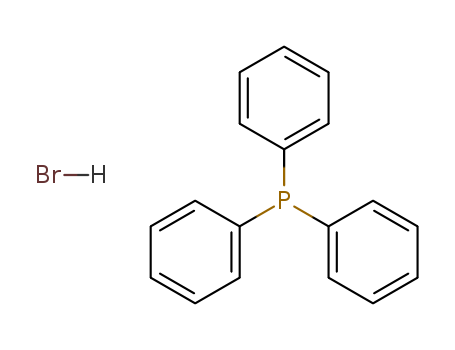
Triphenylphosphonium bromide
(6399-81-1)-

- / 99.00%
-

Industrial Grade / 95%
-

- / 99.00%
-

Industrial Grade / 99%


Request for quotation , get quotes from more suppliers.
Source Phosphines Products Supply
Tricyclohexylphosphine
(2622-14-2)-

- / 99%
-

Industrial Grade, Feed Grade, Food Grade, Pharma Grade / 99%
-

Industrial Grade / 99%
-



Request for quotation , get quotes from more suppliers.
Tributylphosphine
(998-40-3)-

Industrial Grade / 99.9%
-

-

- / 0.00%
-

- / 99.00%


Tri-tert-butylphosphine
(13716-12-6)-

Industrial Grade / 99%
-

- / 99.00%
-

Industrial Grade / 98%
-

- / 99%


Request for quotation , get quotes from more suppliers.
Tetraphenylphosphonium bromide
(2751-90-8)-

- / 99.00%
-

Pharmaceutical Grade / 99%
-

Pharmaceutical Grade / 99%
-

Analytical Reagent / 99%



Request for quotation , get quotes from more suppliers.
-
phosphine")
- / 99.00%
-

Industrail Grade / 98%
-
phosphine 99% see COA kanbei")
- / 99%
-

Industrial Grade / 99.0%


Request for quotation , get quotes from more suppliers.
Source Phosphines Raw Materials by Region


More Information
Phosphines are one of the most vital classes of phosphorus-based compounds with their application in several industries. Phosphine, the simplest of these compounds, is a colorless, very reactive gas used in many manufacturing processes. Phosphine gas is used in industries that need high-purity materials for their state-of-the-art products. Due to its reactivity, it is suitable for use in chemical reactions that produce important intermediate products.
Phosphines are a class of compounds widely used in the synthesis of various industries including agrochemicals, pharmaceuticals and electronics. Phosphine and its derivatives are widely used in the synthesis of flame retardants that are indispensable for producing safer materials. Furthermore, they are used in the semiconductor industry where the role of chemical reactions is decisive in creating high-quality semiconductors. Phosphines are also employed in chemical vapour deposition processes, which prove their involvement in the synthesis of the latest materials.
Key Applications of Phosphines:
Applied in making flame retardants for safer materials.
Applied in the production of semiconductors for manufacturing of semiconductor devices.
Used in the manufacture of pharmaceuticals, especially the intermediates.
Used in the synthesis of pesticides and herbicides.
Applied in chemical vapour deposition in the production of electronic components.
Function as ligands in catalytic activities in various reactions.
Frequently Asked Questions
Phosphines are organophosphorus compounds containing a trivalent phosphorus atom bonded to three organic substituents. They are widely used as ligands in transition metal catalysis, particularly in cross-coupling reactions such as Suzuki, Heck, and Stille couplings. Phosphines also play essential roles in pharmaceutical synthesis, agrochemical manufacturing, and materials science due to their electron-donating properties and ability to modulate catalyst activity and selectivity.
Selecting the appropriate phosphine ligand depends on several factors:1. The type of metal catalyst being used (e.g., palladium, nickel, rhodium).2. The desired reaction outcome—bulky or electron-rich phosphines may enhance reactivity or selectivity.3. Air and moisture sensitivity; some phosphines (like triphenylphosphine) are stable, while others (e.g., trialkylphosphines) require inert handling.4. Solubility and compatibility with your reaction solvent.Consulting literature precedents for similar transformations is a reliable starting point.
Many phosphines can pose health and safety risks. Tertiary phosphines, especially low-molecular-weight alkylphosphines, are often pyrophoric (ignite spontaneously in air) and toxic if inhaled or absorbed through the skin. Aromatic phosphines like triphenylphosphine are generally more stable but still require proper handling under inert atmosphere when high purity is needed. Always use appropriate personal protective equipment (PPE), work in a fume hood, and follow SDS guidelines for safe storage and disposal.
Common phosphine ligands in industrial settings include triphenylphosphine (PPh₃), tricyclohexylphosphine (PCy₃), tri(o-tolyl)phosphine, and bidentate phosphines like 1,2-bis(diphenylphosphino)ethane (dppe) and Xantphos. These ligands are selected based on steric bulk (measured by Tolman cone angle) and electronic properties (Tolman electronic parameter). For large-scale processes, air-stable and recyclable phosphine derivatives are preferred to ensure operational safety and cost efficiency.
To preserve stability and prevent oxidation, phosphines should be stored under an inert atmosphere (argon or nitrogen) in tightly sealed, amber glass bottles at low temperatures (typically 2–8°C or –20°C for sensitive types). Avoid exposure to light, moisture, and oxygen. For long-term storage, consider using glovebox conditions or ampoule-sealed formats. Always check for discoloration or precipitate formation before use, as these may indicate degradation to phosphine oxides.