German giant BASF starts large investment project in China
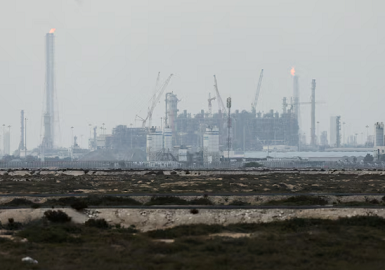
German chemical giant BASF on Saturday officially launched its largest-ever investment project, with financing estimated to reach up to US$10 billion upon completion, in south China's Guangdong province.
The BASF smart Verbund project, located in the city of Zhanjiang, will initially include plants to produce engineering plastics and TPU serving a range of key industries. They are expected to go into production by 2022.
The Verbund project is the first wholly foreign-funded project in China's heavy chemical industry.
"By utilizing the latest digital technologies and applying the highest safety standards, the new Verbund site will be a role model for sustainable production contributing to the development of a circular economy in China," said Dr Martin Brudermuller, chairman of the board of executive directors of BASF SE.
The whole Verbund site in Zhanjiang is planned to be completed by 2030, when it will cover 9 square km.
"Zhanjiang is a perfect location for BASF to further strengthen our footprint of local production in China," said Dr Stephan Kothrade, president of Asia Pacific functions and president and chairman of Greater China at BASF.
He said the smart Verbund site will form a solid foundation for a world-class industrial cluster in Zhanjiang and establish stronger business connections between the south China region and other Asian countries.
By 2022, the new engineering plastics compounding plant will supply an additional capacity of 60,000 tonnes per year in China, bringing BASF's total capacity for these products in the Asia Pacific to 290,000 tonnes per year.
The Verbund site in Zhanjiang will be BASF's third production site worldwide, following Ludwigshafen in Germany and Antwerp in Belgium. The new capacity will enable BASF to meet the growing demand of its customers, particularly in the automotive, electronics and new energy vehicles industries.
Zheng Renhao, secretary of the Zhanjiang municipal committee of the Communist Party of China, said the BASF project has shown a strong ability to form an industrial cluster by attracting a large number of upstream and downstream enterprises to Zhanjiang.

You May Interested In


High Quality β-Nicotinamide adenine dinucleotide CAS 53-84-9 NADwith ready stock and best price
$3/UNIT FOB


2026-10-16
Trade Alert
Delivering the latest product trends and industry news straight to your inbox.
(We'll never share your email address with a third-party.)

Related News
-
BASF and Evonik Rumored Potential Acquisition or Merger
-
South Korea to Impose Anti-Dumping Duties on Caustic Soda: Chinese Mainland Firms Face Up to 22.21%, Taiwan Region 38.89%
-
BASF and Thailand’s NEO Corporate Enter Joint Development Partnership in Personal Care
-
BASF Raises North American Nylon Products by $0.08/lb, Fourth Price Increase in Six Months
-
EAEU Initiates Review of Anti-Dumping Measures on Chinese Titanium Dioxide, Suspends Duties During Investigation
-
Three Major Indian Chemical Investments Target China's PC Exports
-
Pakistan Launches Successive Anti-dumping Investigations against Chinese Products, Involving Soda Ash, Ibuprofen and Other Raw Materials
-
First New UV Filter in Nearly 27 Years: BASF's Tinosorb® S Approved by FDA, Marking a Historic Shift for the U.S. Sunscreen Market
-
Multiple Chemical Industry Leaders Post Strong H1 Earnings Growth as Sector Profitability Revives
-
South Korea Initiates Anti-Dumping Probe on Chinese PVC Suspension Resin, Involving Tianjin Bohua and Wanhua Chemical
Recommend Reading
-
![Lotte Chemical Jumps Nearly 13% as Korean Petrochemical Stocks Rally on Supply-Tightening Bets]()
Lotte Chemical Jumps Nearly 13% as Korean Petrochemical Stocks Rally on Supply-Tightening Bets
-
![European Gas Breaks €80 Intraday, Putting Chemical and Fertilizer Output Back Under Pressure]()
European Gas Breaks €80 Intraday, Putting Chemical and Fertilizer Output Back Under Pressure
-
![“The 40-Year Ethylene Giant Collapses”: ExxonMobil’s Premature Shutdown Is Not Just Scotland’s Tragedy—It’s the Twilight Elegy of European Industrial Civilization]()
“The 40-Year Ethylene Giant Collapses”: ExxonMobil’s Premature Shutdown Is Not Just Scotland’s Tragedy—It’s the Twilight Elegy of European Industrial Civilization
-
![Qatar LNG Hit by Attack: 17% Export Capacity Lost, $20 Billion Wiped Out]()
Qatar LNG Hit by Attack: 17% Export Capacity Lost, $20 Billion Wiped Out
-
![“Amputation or Strategic Retreat?”: Shell’s Six-Year Chemical Losses and the Quiet Unwinding of an Empire]()
“Amputation or Strategic Retreat?”: Shell’s Six-Year Chemical Losses and the Quiet Unwinding of an Empire
-
![Business Society’s Market Outlook for Polyester Staple Fiber on August 14, 2026: Volatile]()
Business Society’s Market Outlook for Polyester Staple Fiber on August 14, 2026: Volatile
-
![Lack of Positive Factors Continues to Weaken Polyethylene Market]()
Lack of Positive Factors Continues to Weaken Polyethylene Market
-
![Business Society’s Diesel Market Outlook on August 17, 2026: Fluctuating Trends]()
Business Society’s Diesel Market Outlook on August 17, 2026: Fluctuating Trends
-
![This week, China's 180CST fuel oil market first rose then fell]()
This week, China's 180CST fuel oil market first rose then fell
-
![Limited Fluctuations in the Shandong Region Asphalt Market This Week]()
Limited Fluctuations in the Shandong Region Asphalt Market This Week