How does zinc reacts with hydrogen chloride to form zinc chloride?
An experiment like how zinc reacts with hydrogen chloride to form zinc chloride is truly fascinating, especially if you are interested in chemical reactions. You may think it is not easy to understand, but it's not. Still, learning elements and chemical reactions are fun, especially if this leads you to understand certain matters like how materials are made from the way they are and how certain substances react when mixed together. Surely, it is a mind-blowing thing you can learn and worth a shot. Here, you will learn what chemical reaction happens when zinc bonds to hydrogen chloride when forming zinc chloride.
Getting to know your Elements
Transitioning Zinc from metal to Nutrient.
Before you learn how elements react to one another, you must first learn and understand the element themselves, starting with Zinc. Zinc, known for its chemical symbol ZN, has an atomic number of 30. It became an element that is part of the periodic table on 1746, which Andreas Marggraf discovered.
The element has a physical characteristic of a color between silver and white with a hue of blue. As a metal, it is mainly found in ores and can be used to coat other metals like iron. Coating zinc can reduce the metal for rust. It can be commonly found in cars, lamps, barriers, and bridges.
For biological purposes, zinc can also be found inside our bodies. It is an essential nutrient for the following bodily functions.
Cell growth
DNA Creation
Tissue Reconstruction
Immune System Support
Protein Synthesis
In the medical field, Zinc can be known under different names such as Galzin and ZnCl2.
Hydrogen Chloride: A compound of 2
From the name itself, you can note that the chemical substance is a mixture of two elements named Hydrogen and Chlorine. To give a background, hydrogen as a gas is the first element on the periodic table. It has an atomic number of 1. Since it is gas, it cannot be described physically using colors and texture, but it can be described as colorless and odorless. Other than its name, it is also known as protium.
Now for chlorine with the symbol Cl, the second element has an atomic number of 17 with a physical description of being green and yellow and a really dense toxic smell. The chlorine we use as a cleaning agent is the same element but is a process to become safer than its pure form. Despite its danger, it is beneficial in killing germs. The name can also be associated with the names like bleach and chloride.
Now, if you mix the two elements, you will come up with hydrogen chloride. Hydrogen chloride, a gaseous chemical, can also be called hydrochloric acid. The names may differ, but their only difference is their physical state. Both contain a similar formula, but the hydrochloric acid is in an aqueous solution.
Zinc and Hydrogen Chloride: A result of the Mix
This is the common question that can happen between these elements. What chemical reaction happens when zinc bonds to hydrogen chloride when forming zinc chloride? Simple, it appears that when two elements are combined, a displacement occurs along the reaction, which results in the end product. In this case, when zinc is mixed with hydrogen chloride, the zinc element will bond with chlorine creating the chemical zinc chloride and releasing hydrogen gas.
Imagine we are experimenting. In a test tube, you can put in zinc. Once you pour in the hydrochloric acid, a bubble will start forming and dissolve the zinc. This is when the single displacement reaction happens. Once done, you'll now have a zinc chloride in your test tube. On the other hand, hydrogen has been released into the air since its gas during the bubble reaction.
A Little Experiment - A Great Knowledge.
Now, if you wish to experience and observe the change between these elements physically, we can help you with that. All you have to do is have the suitable materials. To find it, you must visit the echimi store and purchase what you need.
Experiments Ingredients: A core to Scientific Discovery
Here are some of the chemicals you use to conduct your experiments.
1. Zinc
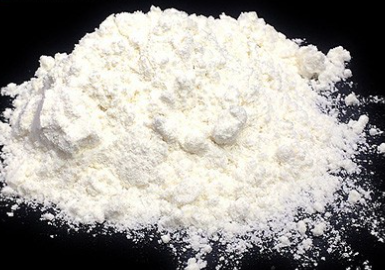
Here, you'll find powder zinc in grey that can be sold in bags in a 50 or 400 kg measurement. The chemical's grains are measured between 3.2 -4.2 microns with a density of 2.2. grams per cubic centimeter.
2. Hydrogen Chloride
As mentioned, the element is colorless but has a strong smell and is in gas solution, but once the item comes in contact with environmental humidity, it turns into hydrochloric acid. It is a similar chemical but different in physical state. It has a molecular weight of 36.4 and a mass of 35.9. Its packing level is 1 with a hazardous category of 3.
3. Hydrochloric Acid
If you are not confident about using hydrogen chloride, you can use this chemical as an alternative. This characteristic is similar to hydrogen chloride, including its chemical formula. Their only difference is that this is made from a solution while the other is from gas. The items are sold in drums or cans.
Material: A Necessity of the Activity
To perform, you need to have the following items both for the activity and safety purposes:
Test tube
Test Rack
Laboratory Tongs
Droppers
Mask
Gloves
Laboratory Gown
Goggles
If you wish to perform the activity, ensure you know what you are doing. A responsible adult is present-someone who can guide you in doing such an activity. You can use this guide to experiment. Also, read some safety practices for you to be safe.
Remember, experimenting with knowledge is one thing but experimenting without knowledge is another. Be a science-abiding citizen that aims to explore experiments safely. With this, you'll be able to observe directly and record how zinc reacts with hydrogen chloride to form zinc chloride.
1.https://www.echemi.com/produce/pr2203082124-zinc-powder-99-greyish-f-3000-honjo-zinc-dust.html
2. https://www.echemi.com/products/pid_Rock19088-hydrochloric-acid.html
3.https://www.echemi.com/produce/pr2204091161-hydrochloric-acid-33-white-to-off-yellow.html
Looking for chemical products? Let suppliers reach out to you!
You May Interested In


SS-31 Cosmetic peptides, discounted price improving cognitive impairment factory supply
$8E+1/UNIT FOB


2026-09-23
Trade Alert
Delivering the latest product trends and industry news straight to your inbox.
(We'll never share your email address with a third-party.)

Related News
-
Nano Zinc Oxide Enhances Rice's Resistance to Rice Blast Fungus, Study Finds
-
Zinc and Zinc Glycinate: Definition, Uses, Benefits & Differences
-
The common uses of zinc that you didn't know about
-
How is zinc chloride made and its properties.
-
Explain how is zinc used in industry?
-
China丨Zhejiang Xinnong Chemical: Overseas business of Zinc thiazole formulation is still in its infancy
-
What are the the interesting info about Zinc and benefits?
-
Supply Shortage Worries Push Zinc Prices to New Highs
-
What Are 10 Fun Facts About Zinc You Need To Know?
-
Shenlong Zinc Industry has been awarded Top 10 Influential Fillers Suppliers
Recommend Reading
-
![Bismutat Explained: Properties, Uses, and Comparison with Bismuth]()
Bismutat Explained: Properties, Uses, and Comparison with Bismuth
-
![Chemical Properties and Uses of Tetraetil]()
Chemical Properties and Uses of Tetraetil
-
![Applications of Caesium Iodide]()
Applications of Caesium Iodide
-
![Ethylene Glycol: Production, Uses, and Safety]()
Ethylene Glycol: Production, Uses, and Safety
-
![Fipronil: Uses, Safety, and Environmental Impact]()
Fipronil: Uses, Safety, and Environmental Impact
-
![MTBE Market Trend Consolidates Weakly]()
MTBE Market Trend Consolidates Weakly
-
![Ethanol Market Prices Fluctuate Narrowly]()
Ethanol Market Prices Fluctuate Narrowly
-
![Sodium Metabisulfite Prices Declined in September]()
Sodium Metabisulfite Prices Declined in September
-
![This week, the cyclohexane market in China showed a weak trend (9.19-9.26)]()
This week, the cyclohexane market in China showed a weak trend (9.19-9.26)
-
![BDO Market Continues to Weaken]()
BDO Market Continues to Weaken