




What is chlorine and examples of its reactions
One of the chemistry topics that most relevant to everyday people is chlorine reactions and the uses of its compounds. It's not hard to see why - chlorine is one of the most used elements in everyday life, from its presence in rock salt to its use in plastic and rubber manufacturing. Therefore, you might be interested in what chlorine is, and some examples of its reactions.
Chlorine Definition and Uses
Chlorine is a halogen element, part of Group 17 of the periodic table. It has the atomic number 17 and has an atomic weight of 35.446 to 35.457 amu, and in its pure form, is a yellow diatomic gas that can be used as an irritant. However, if considering chlorine compounds, the element does have several key applications.
When thinking of chlorine, the first key application that people think of is the chlorination of water, usually in swimming pools, for treatment. The reaction of chlorination goes as follows: Cl2 + H2O → HClO + HCl. UV light is used as a catalyst for the reaction and ions are formed, mixing with the water.
After that, microorganisms in the water are killed by the acid penetrating their cell walls. The effectivity of this treatment is measured through the pH of the treated water, with the desirable pH level ranging from 5.5 to 7.5. Chlorination is usually a step undertaken by water treatment plants to reduce bacterial and other microorganism levels in public drinking water.
Aside from chlorination and its use in water treatment, there are other chlorine reactions and the uses of its compounds in applications like food, industry, medicine, farming, and other areas. Some examples are listed below.
Chlorine Reactions and the Uses of Its Compounds
Sodium Chloride
This might be the most familiar compound on the list. Sodium chloride (NaCl), or salt is most commonly used as a food condiment or a preservative, but it does have many other uses in industry. Any reaction between hydrochloric acid and sodium hydroxide will produce NaCl. This reaction is called neutralization: HCl + NaOH → NaCl + H2O.
Aside from food uses, NaCl also has cleaning uses. It is used to remove stains, prevent mold, and even salting roads to prevent ice. In the medical field, it is used for eye drops, IV drips, saline injections, and nasal irrigation. In industry, it is used to produce plastic, paper, rubber, soaps, polyester, detergent, glass, bleach, and many other products.
Hydrogen Chloride
Hydrogen chloride (HCl) is a colorless gas at room temperature that has laboratory and industrial applications. It is formed through burning hydrogen in chlorine gas through the following reaction: H2 + Cl2 → 2HCl
There are other chlorine reactions that can form the chloride compound; treating sodium chloride (NaCl) with sulfuric acid (H2SO4) at about 150 degrees Celsius, called the salt-cake process is one, for example - NaCl + H2SO4 ⟶ NaHSO4 + HCl.
According to the Center for Disease Control (CDC), HCl can be used for electroplating metals, cleaning, pickling, tanning leather, and producing many different products. Its importance in manufacturing ensures that a steady supply is always produced by different industries.
Ammonium Chloride
Meanwhile, ammonium chloride (NH4Cl) is a white crystalline solid at room temperature. It can be produced through sublimation, with the following reaction: NH4Cl → NH3 + HCl. Alternatively, it can also be produced through a reaction with a base, such as sodium hydroxide: NH4Cl + NaOH → NH3 + NaCl + H2O.
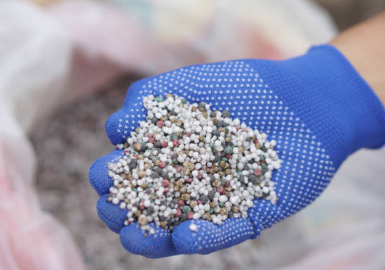
Ammonium Chloride is usually used for industrial purposes, specifically metalwork. It is used as a chemical agent that is used to clean workpieces by forming metal chloride. It is also an ingredient in cough medicine and is also used as a food additive. It can also be used as a source of nitrogen in fertilizers as well as an electrolyte in dry cells.
If these use cases are relevant to you, then you might want to buy chlorine. If you need to use it for household use only, then you can buy brands such as Clorox for retail. However, if you need to buy them wholesale, then you might want to look at websites such as echemi.com for wholesale chemicals. Echemi offers chemicals such as chlorine wholesale that can be used for the applications listed above. If you are interested, then you can look through this link for chlorine: https://www.echemi.com/searchGoods/pid_Rock21930-chlorine.html.
Looking for chemical products? Let suppliers reach out to you!
You May Interested In


Glow70/KLOW80 99% China Peptides Warehouse Direct Delivery Lyophilized Powder in Stock
$169/UNIT FOB


2026-10-24
Trade Alert
Delivering the latest product trends and industry news straight to your inbox.
(We'll never share your email address with a third-party.)

Related News
-
RMF:Iron chlorine e6 was successfully listed in Anhui
-
How Is Chlorine Made? The Science Behind A Fundamental Chemical
-
What is The Source of Chlorine: A Detailed Guide
-
Fire Breaks Out at Dow Plant And Leads to Chlorine Leak!
-
The Bisphenol A Market Goes Up Broadly/the Ring Chlorine Market Runs Weakly
-
Hanwha plans to invest in new 180,000 tons/year DNT production capacity
-
Liquid chlorine leakage accident occurred in a chemical plant from Zibo Shandong
-
The liquid chlorine market is gradually picking up
-
Pipeline transport of chlorine is here
-
HNO2 (Nitrous Acid): Properties, Uses, and Safety
Recommend Reading
-
![Heptane: Properties, Uses, and Industrial Applications]()
Heptane: Properties, Uses, and Industrial Applications
-
![Calcium Sulfate: Properties, Uses, and Applications]()
Calcium Sulfate: Properties, Uses, and Applications
-
Barium Sulfide: Properties, Uses, and Safety
-
![Sodium Nitrate: Fertilizer, Food Preservative, and Chemical Properties]()
Sodium Nitrate: Fertilizer, Food Preservative, and Chemical Properties
-
![What is Sodium Hipoklorit? (Definition, Uses & Safety)]()
What is Sodium Hipoklorit? (Definition, Uses & Safety)
-
![Formic Acid Market Supply Is Loose, Inventory Reduction Is Orderly]()
Formic Acid Market Supply Is Loose, Inventory Reduction Is Orderly
-
![Acetic Acid Market Trends Consolidate (May 18–May 24)]()
Acetic Acid Market Trends Consolidate (May 18–May 24)
-
![Formic Acid Prices First Rise and Then Stabilize]()
Formic Acid Prices First Rise and Then Stabilize
-
![Pre-holiday inventory buildup sluggish; PCs operate at low levels through late December]()
Pre-holiday inventory buildup sluggish; PCs operate at low levels through late December
-
![Optimistic Expectations for US-Iran Talks Lead to Sharp Drop in Oil Prices, Long-term Supply and Demand Dynamics Remain Uncertain]()
Optimistic Expectations for US-Iran Talks Lead to Sharp Drop in Oil Prices, Long-term Supply and Demand Dynamics Remain Uncertain





- Hot Searches
- uv absorbing chemicals for cosmetics market
- thymosin alpha-1 for sale
- graphite pricing
- n-isopropylbenzylamine for sale
- ambroxon
- quartz chemicals
- retatrutide vendor
- where can you buy sulfur hexafluoride
- solvent naphtha suppliers
- perchloroethylene msds
- aluminium chloride
- dapagliflozin propanedio