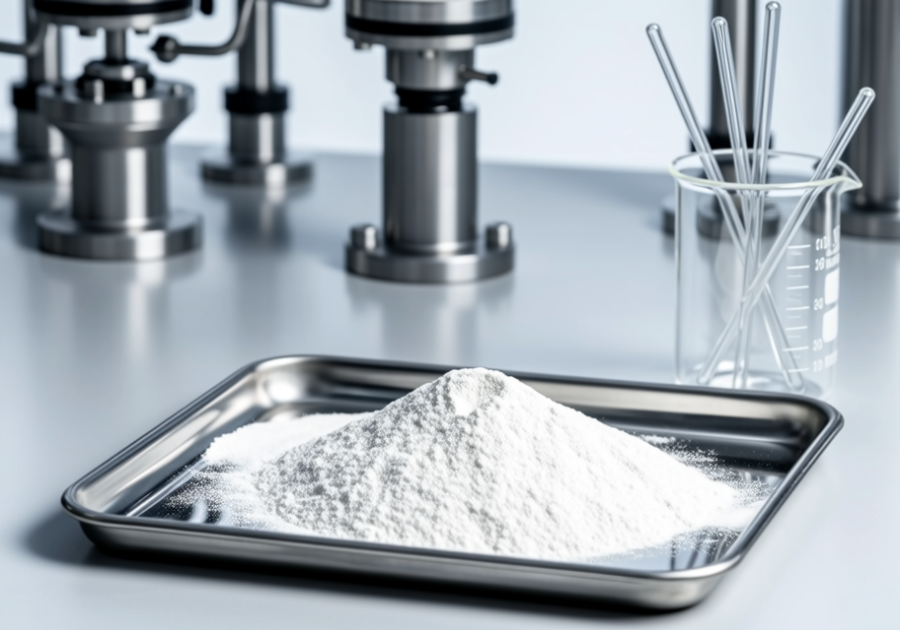
Four major functions of surfactants in cosmetics
Surfactant is a substance with a very special chemical structure. It is widely used in the cosmetics industry. It is an auxiliary raw material in cosmetic raw materials. Although the amount is small, it plays a great role. It is used in facial cleanser, moisturizing lotion, Skin creams, shampoos, conditioners, toothpastes and other products are used in most products. Its functions in cosmetics are diverse, the main functions are: emulsification, washing, foaming, solubilization, sterilization, antistatic, dispersion, etc. Here we introduce in detail its four main functions.
(1) Emulsification
What is emulsification? As we all know, our most commonly used creams and lotions in skin care products contain both oily ingredients and a large amount of Water. They are a mixture of oily ingredients and water, but why do we not see it under the naked eye? Even the oil droplets inside can not see the water seeping out? This is because they have formed a very uniformly mixed dispersion system, that is, oily ingredients are evenly dispersed in water in the form of tiny droplets, or water is evenly dispersed in the oily ingredients in the form of tiny droplets. The former is called Oil-in-water, the latter is called water-in-oil, this type of cosmetics is called emulsion cosmetics, it is the most common type of cosmetics. However, under normal circumstances, oil and water are incompatible with each other. After the stirring is stopped, the oil and water return to a layered state, and a stable and uniform dispersion system cannot be achieved. The oily ingredients in creams and emulsions are The reason why a uniformly mixed dispersion system can be formed with water is that surfactants are added to it. The special structure of the surfactants enables the incompatible oil and water to be uniformly mixed together to form one Relatively stable dispersion system, that is, emulsion. The effect of Surfactant in emulsion is called emulsification. We call surfactants that play emulsification as Emulsifier. Therefore, there are surfactants in our daily creams and lotions.
(2) Washing and foaming effect
Some surfactants have good washing and foaming effects. The soaps that everyone is very familiar with are a very common type of surfactants. The soaps and soaps we use use soap ingredients (surfactants) to clean , Foaming effect, some facial cleansers also play a cleansing effect through the soap ingredients inside, but the soap ingredients have a strong cleaning power, which is easy to cause skin degreasing, and the irritation is slightly strong, so dry skin and sensitive skin This kind of cleansing products should not be used. In addition, products such as bath lotions, shampoos, hand sanitizers, and toothpastes are all surfactants that play a cleaning and foaming role.
(3) Solubilization
Surfactants can increase the solubility of some insoluble or poorly soluble substances in water, so that they can be completely dissolved in water, and finally form a transparent state. This effect is called solubilization, and the surface activity that exerts solubilization Agents are also called solubilizers. For example, we want to add an oily ingredient with good emollient properties to the transparent lotion, but the oil cannot be dissolved in the water and can only float on the surface of the lotion in the form of small oil droplets. At this time, we can use the surface The solubilizing effect of the active agent is to dissolve the oily ingredients in the make-up water well by adding the surfactant, and the product finally presents a good transparent appearance. However, it should be noted that the amount of oily ingredients that can be dissolved by solubilization is limited, and it is difficult for a larger amount of oily ingredients to be completely dissolved in water through solubilization. Therefore, with the increase of oily ingredients, the amount of surfactants needs to be increased. The oily ingredients and water are emulsified. This is why some lotions are opaque and milky white, because there are more moisturizing oils on the surface. The active agent emulsifies it with water.
Surfactants can be divided into four categories: anionic, cationic, zwitterionic and nonionic according to their structural characteristics. Among them, anionic surfactants have better washing and foaming effects, and are mostly used in cleaning products; cationic surfactants have better sterilization, antistatic and soft hair effects, and are mostly used in hair conditioners; zwitterionic surface The active agent has good washing and foaming, stabilizing and thickening effects. It is mostly used as an auxiliary anionic surfactant in cleaning products to enhance the cleaning effect of the product and reduce irritation; non-ionic surfactants have emulsifying and solubilizing effects Good at, low irritation, mostly used in creams, lotions and water products that need to be solubilized.

You May Interested In



2026-09-20
Trade Alert
Delivering the latest product trends and industry news straight to your inbox.
(We'll never share your email address with a third-party.)

Related News
-
The role of surfactants in cosmetics
-
Amazon Turns Lilly’s Weight-Loss Pill Into a Retail Logistics Play
-
“Soaring Sulfuric Acid, Tightening Ore Supplies”: The High-Stakes Battle Behind the Titanium Dioxide Price Surge
-
German Chemical Industry Posts Q2 Rebound but Capacity Utilization Remains at 73.2%
-
U.S. 10% Temporary Tariff Expires, New Section 301 Tariffs Not Yet Implemented
-
Chinese Urea Producers Receive a Timely Boost as Second Round of 2026 Export Quotas Nears 2 Million Tons
-
Pfizer Warns Germany Over Drug-Pricing Policy
-
India Raises Cancer Drug Price Caps by 50%
-
New York Targets Additives and GRAS Disclosure
-
Urea Prices Surge as India Faces Critical Shortages: Will China’s Export Quotas Provide Relief?
Recommend Reading
-
![Spain’s Data-Protection Confusion Hits Pesticide Competitiveness]()
Spain’s Data-Protection Confusion Hits Pesticide Competitiveness
-
![Spain’s Data-Protection Confusion Hits Pesticide Competitiveness]()
Spain’s Data-Protection Confusion Hits Pesticide Competitiveness
-
![Biologicals Move from Trial Plots to Real Distribution]()
Biologicals Move from Trial Plots to Real Distribution
-
![EU Low-Value Parcel Rules Could Disrupt Chemical Sample Flows]()
EU Low-Value Parcel Rules Could Disrupt Chemical Sample Flows
-
![EU May Build Industry-Level Trade Barriers Against Chinese Chemicals]()
EU May Build Industry-Level Trade Barriers Against Chinese Chemicals
-
![Business Society’s MTBE Market Outlook on September 3, 2026: Volatile Consolidation]()
Business Society’s MTBE Market Outlook on September 3, 2026: Volatile Consolidation
-
![Business Society’s MTBE Market Outlook on September 2, 2026: Weak Rebound]()
Business Society’s MTBE Market Outlook on September 2, 2026: Weak Rebound
-
![Business Society’s Market Outlook for Petroleum Coke on September 2, 2026: Volatile]()
Business Society’s Market Outlook for Petroleum Coke on September 2, 2026: Volatile
-
![Business Society’s Market Outlook for Heavy-Weight Pure Soda Ash on September 3, 2026: Volatile]()
Business Society’s Market Outlook for Heavy-Weight Pure Soda Ash on September 3, 2026: Volatile
-
![Business Society’s September 3, 2026 Methanol Market Outlook: Clearly Upward Trend]()
Business Society’s September 3, 2026 Methanol Market Outlook: Clearly Upward Trend