What is the secret of vant Empire, which was founded eight years ago and has incubated more than 20 subsidiaries?
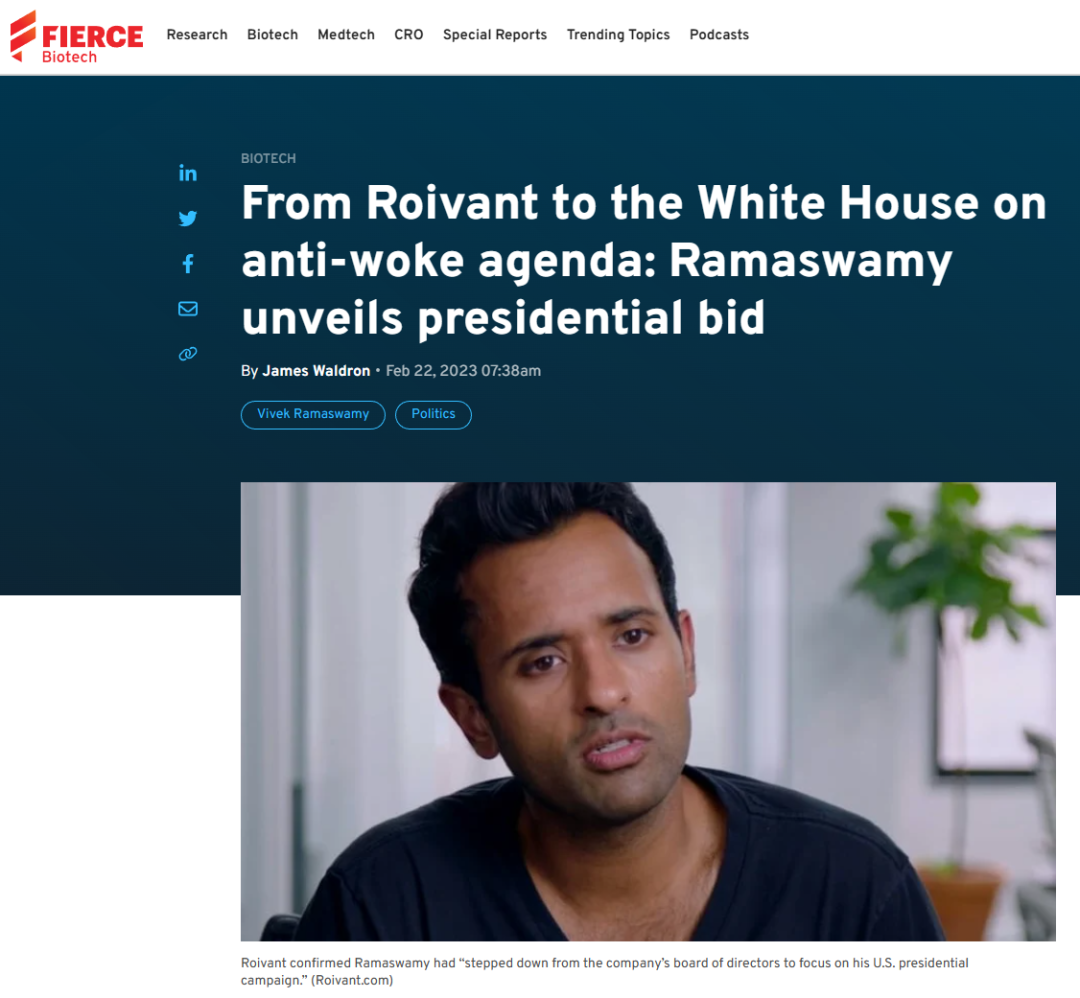
Vivek Ramaswamy, the founder of Roivant Sciences, has resigned from his position as chairman of the biotech company to formally announce his candidacy for president of the United States.
It's a remarkable career change for a tech entrepreneur who founded Roivant back in 2014.
Founded in 2014, Roivant has attracted much capital and industry attention in biotech incubation. In just eight years, the company has spawned more than 20 "vant "subsidiaries with varying degrees of success, including six FDA-approved drugs to date.
Here we take a look at the growth of pharmaceutical company Riovant.
The success of the hub-and-spoke model
Roivant Sciences was originally founded in New York by Vivek Ramaswamy, a young Indian-born investor and entrepreneur.
Vivek was born in the United States in 1985, the son of immigrants from India. In 2007, Ramaswamy graduated magna cum laude from Harvard University with a bachelor's degree in biology. He received his Juris Doctor degree from Yale Law School in 2013.
According to its website, Roivant has established a portfolio of 20+ companies (Vants). These "-Vants" have conducted nine Phase 3 clinical trials (eight of which have been successful) and have launched VTAMA 1% cream for the topical treatment of psoriasis.
In 2019, Riovant completed a $3 billion strategic deal with Japanese pharmaceutical company Sumitomo Dainippon Pharma, which completed the acquisition of five Vant companies owned by Roivant. At the same time, Sumitomo Pharmaceutical completed a strategic alliance with Roivant Sciences and established a wholly-owned subsidiary, Sumitovant Biopharma, as the parent company of the five acquired companies.
The company is part of a wave of "hub-and-spoke" life science startups that have sprung up in recent years. Roivant Sciences is a good example of a company like BridgeBio Pharma, PureTech and Nimbus, which recently enjoyed a bumper crop. The startups' strategy is to take drugs off the lab storerooms of pharmaceutical companies or universities and place them in new biotech companies. Last year, for example, Nimbus sold an anti-inflammatory drug that blocks the TYK2 protein to Takeda for $4 billion in cash and a milestone price of up to $2 billion.
Since Roivant was founded in 2014, it has had its share of successes and setbacks. Myovant, for example, was sold for $3 billion, while Axovant, which developed a drug for Alzheimer's disease, went bankrupt.
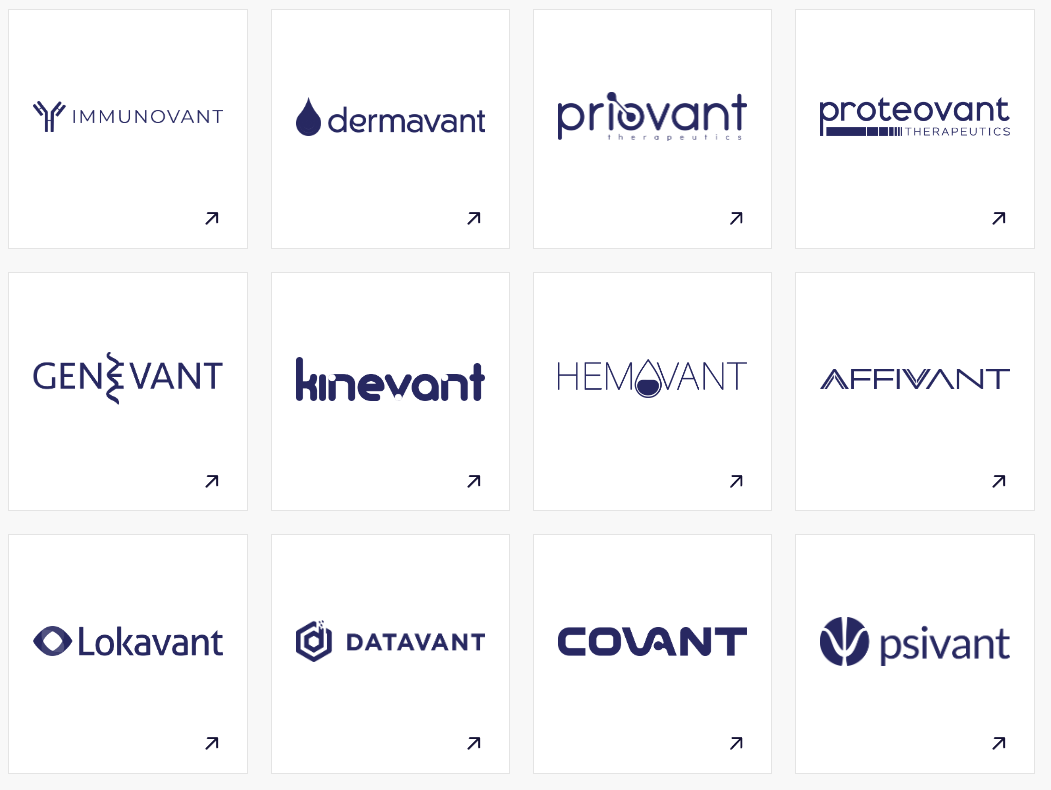
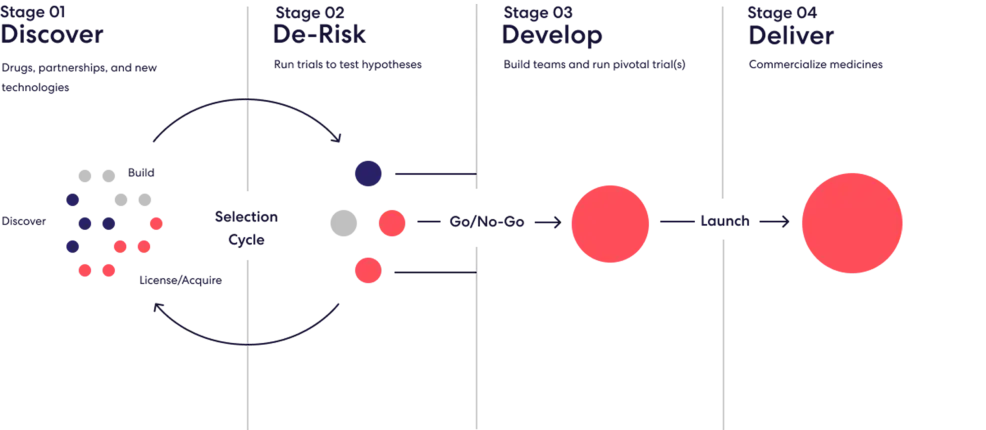
Current CEO Matt Gline describes the benefits of this central-radiant "Vant" model as recruiting good leaders and putting good people with the right expertise on important projects. The "Vant" model allows us to put really strong people into a capital-constrained, down-to-earth startup environment, and that's how we think people operate at their best.
The general consensus in the industry is that listed subsidiaries are more difficult to manage than wholly-owned subsidiaries. As a result, Matte stresses that most of Riovant's "Vants" are wholly owned, rather than independently listed companies, which will remain unchanged. "Ultimately, the way to create value in our business is to generate important scientific data."
Help the combination of production and education, Roivant to acquire Oncopia
In December 2020, Roivant acquired Oncopia of the University of Michigan for its PROTAC pipeline of depressants, which were originally developed in Wang's lab for four cancer targets. As part of the partnership, Roivant will also begin sponsoring research in Wang's pharmaceutical chemistry laboratory, with the goal of using the additional funding to develop new depressants.
Roivant's portfolio of targeted depressants acquired from Oncopia includes those targeting the tumor protein STAT3 and the androgen receptor AR. STAT is a new drug target that has not yet been approved by the FDA, while AR is a drug target for prostate cancer, but patients often respond poorly to or develop resistance to conventional inhibitors.
Because PROTAC depressants have so much transformative potential, it has become a competitive field over the past few years.
A handful of startups have been built around small-molecule depressant platforms and have raised significant amounts of money from venture capitalists and public markets, formed partnerships with big Pharma or been acquired outright. Arvinas Therapeutics, which has the fastest-growing clinical antipsychotic, raised more than $100 million ina 2018 IPO that valued it at $2.8 billion.
Professor Wang's lab at the University of Michigan is fruitful. Since 2002, he has submitted 111 inventions to the University of Michigan's Office of Technology Transfer, executed 63 commercialization agreements, and founded five start-up companies. One of the largest startups is Ascentage Pharma, which has seven University of Michigan LABS for preclinical and clinical compounds. Ascentage raised US $53 million in an IPO on the Hong Kong Stock Exchange in 2019, valuing the company at US $870 million as of December 2020.
Wang says the innovation partnership with Riovant "helps us at every step to ensure that our intellectual property is protected and that we negotiate the right research or licensing agreement. Not only to protect the interests of the university, but also to allow us to advance things in development and ultimately deliver them to patients."
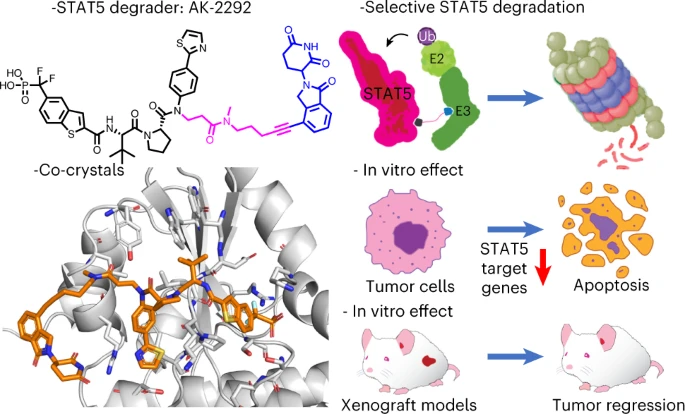
Professor Wang and his team recently published AK-2292, a new depressant targeting the degradation of STAT5, in the journal Nature. In the latest paper, Wang's team targets a difficult-to-produce signal transduction and transcription activator (STAT5) and reports the development of AK-2292 as the first effective and selective small molecule depressant for the STAT5A and STAT5B subtypes. AK-2292 induces degradation of STAT5A/B proteins and has excellent selectivity for all other STAT proteins and over 6,000 non-STAT proteins, thereby selectively inhibiting STAT5 activity in cells. Tumor regression was achieved in two leukemia xenografted mouse models.
Roivant develops revolutionary drugs and technologies by building nimble, focused startups with the suffix Vants.
Their philosophy was to attract talent and funding in unconventional ways: Axovant became the biggest biotech IPO in U.S. history, though it eventually collapsed; Myovant set a record for biotech ipos in 2016 and was acquired by Sumitomo Pharmaceutical at a valuation of $2.9 billion. And Japan's SoftBank's $1 billion investment in Roivant also set a record for the highest venture capital investment in Europe in 2017. Worth keeping an eye on immunology-focused Immunovant, whose asset batoclimab is currently in clinical trials, and dermatology-focused Dermavant, whose Vtama cream is the first and only steroid-free FDA-approved drug in its class for adult plaque psoriasis.
Roivant reported a net loss of about $1 billion in 2022 and laid off 12% of its workforce in November. It is likely to suffer significant operating losses for the foreseeable future, according to a recent SEC filing.

You May Interested In


High Quality β-Nicotinamide adenine dinucleotide CAS 53-84-9 NADwith ready stock and best price
$3E+1/UNIT FOB


2026-10-24
Trade Alert
Delivering the latest product trends and industry news straight to your inbox.
(We'll never share your email address with a third-party.)

Related News
-
Behind the Three Consecutive Titanium Dioxide Price Hikes, Sulfur and Sulfuric Acid Costs Are Rewriting the Pricing Floor
-
Brazil Expands Chemical Tax Breaks as India’s Crop Protection Industry Warns of a 25% Cost Increase
-
Three Major Indian Chemical Investments Target China's PC Exports
-
Sika in China Under Pressure: The Structural Alarm Behind the 1,500-Job Cut
-
25 Companies Raise Prices Three Times Within a Month: China’s Titanium Dioxide Industry Shifts from “Price Wars” to a “Pricing Alliance”
-
New Ocean Freight GRI Takes Effect on Asia, Middle East and Africa Routes to U.S. and Canada
-
Chung Lien Oil’s 8,000-Ton Soybean Oil BaP Scandal: NT$165 Million Fine, 401 Product Recalls, Source Still Unknown
-
China’s Chemical “Spring Surge”: 68.8% of Products Rising—Real Recovery or Just a Pre-Festival Mirage?
-
Huide Technology Partners with U.S. Firm to Open the Door to Mass Production of Circular TPU
-
Wanhua Shuts 1.1 Million-Tonne Yantai MDI Unit for 45-Day Maintenance
Recommend Reading
-
![Metso Expands Wear Parts Capacity in China with New Rubber Factory in Quzhou]()
Metso Expands Wear Parts Capacity in China with New Rubber Factory in Quzhou
-
![Bridgestone Reports Q3 Growth Amid Challenging North American Market]()
Bridgestone Reports Q3 Growth Amid Challenging North American Market
-
![Singapore Orders Nestlé Formula Recall as Infant Safety Comes Under the Spotlight]()
Singapore Orders Nestlé Formula Recall as Infant Safety Comes Under the Spotlight
-
![Cheap Sugar, Costly Lives: WHO Pushes Governments Toward a New Era of Health Taxes]()
Cheap Sugar, Costly Lives: WHO Pushes Governments Toward a New Era of Health Taxes
-
![Trinseo Faces Pressure in Resin Markets but Sees Growth in Recycled Products]()
Trinseo Faces Pressure in Resin Markets but Sees Growth in Recycled Products
-
![After Semaglutide Patent Expiry in India, the Price System Has Been Restructured as More Than 40 Drugmakers Enter the Competition]()
After Semaglutide Patent Expiry in India, the Price System Has Been Restructured as More Than 40 Drugmakers Enter the Competition
-
![Expected Short-term Peak Season Surge, This Week's Polyester Chip Market in China Shows High-level Fluctuations]()
Expected Short-term Peak Season Surge, This Week's Polyester Chip Market in China Shows High-level Fluctuations
-
![Business Society’s Market Outlook for Fuel Oil 180CST on August 10, 2026: Volatile]()
Business Society’s Market Outlook for Fuel Oil 180CST on August 10, 2026: Volatile
-
![Business Society’s Gasoline Trend Analysis for September 17, 2026: Volatile Consolidation]()
Business Society’s Gasoline Trend Analysis for September 17, 2026: Volatile Consolidation
-
![October MTBE Market Trend Fluctuates and Declines in China]()
October MTBE Market Trend Fluctuates and Declines in China